
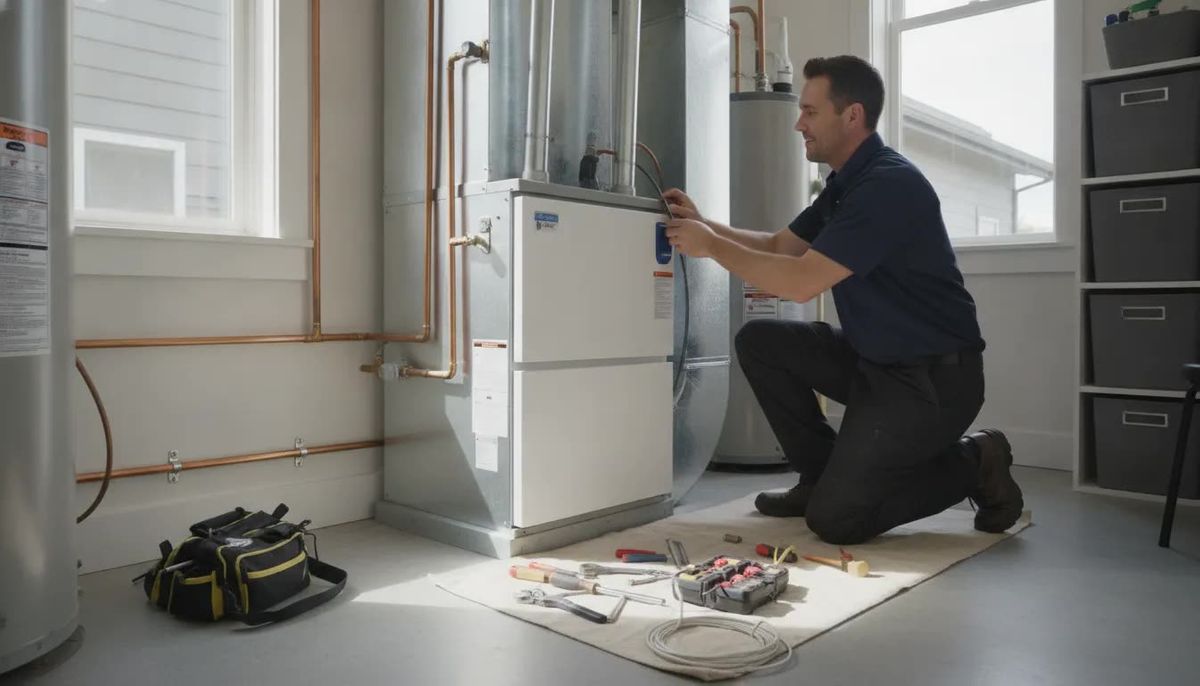
If you are asking how long does it take to install a furnace, the honest answer for most Bay Area homes is one working day on site. A straight replacement in an accessible closet or garage often finishes in about 4 to 8 hours. A gas furnace that also needs venting, a condensate drain, or duct corrections can use most of the day. A job that starts with major duct changes can run into a second day.
The clock that matters is the one from shutoff to tested heat, not just the time it takes to set the cabinet in place.
Call (650) 758-4900 to plan your furnace installation
Ortiz Heating and Air Conditioning, Inc. is a family-owned, Carrier-authorized contractor based in Burlingame. We install and replace furnaces for homes across San Francisco, the Peninsula, and the East Bay. We use one-hour appointment windows, so you are not holding the whole day for a four-hour arrival range. This guide covers the install day itself. City planning, equipment sizing, and local cost questions live on the neighborhood guides we link below.
How long does a typical furnace installation take?
For a like-for-like replacement, plan on a single visit. The crew disconnects the old furnace, sets the new one, reconnects ducts, power, and fuel, then tests heat before they leave. When the closet is clear, the ducts already match, and the vent path is reusable, that sequence often lands in the 4-to-8-hour range.
Treat published ranges as planning bands, not a promise. Lennox's homeowner guide puts most furnace installations at 4 to 10 hours. A straight replacement is closer to 4 to 6 hours. Minor duct adjustments land at 6 to 8 hours, and major ductwork can take 1 to 2 days. Angi reports a similar 4-to-8-hour residential range. Those figures match what we see when the house is ready and the scope was written down before the truck arrives.
Gas equipment usually takes longer than an electric furnace. The crew has to make a tight gas connection, confirm venting, and, on a high-efficiency model, add a condensate drain. Electric replacements skip the gas and flue work, so they often finish sooner if the electrical circuit is already adequate. Oil systems are uncommon in our service area. If a tank, line, or conversion is part of the job, say so on the estimate so the timeline includes it.
Same-day heat is the goal, not a guarantee
A normal replacement should restore heat before the crew leaves. That fails when the job grows on site. A cracked heat exchanger may be the only item on the original scope. Then the tech finds undersized return ducts, a rusted flue, or a closet that will not accept the new cabinet. Those are real safety and performance items. They should pause the finish, not get skipped so the clock looks shorter.
The U.S. Department of Energy's Building Science note on HVAC quality installation says more than half of U.S. home HVAC systems are believed to perform poorly because of installation issues, including oversized equipment and poorly designed ducts. The same note ties quality installation, including correct sizing and sealed ducts, to about 11% to 18% better furnace performance. A faster slap-in does not protect that result.
What stretches a furnace install past one day?
The furnace cabinet itself is rarely the long part. Time gets added by the house around it. Ask which of these are already in the written scope, because each one changes the day.
Duct repairs or resizing. A matched furnace on leaky or undersized ducts will not move the air the new blower expects. Sealing a few joints may fit the same day. Replacing a trunk, adding a return, or correcting a downflow setup can push the work to a second visit. Our duct services page is the place for that scope, and the air duct installation cost guide covers what duct changes tend to involve.
Tight access. Attic furnaces, crawl-space units, and hall closets with a water heater in the way take longer to remove and set. A two-person carry through a finished hallway is slower than rolling a cabinet out of a garage.
Venting and condensate. Standard-efficiency furnaces often reuse a metal flue. High-efficiency condensing furnaces need a different vent material, a slope, and a drain. If the old flue cannot be reused, the exterior penetration and the drain path add hours.
Gas or electrical changes. Some gas and electrical details are not a five-minute reconnect. A shutoff too far from the cabinet, a connector that no longer meets code, or a circuit that cannot feed the new blower all add time.
Add-ons. A new thermostat, a better filter cabinet, or an indoor-air accessory is worth doing while the system is open, and each one needs its own wiring and test. See our indoor air quality services if filtration is part of the plan, and the smart thermostat guide if you want controls changed the same day.
Permits and inspections. The permit application usually happens before install day. The inspection often happens after the crew is gone. Neither should be confused with the hours the technicians are in the house. Our Bay Area HVAC permit guide explains that timing, and the HVAC installation page lists the permit questions to ask before work starts.
Downflow furnaces, common in some California closets and attics, add their own layout checks. If that is your configuration, the downflow furnace installation guide covers orientation. It is a different question from how long the crew will be on site.
What happens during the installation day?
A careful furnace replacement follows a sequence. Knowing it helps you tell a finished job from a cabinet that was only set in place.
Protect the work area and shut off power and gas.
Remove the old furnace and haul it away.
Set, level, and connect the new furnace.
Commission the system and confirm heat at the thermostat.
Protect the house and kill the utilities
The crew lays protection from the door to the furnace. They confirm the model and the work order, then shut off power and gas. They should tell you when heat will be off. On a mild Peninsula day that window is easy. On a cold East Bay night, you will want the plan from the next section before they arrive.
Remove the old furnace
Disconnecting the flue, gas line, electrical whip, thermostat wire, and both duct connections usually takes one to two hours. It takes longer if the cabinet is corroded to the platform or boxed in by shelving. The old unit leaves the house the same day. It should not stay in the garage as a leftover.
Set, connect, and level the new furnace
The new cabinet has to sit level. Return and supply connections should be sealed, the gas valve and drip leg arranged correctly, and the vent pitched the way the manufacturer requires. High-efficiency models also get a condensate trap and a drain that will not freeze or back up into the cabinet. This is the step people picture as "the install." It is only the middle of the visit.
Commission the system before anyone leaves
Commissioning is the part that separates a one-day install from a return visit next week. The crew should fire the furnace and confirm ignition and flame. They should measure temperature rise against the nameplate, check blower speed, look for duct leaks at the new connections, and cycle the thermostat from the room you live in.
Federal furnace guidance from the Department of Energy points buyers to ANSI/ACCA quality-installation practice. Oversizing, duct leaks, and poor airflow are how a new furnace misses its rated efficiency. If a tech cannot show you a completed start-up, the job is not finished, even if the cabinet is in the closet.
Ortiz crews do this work in house. We do not hand the gas connection or the start-up to a separate subcontractor, and the proposal you approved is the scope we install. If something on site would change that scope, you should hear about it before extra work begins.
How should you plan the day around the work?
You can shorten the visit by clearing the path, and you can make the heat-off window easier to live with. You cannot safely speed up a gas connection.
Move stored items at least three feet back from the furnace, and clear a walkway from the entry door. Attic hatches and garage bays need the same treatment.
Secure pets. A closet install still means an open exterior door and a crew moving a heavy cabinet.
Plan on the thermostat being off from arrival until start-up. For most homes that is the workday, not the whole week.
If anyone in the home depends on steady heat, ask whether the job can be scheduled for a milder day. Bay Area microclimates vary: a Burlingame afternoon and a Richmond morning are not the same heating load.
Do not book a same-day inspection, a flooring contractor, or a deep clean in the furnace closet. The crew needs the space until the test is done.
Ask for the one-hour arrival window when you schedule. Ortiz uses one-hour windows rather than a half-day range, so you can leave for work if the closet is already clear and someone can let the crew in.
Office scheduling is Monday through Friday. The quote page lists weekday hours and is closed Saturday and Sunday, so a Friday install should not assume a weekend return trip for a missed part. If the furnace has already failed, a repair visit is a different appointment from a replacement. Our heating repair service is the right stop for a no-heat diagnosis. Replacement estimates are for new equipment, not for a paid diagnostic.
Which choices change the timeline before install day?
Three decisions made during the estimate have more effect on duration than the brand name on the cabinet.
Replacement versus a first-time furnace
A replacement uses a platform, ducts, and usually a flue that already exist. A first-time furnace, or a move from a wall heater to a ducted system, is a construction project. New ducts alone can take longer than the furnace set. If you are comparing that path with a heat pump, read the heat pump versus gas furnace guide and our heat pump services. Those pages own the equipment choice. This one only tells you that a fuel or distribution change is not a half-day swap.
Matched equipment versus a closet that is too small
A new furnace is not always the same height or depth as the 20-year-old unit. Closet returns, coil cabinets, and filter racks have to line up. Finding out on install morning means a return trip for a transition piece. A sizing visit that measures the closet, the flue, and the electrical panel avoids that. Local sizing and cost questions belong on the city guides if you live in those cities. professional furnace installation in Oakland, the San Francisco furnace planning guide, and the Richmond furnace planning guide.
Permit timing versus crew timing
Bay Area cities do not share one permit desk. San Francisco, San Mateo County, and East Bay jurisdictions can require mechanical details, equipment specs, and Title 24 paperwork before the job is legal to finish. Ortiz confirms which permits apply when you request an installation estimate, and we coordinate that process rather than leaving you to guess the department.
The Title 24 HVAC guide is the reference for energy-code paperwork. Build the permit into the project calendar. Do not add those office days to the 4-to-8-hour install visit, and do not let a crew skip the permit to keep a one-day promise.
What should the quoted timeline include?
A useful estimate states duration in the same sentence as the scope. When you compare proposals, ask for these items in writing.
Whether the visit is a replacement on existing ducts or includes duct, flue, gas, or electrical changes.
How many technicians are scheduled, and the arrival window.
Whether heat is expected back the same day, and what would push the job to a second day.
Who pulls the permit and who meets the inspector.
That start-up includes thermostat check, visual combustion check, and temperature rise, not only "it turned on."
What is hauled away, and whether the closet is left ready to close up.
Which warranty registration depends on a documented professional install. Many manufacturers require it.
Free estimates apply to new equipment installation and replacement. Do not expect a repair diagnostic to be folded into that estimate, and do not treat a verbal "we can knock it out in the morning" as the scope. If two bids disagree by half a day, the shorter one may be leaving out commissioning or duct corrections you will pay for later.
California expects this work from a licensed contractor. The Contractors State License Board's HVAC consumer guidance ties real efficiency to correct installation, not only to the equipment label. Ortiz holds California license CL803346, and we are a Diamond Certified, BBB-accredited Carrier dealer serving homeowners from Burlingame across the Peninsula and East Bay. That is the standard the timeline should be built around.
How do you know the job is actually finished?
Before the crew packs up, you should be able to check a short list without any tools.
The thermostat reaches the set point and the furnace shuts off on its own, then restarts when you raise the setpoint a few degrees.
Supply air at the registers is warm, and you do not smell persistent gas or scorched dust after the first cycle. A short burn-off smell on a brand-new heat exchanger can be normal. A gas odor is not.
The condensate line on a high-efficiency furnace is running to a proper drain, not into a bucket that someone has to empty.
New duct joints are sealed, filter access is reachable, and the panel doors are on.
You have the model and serial number, the permit number if one was required, and a plain-language note of anything deferred to a second visit.
If heat is not restored, ask what part or inspection is outstanding and when the return visit is. A finished installation is one you can live with overnight, not one that still needs a programmer, a drain, or a flue cap.
Schedule your furnace installation estimate
Frequently asked questions
Can a furnace be installed in one day?
Yes, when the job is a replacement, the closet is accessible, and the ducts, gas line, and vent can be reused. Many Bay Area homes are in that group, and heat is back the same day. Plan a second day if the crew also has to rebuild ductwork, move the flue, or correct an electrical circuit.
How long will my house be without heat?
Usually for the length of the visit, often 4 to 8 hours for a straightforward replacement. The furnace is off from the first disconnection until start-up is done. Ask the estimator whether your scope is still a same-day restore before you schedule a very cold week.
Does a high-efficiency furnace take longer to install?
Often, yes. Condensing furnaces need different venting and a condensate drain, so they take more setup than a standard-efficiency unit that reuses a metal flue. The extra time is part of installing the equipment the way the manufacturer specifies.
Should I stay home the whole time?
Someone needs to provide access at the start and be available for questions if the scope changes. You do not have to watch every connection. With a cleared path and a one-hour arrival window, many homeowners check in at the end for the thermostat test and the walkthrough.
Does the permit inspection happen on install day?
Sometimes the paperwork is already approved before the crew arrives, and the inspection is a separate appointment after the work. Confirm who schedules it. Inspection timing is not the same thing as the hours the installers are in the house.
Plan the install day before you book it
Most furnace replacements in our service area are a one-day project. Homes that run long usually needed duct, vent, or access work that could have been named on the estimate. If you want a timeline that matches your closet, your fuel type, and your city, start with a replacement quote. We will tell you whether heat should be back the same day and what would add a second visit.
Call (650) 758-4900 to plan your furnace installation. You can also request the estimate through our quote form, or reach the Burlingame office on weekdays if you would rather talk through the scope first. If you are still deciding whether the furnace should be repaired instead of replaced, our repair or replace guide walks through that choice before you schedule installation.