
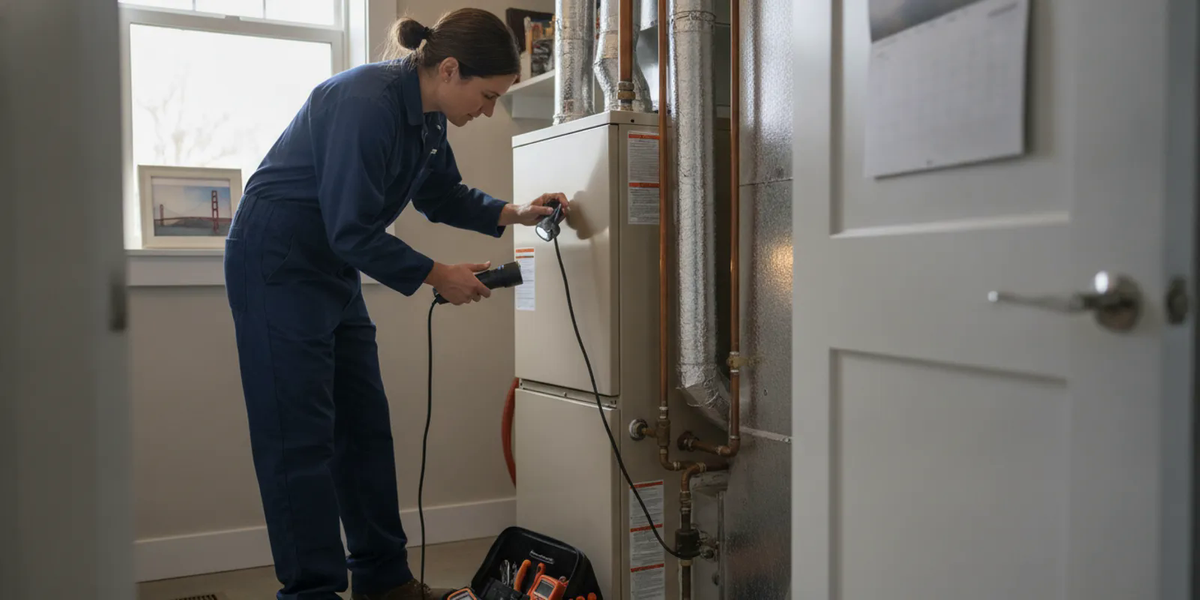
Planning furnace installation in Oakland starts with more than choosing a model. Your home's heat loss, ductwork, venting, electrical and gas connections, and the way you use each room all affect the right system. A careful plan helps prevent comfort problems and surprises once the old equipment is removed.
Talk with an HVAC professional about your furnace project
This guide explains what to review before replacing or adding a furnace, how sizing and efficiency choices work, what can affect project costs, and which questions to ask when comparing installation estimates. Every home is different, so treat these points as a planning checklist rather than a substitute for an in-person assessment.
When Should You Plan a Furnace Replacement?
A furnace that stops working is not automatically beyond repair. The decision depends on the equipment's condition, the type and frequency of problems, the availability of parts, and whether the system can heat the home reliably. If the furnace is older, needs repeated repairs, or leaves rooms uncomfortable despite normal operation, it may be time to compare repair with replacement.
Look for patterns, not one isolated symptom. Keep notes about how often the system needs attention, which rooms feel cold, whether the furnace runs for unusually long periods, and whether energy use has changed. A persistent new noise or a problem with ignition also deserves professional evaluation. Do not open the furnace cabinet or attempt gas, electrical, combustion, or venting repairs yourself.
If the furnace has stopped heating, a diagnostic visit can help identify the cause before you decide on new equipment. Repair and diagnostic charges are not the same as an installation estimate. Ortiz offers free estimates for installing or replacing equipment; repair evaluations should be discussed separately. See the company's heating and HVAC repair services if you need help evaluating an existing system.
When a replacement is likely, planning ahead gives you time to compare designs and prepare for work rather than selecting equipment during an urgent breakdown. The right timing still depends on the furnace's condition and your household's needs; age alone cannot determine whether replacement is necessary.
How Is the Right Furnace Size Determined?
Furnace capacity should be based on the home's heating requirements, not just the size of the old unit or a quick rule based on square footage. A proper sizing review considers the home's layout and construction, insulation, windows, air leakage, ceiling heights, and local outdoor conditions. It should also account for how the home is used and where comfort problems occur.
An oversized furnace can reach the thermostat setting quickly and cycle on and off more often than intended. That can create uneven temperatures and affect comfort. An undersized unit may have difficulty keeping up during colder weather. Neither outcome is solved simply by selecting the largest or smallest available model.
Ask the installer how the proposed capacity was selected. A useful conversation should connect the equipment recommendation to the home's actual characteristics and identify assumptions that may need checking. If a room is consistently colder than the rest of the house, mention it during the assessment. The cause could involve airflow, duct condition, insulation, or system design, rather than a need for a larger furnace.
What should a sizing visit cover?
Home details: Ask whether the assessment considers conditioned space, ceiling height, windows, insulation, and air leakage.
Existing system: Review the furnace's model and capacity, but do not assume the old size is correct for the home today.
Comfort concerns: Identify cold rooms, temperature swings, and how the thermostat is used.
Duct and airflow review: Ask whether existing ducts can distribute the selected system's heat as intended.
Recommendation rationale: Request a clear explanation of the proposed capacity and any alternatives.
Good sizing is part of a complete installation plan. Ortiz provides HVAC installation and replacement services for residential and light commercial properties. Ask the estimator how the assessment will be tailored to your home's layout and existing equipment.
Which Furnace Efficiency and System Options Should You Compare?
Efficiency is one factor in the selection, alongside installation requirements, comfort, and the condition of the home's existing infrastructure. A higher-efficiency model may have different venting, condensate drainage, or electrical needs than the furnace it replaces. The equipment label alone does not show whether a system is a good fit for a particular home.
Ask for the efficiency rating and compare models on the same basis. Have the installer explain the expected operating differences, any additional work needed for the selected model, and how maintenance requirements compare. A furnace's performance also depends on correct sizing and installation, so discuss workmanship and commissioning rather than comparing ratings alone.
| Option or project factor | What to compare | Questions to ask |
|---|---|---|
| Like-for-like furnace replacement | Whether existing capacity, venting, and connections remain suitable | What conditions would require changes beyond replacing the equipment? |
| Different furnace efficiency level | Equipment rating and any new venting, drainage, or electrical needs | What added installation work does this model require? |
| Furnace with duct improvements | Airflow, duct condition, leaks, and room-to-room comfort | Which duct changes are necessary, and how will they address the concern? |
| Alternative heating system | Fuel source, home layout, distribution system, and project scope | Would a heat pump or another system suit the home, and what changes would it involve? |
For some households, comparing a furnace with a heat pump is worthwhile, especially when planning a larger heating and cooling upgrade. The two approaches are not interchangeable in every home. They have different equipment and installation needs, and the best fit depends on the property and the owner's goals. Ortiz also provides heat pump services, which can be part of a broader options discussion.
Should You Inspect or Modify the Ductwork?
A new furnace relies on the home's air distribution system to deliver heat. Ducts that are damaged, disconnected, poorly matched, or restricted can undermine comfort even when the furnace itself is correctly selected. This is why it is useful to ask about ducts before approving equipment and not wait until installation day to discover an issue.
Have the installer explain what can be seen and assessed, including accessible duct condition, connections, airflow concerns, and any return-air limitations. If the home has rooms that are consistently too warm or too cold, share that history. The assessment should distinguish between work needed for safe, appropriate operation and optional improvements that may be considered separately.
Not every older duct system needs replacement. The scope depends on its condition and compatibility with the proposed system. Request a written explanation for any recommended duct repair, replacement, or adjustment. Ortiz's duct services include duct repair and replacement, and an installer can explain whether duct work belongs in your project scope.
What Can Affect Furnace Installation Costs in Oakland?
There is no reliable universal price for furnace installation. Two homes with similar square footage can have different project requirements. Equipment selection is only one part of the total: the condition of the existing setup, accessibility, venting, ductwork, and any required electrical or gas changes can all affect the work.
To understand an estimate, compare the scope and not only the bottom-line amount. A clear proposal should identify the equipment being installed and describe the work included. It should also say whether related changes, permits, removal of old equipment, and system start-up or verification are included or handled separately. If something is excluded, ask what could make that work necessary and how a change would be approved.
Equipment: Model, capacity, efficiency, and included components.
Site conditions: Access to the furnace location and the condition of existing connections.
Venting and drainage: Whether the selected furnace needs a different exhaust route or condensate handling.
Duct adjustments: Any repairs or modifications identified during the assessment.
Permits and inspections: Which approvals apply and who coordinates them.
Start-up and handoff: How operation will be checked and what system information you will receive.
Ortiz provides free estimates for new equipment installation and replacement. That does not mean every repair diagnostic or repair estimate is free. For a replacement estimate, use the company's equipment quote request page and describe the home's current system and any comfort concerns.
How Do Permits and Installation Checks Fit In?
Permit requirements depend on the project and the local authority having jurisdiction. Do not assume that a straightforward equipment swap automatically has the same requirements as a project that changes venting, fuel connections, electrical work, or other building systems. Ask the contractor to identify the approvals that apply to your specific Oakland address and who is responsible for arranging them.
The City of Oakland's official site is a starting point for local government information, but confirm current requirements with the appropriate building department before work begins. Ask whether inspections are expected and how they fit into the installation schedule. Keep copies of applicable permit documents and final records with your home information.
Before selecting an installer, you can also check contractor licensing information through the California Contractors State License Board. During project planning, agree on a written scope, schedule, and process for approving changes. The installer should be able to explain the work and the handoff without asking you to guess what is included.
What Questions Should You Ask Before Accepting an Estimate?
Use the estimate discussion to understand both the proposed equipment and the steps required to install it. These questions make it easier to compare proposals on consistent terms:
How did you determine the furnace capacity for this home?
What equipment model and efficiency rating are included, and what alternatives are available?
Were the ducts and existing venting reviewed? Are any changes recommended?
Does the estimate include removal of the old unit, permits, inspection coordination, and start-up checks?
What work is excluded, and how would an unexpected condition or change in scope be handled?
What is the expected sequence of work, and what should I prepare before installation?
What operating instructions, maintenance guidance, and equipment documentation will I receive?
Ask for answers in writing where they affect the project scope. If two estimates differ, identify whether they specify different equipment, duct work, permit handling, or other tasks. A lower initial amount may not cover the same work as a more detailed proposal.
How Can Oakland Homeowners Prepare for Installation?
Once you choose an installer and agree on a scope, confirm practical details before the appointment. Clear access to the furnace and the path to it, move stored items away from the work area, and ask whether anyone needs to be home. If the equipment is in a closet, attic, or other restricted space, mention access constraints early.
Share relevant information about the existing system, including recurring problems and rooms with uneven heat. Confirm how the work area will be protected, whether the old furnace will be removed, and how the installer will explain the new system after start-up. Avoid making changes to gas or electrical connections yourself while preparing.
Ortiz serves communities across the Bay Area. Homeowners can review the company's East Bay Area and Alameda County coverage and use the contact page to discuss an installation project. Confirm service availability for your address when you get in touch.
Plan your furnace installation with a clear project scope
Frequently Asked Questions About Furnace Installation in Oakland
Does every furnace replacement require a permit?
Requirements depend on the project and the local authority. Ask the installer to confirm which permits and inspections apply to your address and proposed work before installation begins.
Can an installer use the same furnace size as the old one?
Possibly, but the old capacity should not be treated as proof that it is correct. Ask for a sizing review that considers the home and its current comfort needs before deciding on replacement capacity.
Does a new furnace mean I need new ducts?
Not necessarily. Duct work depends on the existing system's condition, airflow, and compatibility with the proposed furnace. Ask the installer to explain any recommended duct changes and the reason for each one.
Are furnace installation estimates free?
Ortiz offers free estimates for installing or replacing equipment. Repair diagnostics and repair estimates are separate; ask about those charges when arranging repair service.
Plan Your Oakland Furnace Project With Confidence
Compare furnace options by looking at sizing, efficiency, duct compatibility, permit responsibilities, and the full written scope rather than choosing by equipment label alone. Ortiz Heating and Air Conditioning provides free estimates for new equipment installation and replacement; contact the team to discuss your Oakland home's needs. A thoughtful assessment helps you understand the work before installation begins.