
Spring in the San Francisco Bay Area marks a quick change from damp fog to strong heat. This change puts unique stress on your home comfort systems.
The spring HVAC maintenance checklist Bay Area residents follow includes checking air filters, clearing the outdoor condenser unit, testing thermostat settings, and looking for ductwork leaks. The Environmental Protection Agency (EPA) notes that regular maintenance prevents costly repairs and extends the total life of your equipment. Taking these steps now ensures your system runs well when strong heat hits the East Bay and Peninsula while also managing the massive spring pollen surge. While many of these tasks are simple to do yourself, a professional inspection checks your system's mechanical health to avoid sudden summer breakdowns and high bills. This routine care keeps your home cool and safe throughout the season so you can enjoy the change to warmer weather without any unexpected cooling issues.
Proper care today protects your home from the sudden heatwaves that hit Northern California. You might wonder why these specific tasks are so vital for local systems. Let us begin.
Schedule Your Spring HVAC Tune-Up Today -- call (650) 758-4900 to book your appointment.
Why Spring HVAC Maintenance Matters for Bay Area Homes
Unique stresses from Bay Area microclimates
The San Francisco Bay Area is famous for its diverse weather patterns and microclimates. A home in the San Francisco fog belt may only need its heater for most of the year. But just a few miles away in the East Bay or Contra Costa County, air conditioners must fight intense summer heat. These local zones mean your system faces different types of wear based on your zip code. A spring HVAC maintenance checklist Bay Area homeowners follow must account for these local shifts. When your unit sits idle through a damp winter, dust and moisture can build up inside the ducts and coils. Checking the system in the spring ensures it is ready for the specific demands of your local air before the first heatwave hits.
Preparing for the seasonal changeover
Spring marks a major shift for your home comfort system. After a long winter of light use or heating, your air conditioner must suddenly cool the home as temperatures rise. This transition often happens at the same time as a massive pollen surge across Northern California. When pollen and dust coat your outdoor unit, it cannot shed heat well. This makes the system run longer and raises your power bills. The Environmental Protection Agency (EPA) shows that preventive maintenance helps save money while it increases energy efficiency. It also improves the performance of your unit and protects your health by keeping indoor air clean.
Performance through regular inspections
Getting your system ready now helps it last much longer. When an expert checks your unit, they look for small leaks and electrical issues that you might miss. This is important because the Bay Area can have big swings in humidity and temperature within a single day. These changes put extra stress on the seals and motors of your HVAC unit. Regular care ensures that every part is clean and well-oiled. This keeps the system running smooth and helps you avoid sudden breakdowns when you need cooling the most.
Avoiding mid-summer system failures
Nobody wants their air conditioner to fail during the first major heatwave of the year. Many system breakdowns happen because small issues were ignored during the milder spring months. Regular care helps you prevent many issues from becoming costly problems later on. By following a structured checklist, you can find worn parts and low coolant levels before they lead to a full shutdown. Scheduling regular AC service and maintenance is the best way to keep your home cool all summer. This small step helps you avoid the stress and high cost of urgent repairs when the weather gets hot.
How Often Should You Change Your Air Filters in Spring?
The air filter is your first line of defense. It keeps dust and dirt out of your HVAC unit. In the San Francisco Bay Area, spring brings a massive surge in pollen. This extra debris can clog your system fast. If you want to keep your air clean and your bills low, start your spring HVAC maintenance checklist Bay Area with a fresh filter. A clean filter is the heart of a healthy home.
Understanding MERV Ratings
Filter ratings show how well a filter works. This is called a MERV rating. Most homes use a MERV-8 filter. This is fine for basic dust. But if you have allergies, you should get a better one. The CDC says that a MERV-13 filter or better is a key way to keep air clean. These filters catch much smaller bits. They can help your family breathe well during the high pollen months. High MERV filters block more smoke and smog too. This is helpful for our local air in the East Bay. A better filter catches more pet hair and mold as well.
Getting a Good Fit
A new filter only works if it fits right. You must make sure your filters are the right size for your exact unit. If a filter is too small, air will leak around the edges. This check is part of a good HVAC tune-up checklist for spring. You should also look at the filter rack. You need to check the filter case to stop air from going around the filter. This makes sure all air goes through the mesh to be cleaned. A tight fit stops dust from coating your inner coils. Dirty coils make your unit run much longer to cool the house. This wear and tear will lead to a shorter system life.
Checking Your Filters Monthly
You should check your filter every month in the spring. Slide the filter out and hold it up to a light. If you cannot see the light through the mesh, it is time to change it. A dirty filter makes your fan work too hard. This wastes power and can cause a break. A clogged filter can also make your unit freeze up. Keeping a clean filter is the best way to protect your heating and air unit. It is a simple task that saves you money on big repairs. Do not wait for the AC to fail before you check the filter.
How to Clean Your Outdoor Condenser Unit
The outdoor unit is the heart of your cooling system. In the San Francisco Bay Area, this unit faces tough tests from our varied weather. Coastal fog carries damp air that can trap pollen and dust. This forms a thick mud on the metal fins. This buildup forces your system to work harder, which raises your monthly power bills. Regular AC service and maintenance ensures that heat can leave your home fast before the first summer heatwave hits.
Safety and Power Steps
Before you start any work, you must make sure the unit is safe to touch. Moving parts like the fan can cause bad cuts if the unit starts by surprise. Find the power cut-off box near the unit and pull the plug or flip the switch to off. For more safety, turn off the own breaker at your main power panel. These steps protect you and stop shorts while you clean the system.
Step-by-Step Condenser Cleaning
Cut the power. Find the outdoor power box and pull the fuse or flip the switch. Also, turn off the AC breaker at the main panel to make sure no power reaches the unit.
Clear the area. Pull any weeds, tall grass, or leaves around the base. Trim back plants to keep at least two feet of open space for good preventive maintenance and air flow.
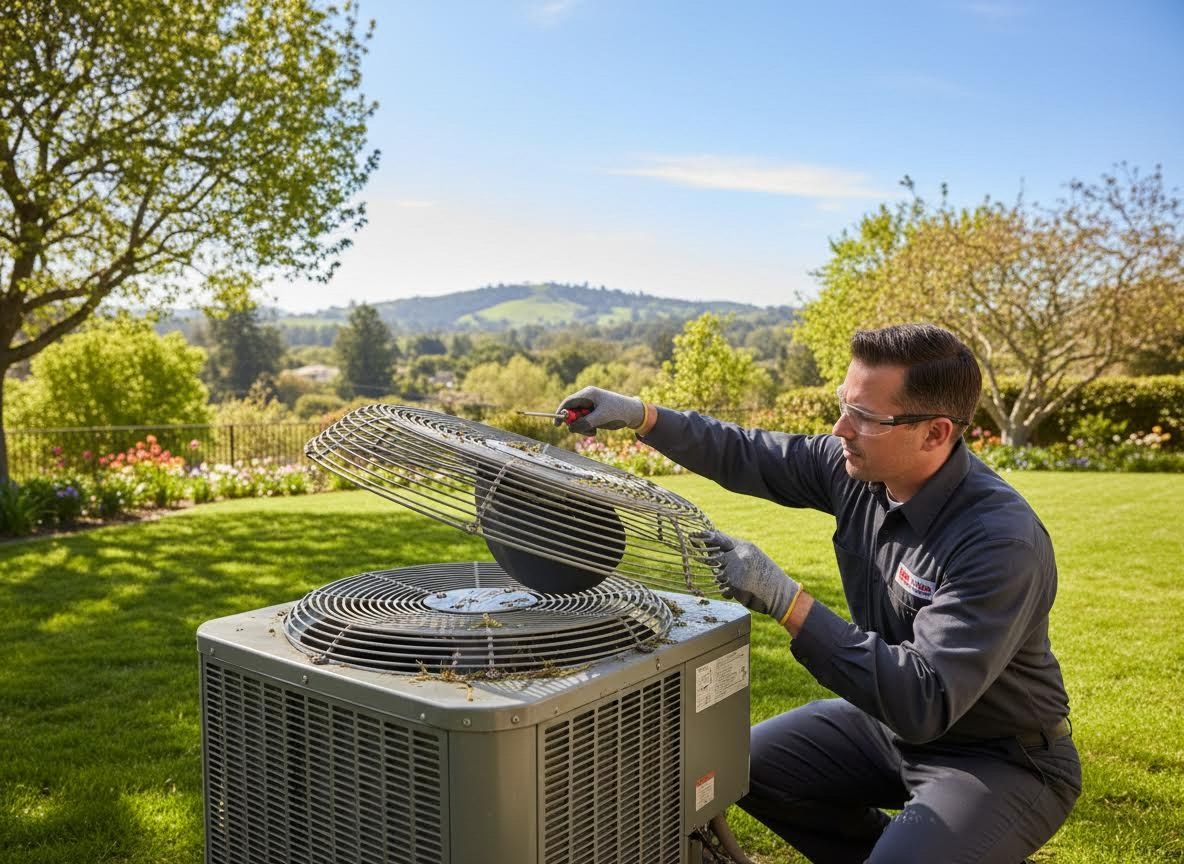
Remove the cage. Use a tool to take off the screws holding the fan grill or side panels. Carefully lift the fan unit out if needed, but do not pull or tug on the inner wires.
Wash the coils. Use a garden hose with a spray head to rinse the metal fins from the inside out. Use a soft stream of water, as high pressure can crush or bend the thin metal fins.
Fix bent fins. Look for spots where the fins are flat or crushed. Use a special tool called a fin comb to gently pull the metal back to its straight spot to fix air flow.
Level the pad. Check the stone or plastic pad under the unit to make sure it has not moved. A tilted unit can cause the oil in the part to settle wrong, which leads to early motor failure.
Dealing with Bay Area Grime
Damp air in towns like Daly City or San Francisco makes pollen stick to the coils. This creates a hard layer of dirt. If a hose does not wash off the muck, you may need a special coil cleaner. Do not use a pressure washer, as the force will break the soft parts. If you find big ice spots or oil leaks during your check, call for a pro to handle the HVAC tune-up checklist and repair.
How to Test Your Thermostat Before Summer
Switch between heating and cooling
Testing your controls is a vital part of a HVAC tune-up checklist for spring. Start by switching your system from heat to cool mode. This helps you check that both work well. Run the furnace for a few minutes to make sure it shuts off as planned. Then, turn on the AC and listen for odd noises or smells. A standard HVAC maintenance plan always includes these steps to find faults before summer hits. This simple test checks that your system is ready for the first Bay Area heatwave.
Check batteries and settings
Many smart thermostats rely on batteries that can fail after a year of use. Swap out old batteries now to prevent a sudden system shutdown in the middle of July. Look at your cooling schedule to make sure it matches your current needs. Bay Area weather often brings late heat followed by thick evening fog. Set your system to start cooling before the peak heat hits, but adjust for the natural cooling that the fog provides at night. Smart units can even learn your habits to save more cash. This keeps your home cozy while cutting down on high power bills.
Check for correct readings
A thermostat must react to small changes in room heat levels. Try lowering the setting by two degrees and listen for the system to kick on right away. If the air does not start flowing, your sensors might need an expert check. You should also check the reading on your screen against a separate tool. If the numbers do not match, your unit may need a new place on the wall or a fresh start. If your home feels too warm while the screen shows a low number, your device likely needs a tune-up. If these tests show problems, call an expert to check your wiring and system health.
Inspect Ductwork and Check Airflow
The air ducts in your home act like the lungs of your HVAC system. They carry cool air to every room and bring it back to be cooled again. During your spring HVAC checkup, you should take time to look at any ducts you can reach. If your ducts have leaks or blocks, your AC unit must work much harder to keep you cool. This puts more stress on the parts and leads to higher power bills. It can even cause the system to fail during a hot day in the East Bay. Taking a few minutes to check your airflow is a simple way to protect your home.
Spotting Leaks and Blockages
Start by walking through each room to check your vents. It is common for chairs, rugs, or heavy curtains to block these openings. This is a big issue in many San Francisco homes where space is small. When you block a vent, you trap air inside the pipes. This makes your fan motor work much harder than it should. You should also look for signs of trouble in your attic or basement. Look for loose tape or breaks at the joints. You can often find leaks by listening for a high-pitched whistling sound. You can also feel for cool air coming out of the duct with your hand.
Cleaning and Air Health
The inside of your ducts can gather a lot of dust and pet hair over time. This buildup creates drag that slows down the air. If you see thick dust on your vent covers, the inside of the ducts is likely much worse. You should also look for signs of pests. Mice and rats can nest in ducts and leave behind a mess that ruins your air health. The EPA says that early care helps you avoid big repair costs and keeps your system strong. For the best results, use a complete air conditioner service guide to ensure every part is ready for the heat.
When to Call an Expert
You can do a lot of the visual work on your own, but some tasks need a pro. If you find big leaks or blocks, you should call an expert. Most pros suggest that you get an expert duct cleaning every three years or so. This is mostly true if you have pets or live in a dusty area. Clean air ducts help the air move freely. This helps your home stay cool and keeps your power costs low. Keeping your ducts in good shape is a key part of your spring HVAC maintenance checklist.
When to Call a Professional: The Spring Tune-Up
While owners can handle basic tasks like filter changes, a full spring service needs a trained eye. A pro spring tune-up is a deep dive into the health of your cooling system. This visit is a paid service with a diagnostic fee. It is not like the free estimates we give for new equipment or unit swaps. This cost is worth it because a pro visit helps you improve air quality and extend the life of your system before the heat hits. Finding small flaws now saves you from a hot house later.
TaskDIYProfessionalAir filter replacementYes - monthly checkVerify size and typeOutdoor unit debris removalYes - clear 2ft aroundDeep coil cleaningThermostat testingYes - mode switch checkCalibration and wiringDuctwork visual checkYes - look for leaksSealing and cleaningRefrigerant levelsNo - requires toolsYes - pressure testElectrical connectionsNo - safety riskYes - full inspectionCompressor and motor testNo - specialized gearYes - performance checkSafety controls verificationNo - expert onlyYes - code compliance
Deep Checks of the Unit
An expert tech looks at the parts of your air unit that are hard to reach. They check the refrigerant levels to make sure your system can cool your home well. Low levels often mean there is a leak that needs a quick fix. The tech also checks all electric links. Loose wires or old parts can lead to a fire or a total break. By finding these small flaws early, you can prevent many issues from becoming costly problems later.
Our team also tests the compressor and fan motors. These parts do the hard work for your air unit. If they are under stress, your power bills will rise. We clean the evaporator and condenser coils as part of a complete HVAC tune-up guide for the year. Dirty coils make it hard for the unit to shed heat. This forces the system to run longer and work harder than it should. Clean coils help the unit stay cool and run for less money.
Safety and Work Tests
Safety is a top goal during a spring visit. Techs check all safety controls to make sure they work as they should. This includes looking at the drain lines for blocks that could cause water damage or mold. We also run a full system test. This check measures the air flow and how well the unit cools. It shows us if the unit meets the factory specs for cooling. A system that works well uses less power and lasts longer.
Standard Checklist Items
A full check follows a standard list that includes testing air flow and clearing the outdoor unit. We check the thermostat settings to make sure they match your needs. We also inspect the air filters to see if they are the right size and type. These steps are key to a healthy system. Keeping the unit clear of dirt and leaves allows it to breathe. This prevents the system from getting too hot during the long Bay Area summer days.
A standard spring check is more than a quick look at the unit. It is a full health scan that keeps your home cozy and safe all year. If you want to keep your system in top shape, you should book professional HVAC maintenance services every year. This step keeps your warranty valid and your cooling costs low all through the summer. A pro eye catches what a quick scan might miss.
Frequently Asked Questions
Why is spring HVAC maintenance important for Bay Area homeowners?
Spring in the local area brings a huge surge in pollen. This pollen can clog your unit and lower air quality. Routine care improves how your system works and protects your health. It also helps you save money on bills each month. Getting your unit ready now stops breaks when the first summer heat wave hits. According to the EPA, good upkeep helps your system last longer and work better.
How often should I replace my air filters during a Bay Area spring?
You should check your filter every month. If you have pets or allergies, change it monthly. A clean filter is key to good airflow and keeping dust out of the system. For standard homes, every 2-3 months is fine, but checking monthly keeps you ahead of pollen season.
What is included in a professional spring HVAC tune-up?
A pro spring tune-up is a deep scan. Techs check refrigerant levels, electrical lines, and motors. They clean the condenser coils, test thermostat settings, verify airflow, and check safety controls. This is a paid diagnostic service designed to prevent sudden breakdowns.
Can I clean the outdoor condenser unit myself?
Yes, you can clear leaves and weeds from around the unit (keep a 2ft zone clear) and gently rinse the coils with a garden hose. Always cut power first. Do not use a pressure washer or touch the wiring. Leave deep coil cleaning and electrical checks to a professional.
How does ductwork affect HVAC performance in the spring?
Leaky or blocked ducts force your system to work much harder. This raises your energy bills and can lead to mid-summer failure. Checking for loose joints and ensuring vent covers are not blocked by furniture helps maintain proper airflow.
What are the signs that my HVAC system needs immediate repair?
If your system makes loud or odd noises, blows warm air when set to cool, or turns on and off too quickly, call a technician. Other signs include sudden spikes in your energy bill or weak airflow from the vents.
Is a spring HVAC tune-up estimate free?
No, a spring maintenance tune-up is a paid service with a diagnostic fee. We only provide free estimates when you are replacing or adding new equipment, such as a new furnace, air conditioner, heat pump, or ductwork system.