
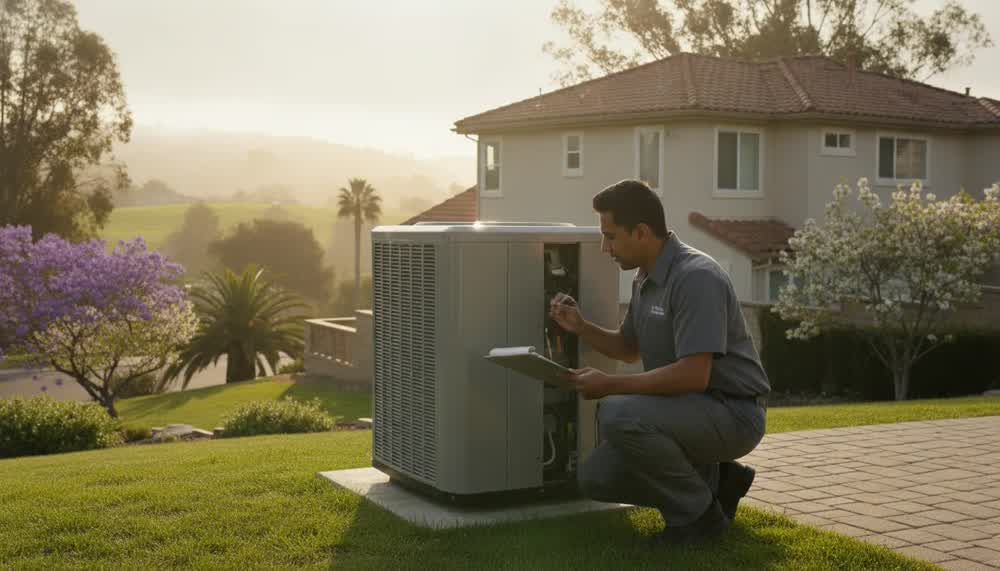
Bay Area weather can shift from cool, damp mornings to a sudden warm afternoon, and the right HVAC preparation changes with the season. A system that sat through months of light use may still have restricted airflow, a dirty filter, or a thermostat setting that wastes energy when demand rises.
An HVAC maintenance checklist Bay Area homeowners can use should cover spring cooling preparation, fall heating preparation, filter and airflow checks, plus outdoor-unit clearance, thermostat settings, and duct condition. It should also cover professional measurements of refrigerant and system performance. Handling simple upkeep at home and scheduling qualified service for technical checks helps protect comfort, efficiency, and equipment life.
That approach matters across San Francisco, San Mateo, Alameda, and Contra Costa counties, where local microclimates do not create one uniform heating or cooling season. Start by separating the tasks you can safely complete yourself from the inspections that require trained equipment and experience. Then work through how each seasonal check supports the other.
Schedule your Bay Area HVAC maintenance tune-up today
What a Seasonal HVAC Maintenance Checklist for Bay Area Homeowners Covers
Your HVAC system may cool your home during a late-season heat wave and provide heat on a chilly winter morning. In much of the Bay Area, that same equipment works across mild winters, foggy summers, and sharp temperature swings rather than following four predictable seasons. A useful checklist therefore prepares both sides of the system instead of waiting for the first uncomfortable day.
Why seasonal timing matters
Ortiz recommends spring cooling preparation and fall heating preparation because seasonal shifts expose different weaknesses. Before cooling demand rises, the system should be ready to move air efficiently. Before heating season, the heating components, airflow, and controls deserve their own review. Preventive maintenance helps heating and cooling equipment operate at peak performance and energy efficiency, according to the U.S. Environmental Protection Agency.
Local conditions make that timing more important. The Bay Area includes five distinct microclimates, so a home near the coast may have different equipment demands from one inland in Alameda or Contra Costa County. Ortiz brings 25 years of local experience to those differences.
What maintenance actually covers
A seasonal review is more than changing a filter. Homeowners can replace the filter on schedule, keep supply vents open, check thermostat settings, and clear leaves or debris from around the outdoor unit. Those steps support airflow and help protect the equipment.
A professional visit goes further. A technician inspects ducts, filters, the blower, and indoor coil for dirt or obstructions, then verifies airflow and refrigerant charge by measurement. The U.S. Department of Energy identifies these checks as part of proper heat pump maintenance. If duct leakage is found, it should be diagnosed and sealed professionally rather than covered with a temporary fix.
Who benefits most from a year-round plan
Dual-fuel, heat pump, and conventional heating-and-cooling systems all benefit from a documented seasonal plan, especially when one system serves the entire home. It is also valuable for older equipment, homes with uneven temperatures, and households that rely on consistent indoor comfort. Use this checklist for routine homeowner care, then schedule professional HVAC maintenance services when a task requires testing, disassembly, or refrigerant and ductwork expertise.
Spring HVAC Maintenance Checklist: Prepare for Bay Area Cooling
Spring is the right time to prepare your system before a late-season heat wave puts it under sustained demand. A few homeowner checks can improve comfort, while measured testing belongs to a qualified HVAC professional.
Start with the indoor filter
Inspect the return-side filter and replace or clean it according to the filter manufacturer's instructions. In a ducted system, this filter protects the air-handler motor and helps improve indoor air quality. A clogged filter also restricts the air moving through the system, so do not wait until cooling season is fully underway. If your home has unusual dust, pets, or wildfire smoke exposure, ask a professional whether your current filter type and replacement interval are appropriate. The U.S. Department of Energy identifies the filter as a critical part of HVAC system health.
Clear the outdoor condenser
Walk around the outdoor unit and remove leaves, weeds, branches, and other debris. Keep at least two feet of open clearance around the unit so air can move freely through the coil. Do not bend the fins, spray electrical components, or open panels to perform work that requires specialized training. Check again after spring gardening and before the first extended cooling period.
Review the thermostat and schedule
Replace weak thermostat batteries if applicable, confirm the system is set to cooling when needed, and review programmed temperature changes. If you use a heat pump, keep the fan setting on auto rather than continuous operation. The Department of Energy warns that continuous indoor fan operation can degrade heat pump performance. For better scheduling decisions, review our smart thermostat guide.
Confirm vents are open and unobstructed
Make sure supply vents and return grilles are open, visible, and not blocked by furniture, rugs, or storage. Uneven airflow can point to a larger duct, blower, or system-balancing issue. Avoid closing multiple vents as a workaround, since that can increase system strain.
Book a measured cooling tune-up
Schedule professional HVAC maintenance services before the first major cooling demand. During the visit, the technician should verify adequate airflow and correct refrigerant charge by measurement, not guesswork. These checks matter because the average household spends more than $2,200 each year on energy, with nearly half going to heating and cooling, according to ENERGY STAR. A measured tune-up can identify performance problems before they become a hot-weather breakdown.
Fall HVAC Maintenance Checklist: Get Ready for Bay Area Heating
Bay Area winters are generally mild, but the first cold nights can still expose a neglected furnace or heat pump. Fall is the right time to prepare the heating system before it has to run regularly, especially in homes that sit unused through much of the warmer season. A few practical checks can improve airflow and comfort, while professional service can identify problems that are not visible from the thermostat.
Furnace and heat pump preparation
Start by replacing the return-side filter with the correct size and rating for your system. Filters protect the air handler motor and help improve indoor air quality, so a clogged filter should not be left in place through heating season. Also clear leaves, storage items, and dust from around accessible equipment, registers, and return grilles.
Heat pumps need particular attention because they provide both heating and cooling. Professional heat pump service at least once a year supports efficient operation, according to the U.S. Department of Energy. During a tune-up, a technician can inspect the ducts, filters, blower, and indoor coil for dirt or obstructions. ENERGY STAR's HVAC maintenance checklist outlines the inspection points that matter.
Ductwork and airflow checks
Walk through the home and make sure supply registers and return grilles are open and unobstructed. Listen for unusual whistling, weak airflow, or rooms that remain noticeably colder than others. These symptoms can point to airflow restrictions or duct problems rather than a thermostat issue.
Duct leakage should be diagnosed and sealed by a professional. Leaky ducts can reduce system performance and waste conditioned air before it reaches the rooms that need it. A proper service visit should verify airflow by measurement, rather than relying only on how the system sounds.
Safety checks before heating season
If your home uses a gas furnace or another combustion appliance, test carbon monoxide alarms and replace batteries according to the manufacturer's instructions. Keep alarms near sleeping areas, and never ignore a detector alert, headache, dizziness, or unusual exhaust odor. Review our carbon monoxide safety guide for additional home-protection steps.
Finish the checklist by scheduling a fall heating tune-up. Ask the technician to inspect the system, confirm safe operation, and address airflow or duct concerns before colder weather arrives. Routine preventive maintenance helps heating and cooling equipment operate at peak performance and efficiency.
Wildfire Season, Air Quality, and Your Bay Area HVAC
Why wildfire smoke matters for HVAC systems
During Bay Area wildfire season, smoke can enter through open doors, leaks around the building envelope, and poorly sealed ductwork. Fine particles can also collect on return grilles and filters, restricting airflow as the system continues running. A filter installed on the return side of a ducted HVAC air handler helps protect the motor while improving indoor air quality, according to the U.S. Department of Energy Building Science Education and Solutions Center.
Choosing a higher-MERV filter
A higher-MERV filter can capture more airborne particles, but the highest available rating is not automatically the right choice for every system. A filter that is too restrictive may reduce airflow, increase operating strain, or make comfort uneven. Check the equipment manufacturer's approved range and confirm that the filter fits tightly without bypass gaps. During a smoke event, inspect the filter more often than you would during ordinary operation and replace it when it is visibly loaded or airflow declines.
Sealed ducts and whole-home air cleaning
Filtration works best when air travels through the filter instead of around it. Sealing accessible duct connections and return-side gaps helps reduce the amount of smoky, unconditioned air pulled into the system. A professional can also evaluate blower airflow and recommend a whole-home solution. Such as upgraded media filtration or air cleaning equipment, based on your HVAC design and household needs. Explore Ortiz's indoor air quality solutions for options beyond a basic filter.
For a room-by-room response during an active smoke event, keep windows and doors closed, limit unnecessary outdoor-air exchange, and follow local air-quality guidance. Ortiz's guide to wildfire smoke protection can help you plan before conditions deteriorate. Add filter condition, return-air sealing, and indoor air quality performance to your seasonal HVAC review rather than treating smoke preparation as a one-time emergency fix.
DIY Maintenance vs. What a Professional Should Handle
A homeowner can handle several simple upkeep tasks, but maintenance has a clear limit. Filters, vents, the thermostat, and the outdoor cabinet are accessible. Refrigerant, electrical components, airflow measurements, and duct performance require trained equipment and technical judgment. Use this comparison to keep routine care safe while knowing when to schedule professional maintenance services.
Tasks You Can Safely Do Yourself
Replace or clean the air filter according to the filter manufacturer's instructions and the needs of your household. In a ducted system, the return-side filter helps protect the air handler motor and supports indoor air quality. You can also remove leaves and debris from around the outdoor unit, keeping the area clear without opening the cabinet. Wipe dust from supply vents and the thermostat, and check that furniture or curtains are not blocking airflow.
Replace or clean the air filter. DIY: Yes. When to call a pro: Call if airflow remains weak or the filter becomes dirty unusually quickly.
Clear leaves and debris around the outdoor unit. DIY: Yes. When to call a pro: Call if the cabinet, coil, or fan appears damaged. Do not remove panels.
Clean vents and check thermostat settings. DIY: Yes. When to call a pro: Call if rooms remain uncomfortable or the system cycles abnormally.
Verify refrigerant charge and airflow. DIY: No. When to call a pro: A technician should verify both by measurement during service.
Inspect electrical parts, blower, coils, and ducts. DIY: No. When to call a pro: Schedule professional maintenance when components need inspection or testing.
Diagnose and seal duct leakage. DIY: No. When to call a pro: Call when ducts leak, are damaged, or rooms receive inconsistent airflow.
Where Professional Maintenance Becomes Essential
A professional can inspect the ducts, filters, blower, and indoor coils for dirt or obstructions that reduce performance. The technician can also measure airflow and refrigerant charge instead of judging system operation by sound or temperature alone. Duct leakage should be diagnosed and sealed professionally because inaccessible connections and pressure losses can undermine comfort throughout the home.
For heat pumps, the U.S. Department of Energy recommends professional service at least once a year. If a diagnostic visit is needed, a service fee applies. Free estimates are reserved for replacing or adding new equipment, not inspections, diagnostics, or repair estimates. If you are unsure what your system needs, contact us to discuss the right service visit.
Get a professional Bay Area HVAC maintenance service
How Often Should You Service Your HVAC in the Bay Area?
For most Bay Area homes, schedule professional HVAC maintenance twice a year: once in spring before the cooling season and again in fall before heating demand increases. This rhythm fits the region's seasonal shifts while giving a technician two opportunities to catch developing problems before they become an unexpected breakdown.
The biannual rhythm for Bay Area systems
Spring service should focus on cooling readiness, including airflow, the outdoor unit, and the condition of the air filter. Fall service should prepare the furnace or heat pump for heating, with attention to safe operation, ducts, and indoor components. A heat pump should receive professional service at least once a year, according to the U.S. Department of Energy, so the twice-yearly schedule provides a practical minimum for systems that handle both heating and cooling. Homes with heavy use, pets, construction dust, or persistent indoor-air-quality concerns may need more frequent filter checks between visits.
What a professional tune-up includes
A meaningful tune-up is more than a quick visual inspection. The technician should inspect ducts, filters, the blower, and indoor coil for dirt or obstructions. For heat pumps and air conditioners, proper refrigerant charge and airflow should be verified by measurement rather than assumed. Duct leakage may also need professional diagnosis and sealing because losses in the duct system can reduce efficiency and comfort. Ortiz has made maintenance a core part of its work, representing 20% of the business, with experience across the Bay Area's five distinct microclimates.
How maintenance can pay for itself
Regular tune-ups help equipment operate efficiently and can support a longer service life. The U.S. Environmental Protection Agency notes that the average household spends more than $2,200 each year on energy, with nearly half going to heating and cooling. Keeping a system clean, properly adjusted, and moving air as designed gives it a better chance to use that energy effectively. For a seasonal plan tailored to your equipment and neighborhood conditions, explore Ortiz's professional HVAC maintenance services.
Schedule your seasonal Bay Area HVAC tune-up
Frequently Asked Questions
What should be included in HVAC maintenance?
A complete visit should cover the filter, thermostat, electrical components, airflow, ductwork, blower, indoor coil, and outdoor equipment. A professional should measure airflow and refrigerant charge rather than relying only on visual checks. The U.S. Department of Energy also recommends inspecting ducts, filters, blowers, and coils for dirt or obstructions that can reduce performance. ENERGY STAR's maintenance checklist lays out these inspection points.
Is seasonal HVAC maintenance necessary in the Bay Area?
Yes. Spring is a practical time to prepare cooling equipment, while fall is the right time to prepare heating equipment before demand increases. Bay Area homes experience different conditions across several microclimates, so a system near the coast may have different operating concerns than one inland. Seasonal checks help identify restricted airflow, worn components, or comfort issues before the first major temperature shift.
How do Bay Area wildfire seasons affect my HVAC system?
Smoke can increase the importance of a clean, properly fitted filter and good duct sealing. Check the filter more frequently when outdoor air is smoky, and ask a qualified technician whether your equipment can support an appropriate filtration or indoor air quality upgrade. Do not block return grilles or place restrictive filters in the system without confirming compatibility, because inadequate airflow can strain the equipment.
What are the benefits of biannual HVAC maintenance?
A spring and fall schedule gives both cooling and heating equipment attention before its primary season. It can improve operating efficiency, support more consistent comfort, and help extend equipment life. The checklist is not a guarantee against breakdowns, but finding developing problems earlier may reduce the chance of an emergency failure during a heat wave or cold spell.
How much does a routine HVAC inspection cost?
The price depends on the system type, the scope of the visit, and whether the technician finds a repair issue. Diagnostic and service-call fees apply when investigating a repair problem. Free estimates are reserved for replacing or adding new equipment, such as a furnace, air conditioner, heat pump, or ductwork, not for inspections or diagnostics.
Schedule Your Seasonal HVAC Tune-Up
A professional spring or fall tune-up can help you prepare your heating and cooling system for Bay Area weather while identifying maintenance needs specific to your home. Review your checklist, then schedule a professional HVAC tune-up with Ortiz Heating and Air Conditioning. The team can help you decide which seasonal steps deserve professional attention and answer questions about your system.