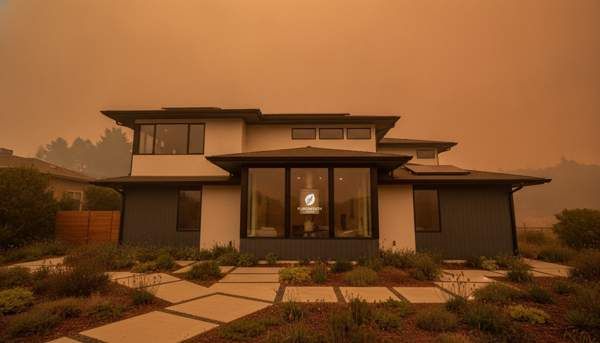
Wildfire season brings more than just hazy skies to the San Francisco Bay Area. Tiny, harmful particles from distant flames travel quickly and creep into local neighborhoods, turning clean houses into traps for toxic soot.
Protecting your wildfire smoke indoor air quality requires a mix of sealing entry points, running dedicated filtration systems, and managing your home HVAC unit. Wildfire smoke consists of fine particulate matter, known as PM2.5, which easily bypasses standard home construction and standard air filters to enter your breathing space. To keep your air clean during active fires, you must close all windows and doors. Set your air conditioner to recirculate mode, and use portable HEPA air purifiers in high-traffic rooms. For long-term protection, upgrading to a high-efficiency MERV 13 filter or installing a professional whole-house air purifier ensures your heating and cooling system constantly scrubs these dangerous microscopic pollutants from your indoor environment.
Call Ortiz Heating and Air Conditioning today at 925-370-4323 to schedule an indoor air quality assessment and protect your home before wildfire smoke arrives.
Managing your breathing environment during a major smoke event can feel overwhelming when the air outside turns orange. Knowing the risks and taking proactive steps to clean your home air is the best way to keep your family safe. In this guide, you will learn exactly how wildfire smoke affects your indoor environment and what steps you can take to protect your home.
Wildfire smoke enters your home through infiltration, a process where outdoor air seeps through tiny cracks around windows, doors, and walls. The fine PM2.5 particles in wildfire smoke bypass standard furnace filters and can build up to dangerous levels inside your home within hours of a smoke event. A combination of sealing, upgraded filtration, and continuous fan operation is your best defense.
How Does Wildfire Smoke Affect Your Home's Indoor Air Quality?
Wildfire smoke is a major threat to your home's indoor air quality. During a fire event, tiny soot particles and gases pollute the outdoor air. Most people think that staying inside with closed windows keeps them safe. But outdoor pollution does not stay outside. It leaks into your house through small cracks in walls, windows, and doors. This process is called infiltration, and it can quickly degrade the air you breathe inside your home.
The Danger of PM2.5 Particles
The main threat in wildfire smoke comes from fine particulate matter known as PM2.5. These microscopic particles are less than 2.5 microns in wide. For comparison, they are about thirty times smaller than a human hair. Because they are so small, these particles can bypass standard fiberglass furnace filters easily. The U.S. Environmental Protection Agency warns that these fine particles can lodge deep in your lungs and even enter your bloodstream.
Health Risks and Bay Area Smoke Season
Breathing PM2.5 particles causes serious health problems. It can lead to burning eyes, runny noses, and bronchitis. For people with asthma or heart disease, the risks are much higher. In the San Francisco Bay Area, wildfire season now runs from July through October. During these months, heavy smoke can linger in our valleys for days. High levels of indoor smoke are linked to more hospital visits for lung and heart issues.
How Smoke Infiltrates Closed Homes
Even if you keep your home closed, smoke finds a way in. Natural ventilation moves air through drafty window frames, doors, and vents. Standard home systems often pull outdoor air inside without cleaning it first. To protect your family, you need a tight building envelope and high-efficiency filtration. Upgrading to a MERV 13 filter or using a portable air purifier can help capture these dangerous smoke particles before you breathe them.
Creating a dedicated clean room in your home is the single most effective step you can take during a wildfire smoke event. Choose a bedroom or small living area with few windows, seal all gaps with weatherstripping, and run a properly sized HEPA air purifier continuously. Eliminate indoor particle sources like gas stoves, candles, and vacuuming until the smoke clears.
How to Seal Your Home and Create a Clean Room During Wildfire Season
When wildfire smoke blankets the San Francisco Bay Area, protecting your health means securing your indoor air quality. During active fires, the concentration of fine particulate matter, or PM2.5, can spike to dangerous levels outdoors. To prevent this hazardous soot from seeping inside, homeowners must take active steps to seal the house and establish a safe, indoor sanctuary. Creating a dedicated clean room is an effective way to lower your exposure to wildfire smoke indoor air quality hazards while staying comfortable at home.
Sealing Leaks and Bay Area Housing Challenges
Many homes in the San Francisco Peninsula and East Bay areas were built several decades ago. These older properties often feature drafty wood frames, single-pane windows, and unsealed utility penetrations that allow outdoor pollutants to enter freely. To improve your indoor air quality, you must minimize this passive infiltration. Start by applying fresh weatherstripping to all exterior door and window frames to close visible gaps. For older windows, sealing drafts with temporary caulking or weather-seal tape during smoke events can prevent soot from drifting into your living spaces.="800" height="450" loading="lazy" />
How to Set Up a Designated Clean Room
According to guidelines from the U.S. Environmental Protection Agency, a clean room is a specific space set up to keep smoke and particle levels as low as possible. You should choose a bedroom or small living area with few windows and doors to make it easier to isolate. Keep all windows and doors in this room closed tight at all times. Place a portable air cleaner with a true HEPA filter in the room and ensure the unit is the right size for the square footage of the space to keep the air constantly clean.
Eliminate Indoor Particle Generators
Once your clean room is sealed, you must prevent new pollutants from building up inside your home. Everyday household chores can release heavy bursts of indoor particles that degrade your air as much as outdoor smoke. Avoid cooking on gas stoves, frying foods, or using wood fireplaces during high-smoke events. You should also avoid vacuuming unless your vacuum has a HEPA filter, as standard vacuums simply kick settled dust and soot back into the air. Do not burn candles, use incense, or smoke tobacco indoors while your home is closed up.
Emergency Prep and Airflow Control
When smoke levels peak, run your central heating or cooling system on the recirculate setting to prevent it from pulling smoky air from the outside. Ensure your system uses a high-efficiency filter, such as a MERV 13 model, which can capture fine ash and soot particles. Always stay alert to local emergency broadcasts and keep at least a five-day supply of food, water, and essential medicines on hand. If your home becomes too hot or if you cannot keep the smoke out, be prepared to seek clean air shelters in your local county. For ongoing protection, consider whole home air purifier installation as a permanent solution.
For wildfire smoke protection, you need a filter rated MERV 13 or higher. MERV 13 filters capture over 90% of particles between 1 and 3 microns, including the fine PM2.5 particles found in wildfire smoke. Standard MERV 8 filters catch less than 20% of smoke particles. Always verify that your HVAC system can handle the increased airflow resistance of a denser filter before upgrading.
What MERV Rating Do You Need to Filter Wildfire Smoke?
During wildfire events, keeping your windows and doors closed is only the first step. To truly protect your family, you must optimize your home's mechanical filtration. Standard heating and cooling systems rely on filters to remove airborne particles, but not all filters are equal. Upgrading your HVAC filter is one of the most effective ways to reduce wildfire smoke indoor air quality hazards throughout your entire home. Understanding Minimum Efficiency Reporting Value (MERV) ratings will help you choose the best filter to stop microscopic soot and ash.
How MERV Ratings Measure Particle Filtration
Air filters are rated on a MERV scale from 1 to 16, which measures how well a filter traps particles of different sizes. A higher MERV rating indicates a denser filter material capable of capturing smaller contaminants. Standard 1-inch fiberglass filters, often rated MERV 1 to 4, only catch large debris like lint and carpet fibers. To capture the fine PM2.5 particles found in wildfire smoke, you need high-efficiency options. According to the U.S. Environmental Protection Agency, filters with a MERV rating of 13 or higher are highly efficient at trapping fine wildfire ash, soot, and smoke particles.
Comparing MERV 8, 11, and 13 Filters
Each rating step offers a different level of protection for your lungs and household. A MERV 8 filter is the minimum recommended for basic residential dust and pollen, but it catches less than 20% of fine smoke particles. A MERV 11 filter provides better filtration, capturing about 65% of mid-sized particles, but it still allows fine smoke soot to pass through. A MERV 13 filter is the residential gold standard for smoke events. Capturing over 90% of particles between 1 and 3 microns and more than 50% of the smallest 0.3-micron particles. For homes that need ultimate protection, local experts recommend upgrading to a whole-home system with advanced purification, which you can learn about in our complete indoor air quality guide.
The Problem with HEPA and Dense Filters in Standard Systems
It is tempting to look for the highest possible filtration, such as a True HEPA filter, but standard residential HVAC systems cannot handle them. HEPA filters are extremely dense and require specialized, high-pressure blowers to push air through. If you slide a thick, restrictive filter into a standard 1-inch slot, you will severely restrict system airflow. This restriction forces your blower motor to work harder, which raises your energy bills and can cause the system to overheat or fail. To safely use a high-efficiency filter, you should consult a professional to see if your system can handle the pressure or to schedule routine HVAC maintenance to ensure your system operates safely.
Changing Filters During Wildfire Season
Under normal conditions, a standard pleated air filter can last up to three months. However, active wildfire smoke changes the rules completely. The heavy volume of soot and ash in smoky air will clog a high-efficiency filter very quickly. A clogged filter restricts system airflow, which lowers your heating or cooling efficiency and strains the equipment. During active wildfire season, you should check your air filter every two weeks and plan to change it monthly. Or even sooner if you notice visible gray or black buildup on the filter media. Keeping a fresh filter in place ensures continuous, safe airflow and keeps your indoor air clean.
Whole-home air purification systems offer superior coverage compared to portable units, cleaning the air in every room simultaneously through your existing ductwork. While portable HEPA purifiers cost less upfront and work well for single rooms. A professionally installed whole-home system with MERV 13 or higher filtration provides comprehensive protection throughout your entire house.
Portable Air Cleaners vs. Whole-Home Air Purification: Which Is Right for You?
When wildfire smoke threatens your indoor air quality, choosing the right filtration system is the first step toward a safer home. You can combat airborne particulate matter (PM2.5) with either individual portable air cleaners or a whole-home purification system. Understanding how these systems differ in terms of cost, coverage, and performance is essential before you make a decision.
Coverage and System Cost
Portable air cleaners are individual units designed to clean the air in a single room. While they are cheap upfront, buying several units to cover your entire house can quickly become expensive. On the other hand, a whole-home air purifier integrates directly into your existing HVAC ductwork. According to the ldfire-smoke-course/strategies-reduce-exposure-indoors" rel="nofollow" target="_blank">U.S. Environmental Protection Agency (EPA), upgrading to a high-efficiency HVAC filter can decrease indoor PM2.5 levels by about 50 percent when the system fan runs continuously. While a whole-home system costs more to install, it protects every room in your house simultaneously.
Maintenance and Smoke Protection
Both options require regular filter changes to maintain optimal wildfire smoke indoor air quality. Portable units often use high-efficiency particulate air (HEPA) filters, which must be swapped every few months during heavy smoke seasons. Whole-home systems require you to switch your thermostat fan setting from auto to on so that the air is continuously filtered. If you want to learn more about setting up these advanced central systems, read our guide to whole-home air purifier installation for a full breakdown of the process.
Comparing Your Clean Air Options
Comparing the two approaches helps you find the best fit for your budget and home size. Below is a direct breakdown of how portable units and whole-home systems compare across key categories.
Feature.Portable Air Cleaners.Whole-Home Air Purification.Upfront Cost.Low ($100 - $300 per unit).Higher (requires professional installation).Room Coverage.Single room only.Entire house through ductwork.Filter Life.3 to 6 months.6 to 12 months (varies by filter type).Smoke Filtration.High (uses HEPA filters).Excellent (uses MERV 13+ or HEPA).Installation.Plugs into any standard outlet.Requires HVAC professional.
During a wildfire event, set your HVAC system to recirculate mode, close all fresh air intakes, and switch the fan from AUTO to ON for continuous filtration. Change your air filter monthly or more frequently if you see visible buildup. A MERV 13 filter running continuously can cut indoor PM2.5 levels by approximately 50 percent.
HVAC Settings During Wildfire Season: What to Do and What to Avoid
When wildfire smoke darkens the skies, keeping your home safe is your main goal. Wildfires release fine dust and ash that hurt your lungs. Your home HVAC system can help clean your indoor air, but only if you use the right settings.
Protect Your Indoor Space with the Right Settings
If you leave your system on its default settings during a smoke event, you might pull dirty air inside. You must adjust your thermostat to keep the smoke out and clean the air you breathe. Follow this step-by-step guide to stay safe.
Switch your HVAC to recirculate mode: Set your system to recirculate the air already inside. This stops your unit from pulling in smoky air from the outside. If you cannot find a recirculate button on your thermostat, look for a fresh air vent lever on your indoor unit and close it.
Close all windows and doors: Make sure your home is fully sealed. Even small gaps can let fine ash inside. If you have window air conditioning units, turn them off or seal their edges to stop leaks.
Set your thermostat fan to ON: Change your fan setting from AUTO to ON. This keeps the fan running all the time. Continuous fan operation forces your indoor air through the system filter without stopping, which helps lower the level of fine dust in your rooms.
Check and replace your air filter: Wildfire dust clogs filters very fast. Check your filter every few days during a smoke event. A clogged filter slows down air flow and can hurt your fan motor. Use a MERV 13 filter if your system supports it.
Use a portable air cleaner: Add a portable HEPA air purifier to the room where you spend the most time, such as your bedroom. This adds an extra layer of protection. According to the U.S. Environmental Protection Agency (EPA), using a portable air cleaner alongside your HVAC system is the most effective way to clean indoor air during a major smoke event.>
Why Recirculation Matters for Bay Area Homes
Most home HVAC systems do not bring in fresh air from the outside, but some newer units do. During a wildfire, any fresh air intake must be shut. Keeping the air moving through your home filter is the best way to trap small dust particles. If your system runs on AUTO, the filter only works when the system is actively heating or cooling, which leaves air dirty for long periods. For more details on how to prepare your home for smoke season, see our spring HVAC maintenance checklist for Bay Area homeowners.
Professional indoor air quality solutions, including whole-home air purifiers, UV germicidal lights, and humidity control systems, provide year-round protection beyond what portable units can achieve. An IAQ assessment identifies the specific pollutants in your home and lets your HVAC technician design a targeted solution that integrates with your existing system.
When Should You Invest in Professional Indoor Air Quality Solutions?
Wildfire smoke can ruin your indoor air quality. During a smoke event, fine particles seep into your home through small gaps and vents. To protect your family, you need a plan that keeps polluted air out and clean air in. The US EPA reports that keeping doors closed and running a high-efficiency filter can cut indoor smoke particles by up to half.
Custom IAQ Assessments
Every home in the San Francisco Bay Area is different. An indoor air quality assessment finds the exact pollutants in your living space. Ortiz experts test your rooms for fine dust, pollen, mold, and wildfire soot. This diagnostic process is crucial because older homes often leak more than newer builds. Once we find the weak spots in your house, we can design a system to seal out dangerous air. Contact Ortiz today to schedule your comprehensive IAQ assessment and breathe cleaner air year-round.
Whole-Home Air Purifiers
A portable air filter can only clean one room at a time. A whole-home system connects directly to your existing heating and cooling equipment. We install media filters and electronic air cleaners to scrub your air. These devices use thick, pleated material to trap very small smoke particles. Professional installation is key to ensure your system has the right size and remains compatible with your current HVAC unit. Learn more about your options in our guide to whole-house air purifier systems.
UV Lights and Humidity Controls
Smoke is not the only threat to your home. High humidity can cause mold, while dry air makes breathing hard. We install whole-home humidifiers and dehumidifiers to keep moisture at a safe level. We also add UV germicidal lights inside your ducts. These lights destroy bacteria, viruses, and mold spores as they pass through the system. Combining these tools gives you clean air all year long. Read our complete indoor air quality guide for a deeper look at all available options.
Why Trust Ortiz Heating and Air Conditioning
We have 25 years of local HVAC experience in the Bay Area. Our team knows how to protect your home from seasonal heat and wildfire smoke indoor air quality risks. We help you choose the best tools for your budget and house layout. Explore our professional indoor air quality services to see how we keep your home safe and healthy.
Frequently Asked Questions
How does wildfire smoke get inside when doors and windows are closed?
Wildfire smoke contains fine particles that easily seep inside through small cracks around windows, doors, and walls. According to the EPA, outdoor air leaks into homes naturally through a process called infiltration. Using a high-grade MERV 13 filter in your HVAC system helps capture these tiny soot and ash particles before they can build up in your living space.
Will a standard home HVAC filter protect against wildfire smoke?
No, standard filters with low MERV ratings only trap larger dust particles and protect your system equipment. To capture fine wildfire smoke particles, the EPA recommends upgrading to a filter rated MERV 13 or higher. These dense filters trap about 90 percent of fine particles down to 1 micron, which helps keep your indoor air clean during smoky days.
Should I run my kitchen or bathroom exhaust fan when outdoor air is smoky?
No, you should limit the use of local exhaust fans during active wildfire smoke events. When an exhaust fan vents air out of your home, it creates negative pressure that pulls smoky outdoor air inside through cracks and gaps. Keep fans off unless absolutely necessary.
How often should I change my air filter during wildfire season?
During active wildfire season, check your air filter every two weeks and replace it monthly. Or sooner if you see visible gray or black buildup on the filter media. A clogged filter restricts airflow and forces your HVAC system to work harder, which can lead to higher energy bills and equipment strain.
Can I use a window air conditioner during a wildfire smoke event?
Window air conditioning units can pull smoky outdoor air directly into your home. If you must use one, seal the edges of the unit with weatherstripping or tape and set the fan to recirculate if your model supports it. For the best protection, use your central HVAC system on recirculate mode instead.
Is a portable air purifier enough to protect my whole home?
Portable air purifiers are effective for single rooms but cannot clean the air throughout an entire house. To protect your whole home, you need either multiple portable units in every room or a professionally installed whole-home air purification system that connects to your existing ductwork. A whole-home solution provides consistent filtration across every room simultaneously.
Ready to Protect Your Bay Area Home from Wildfire Smoke?
Do not wait until the sky turns orange to think about your indoor air quality. Ortiz Heating and Air Conditioning has been helping Bay Area homeowners breathe cleaner air for 25 years. Call us today at 925-370-4323 to schedule your indoor air quality assessment and ensure your home is ready for wildfire season.