
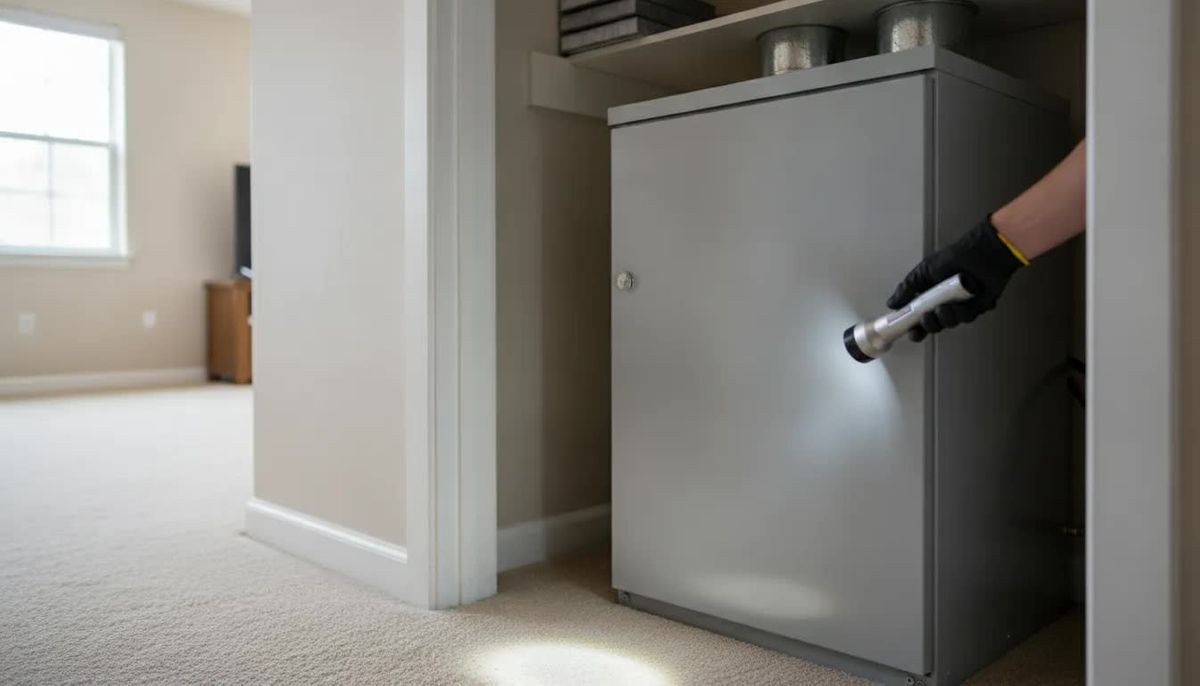
A furnace that starts and stops, blows cool air, or leaves some rooms cold is giving you useful information, even before a technician arrives. In San Mateo's mild but damp Peninsula climate, older furnaces tucked into closets, garages, or crawl spaces can develop airflow, ignition, control, or corrosion-related problems.
For furnace repair in San Mateo, begin with safe checks outside the cabinet. Confirm the thermostat mode and batteries, and inspect a reachable filter. Make sure supply and return vents are open. Look at the breaker once, and note whether other gas appliances work. If the problem continues, a paid diagnostic visit can identify the cause and produce a repair estimate before any work starts.
Do not open the furnace cabinet or handle gas and electrical components. A technician can explain whether the issue calls for a focused repair, further testing, or replacement planning. First, consider which changes in sound, airflow, cycling, or temperature deserve prompt attention.
Warning signs that call for furnace repair in San Mateo
Start with what you can notice without opening the furnace cabinet. No heat, lukewarm air, weak airflow, or rooms that never reach the thermostat setting all deserve attention. A filter that is dirty, a blocked vent, or a thermostat issue can affect comfort. If the basic checks do not explain the problem, furnace repair in San Mateo can help identify the cause before it worsens.
Short cycling is another important clue. The furnace starts, runs briefly, and shuts off before the home is comfortable. Restricted airflow or a stuck limit switch can trigger this pattern. The system may also be poorly matched to the house, especially when it heats quickly and shuts down repeatedly. An oversized or malfunctioning furnace can waste cycles without delivering steady comfort.
Uneven rooms can point to airflow or balancing problems, but they can also indicate equipment that no longer matches the home. Notice whether one area stays cold while another becomes warm. Weak airflow from several registers is more concerning than one closed or obstructed vent. Ortiz's HVAC repair services include inspection and an explanation before repair work.
Pay attention to new sounds, too. Banging, squealing, scraping, or repeated clicking can signal a problem with ignition, the blower, or another internal component. You may also see a yellow or lazy flame through a sight glass instead of a clean blue flame. Soot around the furnace, a burning smell, or an exhaust-like odor is not a wait-and-see symptom.
Turn the system off and seek professional help if you see soot, an abnormal flame, or smell exhaust. If a carbon monoxide alarm sounds, or anyone develops headache, fatigue, nausea, dizziness, or shortness of breath when the heat runs, leave the home and call for help. Carbon monoxide has no smell, so an odor is not a reliable safety test.
San Mateo winters are mild, not warm enough to ignore a failing furnace overnight. NOAA 1991-2020 climate normals for San Francisco International Airport list a January average high of 58.0 F and a low of 44.5 F. December averages 58.2 F and 44.6 F, with 4.14 inches of normal precipitation, the wettest month in that series. These NOAA climate normals describe the nearby airport, not every San Mateo home, but reliable heat still matters after sunset.
Safe checks before you book a diagnostic
Before arranging furnace repair in San Mateo, stay outside the furnace cabinet. These checks can identify a simple interruption without exposing you to moving parts, electrical components, or combustion hazards.
Check the thermostat. Confirm it is set to Heat, not Cool or Off, and set the temperature above the current room temperature. If the thermostat uses batteries, replace them with fresh batteries.
Inspect only a reachable filter. If you can access the filter without opening the blower door or removing a panel, check whether it is visibly dirty. Replace it according to the equipment manual and the University of Missouri heating maintenance guidance. A dirty filter can restrict airflow.
Clear the air paths. Make sure supply vents are not covered by rugs, boxes, or furniture. Check that return grilles are also open and unobstructed so the system can move air through the house.
Look at the breaker once. If the furnace breaker appears tripped, you can reset it one time. Do not keep resetting it if it trips again. Repeated resets can point to an electrical or equipment problem that needs professional diagnosis.
Check another gas appliance. Notice whether a gas stove or water heater still lights normally, if your home has one. If the furnace and those appliances are all without gas, the issue may involve the gas supply rather than a failed furnace control board.
Stop immediately if you smell gas, a carbon monoxide alarm sounds, anyone feels sick when the heat runs, you see soot, or a flame appears yellow instead of blue. Leave the area and seek help as appropriate. The CPSC carbon monoxide guidance explains that carbon monoxide is colorless and odorless and recommends professional heating-system inspection and service.
What the paid diagnostic visit covers
A furnace repair visit in San Mateo begins with a paid diagnostic. It is not a no-charge estimate. Ortiz's technician inspects the system, explains what is causing the problem, and provides a repair estimate before any work starts. You can review the recommended solution and its cost before authorizing the job. The diagnostic fee covers the visit itself.
The inspection should look beyond the symptom. Depending on the furnace and the issue, the technician may check combustion and the flame, airflow through the system, electrical components, the thermostat and controls, and the flue. A high-efficiency furnace also needs attention to its condensate drain and related components. These checks help separate a dirty sensor, ignition problem, airflow restriction, or control failure from a more serious safety concern.
Ortiz's HVAC service call process includes explaining the findings and estimate before repair. If you want more background on the visit itself, read how an HVAC service call works. You can ask what failed, what the repair is expected to address, and whether the proposed work requires any permit review in San Mateo.
Ortiz lists office hours as weekdays from 8:00 AM to 5:00 PM, with weekends closed. A routine diagnostic should be arranged during those hours. A heating emergency is different. The live heating page says emergency HVAC heating service is available 24 hours a day. Do not treat no heat, soot, or a combustion concern as something that must wait for the next weekday.
A repair estimate is also different from a quote for new equipment. If the furnace is beyond practical repair or replacement is the better long-term decision, ask about the reasons, including the system's condition and repeated failures. For equipment replacement or a new installation, use Ortiz's request-a-quote page for new equipment. That is a separate planning conversation from paying to diagnose an existing furnace.
Common furnace repairs in Peninsula homes
A technician starts by matching the symptom to the furnace's safety and operating controls. A furnace that will not start, blows cool air, cycles off too soon, or makes unusual sounds may have a straightforward component failure, but the cabinet should not be opened for a homeowner diagnosis. The repair possibilities commonly include:
Flame sensor or igniter: A dirty flame sensor can keep a gas furnace from proving that the burner lit. A failed hot-surface igniter can prevent ignition altogether.
Limit switch and airflow: A clogged filter or closed supply and return vents can reduce airflow and make the limit switch shut the furnace down to control temperature. Repeated short cycling needs a technician's assessment rather than repeated resets.
Blower motor or capacitor: If the blower motor or its capacitor fails, the furnace may produce heat without moving enough warm air through the home.
Inducer motor: A failing inducer can affect the furnace's startup sequence and venting safety checks.
Condensate drain: High-efficiency furnaces produce condensate. A blocked drain can trigger a safety shutdown or contribute to water around the equipment.
Thermostat or control board: Faulty thermostat wiring, a failing thermostat, or a control-board problem can make the furnace respond incorrectly or not respond at all.
Peninsula conditions can add context. Furnaces installed in closets, garages, or crawl spaces are exposed to their surrounding environment, and damp marine air can contribute to rust on cabinets and flue joints. A technician may check those areas while investigating common gas furnace problems.
A suspected cracked heat exchanger is different from a dirty sensor or blocked filter. It is a stop-use safety issue, not a cleaning task. Turn the furnace off and have the condition evaluated. If the technician finds a combustion-air or filtration concern, an indoor air quality service may be relevant to that specific diagnosis, rather than a product recommendation.
Repair the furnace or plan a replacement
A diagnosis should make the next choice clearer, not force you into a replacement. Repair is reasonable when one identifiable part has failed, the heat exchanger is sound, and the furnace still heats the house reliably. A failed igniter, flame sensor, thermostat, blower component, limit switch, inducer, or condensate drain may be a service issue rather than a reason to replace the entire system.
When repair is the sensible next step
Ask the technician what failed, what caused it, and whether the rest of the furnace is operating safely. That conversation matters in San Mateo homes where furnaces may sit in closets, garages, or crawl spaces and damp marine air can contribute to rust on cabinets or flue components. Ortiz charges a diagnostic fee for repair visits. You should receive an explanation and an estimate before work begins.
For a homeowner researching furnace repair in San Mateo, the practical test is performance after the diagnosis. If the furnace starts consistently, reaches the thermostat setting, and has no safety concern, repairing the failed component may preserve a system that still meets the home's needs.
When replacement deserves a separate conversation
Replacement deserves more attention when the heat exchanger is cracked, the same furnace keeps failing, or the system cannot hold the setpoint on a cold night. A suspected cracked heat exchanger is a stop-use condition. Do not keep operating the furnace while waiting for a decision. The technician should explain the safety finding and the available next steps.
There is no useful dollar rule or fixed age cutoff that fits every home. Consider the diagnosis, the pattern of failures, the furnace's ability to heat the house, and the safety of continued operation. If replacement is the better path, begin with furnace installation planning rather than treating a new system as an emergency purchase. If you are also considering a different heating approach, review this heat pump and gas furnace comparison.
San Mateo requires mechanical permits for installation and repair of heating systems. Ask the technician whether the proposed work needs one, and use the City's City of San Mateo building permits page for permit guidance.
How San Mateo homes change the repair
Many older San Mateo homes place the furnace in a hall closet, garage, or crawl space. That location affects the visit before any diagnosis begins. A technician may need to protect finished flooring, work in a tight opening, or inspect equipment where lighting and clearance are limited. The repair plan depends partly on safe access to the cabinet, venting, wiring, and nearby duct connections.
Access also changes what a homeowner notices. A furnace in a hall closet may make airflow and noise easy to hear, while equipment in a garage or crawl space can operate out of sight. Damp marine air can contribute to corrosion on flue pipe and cabinet screws. Rust does not identify one failed component, but it gives the technician another condition to inspect during furnace repair in San Mateo.
San Mateo winters are mild, but mild does not mean the furnace is rarely needed. The same NOAA 1991-2020 normals for San Francisco International Airport show a January average low of 44.5 F. These are airport averages, not a promise about one home. A weak furnace may seem adequate during the afternoon, then struggle after sunset when indoor temperatures fall.
Uneven rooms deserve a careful diagnosis rather than an automatic furnace replacement. A furnace fault can reduce heat production or airflow at the equipment. Leaky, disconnected, or poorly balanced ducts can lose heated air before it reaches a room. If the furnace sounds normal but one area stays cold, ask the technician to evaluate the distribution system. This duct repair in San Mateo guide explains that separate concern.
Location and climate also make prevention practical. A reachable filter, clear return path, and professional inspection can help identify airflow or corrosion concerns before the next cold evening. For maintenance planning, see the furnace maintenance service guide. Ortiz serves San Mateo within its documented Peninsula service area.
Frequently Asked Questions
Can I repair my own furnace?
You can make a few safe checks without opening the cabinet. Confirm the thermostat mode and batteries, and inspect a reachable filter. Clear blocked supply and return vents, check the breaker once, and see whether other gas appliances work. Stop there. Do not handle wiring or gas components, open panels, bypass safety controls, or repeatedly reset a breaker. A technician should diagnose ignition, flame-sensor, blower, inducer, condensate, thermostat, and limit-switch problems.
Is an old furnace automatically unsafe?
No. Age alone does not determine safety. A furnace should be evaluated based on its condition, operating symptoms, safety findings, repair history, and ability to heat the home. However, yellow flame, soot, unusual smells, or signs of combustion trouble require you to stop using the equipment and call a technician. If a carbon monoxide alarm sounds or anyone feels ill when the heat runs, leave the home and call for help. Carbon monoxide is odorless, according to the U.S. Consumer Product Safety Commission.
What if the heat exchanger might be cracked?
Stop using the furnace and arrange professional evaluation. A suspected cracked heat exchanger is a stop-use condition, not a DIY cleaning or adjustment. Do not open the cabinet or keep testing the system. The technician can explain the findings and whether repair or replacement is the safer option.
Should I book before the first cold nights?
Yes, booking before the first cold nights can give you time to address symptoms such as short-cycling, weak airflow, unusual noise, cool air, or failure to start. A repair visit includes a paid diagnostic. After inspection, the technician explains the problem and provides an estimate before repair. Ask what the diagnostic fee covers before you approve any repair.
Schedule the diagnostic
If the furnace in your San Mateo home will not hold heat, short cycles, or shows soot or a yellow flame, stop the home checks and book a paid diagnostic. The technician inspects the system, explains the cause, and gives the repair estimate before any work starts.