
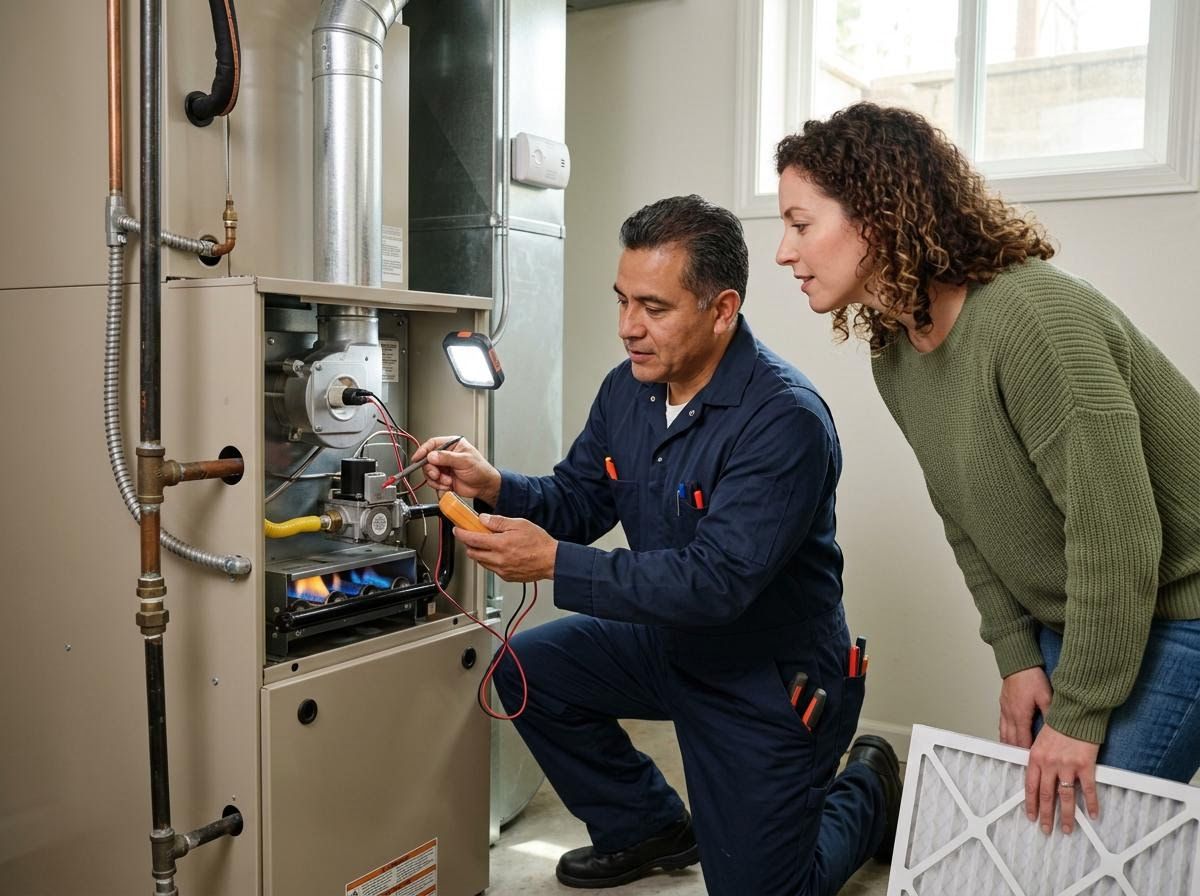
A furnace problem rarely starts with a complete shutdown. More often, Bay Area homeowners first notice uneven rooms, repeated cycling, a new mechanical sound, or an odor that was not there before. Catching those changes early can help limit damage and, more importantly, separate a routine service issue from a safety concern.
Gas furnace repair usually begins with a professional diagnosis of the ignition system, airflow, thermostat, blower, burners, or heat exchanger. Some issues are minor, but a gas odor, soot, a yellow flame, or symptoms that may indicate carbon monoxide require immediate attention. Because gas furnaces can produce invisible, odorless carbon monoxide that may be fatal, safety should come before troubleshooting. The CDC recommends prompt action when furnace safety is in question: learn more about furnace safety.
Understanding the most common failure patterns makes it easier to describe what you are seeing and know when to stop using the system. The first step is recognizing how ignition, airflow, cycling, and blower problems typically appear in Bay Area homes.
Request expert gas furnace repair for your Bay Area home.
Common Gas Furnace Repair Problems Bay Area Homes Face
Gas furnace problems often begin with a symptom that seems minor, such as a brief click at startup or a room that takes too long to warm. The symptom can point to anything from a simple setting or power issue to a mechanical or combustion problem that should not be ignored. Knowing what the symptom usually means helps you choose a safe next step without trying to take apart a gas appliance.
Some basic checks are reasonable for a homeowner. Confirming the thermostat setting, checking the furnace power switch, and looking at the pilot or ignition status may reveal a quick fix. However, gas connections, burners, heat exchangers, blower motors, and electrical controls require professional inspection. The table below offers a practical starting point for deciding whether to check the basics or schedule gas furnace repair.
Common gas furnace symptoms, likely causes, and recommended response:
No heat: The thermostat may be set incorrectly, the furnace power switch may be off, or the system may have lost its ignition or fuel operation. A dirty filter or a failed control can also stop normal heating. DIY check first, then needs a pro if the setting, switch, and filter are not the issue. Do not repeatedly reset a furnace that will not start.
Pilot or ignition failure: A standing pilot may be out, or an electronic ignition, flame sensor, safety control, or gas supply component may not be operating correctly. Usually needs a pro. A homeowner can observe the pilot status and follow the manufacturer instructions, but should not adjust gas pressure or work on ignition components.
Short cycling: Frequent on-and-off operation can signal a clogged filter, restricted airflow, or a thermostat problem. An incorrectly sized or overheating system may also need evaluation. Needs attention from a pro if replacing the filter does not resolve it. Repeated cycling wastes energy and can place extra stress on the equipment.
Blower problems: Weak airflow, delayed airflow, or scraping and squealing sounds may involve the blower wheel, motor, belt, or motor bearing. A loose component can create rattling or vibration. Needs a pro. Turn the system off if the noise is severe, airflow is absent, or a burning odor accompanies operation. Do not reach into the blower compartment.
Unusual odors: A brief dusty smell at the beginning of the heating season may come from dust on internal surfaces. Persistent burning, fuel-like, or smoky odors can indicate a combustion, electrical, or ventilation concern. Stop and seek professional guidance. If you smell gas, leave the area and contact the gas utility or emergency services from a safe location. Never operate a suspected unsafe furnace.
Prevention also matters. ENERGY STAR recommends annual pre-season contractor check-ups, and notes that a dirty filter can raise energy costs, damage equipment, and contribute to early failure. Scheduling regular furnace maintenance can help identify airflow, ignition, and mechanical concerns before they become a mid-season outage. When a problem involves gas, combustion, or internal electrical parts, a qualified technician can test the system safely and explain whether repair is appropriate.
What Warning Signs Need Urgent Gas Furnace Repair?
Some furnace symptoms are inconvenient. Others signal an immediate safety concern. Gas furnaces produce carbon monoxide (CO), an invisible, odorless poisonous gas that can kill without warning, according to the CDC's furnace safety guidance. Because you cannot reliably see or smell CO, every home with fuel-burning equipment should have working carbon monoxide detectors on each level and near sleeping areas.
Smell of gas or rotten eggs
A rotten-egg odor may indicate a gas leak because odorant is added to natural gas to help people detect it. Do not investigate the furnace, operate electrical switches, light a flame, or use a phone inside the home. Leave immediately, warn others as you exit, and call your gas utility or emergency services from a safe location. If you can do so without putting yourself at risk, shut off the gas supply at the exterior shutoff. Do not return until qualified authorities say it is safe, and arrange professional gas furnace repair before the equipment operates again.
Soot, scorch marks, or a yellow flame
Dark soot around the furnace, vent, registers, or nearby walls can point to incomplete combustion or a venting problem. A healthy burner flame is generally steady and blue. A yellow, wavering, or fluttering flame can mean the burner is not receiving or mixing air correctly. Do not adjust the burner yourself. Improper gas connections, dirty burners, and cracked heat exchangers can create both carbon monoxide and fire hazards, as noted by ENERGY STAR's heating and cooling maintenance guidance. Turn the system off and have a qualified technician inspect it promptly.
Headache, nausea, dizziness, or unusual fatigue
If people or pets develop headaches, nausea, dizziness, confusion, or unusual tiredness while the furnace is running, treat the situation as a possible CO exposure. Get everyone outside into fresh air and call emergency services. Do not re-enter to search for the source. A detector alarm requires the same response, even if symptoms are not obvious. Never assume that opening a window makes it safe to keep using the furnace.
Frequent cycling or repeated shutdowns
A furnace that starts and stops repeatedly may have restricted airflow, a clogged filter, or a thermostat problem. Those causes still need attention, but repeated unsafe cycling can also accompany overheating or a combustion fault. Turn the system off if it produces unusual odors, flame changes, soot, or alarming noises. An intermittent symptom should not be dismissed simply because the furnace eventually heats the home.
When these warning signs appear, treat the situation as emergency HVAC repair, not a routine adjustment. A professional can test combustion, verify venting and gas connections, inspect the heat exchanger, and identify the cause before the furnace is placed back in service.
Schedule expert gas furnace repair in the Bay Area.
Gas Furnace Repair Cost: What to Expect in the Bay Area
When a gas furnace stops heating, the first question is often, "How much will this cost?" The answer depends on what failed. How accessible the part is, and whether the issue has caused additional damage. A technician needs to identify the problem before giving you a meaningful repair quote, so a symptom such as no heat does not have one fixed price.
As a general benchmark, common gas furnace repairs may range from about $100 to $600 or more, depending on the issue. That range is a reference point, not a Bay Area price promise. Replacing a simple component can be very different from addressing a blower motor, ignition system, gas connection, or heat exchanger concern. For a fuller discussion of the variables behind furnace pricing, see the real cost of furnace repair.
What affects the repair quote?
The problem itself matters more than the furnace's symptoms. A clogged filter or airflow restriction may contribute to short cycling, while squealing, grinding, or rattling can point to a worn belt, motor bearing, or blower problem. Those warning signs are more useful than guessing from the age of the equipment or from a generic online price list.
Safety-related findings can also change the decision. Gas furnaces produce carbon monoxide, an invisible and odorless poisonous gas that can be fatal, according to the CDC. ENERGY STAR notes that improperly operating gas connections, dirty burners, and cracked heat exchangers can create fire or health hazards. If a technician finds one of these conditions, restoring safe operation takes priority over choosing the lowest-cost repair.
How the diagnostic visit works
A gas furnace repair appointment begins with a professional inspection and diagnostic service visit. Ortiz charges a standard service or diagnostic fee for this work. The visit is not a free repair estimate, because repairs and diagnostics are never free. If you authorize the recommended repair, the diagnostic fee is credited toward that repair. Free estimates apply only to new equipment installations or additions, such as a new furnace, air conditioner, heat pump, or duct system.
That process gives you a clearer choice: repair the identified fault. Discuss replacement if the equipment is unsafe or no longer practical to maintain, or ask questions before authorizing work. If your furnace is showing unusual noises, repeated cycling, weak airflow, or inconsistent heat, address the signal early rather than waiting for a larger failure.
How to Troubleshoot a Gas Furnace Before Calling a Professional
Before scheduling gas furnace repair, you can perform a few simple checks that do not involve opening the gas system or handling internal components. These steps may resolve a basic thermostat, power, or airflow problem, and they can give a licensed technician useful information about what happened. Stop immediately if you smell gas, see soot, notice an unusual flame, or suspect a carbon monoxide problem. Do not attempt to adjust gas pressure, relight equipment you are not trained to service, or work on burners, ignition components, or the heat exchanger.
Confirm the thermostat settings. Set the system mode to Heat, not Cool or Off. Raise the temperature several degrees above the current room temperature so the furnace has a clear call for heat. If the thermostat uses batteries, replace them if the display is blank or weak. Wait a few minutes for the furnace to respond. Thermostat settings are among the relatively simple checks that may be handled before calling a professional, while more involved problems require qualified service.1
Check the furnace power. Locate the furnace service switch, which often resembles a light switch near the unit, and confirm it is in the on position. Then check the electrical panel for a tripped furnace breaker. If the breaker trips again after you reset it once, leave it off and call a professional. Repeated trips can indicate an electrical or equipment fault, not a problem to solve by repeatedly restoring power.
Inspect and replace the air filter. Turn the system off before removing the filter. If it is visibly gray, packed with dust, or overdue for replacement, install a correctly sized filter with the airflow arrow pointing toward the furnace. A dirty filter can increase energy costs, restrict airflow, damage equipment, and contribute to early failure.2 Frequent short cycling can also signal a clogged filter or restricted airflow.1
Check airflow at the registers. Make sure supply vents are open and not blocked by furniture, rugs, or stored items. Confirm that return-air grilles are clear. Poor airflow can keep the furnace from operating normally, so note whether some rooms have weak airflow or whether all registers are affected.
Use the reset button only as directed. If your furnace has a clearly identified manufacturer reset button, consult the equipment manual before using it. Press it only once, never bypass a safety control, and do not keep resetting the furnace if it shuts down again. A repeated lockout points to a problem with ignition, flame sensing, airflow, or another component that needs diagnosis.
Leave gas odors, ignition failures, burner concerns, yellow or unstable flames, soot, unusual combustion odors, suspected heat-exchanger damage, and any carbon monoxide concern to a licensed technician. Gas furnaces can produce carbon monoxide, an invisible and odorless poisonous gas that can be fatal.3 If a carbon monoxide alarm sounds or anyone develops symptoms such as headache, dizziness, weakness, nausea, or confusion, leave the building. Contact emergency services from outside. Do not restart the furnace until it has been professionally inspected.
Should You Repair or Replace Your Gas Furnace?
Repair is often the sensible choice when a gas furnace is relatively young, the problem is isolated, and the equipment has otherwise provided dependable heat. A professional can identify the failed component, explain the repair, and help you decide whether putting more money into the system is reasonable. The diagnostic visit has a service fee, which is credited toward the repair if you authorize the work, rather than being presented as a free repair estimate.
Replacement deserves closer consideration as a furnace approaches the end of its expected service life. Gas furnaces commonly last about 15 to 20 years, although installation quality, maintenance, operating conditions, and repair history all affect actual longevity. If your system is older and has needed several repairs recently, recurring breakdowns may indicate that more failures are likely. A useful rule of thumb is to compare the repair cost with the cost of a suitable replacement. When one repair approaches roughly half the replacement cost, replacement may offer better long-term value, especially if the equipment is also inefficient or unreliable.
Safety problems change the decision
Some defects are not ordinary wear-and-tear decisions. Gas furnaces produce carbon monoxide, an invisible, odorless poison that can be fatal, according to the Centers for Disease Control and Prevention. Improper gas connections, combustion problems, and a cracked heat exchanger can create fire or health hazards. A cracked heat exchanger is a serious safety failure and requires replacement rather than a routine repair. If you smell gas, see soot, notice an unusual flame, or suspect carbon monoxide. Turn off the system if it is safe to do so, leave the area as appropriate, and seek qualified help immediately.
Consider efficiency and future comfort
A newer high-efficiency furnace can reduce wasted energy and provide more consistent comfort, but the right choice depends on the home's existing ductwork, heating needs, and budget. Ortiz is an authorized Carrier dealer and can install and service Carrier equipment, while also servicing all other major brands and models. That broader experience makes the recommendation about your home's condition, not a requirement to replace a particular brand.
Whether repair or replacement is the better path, annual pre-season checkups can help identify problems before they become expensive failures. Review this guide to regular furnace maintenance, and use our tips for choosing a reliable furnace repair technician when your system needs an evaluation.
Get a professional gas furnace repair quote today.
Frequently Asked Questions
What are common signs that a gas furnace needs repair?
Watch for no heat, uneven temperatures, repeated on-and-off cycling, unusual odors, or new banging, squealing, grinding, or rattling sounds. Frequent cycling can point to a clogged filter, restricted airflow, or a thermostat problem. Scraping or squealing may involve a worn belt or motor bearing and should be inspected rather than ignored.
Is it safe to perform my own gas furnace repair?
Homeowners can safely check simple items such as the thermostat setting, the furnace power switch, and a visibly dirty filter. Do not disassemble the burner, alter gas connections, bypass safety controls, or work on the heat exchanger. If you smell gas, see soot, notice a yellow flame, or suspect carbon monoxide, leave the home. Contact emergency services before arranging professional HVAC help. The CDC explains that carbon monoxide from fuel-burning furnaces is invisible, odorless, and potentially fatal.
How much does a gas furnace repair cost?
Typical repairs may range from about $100 to $600 or more, depending on the failed component, access, and equipment. That range is a planning benchmark, not a guaranteed quote. A repair visit begins with a diagnostic service fee, which is credited toward the repair if you authorize the work. Repairs are not eligible for a free estimate.
How often should I have my gas furnace serviced?
Schedule a professional inspection and tune-up once a year, ideally before the heating season, through Ortiz maintenance services. Annual pre-season check-ups can help identify safety and performance problems early. Replace or clean the filter as appropriate for your system, since a dirty filter can increase energy costs and damage equipment, according to ENERGY STAR's maintenance guidance.
Ready to Schedule Gas Furnace Repair?
When a gas furnace is not heating reliably or shows warning signs, a professional evaluation can help identify the problem and determine the appropriate repair. Contact Ortiz Heating and Air Conditioning for expert gas furnace repair.