
For families living in the San Francisco Bay Area, clean indoor air is no longer something that can be taken for granted. Between seasonal wildfire smoke, urban smog, coastal marine layers that encourage mold growth, and high pollen counts from local flora. The air we breathe inside our homes can impact our health, comfort, and sleep quality. Since modern homes are tightly sealed to maximize energy efficiency, they often trap these airborne pollutants indoors, making our living spaces far more congested than the environment outside.
Get a free estimate on a whole house air purifier installation from Ortiz Heating and Air Conditioning today. Call 925-370-4323 to schedule your consultation.
When searching for a solution, most homeowners find themselves comparing two primary options: a central, duct-integrated whole house air purifier or multiple standalone, portable room air purifiers. Deciding which approach is right for your household requires a clear understanding of how each system operates. The long-term maintenance demands, and how they perform under the unique environmental conditions of the Bay Area. This comprehensive guide will compare both options head-to-head to help you make an informed decision for your family.
Understanding the Indoor Air Quality Challenge in the Bay Area
Many homeowners are surprised to learn how concentrated indoor air pollution can become. According to the American Lung Association and the Environmental Protection Agency (EPA). Indoor air can be 2 to 5 times - and in extreme cases, up to 100 times - more polluted than outdoor air. Given that Americans spend more than 90% of their lives indoors, with the majority of that time spent inside their homes. The quality of indoor air has a direct, everyday impact on respiratory wellness.
In our local communities, from the San Francisco Peninsula to Alameda and Contra Costa counties, indoor air quality (IAQ) is shaped by several regional factors:
Wildfire Smoke (PM2.5): Fine particulate matter from regional wildfires is small enough to bypass natural respiratory defenses, entering the bloodstream and causing serious long-term health risks. During wildfire season, having an air purifier that can capture these microscopic particles is essential. Read our wildfire smoke indoor air quality guide for specific protection strategies, and explore our comprehensive guide to improving indoor air quality in the Bay Area for year-round solutions.
Marine Layer Moisture: The Bay Area marine layer brings high humidity to coastal and bay-facing neighborhoods. Creating ideal conditions for mold spores and dust mites to thrive inside crawl spaces, walls, and carpets.
Microclimates and Pollen: Our region is famous for its microclimates. One neighborhood might face heavy freeway exhaust and urban dust, while another just miles away is saturated with seasonal pollen from oak, bay, and redwood trees.
To tackle these diverse pollutants, homeowners need an effective strategy to clean their air. Let's look at how portable and whole-house systems perform against these challenges.
What is a Portable Air Purifier?
Portable air purifiers are standalone, plug-in appliances designed to clean the air in a single, localized space, such as a bedroom, living room, or home office. These units house an internal fan that pulls air from the room. Passes it through one or more filters, and releases the cleaned air back into the immediate surrounding space.
Understanding Sizing and Clean Air Delivery Rate (CADR)
When choosing a portable unit, performance is measured by its Clean Air Delivery Rate (CADR). Which indicates the volume of filtered air the unit delivers per minute (measured in Cubic Feet per Minute, or CFM). The Association of Home Appliance Manufacturers (AHAM) recommends a simple rule of thumb for sizing room purifiers: the CADR of your unit should be at least two-thirds of the room's total square footage.
For example, if you want to clean a bedroom that is 300 square feet. You should look for a portable air purifier with a CADR rating of at least 200 CFM. If the unit's CADR is too low for the room, the air will bypass the filter or cycle too slowly, leaving pollutants suspended in the room.
The Advantages of Portable Room Air Purifiers
Lower Initial Investment: High-quality portable room air purifiers are affordable, ranging from $100 to $500 depending on the size and advanced features of the unit. This makes them a highly accessible entry point for immediate relief.
Localized Portability: These units are light and can be moved from room to room. You can keep one in your home office during the work day and carry it to your bedroom at night.
No Installation Required: Portable units are plug-and-play. They do not require any changes to your home's infrastructure, making them the only viable option for renters or homes without central ductwork.
The Disadvantages of Portable Room Air Purifiers
Very Limited Coverage: Portable units only clean the room they are placed in. Standard doors, walls, and hallways block airflow, meaning a unit in the living room will have zero impact on the air quality in your bedrooms or kitchen.
Aesthetics and Floor Space: Standalone units take up valuable floor space, require proximity to electrical outlets, and involve visible, trailing power cords. This can detract from a room's aesthetic.
Operational Noise: To clean the air effectively on poor air days, portable
units must run on high fan speeds. This creates a constant, noticeable hum that can disrupt conversations, television viewing, or light sleepers.
High Lifetime Maintenance Costs: If you try to achieve comprehensive home coverage using portables, you will need to buy 4 or 5 separate units. Each of these units requires filter replacements every 3 to 6 months, leading to high cumulative maintenance costs and increased household energy consumption.
What is a Whole-House Air Purifier?
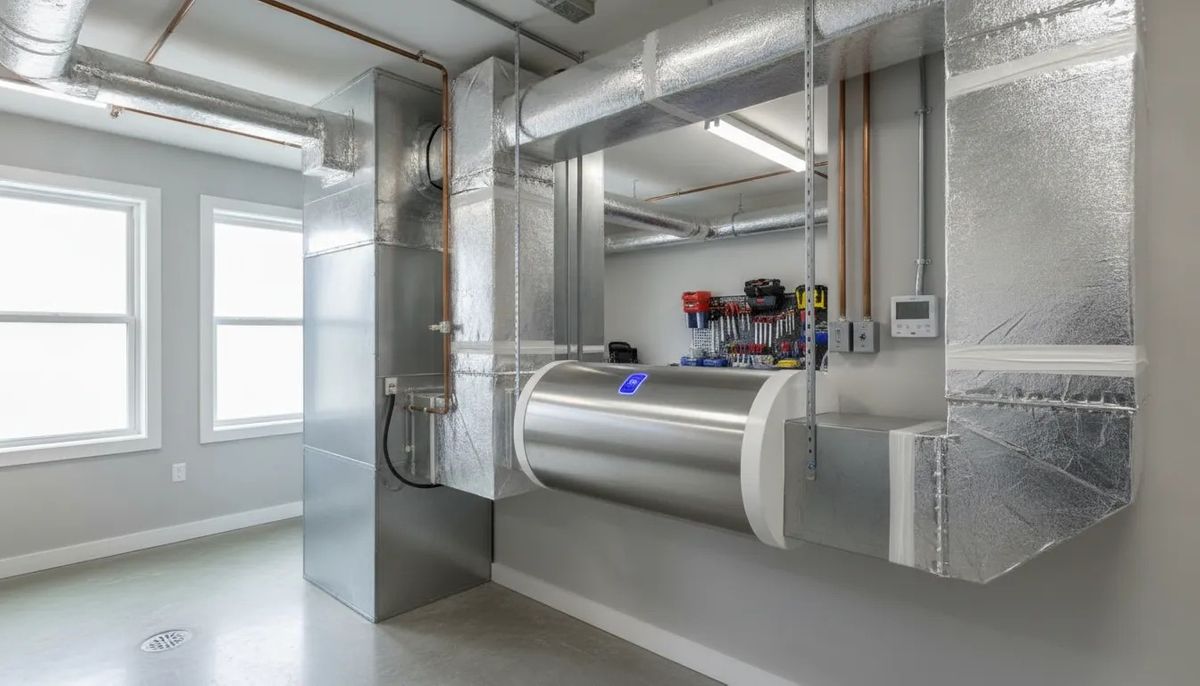
A central whole house air purifier is a professional system integrated directly into your home's existing heating, ventilation, and air conditioning (HVAC) system. Rather than sitting in a corner of a single room, a whole-home system is installed within the return air ductwork, just before the air handler or furnace. Every time your HVAC blower runs, it pulls return air from across the entire home. Passes it through the high-efficiency purifier, and distributes cleaned, purified air through your supply vents to every room simultaneously.
Key Technologies in Whole-Home Systems
While portable systems rely on small, thin filters, whole-house systems use large-scale. Commercial-grade technologies that are built to handle high volumes of airflow (typically between 800 and 2,000 CFM):
Deep-Pleated Media Filtration: Unlike the standard 1-inch fiberglass filters that 85% of homeowners use (which only have a CADR of 10 and are designed to protect HVAC equipment from large dust clasts). Whole-home purifiers use thick, 4-inch to 5-inch pleated media filters. These filters can range from MERV 11 to MERV 16, capturing over 95% of fine particles down to 0.3 microns.
Activated Carbon Cells: These carbon-rich filters adsorb gaseous pollutants, chemicals, smoke odors, and volatile organic compounds (VOCs) that physical media filters cannot capture.
UVC Germicidal Lamps: Ultraviolet light systems are placed in the ductwork or over the indoor coil to destroy the DNA and RNA of biological contaminants. Neutralizing airborne bacteria, viruses, and mold spores as they pass through the airstream.
Photocatalytic Oxidation (PCO): This advanced technology uses a UV light to activate a catalyst, breaking down toxic organic gases and household odors into harmless water vapor and carbon dioxide.
The Advantages of Whole-Home Air Purification
True Whole-Home Coverage: Because the system works inline with your central HVAC ductwork, it purifies the air in every single room, hallway, and living area. There are no dead zones or untreated spaces, ensuring uniform air quality for your entire household.
Silent, Hidden Operation: A whole-house system is installed out of sight in your attic, garage, basement, or utility closet. It produces zero noise in your living sp
aces, utilizing your existing HVAC blower to quietly distribute purified air.
Exceptional Energy Efficiency: Running a single, central whole-house purifier on your HVAC system is significantly more energy-efficient than running 4 or 5 separate portable room units throughout the day.
Infrequent Maintenance: Whole-house filters have a massive surface area compared to small room filters. They typically only need to be replaced once or twice a year, saving you time and keeping maintenance simple.
HVAC Equipment Protection: High-efficiency central purifiers keep dust and debris off your furnace heat exchanger and AC evaporator coil. This maintains system airflow, improves overall heating and cooling efficiency, and extends the operational lifespan of your entire HVAC system.
The Disadvantages of Whole-Home Air Purification
Higher Initial Cost: The upfront cost of a whole-home system is higher than a single portable unit, as it requires the purchase of professional equipment and specialized installation.
Requires Central Ductwork: A whole-house system is only compatible with homes that have a central ducted heating and cooling system, such as a central furnace, heat pump, or central air conditioning system.
Requires Professional Installation: To ensure proper static pressure, air handler compatibility, and a completely sealed air plenum, whole house air purifier installation must be performed by licensed HVAC professionals.
Head-to-Head Comparison: Portable vs. Whole-House
To help visualize how these two options compare on key criteria, review the breakdown below:
Comparison CriterionPortable Room Air PurifierWhole-House Air PurifierCoverage ScopeSingle localized room (typically 150 - 500 sq. ft.)Entire house (typically 1,500 - 5,000+ sq. ft.)Upfront CostLow ($100 - $500 per unit)Moderate to high (requires professional equipment and labor)Maintenance FrequencyEvery 3 to 6 months (often multiple filters to replace)Every 6 to 12 months (single, high-capacity filter change)Noise LevelNoticeable hum to loud fan noise at effective speedsCompletely silent inside your living spacesAesthetics and SpaceTakes up floor space; visible power cords and applianceCompletely hidden within existing HVAC system ductworkFiltration Power (MERV/HEPA)Standard HEPA is excellent, but covers a small volume of airHigh-MERV media (MERV 11 - 16) filters massive air volumeEnergy EfficiencyLow efficiency if running multiple room unitsHigh efficiency; optimized to work with central blower
When evaluating these options, it helps to understand how they compare to what you already have. Many homeowners believe their standard 1-inch throwaway furnace filter is sufficient to protect their health. However, these basic filters only have a Clean Air Delivery Rate (CADR) of around 10. Meaning they let almost all fine particulate matter, pollen, and mold spores pass right through. In comparison, a dedicated whole-home system like a Bryant or Trane central air cleaner can provide a CADR of up to 1,200 CFM. Actively scrubbing the air in your home several times every hour.
Ready to breathe cleaner air? Contact Ortiz Heating and Air Conditioning for a free estimate on whole-house air purifier installation. Call 925-370-4323.
Which Air Quality Solution Is Right for You?
To choose the right path for your household, match your home type, air quality goals, and budget against the scenarios below.
When to Choose a Portable Room Air Purifier
A portable room unit is the ideal choice if:
You rent your home: Renters cannot make permanent structural changes to ductwork or HVAC equipment, making portable units the only sensible option.
Your home lacks central HVAC ductwork: If your home uses ductless mini-splits, baseboard heaters, or wall furnaces, you do not have the ductwork required to support an inline system.
You only need to clean one room: If you spend most of your time in a single room (such as a home office) and have no major respiratory health concerns throughout the rest of the house. A single high-quality room unit is highly cost-effective.
When to Choose a Whole-House Air Purifier
An integrated, whole-home air purification system is the superior choice if:
You own a home with central ductwork: If you already have a ducted furnace, heat pump, or central air conditioner, you can easily integrate a professional air cleaner to help
omplete-guide-for-bay-area-homeowners">improve indoor air quality in the Bay Area.
Someone in your home suffers from respiratory issues: For individuals with moderate-to-severe asthma, airborne allergies, chronic bronchitis, or compromised immune systems, whole-home filtration provides constant. Uniform protection in every room, preventing flare-ups caused by moving between clean and dirty zones.
You want a silent, out-of-sight solution: If you value a clean home aesthetic without visible cords, bulky appliances, and fan noise, a central system is the only way to achieve clean air invisibly.
You want to protect your HVAC investment: A whole-house filter keeps your heating and cooling equipment clean, preventing dust buildup that causes breakdowns, maintaining optimal system efficiency, and extending system life.
Professional Assessment and Safe System Integration
If you decide that a whole-house system is the best fit for your home, the next step is a professional assessment. It is critical not to simply buy a high-MERV filter and slide it into a standard filter slot. Thick, high-efficiency filters create significant air resistance (static pressure). If your central HVAC system's blower motor is not designed to handle this resistance. It can restrict airflow, causing your system to freeze up, overheat, or burn out the motor prematurely.
Our experienced team at Ortiz Heating and Air Conditioning will assess your ductwork, evaluate your system's blower capacity. And recommend a compatible system that cleans your air without placing unnecessary strain on your HVAC equipment. We also offer comprehensive heating services to ensure your entire home comfort system operates at peak efficiency. If you are ready to learn about your options, we provide free estimates on new whole-house air purifier equipment installation or replacement. For repairs, troubleshooting, or standard system diagnostics, we offer thorough evaluations for a standard diagnostic service fee, after which we provide flat-rate, transparent repair quotes.
Call 925-370-4323 or contact us online to schedule your indoor air quality consultation today.
Frequently Asked Questions About Air Purification
Are whole house air purifiers worth the investment?
Yes, for homeowners with central ductwork, a whole-house system is highly worth it. It provides comprehensive air cleaning across every room, operates silently, and requires maintenance only once or twice a year. Over time, it is more cost-effective and energy-efficient than purchasing, running, and maintaining 4 or 5 portable units to cover the same square footage.
Can you add an air purifier to an existing HVAC system?
Yes, most existing central heating and air conditioning systems can be retrofitted with a whole-house air purifier. A professional installer will modify a section of the return air plenum to house the new system. Ensuring it is completely sealed and matches your HVAC blower's static pressure limitations.
How often do you need to change a whole-house air filter?
Whole-house deep-pleated filters (4 to 5 inches thick) have a massive surface area and typically need to be replaced every 6 to 12 months. This is much less frequent than standard 1-inch filters, which require replacement every 1 to 3 months, or portable units, which often require filter changes every 90 days.
Do whole-house air purifiers run constantly?
A whole-house air purifier operates whenever your HVAC system's fan blower is running. To get continuous air purification, you can set your thermostat's fan setting from Auto to On. This runs the low-energy blower fan continuously to circulate and clean your indoor air, even when the system is not actively heating or cooling your home.
What is the difference between MERV 13 and HEPA filtration?
MERV 13 filters capture at least 90% of particles in the 1-3 micron range and over 85% of particles down to 0.3 microns. True HEPA filters capture 99.97% of particles at 0.3 microns. While HEPA is technically more efficient, a whole-house MERV 13 or MERV 16 filter handles much higher air volume. Making it the practical choice for whole-home filtration when integrated with a properly sized HVAC system.
Breathe Easier with Ortiz Heating and Air Conditioning
Your home should be a safe haven where you and your family can breathe clean, healthy air every day. Whether you want to explore professional whole house air purifier installation or need an expert to evaluate your current indoor air quality, the team at Ortiz Heating and Air Conditioning is here to help. With 25 years of trusted local service in the San Francisco Bay Area, we deliver personalized, high-quality HVAC solutions you can rely on.
Contact Ortiz Heating and Air Conditioning today at 925-370-4323 to schedule your professional indoor air quality consultation and take the first step toward a healthier home environment.