
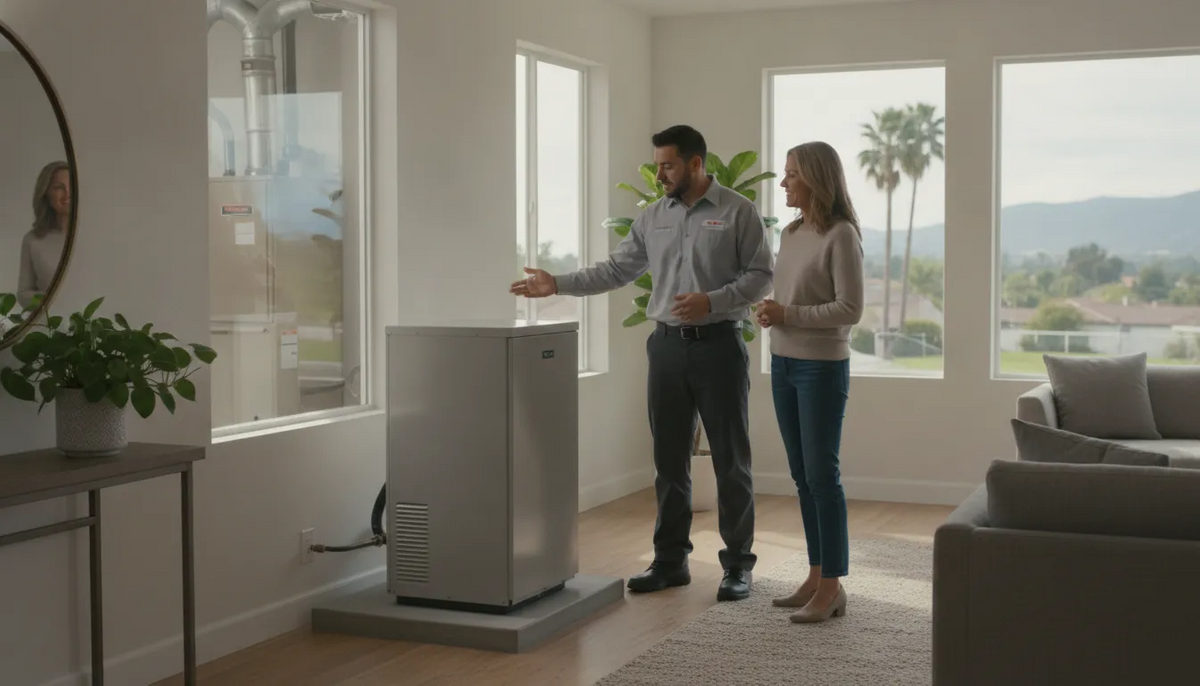
Planning a dual-fuel HVAC project raises a practical question: what should a homeowner budget for equipment, preparation, and professional installation? A hybrid heat pump combines an electric heat pump with a gas furnace and controls. When researching hybrid heat pump installation cost bay area homeowners should focus first on project scope. Avoid relying on an unsupported flat price.
A useful estimate starts with a whole-home assessment and calculated heating and cooling loads. A written scope should separate equipment, ductwork, electrical work, controls, permits, removal, and commissioning.
Request a hybrid heat pump installation estimate
What is included in a hybrid heat pump installation?
A hybrid heat pump, also called a dual-fuel system, combines an electric heat pump with a gas furnace. Coordinated controls manage the two heating sources and determine which one operates based on the system setup, outdoor conditions, and the home's needs. Unlike a standalone heat pump, the gas furnace remains part of the planned heating system. The project therefore involves more than placing a new outdoor unit beside the house.
The equipment and air-delivery components
The outdoor heat pump unit transfers heat for heating and cooling. A ducted system also includes an indoor air handler, refrigerant line set, and the connections needed to move conditioned air through the home. ENERGY STAR explains that air-source heat pumps can connect to conventional forced-air ductwork. While Berkeley's heat pump guidance describes the typical arrangement as an outdoor unit, indoor air handler, and existing or new ductwork.
The existing furnace may be retained, replaced, or repositioned depending on its condition and how the new equipment is designed to work together. Ductwork is reviewed for size, airflow, sealing, and insulation. Existing ducts may be usable, but they should not be assumed to be suitable without an assessment. If the home has no practical duct system, a ductless design is a different project configuration rather than a simple variation of the same installation.
Controls, preparation, and final setup
Controls are central to a dual-fuel installation because they coordinate the heat pump and furnace. The installation scope may also include a load calculation, equipment selection, electrical connections within the agreed scope. Refrigerant and air-side connections, permit coordination, and removal and disposal of old equipment. The written proposal should identify which duct, electrical, structural, and disposal work is included and which items are allowances or exclusions.
Commissioning is the quality-control stage. The installer starts the equipment, checks operation, calibrates controls, verifies airflow and temperature performance, and addresses system balancing issues. Ortiz describes its installation planning as including property and layout assessment, system sizing, precision setup, calibration, testing, and optimization. Homeowner education should follow, including how to use the thermostat, understand the operating modes, maintain filters, and recognize when professional service is needed. This detailed scope is why a reliable estimate for hybrid heat pump installation cost bay area requires an evaluation of the actual home instead of a square-foot estimate alone.
What drives hybrid heat pump installation cost in the Bay Area?
A hybrid heat pump project is priced around the home's requirements, not a universal Bay Area rate. The system combines heat pump equipment, a gas furnace, and controls that determine how the two sources operate. A responsible estimate accounts for the complete installation rather than listing equipment alone.
System design and home load
System configuration is one of the first cost drivers. A ducted design may use an outdoor heat pump, indoor air handler, existing furnace, and conventional ductwork. A ductless or partially zoned design has a different equipment and labor scope. Ortiz evaluates property size, insulation, layout, and heating and cooling needs before recommending equipment. Proper sizing is essential for comfort and performance, and ENERGY STAR notes that HVAC equipment should be sized for the home rather than selected by guesswork: ENERGY STAR heat pump guidance.
That assessment matters in the Bay Area because homes vary widely by age, construction, orientation, ceiling height, window area, and local microclimate. The required capacity, number of zones, equipment location, and compatibility with the existing furnace can all change the scope. Square footage by itself cannot establish the correct system or installation cost.
Ductwork, electrical work, and controls
Existing ductwork can sometimes serve a central heat pump, but it should be evaluated for sealing, insulation, sizing, and airflow. Older, damaged, undersized, or difficult-to-reach ducts may require repair, modification, or replacement. Berkeley's heat pump guidance specifically notes that duct updates may be needed to support efficient operation: Berkeley heat pump HVAC guidance.
Electrical scope depends on the selected equipment and the home's existing service. The estimate may need to account for a new circuit, disconnect, wiring route, sub-panel work, or other upgrades when the current setup cannot support the outdoor unit. Controls also matter. A hybrid system needs compatible thermostatic controls and proper settings so the heat pump and furnace changeover strategy work as intended.
Permits, removal, access, and local conditions
Permits and inspections can vary among Bay Area jurisdictions, so ask whether permit coordination and inspection support are included. Removal and disposal of an old furnace or air conditioner may be part of the installation scope. While structural changes, difficult access, attic or crawlspace work, and equipment placement can add labor. Tight side yards, condominium rules, roof or wall penetrations, and long refrigerant or electrical runs can also affect the work.
For a useful comparison, request a written scope that separates equipment, labor, duct and electrical allowances, controls, permits, removal, commissioning, and exclusions. Ortiz does not publish fixed installation prices. Its estimate process evaluates the property first, then provides transparent pricing before equipment installation or replacement work begins.
How should homeowners compare hybrid system estimates?
The most useful comparison is not the lowest bottom-line number. It is the estimate that makes the full project scope visible. A hybrid system may involve a heat pump, gas furnace, controls, ductwork, electrical work, permits, and removal of existing equipment. If one contractor includes those items and another lists them as allowances or exclusions, the totals are not directly comparable.
Ask each contractor to describe the same work in writing. A clear scope should identify what is included, what could change after inspection, and which items require separate trade coordination. The following questions can help you compare estimates line by line.
Hybrid heat pump estimate comparison checklistQuote line itemWhy it mattersHomeowner questionEquipment and laborThe estimate should identify the heat pump, furnace, air handler or coil, refrigerant components, controls, and installation labor. Equipment sizing should follow an assessment rather than guesswork. ENERGY STAR explains why proper sizing matters.Which equipment models and capacities are included, and does the labor cover complete startup?Duct and electrical allowancesExisting ducts may need sealing, insulation, sizing changes, or replacement. Electrical work may also depend on the home's existing service and the selected equipment.What condition assumptions were made, and are duct changes, circuits, or panel work included or excluded?Controls and changeover strategyA hybrid system needs controls that coordinate the heat pump and furnace. The quote should explain how the system changes operating modes.What controls are included, and who configures the temperature or fuel changeover settings?Permits and inspectionsPermit procedures and costs can vary among Bay Area municipalities. An estimate should state whether permit coordination and inspection support are included.Who pulls the permit, schedules inspections, and responds if corrections are required?Removal and disposalOld equipment removal and disposal can affect labor, access, and cleanup. It should not be left ambiguous. A Bay Area installation scope example includes removal and disposal.Does the scope remove, haul away, and properly dispose of the existing furnace and related equipment?Commissioning and balancingStartup, testing, airflow balancing, and control verification help confirm that the installed system performs as designed. Commissioning is identified as part of a complete installation scope in the supplied Bay Area reference.What testing is performed before handoff, and will the results or settings be documented?Warranties and documentationWritten equipment, labor, registration, maintenance, and operating information clarifies what happens after installation.Which warranties apply, who registers the equipment, and what manuals, model numbers, and completion records will we receive?
Ortiz describes installation planning around property conditions, system sizing, setup, testing, and optimization, rather than a fixed price detached from the home. When comparing a hybrid heat pump installation cost Bay Area estimate, look for that same level of detail. A transparent quote makes exclusions visible before work begins and gives you a fair basis for comparing contractors.
Does a Bay Area home need duct or electrical upgrades?
Not necessarily. Existing ducts can sometimes be reused when a central heat pump replaces a furnace or air conditioner. ENERGY STAR notes that a central air-source heat pump can use pre-existing forced-air ductwork, but reuse should follow an assessment rather than an assumption. The duct system has to deliver the new equipment's airflow effectively throughout the home.
When existing ductwork can stay
A contractor should review the ducts for leaks, insulation, sizing, and overall condition. Berkeley's heat pump guidance specifically notes that updates may be needed to ensure ductwork is properly sealed, insulated, and sized for heat pump operation. Leaky or poorly insulated ducts can waste conditioned air, while undersized sections may restrict airflow and affect comfort. A system that worked acceptably with older equipment is not automatically designed correctly for a new heat pump.
That review may lead to a relatively focused modification, such as sealing joints, improving insulation, or adjusting a problem section. In other homes, damaged, inaccessible, or poorly configured ductwork may make broader replacement or redesign more practical. Equipment sizing also matters. ENERGY STAR states that properly sized HVAC equipment is essential for performance and comfort. So the duct evaluation should be considered alongside the home's heating and cooling load, not as an isolated checklist item.
Ducted and ductless systems have different scopes
A ducted heat pump generally includes an outdoor unit, an indoor air handler, and existing or new ductwork. A ductless heat pump does not require ductwork. Instead, indoor units connect to an outdoor unit, which can make ductless equipment a useful option for homes without suitable ducts, additions, or areas needing targeted comfort. Ortiz offers both ducted and ductless heat pump systems, so the right configuration depends on the home's layout and comfort needs.
When electrical work may be part of the project
Electrical scope depends on the selected equipment and the home's existing electrical service. It should not be described as a universal requirement for every hybrid installation. The equipment choice, available capacity, wiring, disconnect, controls, and local installation conditions determine what must be evaluated. Bay Area installation factors commonly include both ductwork condition and electrical scope. Which is why a responsible quote should identify any electrical allowance or exclusion instead of hiding it in a vague total.
Ask for the proposed system configuration, duct findings, electrical assumptions, and included corrective work in writing. That detail makes it easier to compare estimates and understand what the project actually covers.
What happens during a professional hybrid heat pump installation?
A hybrid system combines a heat pump, a gas furnace, and controls that coordinate the equipment. A professional installation is therefore more than setting an outdoor unit. The contractor must match the system to the home, confirm how the existing infrastructure will be used, and verify that the finished installation operates safely and efficiently.
Assess the home and calculate the load. The process begins with a review of property size, insulation, layout, comfort concerns, and existing heating and cooling equipment. Ortiz uses these details for system recommendations, rather than choosing equipment by square footage alone. Proper sizing is essential to comfort and performance. Ortiz's installation process includes system sizing calculations and layout analysis.
Select the equipment and controls. The contractor determines the appropriate heat pump, furnace, thermostat or control strategy, and indoor equipment. The goal is for the heat pump and gas backup to work as a coordinated system. The recommendation may also account for whether the home will use existing ductwork or require modifications.
Coordinate permits and inspections. Permit requirements can vary by Bay Area city and by the work involved. Ask the contractor which permits, inspections, and code-related steps are included in the proposal, and who will coordinate them. Do not assume every quote handles these items the same way.
Remove old equipment and prepare the site. The crew disconnects and removes equipment that is being replaced, prepares mounting and equipment locations, and protects the work area. If disposal is part of the proposal, it should be stated clearly alongside any exclusions or structural preparation.
Install the heat pump and furnace. A ducted system generally uses an outdoor heat pump, an indoor air handler or furnace assembly, and existing or new ductwork. The crew sets the equipment, completes refrigerant and combustion-related connections as applicable, and follows manufacturer and safety requirements.
Complete duct and electrical work. Existing ducts may be usable, but they should be evaluated for sealing, insulation, sizing, and airflow. Electrical work depends on the selected equipment and the home's existing service. Any modifications or allowances should appear in writing before work begins.
Commission and test the system. Ortiz's documented process includes precision setup, calibration, post-installation testing, and equipment optimization. This stage confirms that controls respond correctly, heating and cooling operate as intended, airflow is appropriate, and the system is ready for regular use.
Review operation with the homeowner. The installer should explain the controls, operating modes, filter needs, maintenance expectations, and documentation. Take this opportunity to ask how the system changes between heat pump and furnace operation and what to do if comfort or performance concerns arise.
Installation timing depends on equipment availability, site conditions, and the amount of duct, electrical, or permit work involved. A detailed, assessment-based proposal is more useful than a guaranteed timeline or a generic hybrid heat pump installation cost bay area figure.
How can Bay Area homeowners prepare for an installation estimate?
A useful estimate starts with useful information about the home. Before the appointment, gather the model numbers or photos of the existing furnace, air conditioner, thermostat, and outdoor equipment. Note whether the home uses natural gas, propane, or another fuel, and locate the electrical panel if you know where it is. Utility bills are optional, but they can help explain seasonal patterns when comfort or operating costs are part of the discussion.
Write down the problems you want the new system to solve. Include rooms that stay too hot or cold, weak airflow, noisy equipment, frequent cycling, humidity concerns, or changes you expect after remodeling. Also mention additions, insulation work, window replacements, or plans to finish an attic or garage. These details help the contractor evaluate the home's layout and heating and cooling needs rather than treating square footage as the only input.
Questions to ask during the visit
Will the recommended equipment be selected from a load calculation, and what assumptions affect the result?
Can the existing ducts support the system, or do sealing, insulation, sizing, or replacement need to be considered?
What controls will coordinate the heat pump and gas furnace, and what electrical work may be required?
Does the written scope include equipment, removal and disposal, installation labor, duct or electrical allowances, commissioning, and homeowner orientation?
Which items are excluded or priced separately, including structural changes, permit fees, or unexpected site work?
Who handles permits and inspections, what project stages should I expect, and what timeline is realistic for this home?
What manufacturer and labor warranties apply, what documentation will be provided, and what maintenance will the system need?
Ortiz does not publish fixed installation prices. Quotes are provided after an assessment, with transparent pricing before work begins. Ortiz evaluates property size, insulation, layout, and heating and cooling needs, and has more than 25 years of local HVAC experience. Homeowners can also choose Bay Area heat pump installers by comparing qualifications and scope, then review Ortiz HVAC installation services for a clearer picture of the planning process. Ortiz serves residential customers across San Francisco, San Mateo, Alameda, and Contra Costa counties.
Frequently Asked Questions
What is a hybrid heat pump system?
A hybrid, or dual-fuel, system pairs an electric heat pump with a gas furnace and controls that coordinate the two heat sources.
Is a hybrid system cheaper than an all-electric heat pump?
There is no universal answer. Installation scope, equipment configuration, ductwork, electrical service, controls, permits, and removal needs all affect the estimate. Compare complete written scopes.
Can existing ducts be used with a hybrid heat pump?
Sometimes. A contractor should assess sealing, insulation, sizing, condition, and airflow. Homes without suitable ducts may need a different configuration.
What should an installation estimate include?
Ask for equipment, labor, controls, duct and electrical assumptions, permit handling, removal, commissioning, documentation, and exclusions.
How long does installation take?
Timing depends on equipment availability, access, permitting, ductwork, electrical work, and system complexity. A typical residential installation may take one to two days, but that is not a guarantee.
Ortiz offers free estimates for equipment installation and replacement. Diagnostic visits and service calls carry a fee.
Plan Your Hybrid Heat Pump Installation with Ortiz
Every home has different equipment, ductwork, electrical needs, and comfort goals. An assessment helps define a practical project scope and clear installation proposal. Ortiz serves Bay Area homeowners.