
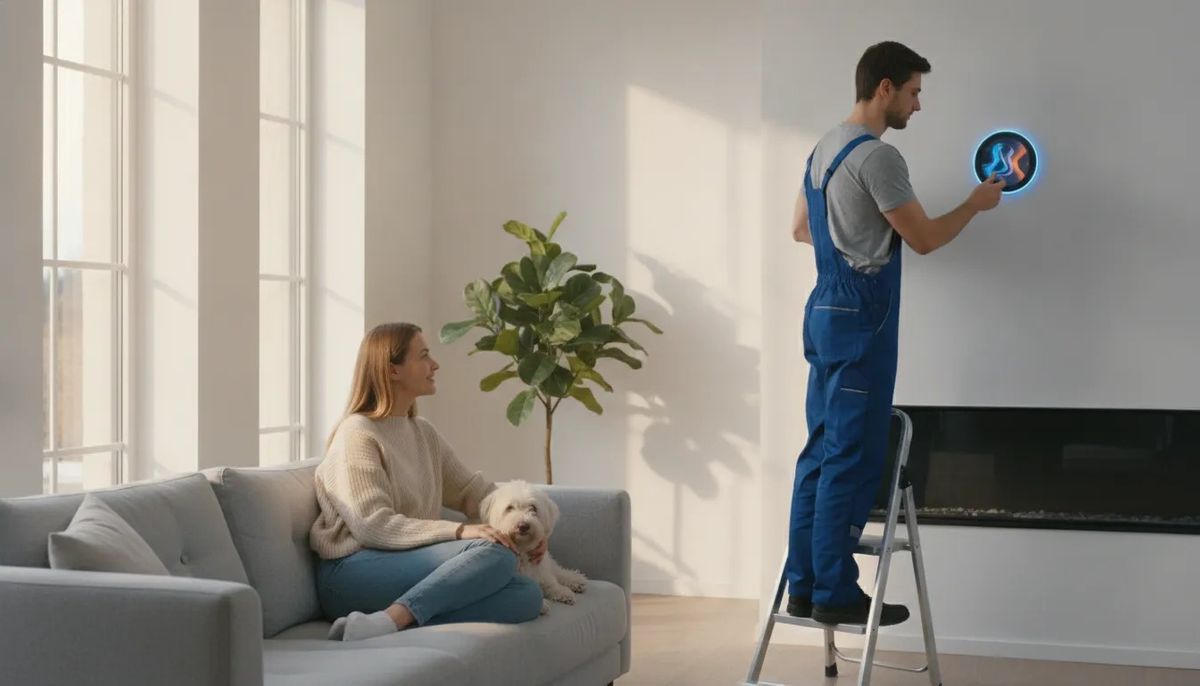
A comfortable Bay Area home does not always need more heating or cooling. Often, it needs a system that matches local conditions and a few habits that prevent conditioned air from going to waste. Coastal fog, inland heat, and shifting temperatures can change how hard your HVAC equipment works from one neighborhood to the next.
HVAC energy savings Bay Area homeowners can achieve start with practical steps: program the thermostat around occupancy. Replace a loaded filter, seal leaking ducts, improve insulation, and compare high-efficiency equipment with available PG&E rebates before replacing an aging system.
Ortiz notes that Bay Area homeowners must account for five distinct microclimates when optimizing HVAC performance. That local perspective helps separate worthwhile improvements from generic advice. Begin by understanding how your microclimate affects run time, comfort, and energy use.
Why Bay Area Microclimates Make HVAC Energy Use Unique
Energy use does not look the same across the Bay Area because homes experience very different outdoor conditions. A property near the coast may need more heating on a cool, damp day. While a home farther inland may face stronger afternoon heat and greater air conditioning demand. Elevation, wind, humidity, shade, and daily temperature swings also affect how long an HVAC system runs.
Ortiz Heating and Air Conditioning serves five distinct Bay Area microclimates, and that local variation matters when improving comfort and efficiency. The right temperature settings, equipment capacity, airflow strategy, and maintenance plan for one neighborhood may not be the best fit for another. Treating the entire region as one climate can lead to oversized equipment, unnecessary runtime, uneven rooms, or a system that is pushed harder than necessary.
Why the same system can perform differently from one city to the next
Heating and cooling loads are shaped by the conditions surrounding the home, not just its square footage. A coastal residence may spend more energy maintaining warmth, especially when outdoor air is chilly and moisture makes the home feel colder. In warmer inland areas, solar heat and larger daytime temperature changes can increase cooling demand. Homes in transitional zones may alternate between heating and cooling within a short period, making responsive controls and balanced airflow especially important.
These differences are why climate-appropriate HVAC management is central to energy efficiency in the Bay Area. Ortiz identifies the local conditions affecting a property before recommending practical adjustments or equipment changes. That approach helps homeowners focus on the source of excess energy use instead of relying on a one-size-fits-all setting.
The following strategies build on this principle. Thermostat scheduling, filter and duct care, insulation, and high-efficiency upgrades can all reduce waste. But their value depends on how well they match the home's microclimate and current system. Understanding that starting point makes it easier to choose savings measures that improve comfort without creating new problems.
Smart Thermostat Setbacks: The Fastest Way to Cut Costs
A programmable or smart thermostat can reduce unnecessary heating and cooling without making your home uncomfortable. Instead of maintaining the same temperature all day, it adjusts the system around your routine. You can schedule a moderate setback while the household is away or asleep, then return to a comfortable setting before everyone arrives home.
Build a Schedule Around Occupancy
Start by identifying when the home is occupied, lightly used, and empty. During a winter absence, lower the heating setpoint rather than turning the system off completely. During warmer weather, raise the cooling setpoint when the house is empty. These small changes reduce run time during hours when comfort matters less.
A day of sensible scheduling can look like this:
Keep the heating setpoint lower while the household is at work or school.
Raise the setpoint shortly before the first person returns home.
Use a lighter setback overnight while everyone sleeps under blankets.
Smart thermostats can automate these adjustments based on time of day, occupancy, or both. Some models also learn household patterns, but review the schedule instead of assuming the default settings fit your lifestyle. A remote sensor can help when one room is consistently warmer or cooler than the thermostat location. In a Bay Area home, that distinction matters because coastal, inland, and shaded rooms may experience different temperatures on the same day.
Industry guidance summarized in the research for this article indicates that smart thermostat scheduling can potentially reduce heating and cooling costs by about 10% to 15% annually. Actual results depend on the starting schedule, equipment efficiency, insulation, weather, and how often the system was previously running. The goal is not to chase a specific percentage. It is to stop conditioning an empty home while preserving a comfortable occupied schedule.
Check the thermostat after changing the schedule. If the system runs for unusually long periods to recover from a deep setback, use a smaller adjustment. Heat pumps may require especially careful programming because aggressive setbacks can trigger less-efficient auxiliary heat on some systems. Follow the equipment manufacturer's guidance, and have the controls reviewed if the system does not respond as expected.
Thermostat automation works best alongside basic system care. Use these home HVAC maintenance tips to keep airflow and equipment performance from undermining your HVAC energy savings Bay Area plan.
Change Your Air Filter and Seal Your Ducts to Stop Energy Waste
Two maintenance details can quietly determine how hard your HVAC system works. The condition of the air filter matters, and so does the integrity of the ductwork. A filter loaded with dust restricts airflow. The blower then has to work harder to move air through the system, which can increase strain and reduce practical efficiency. A clean filter supports steady airflow, more even comfort, and less unnecessary runtime.
How often should you replace an HVAC filter?
There is no single schedule for every Bay Area home. A typical 1-inch filter may need attention about every one to three months. But homes with pets, remodeling dust, allergies, or frequent system use may require more frequent replacement. Check the filter monthly until you understand how quickly it collects debris. Use the size and efficiency rating recommended for your equipment, because an overly restrictive filter can also reduce airflow.
Filter care is one part of a broader maintenance routine. For a practical checklist, review our guide to AC service and maintenance. If airflow remains weak after replacing the filter, the issue may involve a dirty coil, an undersized return, or another condition that deserves professional evaluation.
Duct sealing addresses a different form of waste. In many homes, supply and return ducts pass through attics, crawl spaces, garages, or other areas outside the conditioned living space. Gaps at seams, connections, and registers allow cooled or heated air to escape before it reaches the rooms you are paying to condition. Leaks can also pull dusty or poorly conditioned air into the system, affecting comfort and indoor air quality.
A quick filter and duct check can become a repeatable routine:
Check the filter monthly and replace it when it is visibly loaded.
Inspect accessible duct joints for visible gaps, sagging, or crushed sections.
Keep registers and returns clear of furniture, rugs, and debris.
Have a technician test duct leakage when a room is hard to heat or cool.
A qualified technician can inspect accessible ductwork, test for leakage, and recommend durable sealing or insulation where needed. BayREN's EASE Home program identifies insulation and duct sealing as essential weatherization improvements, with eligibility and coverage subject to current program rules: review the EASE Home details. Do not assume a rebate applies before confirming income, property, contractor, and project requirements.
Clean filters and sealed ducts will not compensate for an incorrectly sized or failing system. But they are sensible first steps toward HVAC energy savings in the Bay Area. They help the equipment deliver the air it already produces instead of wasting energy overcoming preventable airflow and distribution problems.
Insulation and the Building Envelope: Keep Conditioned Air Where It Belongs
Your HVAC system can be efficient and still run longer than necessary if the building envelope allows conditioned air to escape. The envelope includes the attic, walls, floors, windows, doors, and the seams where these components meet. Gaps around penetrations, poorly sealed duct openings, and inadequate insulation make it harder to maintain a steady indoor temperature. Improving these areas reduces the heating and cooling load before you ask the equipment to produce more capacity.
Start Above the Ceiling and Around Air-Leakage Paths
Attic insulation is especially important because warm air rises and an under-insulated attic can transfer heat directly into living spaces during sunny weather. Wall insulation also helps moderate temperature swings, while targeted air sealing closes pathways around recessed lights, plumbing, electrical wiring, attic access doors, and other penetrations. These improvements work together. Insulation slows heat transfer, but air sealing prevents unwanted airflow from carrying conditioned air out of the home.
For moderate-income Bay Area households, the BayREN EASE Home Program may make essential weatherization work more accessible. The program covers 80% of eligible costs for improvements such as insulation and duct sealing, with the homeowner co-pay capped at 20% of the project cost. Eligibility, approved work, and program terms should be confirmed directly with BayREN before planning a project.
California Title 24 energy code provides the broader context for these improvements. Its requirements are designed to support energy performance in homes and buildings, particularly when construction, remodeling, or equipment changes are involved. A qualified contractor can help identify where envelope improvements fit with current code requirements rather than treating insulation as a stand-alone fix.
Once the envelope is improved, your system still needs to be checked for airflow, refrigerant performance, electrical connections, and safe operation. Preventative maintenance plans help keep those operating details aligned with the lower load, so the efficiency gained from insulation and air sealing is not lost through neglected equipment.
High-Efficiency Upgrades and PG&E Rebates That Pay Off
Heating and cooling account for nearly half of a home's total energy use, according to the U.S. Department of Energy. That makes the HVAC system one of the most influential places to look when planning HVAC energy savings Bay Area homeowners can sustain. A modern, properly sized high-efficiency system may lower annual heating and cooling costs by 20% to 40%, depending on the home's size, insulation, ductwork, and existing equipment.
Smart thermostat scheduling: Can reduce heating and cooling costs by roughly 10 to 15 percent annually . Available utility rebates may apply.
Duct sealing and insulation: Reduces conditioned-air loss and lowers heating and cooling load . BayREN EASE may cover part of the costs.
High-efficiency AC or heat pump: Can lower annual heating and cooling costs by 20 to 40 percent . PG&E and California incentives may apply.
Understanding SEER and HSPF ratings
When comparing replacement equipment, look beyond the brand name. SEER2 measures the seasonal efficiency of an air conditioner or heat pump in cooling mode, while HSPF2 measures a heat pump's seasonal heating efficiency. Higher ratings can reduce energy use, but the highest available rating is not automatically the best investment. The equipment must be matched to the home's load, duct system, electrical service, and Bay Area microclimate. A professional load calculation and installation plan help ensure that the rated efficiency is achievable in day-to-day operation.
Heat pumps deserve particular attention because one system can provide both heating and cooling. Rather than creating heat through combustion or electrical resistance. A heat pump transfers heat from outdoor air into the home during colder weather and reverses that process for cooling. PG&E reports that residential customers may save about 20% on utility bills, up to $78 per month. By switching from gas or standard electric appliances to heat pump systems for home heating, cooling, and water heating. Actual savings depend on rates, usage, equipment, and the home's condition.
California Title 24 energy code requirements should also be part of the planning conversation. These standards affect equipment selection, installation, controls, and overall building performance. PG&E offers resources, incentives, and rebate programs that may help qualifying homeowners and businesses improve equipment efficiency. Program rules, eligible models, installation requirements, and application deadlines can change, so verify current details directly with PG&E's energy-saving programs before committing to an upgrade.
For a practical comparison of system options, review our guide to high-efficiency heating upgrades. The goal is not simply to purchase a higher-rated unit. It is to select equipment that fits the home, meets current California requirements. Qualifies for available incentives when possible, and delivers dependable comfort across the Bay Area's changing conditions.
How to Sustain HVAC Energy Savings in the Bay Area Year-Round
Energy savings are easier to maintain when HVAC care follows the Bay Area's changing demands instead of waiting for a comfort problem. A system may run through cool coastal mornings, warm inland afternoons, and extended heating or cooling periods in the same year. Preventive maintenance helps keep airflow, controls, electrical components, and refrigerant performance within proper operating ranges as those conditions change.
Schedule tune-ups before the seasons change
Plan a professional tune-up before the first major heating period and again before the cooling season places sustained demand on the equipment. This timing gives a technician an opportunity to identify restricted airflow, worn components, dirty coils, or control issues before the system has to work at full capacity. Addressing small problems early can help avoid inefficient operation and reduce the chance of an unexpected breakdown during extreme weather.
Routine preventive maintenance is identified as a key service for both HVAC energy efficiency and system longevity. Ortiz Heating and Air Conditioning also emphasizes that Bay Area homes need management suited to the region's distinct microclimates. A maintenance visit should therefore consider how the equipment is being used, not just whether it turns on.
Keep a consistent maintenance routine
Between professional visits, replace or clean filters according to the equipment requirements. Keep supply and return vents unobstructed, and pay attention to changes in airflow, sounds, or temperature balance. These observations give a technician useful information and help prevent minor performance changes from becoming larger repairs.
Maintenance is not a single seasonal task. A documented schedule, timely tune-ups, and prompt attention to unusual operation work together to preserve comfort and support dependable HVAC energy savings throughout the year.
Frequently Asked Questions
What is the best first step for lowering HVAC energy use?
Start with the basics: set a consistent thermostat schedule, replace a dirty air filter, and check whether supply and return vents are blocked. These low-cost steps reduce unnecessary runtime and help your system deliver conditioned air more effectively. After that, have the equipment and ductwork evaluated so you can address problems that are not visible from inside the home.
How much can a smart thermostat save on HVAC bills?
There is no single savings figure for every household because results depend on your schedule, insulation, equipment, and Bay Area microclimate. A smart thermostat can improve efficiency by adjusting temperatures according to time of day and occupancy, rather than conditioning an empty home. Use its schedule features thoughtfully, and avoid frequent manual overrides that cancel out the intended setback.
How often should I replace my HVAC air filter?
Check the filter monthly and replace it when it is visibly loaded with dust or according to the filter manufacturer's instructions. Homes with pets, construction activity, allergies, or frequent system use may need more frequent changes. A restricted filter makes the blower work harder and can reduce airflow, so filter care should be part of routine maintenance rather than an occasional emergency task.
Are PG&E rebates available for HVAC upgrades?
PG&E offers energy-saving programs and incentives, but eligibility, equipment requirements, application deadlines, and rebate amounts can change. Check the current PG&E program terms before purchasing equipment, and confirm that the proposed system qualifies. For context, PG&E says some residential customers may save about 20% on utility bills, up to $78 per month, by switching to qualifying heat pump systems: PG&E heat pump guidance.
Ready to Plan Your Next HVAC Upgrade?
Small efficiency improvements can help. But a properly sized high-efficiency system may be the right next step when your equipment is aging or no longer keeping your home comfortable. For qualifying new heating or cooling equipment, Ortiz offers a free estimate, and the team can help you plan your next upgrade today. Answer a few questions through the get-a-quote form and receive a recommendation matched to your Bay Area home.