
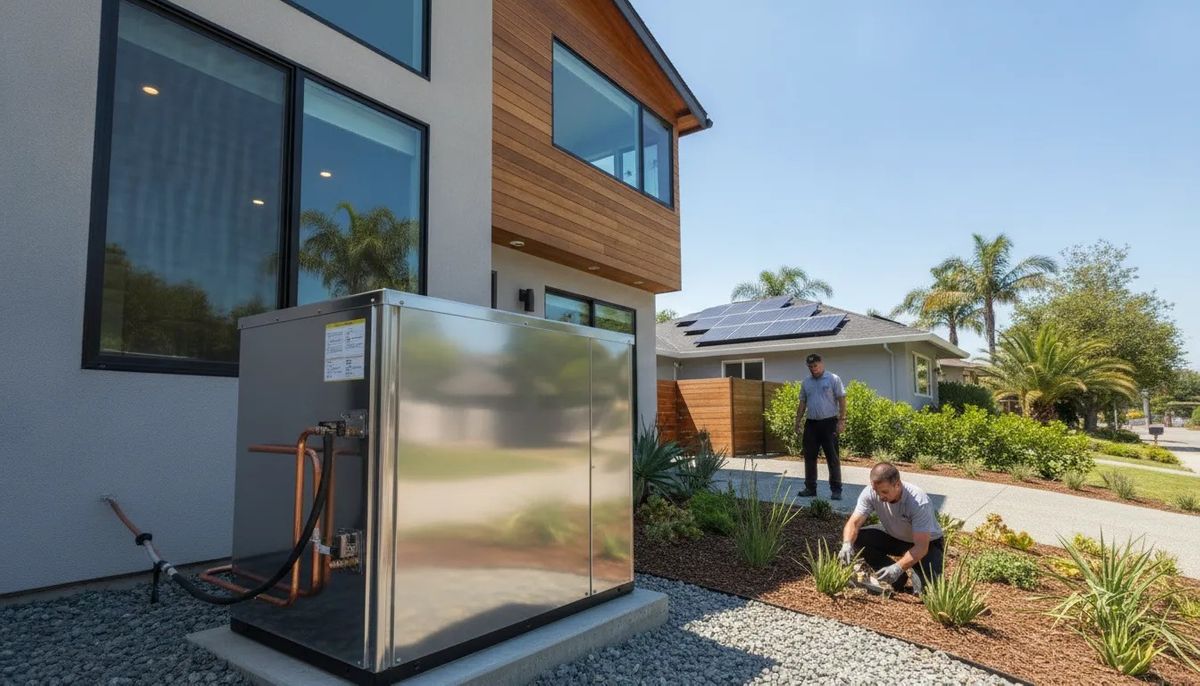
Choosing a heating system in the Bay Area is less about finding one universal winner and more about matching equipment to your home's climate. Energy rates, and comfort needs. Winter temperatures often stay between 40 and 60 degrees, a range in which air-source heat pumps can operate efficiently. A gas furnace, however. Remains a familiar option with predictable heating performance and efficiency ratings that commonly range from 80% AFUE for standard models to 97% or more for high-efficiency equipment.
For many Bay Area homes, a heat pump vs gas furnace Bay Area comparison comes down to priorities. Heat pumps combine heating and cooling in one system and can perform efficiently in mild weather. Gas furnaces may offer straightforward heating and potentially lower operating costs when PG&E gas rates are more favorable than electricity rates.
The right choice also depends on your existing ductwork, the microclimate around your home, and whether installation cost or long-term energy goals carry more weight. Start by comparing the practical advantages and tradeoffs of each system side by side.
Schedule a free estimate for your new heat pump or gas furnace installation today. Ortiz Heating and Air Conditioning provides free estimates for qualifying new equipment replacements and installations.
Heat Pump vs Gas Furnace Bay Area: Comparison Overview
For Bay Area homeowners, the better choice depends on more than the equipment price. Compare efficiency, climate fit, installation scope, and whether you also need cooling. The table below highlights the practical tradeoffs between a heat pump and a gas furnace.
Factor
Heat pump: Heat pump
Gas furnace: Gas furnace
Efficiency rating
Heat pump: Pros: Uses the Coefficient of Performance (COP) and heating seasonal performance factor (HSPF) to describe how efficiently it moves heat. In moderate conditions, one unit of electricity can move multiple units of heat. Cons: Performance varies with outdoor temperature and local electricity rates, so the rating alone does not predict your full utility bill.
Gas furnace: Pros: Uses Annual Fuel Utilization Efficiency (AFUE), which is straightforward to compare. Basic models are commonly rated around 80% AFUE, while high-efficiency models can reach 97% or more. ENERGY STAR gas furnaces in California require at least 90% AFUE. Cons: It burns fuel to create heat and cannot provide air conditioning.
Installation cost
Heat pump: Pros: A single system can handle heating and cooling, which may reduce the need for separate equipment. Cons: A typical ducted installation in the Bay Area may cost about $11,500 to $19,500, depending on the equipment, electrical work, ductwork, and home layout.
Gas furnace: Pros: A new furnace often has a lower upfront installation cost when existing gas service and ductwork are suitable. Typical installation costs range from about $6,500 to $11,000. Cons: You will need separate air conditioning equipment for summer cooling.
Bay Area climate fit
Heat pump: Pros: Winter temperatures often fall between 40 and 60 degrees Fahrenheit, a range where air-source heat pumps generally operate efficiently. See our heat pump services for system options. Cons: Homes in colder inland microclimates still require careful sizing and design for occasional low-temperature periods.
Gas furnace: Pros: Produces consistent heat across a wide range of outdoor temperatures and can be a practical fit where gas infrastructure is already in place. Cons: It provides heating only, so it cannot replace a cooling system.
Best fit
Heat pump: Choose the pros: A heat pump may suit homeowners who want year-round heating and cooling from one system and who prioritize efficient operation in a mild climate. Consider the cons: Compare PG&E electricity costs, existing infrastructure, and the higher initial investment.
Gas furnace: Choose the pros: A gas furnace may suit homeowners seeking a lower initial heating installation cost or already equipped with compatible gas service. Consider the cons: Plan separately for cooling and compare long-term fuel costs before deciding. Ortiz can help evaluate your heating services options.
These ranges are planning figures, not a quote. Actual pricing depends on the home's ductwork, electrical and gas connections, equipment capacity, and installation requirements.
How Do PG&E Rates Affect Heat Pump vs Gas Furnace Operating Costs?
The most efficient equipment is not automatically the least expensive to operate. In the Bay Area, the answer depends on how much energy a system needs and what PG&E charges for that energy. A heat pump may use less total energy, yet still cost more to run than a gas furnace when electricity carries a much higher price than natural gas.
How to compare COP and AFUE
Heat pumps are evaluated with a coefficient of performance, or COP. A COP of 2.5 to 3.5 means the system delivers roughly 2.5 to 3.5 units of heat for each unit of electrical energy it consumes under the tested conditions. One laboratory test measured a COP of 3.48 at an outdoor temperature of 47 degrees Fahrenheit, a useful reference point for Bay Area weather. Actual performance changes with outdoor temperature, system efficiency, sizing, and ductwork.
Gas furnaces use an Annual Fuel Utilization Efficiency, or AFUE, rating. An 80% AFUE furnace converts about 80% of its fuel into usable heat, while high-efficiency models can reach 97% or more. That percentage describes fuel conversion, not the price of the fuel itself.
Why PG&E rates can change the result
For a planning estimate, compare the energy required by each system with your actual utility rates. A representative PG&E electricity range is about $0.25 to $0.30 per kWh at a lower tier and approximately $0.35 to $0.40 at a higher tier. Natural gas may be around $2.50 per therm, including delivery. Your rate tier, seasonal usage, household demand, and current utility tariff can move the result substantially.
Because the electric-to-gas price ratio is high in some Bay Area service areas. Analyses have found that a heat pump can have higher annual operating costs than a high-efficiency gas furnace, even when the heat pump has a strong COP. That is why a cost comparison for your home should use actual bills or recent PG&E rates rather than a generic national calculator. Cost-optimal design balances energy consumption with local fuel prices, not efficiency ratings alone.
For more context on equipment and project budgeting, review our heat pump installation costs guide. Ortiz provides free estimates for new equipment installations or replacements, including heat pumps and furnaces. Service calls, inspections, diagnostics, and repair estimates are not free.
Climate Performance Across Bay Area Microclimates
The Bay Area is not one climate zone. Its five distinct microclimates can produce meaningful differences in outdoor temperature, heating demand, and how quickly a home needs to recover from a chilly evening. That local context matters when comparing a heat pump vs gas furnace Bay Area homeowners may be considering.
Why coastal conditions favor heat pumps
In mild coastal communities, winter temperatures often range from 40F to 60F. Those conditions are well suited to air-source heat pumps, which move heat rather than create it through combustion. A properly sized system can provide efficient heating through much of the season, then reverse operation to provide cooling during warmer weather. That year-round capability can simplify comfort management because one system handles both heating and air conditioning services.
Heat pump performance does not stop when the temperature dips. Outdoor air temperature affects efficiency, but advanced models are designed to maintain useful heating capacity at lower temperatures. In laboratory testing at 47F outdoors and 70F indoors, one residential heat pump delivered a measured coefficient of performance of 3.48. Actual results depend on the equipment, installation, insulation, ductwork, and operating conditions, so a test result should not be treated as a promise for every home.
When inland conditions change the decision
Colder inland areas, including parts of the East Bay, can place greater demands on a heating system during winter mornings and occasional cold snaps. A gas furnace produces heat directly and can deliver a rapid temperature increase, which may appeal to homeowners who prioritize fast recovery in a drafty or poorly insulated home. It may also be a practical choice when an existing gas line, furnace, and duct system are already in good condition.
The right answer depends on the specific neighborhood and home, not a broad Bay Area label. A professional evaluation should consider the local climate, heat-loss characteristics, ductwork, existing utility connections, and the homeowner's need for cooling as well as heating. That site-specific review helps prevent choosing equipment that is technically efficient but poorly matched to the way the home actually performs.
Lifespan, Maintenance, and Long-Term Value
Initial price is only one part of comparing a heat pump and gas furnace. The better long-term question is how each system's service life, maintenance needs, installation quality, and operating costs fit your home and budget.
Expected service life
A well-maintained heat pump typically lasts about 10 to 15 years. Because it provides both heating and cooling, its outdoor compressor and indoor components may operate across more seasons than a furnace. A gas furnace commonly lasts 15 to 20 years or more when it is properly sized, installed, and maintained. Actual lifespan depends on usage, equipment quality, indoor air conditions, and whether problems are addressed before they become major failures.
Maintenance requirements
Heat pumps require attention to both the indoor and outdoor units. Seasonal service can include inspecting electrical connections, cleaning coils, checking airflow, and verifying refrigerant performance. A furnace also needs regular filter changes, airflow checks, burner and heat-exchanger inspections, and safety testing. Neither system is maintenance-free, and professional service is especially important when comfort, efficiency, or unusual noises change.
Installation quality has a direct effect on performance and durability. Proper sizing, ductwork evaluation, refrigerant setup, combustion safety, and commissioning help the equipment operate as intended. A lower-quality installation can shorten service life and erase some of the expected efficiency advantage.
Key takeaways at a glance
Heat pumps typically last 10 to 15 years and provide both heating and cooling.
Gas furnaces commonly last 15 to 20 years with proper maintenance.
Both systems require regular professional service for optimal performance.
Installation quality directly affects efficiency, service life, and operating costs.
Looking beyond the installation price
For Bay Area homeowners, a ducted heat pump installation may cost approximately $11,500 to $19,500, while a gas furnace installation may range from about $6,500 to $11,000. These are starting points, not guaranteed quotes. Existing ductwork, electrical requirements, equipment capacity, and site conditions can change the total.
Total cost of ownership also includes annual energy use and maintenance over the system's life. A furnace may cost less to install and last longer, while a heat pump may combine heating and cooling in one system. Ortiz treats every installation as a lifetime partnership, with attention to detail and honest guidance rather than a one-time transaction. Free estimates apply to new equipment replacements or installations only. Repairs, inspections, and diagnostics carry a service fee.
Environmental Impact and Bay Area Energy Regulations
Environmental performance is an important part of the heat pump vs gas furnace Bay Area decision. But the answer is not as simple as labeling one system clean and the other inefficient. A heat pump uses electricity to move heat rather than burning fuel in the home. That can reduce direct on-site emissions, especially when the system operates efficiently during the Bay Area's moderate winters.
Why the electricity source matters
A heat pump's broader environmental impact depends partly on how the electricity it uses is generated. The National Institute of Standards and Technology notes that comparisons between gas and electric heating vary with the regional generation fuel mix. In other words, a highly efficient electric system is not automatically impact-free, and its results can change as the power supply changes. NIST's analysis of heating equipment and energy sources provides useful context for evaluating that trade-off.
California's movement toward efficient heating
California's ongoing focus on electrification, building efficiency, and energy reduction makes heat pumps increasingly relevant for homeowners planning a replacement. Heat pumps can provide heating and cooling in one system, while avoiding the direct combustion emissions produced by a gas furnace. That does not mean every home should switch immediately. Existing ductwork, electrical capacity, utility costs, and neighborhood conditions still affect the practical result.
Gas furnaces remain a reliable option and can deliver heat by combusting natural gas at the equipment. However, that combustion creates direct carbon emissions, even when the furnace has a high AFUE rating. The broader transition toward efficient heating treats both energy use and fuel choice as part of the solution. NIST describes cost-optimal design as a balance between reducing total energy consumption and comparing the relative costs of available fuels. Rather than assuming that one answer fits every property. Review the full NIST technical note when weighing environmental and operating-cost priorities together.
For a Bay Area home, the strongest choice is the system that is properly sized, efficiently installed, and aligned with the property's long-term energy goals. California's energy-reduction direction may favor electrification over time, but a site-specific evaluation remains essential.
Which Heating System Is Right for Your Bay Area Home?
There is no universal winner in the heat pump vs gas furnace Bay Area decision. The right system depends on your home's infrastructure, neighborhood climate, utility costs, comfort priorities, and plans for cooling. A practical evaluation should look beyond equipment efficiency ratings and consider how the system will perform in your specific home.
Start with the home's existing infrastructure
If your home already has usable ductwork, either a ducted heat pump or gas furnace may be a straightforward replacement path. However, the condition, layout, and size of the ducts still matter. A heat pump may also require electrical capacity and outdoor-unit space, while a gas furnace depends on an existing gas connection and properly vented flue. If the home does not have ducts, a ductless heat pump can offer another option, but the installation plan will be different.
Match the system to your climate and utility costs
Bay Area conditions vary across five distinct microclimates. Coastal homes commonly experience mild winter temperatures in the 40 to 60 degree range, which generally suits an air-source heat pump. Inland homes may see larger temperature swings and occasional cold snaps, making capacity at lower outdoor temperatures an important design consideration.
Review your actual PG&E electricity and natural gas rates before assuming one system will cost less to operate. A heat pump can use energy efficiently, but the cost difference between electricity and gas in your service area can change the monthly result. The choice should balance energy consumption with the price of each fuel, rather than relying on efficiency alone.
Compare the full budget and comfort goals
A gas furnace can make sense when a home already has gas infrastructure and the priority is a familiar heating-only system. A heat pump may be more attractive when you also need air conditioning, since one system can provide both heating and cooling. Consider the upfront installation cost, projected operating expenses, available electrical service, and expected time in the home. A dual-fuel setup can provide additional flexibility by pairing a heat pump with a gas furnace, allowing the system design to respond to outdoor conditions and energy costs.
Ortiz Heating and Air Conditioning is an authorized Carrier Dealer and can evaluate these factors rather than recommending equipment by default. For a new heat pump or furnace installation, Ortiz offers a free estimate. This applies to new equipment only, not repair diagnostics or service calls. Learn more about heat pump services, then request an evaluation based on your home's actual needs.
Frequently Asked Questions
Is a heat pump cheaper than a gas furnace in the Bay Area?
Not necessarily. A heat pump can use less energy to produce heat, but its annual cost depends on PG&E electricity rates. Natural gas prices, equipment efficiency, and how much heating your home needs. In some Bay Area rate situations, a high-efficiency gas furnace may cost less to operate. Compare both systems using your home's actual utility rates and heating demand rather than relying on equipment efficiency alone.
Are heat pumps more efficient than gas furnaces?
They measure efficiency differently. A gas furnace is rated by AFUE, with standard models commonly around 80% and high-efficiency models reaching 97% or more. While a heat pump is evaluated by its coefficient of performance, or COP. A higher COP means more heat output per unit of electricity. Heat pumps also provide heating and cooling in one system, which can improve overall equipment efficiency in a mild climate. ENERGY STAR furnace criteria explain the AFUE standard.
What should I consider when choosing between a heat pump and gas furnace?
Start with your existing ductwork, electrical and gas infrastructure, available installation space, local PG&E rates, and long-term efficiency goals. Your neighborhood matters as well because Bay Area microclimates vary from coastal to inland conditions. A properly sized system and professional installation are essential for comfort and dependable performance.
What are the operating costs of heat pumps versus gas furnaces in the Bay Area?
There is no single cost that applies to every home. Operating expense depends on the system's efficiency, outdoor temperatures, thermostat settings, insulation, duct condition, and the ratio between electricity and natural gas prices. Ask for a site-specific comparison that uses your recent utility bills, home characteristics, and proposed equipment ratings. That approach is more useful than comparing fuel prices or efficiency ratings in isolation.
Ready to Choose the Right Heating System?
The best fit depends on your home's infrastructure, your local Bay Area microclimate, and your long-term comfort and efficiency goals. Whether a heat pump or gas furnace fits your needs, the right installation matters just as much as the equipment itself. At Ortiz Heating and Air Conditioning. Every new furnace or heat pump installation starts with a free estimate and is backed by 25 years of experience, Diamond Certified service, and Carrier-authorized expertise. Schedule your free estimate today.