
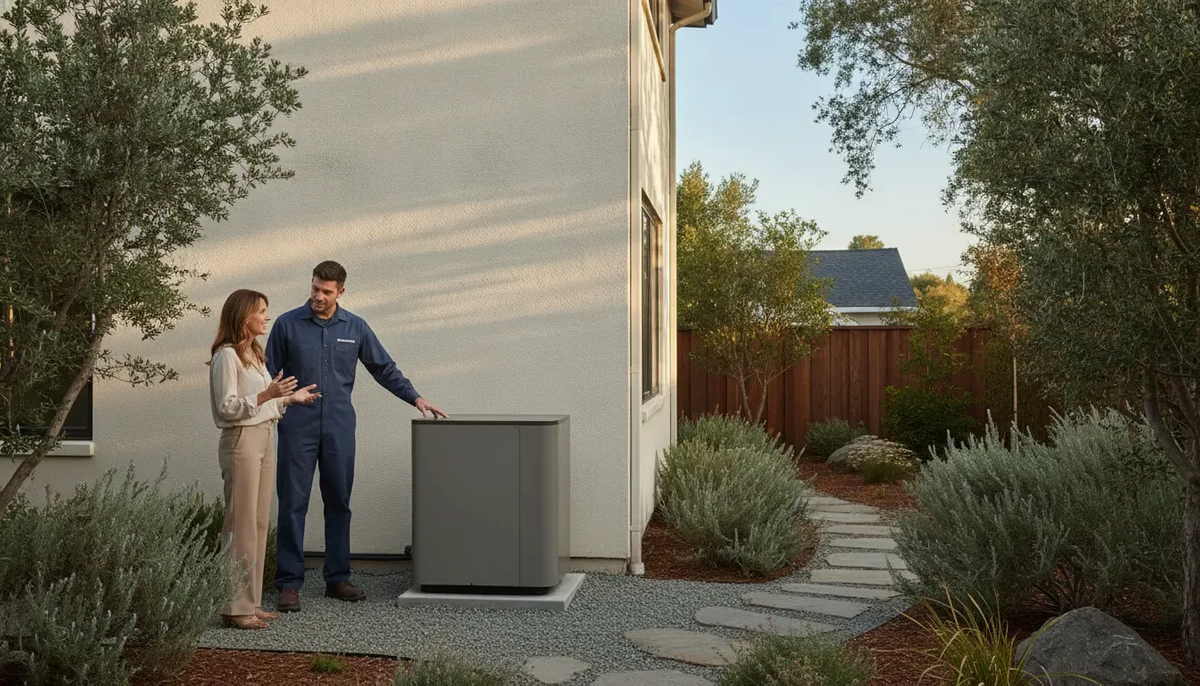
Quick answer: Start with a home-specific evaluation. It should cover load, ducts, electrical service, equipment placement, permits, and comfort goals. Choose the equipment after those details are reviewed.
Request a free heat pump installation estimate in Palo Alto
A heat pump installation palo alto project is not a one-size-fits-all equipment swap. The right design depends on how your home is built, how rooms are used. The condition of existing ducts, available electrical capacity, and the comfort issues you want to solve. Peninsula homes also vary in exposure, insulation, and microclimate. A recommendation that works in one property may be poorly matched to another.
For a successful project, choose a system after a professional evaluation of the home's heating and cooling load. Ductwork or zoning needs, electrical service, equipment placement, and complete project scope. A properly selected heat pump can provide both heating and cooling. Ducted and ductless configurations offer different ways to fit the system to the home.
The most important decision comes before installation day: matching capacity and configuration to the property rather than choosing from a product label alone. That evaluation establishes whether a ducted, ductless, or multi-zone approach makes sense and what the installation should include.
How Heat Pump Installation Palo Alto Projects Begin With the Right System
A heat pump is not a one-size-fits-all appliance. An air-source heat pump transfers heat between the home and outdoor air, providing both heating and cooling through one coordinated system. That basic design is explained by the U.S. Department of Energy, but the right equipment configuration still depends on the home it serves.
For many Palo Alto properties, the first decision is whether a ducted or ductless system makes more sense. A ducted heat pump can use existing central ductwork to distribute conditioned air throughout the home. That may be a practical approach when the ducts are properly sized, sealed, and located to serve the rooms consistently. If ductwork is damaged, undersized, poorly balanced, or difficult to extend. In that case, the installation plan may need duct redesign or targeted replacement rather than simply connecting new equipment to old infrastructure.
Ductless mini-splits are another option, particularly in homes without usable ducts or in additions and rooms that need independent control. A multi-zone design can connect several indoor units to one outdoor unit, allowing different areas to have separate comfort settings. The indoor-unit locations, line-set routing, condensate management, and appearance of each room all deserve attention during design. Ductless is not automatically better or simpler; it is one configuration that may fit specific construction and comfort needs.
Size the system for the home, not the guess
Equipment capacity should follow the home's actual heating and cooling load. A meaningful evaluation considers property size, insulation, windows, layout, air leakage, existing ductwork, electrical capacity, and the way occupants use each space. A home office with afternoon solar gain, for example, may create a different comfort priority than a rarely used room. Oversizing or undersizing can affect cycling, temperature consistency, humidity control, and operating performance, so a professional should explain how the recommendation was reached.
System selection also includes controls, outdoor-unit placement, clearances, drainage, and the home's electrical conditions. These details can affect whether the proposed equipment fits the site and functions as intended. Ortiz has experience with multi-zone systems, duct redesign, and challenging installation spaces. Homeowners can review the company's Ortiz heat pump services and professional HVAC installation services as they compare project approaches. The goal is a complete design that matches the structure, infrastructure, and comfort goals, rather than a capacity number chosen in isolation.
What Should a Palo Alto Homeowner Expect During Installation?
A well-managed installation is more than placing equipment and connecting a few lines. The contractor should first understand how your home uses energy, then document the design decisions, prepare the site, and confirm that the completed system operates as intended. The exact work can differ between a ducted replacement, a ductless system, and a multi-zone design, but these checkpoints should remain clear.
Home assessment
The project begins with an inspection of the home and existing HVAC system. The installer should review the property's layout, insulation, windows, current equipment, ductwork, electrical service, drainage needs, and available indoor and outdoor equipment locations. Share comfort concerns as well, such as rooms that run hot, a home office that needs steadier conditioning, or areas where noise matters. A site assessment helps distinguish a straightforward replacement from a project that needs duct redesign, zoning, or other improvements.
Load and airflow planning
Equipment should be selected for the home's heating and cooling requirements, not simply matched to the nameplate of the old system. Ask how the contractor evaluated the property's size, insulation, layout, duct condition, and comfort goals. The plan should also address airflow through each served area, return-air pathways, filtration, and zone control where applicable. Correct sizing supports more consistent comfort and helps the system avoid operating in a way that creates unnecessary temperature swings.
Written recommendation
After the assessment, you should receive a clear recommendation explaining the proposed configuration, equipment, controls, duct or electrical work, placement, drainage, and project scope. A ducted system may use existing ductwork if its condition and capacity are suitable. A ductless or multi-zone approach may be more practical where ducts are absent or difficult to extend. The estimate should be transparent and provided before work begins, with assumptions and exclusions identified.
Permit and project review
Before installation, confirm which permits and inspections apply to your property and equipment. Palo Alto provides electrification and permit-related resources, but requirements can depend on the specific project. Your contractor should identify the responsible party, include applicable permit work in the scope, and explain any electrical or structural review that may be needed. Do not assume that a replacement has the same requirements as a new installation.
Preparation and installation
The crew should protect work areas, confirm equipment locations, and prepare the electrical, refrigerant, condensate, duct, and control connections required by the design. During installation, ask how the outdoor unit will be supported, how lines will be routed, and how penetrations will be sealed. If existing ductwork or electrical components are being reused, the installer should verify that they are appropriate rather than treating reuse as automatic.
Startup and commissioning
Before the project is considered complete, the system should be started, tested, and commissioned. The technician should verify operating performance, airflow, temperature response, controls, safety functions, drainage, and unusual noise or vibration. Request a walkthrough of the thermostat, filters, maintenance requirements, and any documents or warranty registration steps that apply. A final review gives you an opportunity to identify questions while the installation team is still present.
For a Palo Alto project, look for a contractor who explains each checkpoint and records the final system details. Ortiz provides professional HVAC installation services for new systems, replacements, and upgrades across the Peninsula.
Which Cost Factors Shape Heat Pump Installation in Palo Alto?
A heat pump installation is not a single equipment purchase. The project scope depends on the home, the existing HVAC system, and the details required to deliver even comfort. Two Palo Alto properties may need different solutions because their insulation, floor plans, ductwork, electrical service, outdoor space, and comfort goals differ. A useful proposal makes those differences visible instead of presenting one unexplained total.
Project factors that should appear in a heat pump installation scope
Factor: What to compare
Capacity and efficiency: Look for the proposed capacity, efficiency ratings, equipment model, and the load assumptions behind the selection. Bigger is not automatically better; the system should match the home and comfort objectives.
Ductwork: Confirm whether existing ducts will be reused, sealed, modified, redesigned, or replaced. Ask how their condition and sizing were evaluated.
Electrical service: Check whether the proposal includes circuit requirements, disconnects, wiring, panel capacity review, and any electrical work needed for the selected equipment.
Controls: Compare the thermostat or control system, zoning needs, compatibility with the indoor unit, and how comfort settings will be configured.
Placement and drainage: Review the outdoor unit location, clearances, airflow, service access, condensate routing, and protection from water or other site conditions.
Permits: Ask which permits and inspections apply, who will obtain them, and whether permit-related tasks are included in the written scope.
Access: Clarify how crews will reach the equipment, attic, crawlspace, roof, or electrical panel, including preparation for narrow or difficult work areas.
Labor: Compare the installation tasks, crew responsibilities, removal and disposal work, protection of finished surfaces, and cleanup commitments.
Commissioning: Verify that startup includes refrigerant and electrical checks, airflow and control testing, system documentation, and homeowner instruction.
When comparing written scopes, match like with like. A proposal that leaves duct condition, electrical preparation, permits, or commissioning undefined may look simpler while transferring important decisions to later. Ask each installer to identify assumptions, exclusions, equipment models, and the exact work included. Ortiz's HVAC installation and replacement services emphasize recommendations based on property size, insulation, layout, and heating and cooling needs. That factor-based approach helps Palo Alto homeowners evaluate the quality and completeness of the plan, not just its headline price.
What Heat Pump Installation Palo Alto Homeowners Should Know About Climate and Permits
A heat pump project in Palo Alto should be designed for the specific property, not based on a citywide template. Peninsula conditions can vary by location, exposure, building age, insulation, window area, and indoor comfort goals. Even neighboring homes may have different heating loads, duct layouts, electrical capacity, and outdoor equipment constraints. A careful site assessment helps the installer select equipment that can maintain comfort during both ordinary and occasionally cooler weather without relying on guesswork.
Microclimate and sizing matter
Correct sizing remains central to comfort. The recommendation should account for the home's size, insulation levels, layout, existing ductwork, electrical service, and how the occupants use each room. A system that is too small may struggle during colder conditions. One that is too large may cycle inefficiently and provide less consistent humidity control. The right design may be a ducted system, a ductless configuration, or a multi-zone arrangement, depending on the structure and the desired room-by-room control.
Placement also deserves attention. The outdoor unit needs an appropriate location with adequate clearance for airflow and service access. The installer should consider nearby windows and living spaces when evaluating operating noise, along with a stable base and a sensible path for condensate or defrost water. Drainage should not create a nuisance for walkways, foundations, neighboring property, or other parts of the site. Tight side yards, patios, balconies, fencing, and limited access can affect both the equipment choice and the installation method.
Confirm current Palo Alto requirements
Permitting and electrification requirements can change, and the applicable process may depend on the equipment, scope of work, property, and whether electrical or structural changes are included. Before work begins, ask the contractor to identify which permits and inspections apply, who will obtain them, and what documentation will be provided at completion. Do not assume that a system qualifies for a particular streamlined process or incentive without verifying the current rules.
The City of Palo Alto's Electrify My Home resource is a useful starting point for current city electrification information. A qualified installer should still confirm requirements with the appropriate city department for the actual project. The written proposal should clearly separate equipment, placement, clearances, drainage, electrical work, permits, and commissioning so the homeowner understands the complete scope before approving installation.
What Should You Ask Before Choosing an Installer?
A heat pump is only as dependable as the design and installation behind it. Before choosing a contractor for your Palo Alto project, ask questions that reveal whether the recommendation is based on your home or simply on a standard equipment package.
How will you calculate the heating and cooling load?
Ask whether the contractor will evaluate the home's size, insulation, window exposure, layout, and comfort goals before selecting capacity. Proper sizing is more than matching a system to the old equipment. An installer should explain how the calculation affects comfort, humidity control, cycling, and equipment selection. Be cautious if the recommendation is made without measuring the property or discussing rooms that are consistently too warm or too cold.
What will you inspect beyond the outdoor unit?
Ask for a review of the existing ductwork, electrical service, thermostat or controls, condensate drainage, refrigerant-line routing, equipment clearances, and installation access. A proposal should identify whether ducts need sealing or redesign, whether electrical work is required, and where the indoor and outdoor components will be placed. These details can materially change the project scope, so they should be addressed before work begins rather than discovered midway through installation.
What equipment options and documentation will you provide?
Request the proposed model numbers, capacity, efficiency ratings, configuration, and explanation of why each option fits your home. Ask which permits are required, who will obtain them, and how the completed system will be inspected. You should also receive a written scope that identifies equipment, labor, duct or electrical work, controls, drainage, site preparation, cleanup, and commissioning. Transparent estimates make it easier to compare complete scopes instead of comparing incomplete bids.
How will you commission and support the system?
Ask what the installer will test at startup, including airflow, refrigerant charge, thermostat operation, temperature performance, and safety controls. Clarify the manufacturer's warranty, workmanship coverage, registration process, and what maintenance the system needs after installation. Also ask who will support you if comfort issues arise after the first season.
Which credentials and experience should you verify?
Confirm the contractor's active license, insurance, relevant training, and experience with homes like yours. Ortiz Heating and Air Conditioning, Inc. has more than 25 years of experience and is a Carrier Authorized Dealer. The company holds California Contractor License #CL803346 and is Diamond Certified with BBB A+ accreditation. The company also reports experience with multi-zone systems, duct redesign, and challenging installation spaces, with owner oversight of operations and quality control. Ortiz serves Palo Alto through its San Francisco Peninsula HVAC service area. For additional context on evaluating contractors, review this guide to choosing professional heat pump installers.
How Can You Protect Comfort After Installation?
A successful installation is the beginning of your heat pump's service life, not the end of the project. Before the installer leaves, make sure everyone in the household understands the thermostat or control system. Ask how to change heating and cooling modes, adjust schedules, use zone controls if applicable, and recognize an alert that requires professional attention. A clear handoff prevents confusion and helps you notice unusual operation early.
Confirm that the final setup matches the way your Palo Alto home is used. Bedrooms, living areas, additions, and home offices may have different comfort needs. If your system uses multiple zones. So ask the installer how each zone should be operated and whether closing vents or changing settings in one area affects the rest of the system. Do not assume that a setting designed for another home will be appropriate for yours.
Simple homeowner checks matter
Keep the return-air path and supply registers clear of furniture, curtains, dust, and stored items. Check the filter according to the equipment manufacturer's instructions and replace it when it is dirty or as directed for your specific system. The correct filter type and fit matter. A filter that is incorrectly installed or heavily loaded can restrict airflow, while an oversized or poorly fitted filter may allow air to bypass it.
Pay attention to changes rather than trying to diagnose refrigerant, electrical, or airflow problems yourself. Weak airflow, uneven room temperatures, persistent odors, unusual sounds, water where it does not belong, or repeated control alerts are useful details to document for the installer. A brief record of when the issue occurs and which settings were active can make follow-up more efficient.
Keep the project record accessible
Save the final equipment information, model and serial numbers, commissioning notes, permit documentation, and manufacturer warranty materials in one place. Ask what maintenance and follow-up process the installer recommends for the equipment and your home's conditions. Warranty coverage depends on the applicable manufacturer terms, registration requirements, and the specific installation, so rely on your written documentation rather than assumptions.
For a practical overview of ongoing care, review this guide to heat pump maintenance planning. Consistent attention to controls, airflow, documentation, and professional follow-up gives your installer better information and helps protect the comfort you planned for.
Request a Palo Alto heat pump installation estimate
Frequently Asked Questions About Heat Pump Installation in Palo Alto
How much should a heat pump installation cost in Palo Alto?
There is no reliable one-size-fits-all price. The project total can change with equipment capacity, efficiency, ductwork, electrical upgrades, controls, drainage, permits, access, labor, and commissioning. Ask for a written scope that separates equipment from site work so you can compare complete proposals rather than headline prices.
Can I get a heat pump rebate in Palo Alto?
Rebate availability and eligibility can change by program, equipment type, property, and installation date. Check current guidance through the City of Palo Alto electrification resources, then ask your contractor which documentation and equipment qualifications apply. Do not assume a rebate is available until the program confirms it.
Is a heat pump suitable for every Palo Alto home?
Many homes can use a heat pump, but the right configuration depends on the home's size, insulation, layout, existing ducts, electrical service, and comfort goals. A professional should evaluate the property before recommending a ducted, ductless, or multi-zone system.
What should a contractor include in a heat pump installation proposal?
Look for the proposed equipment and capacity, sizing method, duct and electrical work, permit responsibilities, drainage and outdoor-unit placement, controls, commissioning procedures, warranty terms, and follow-up care. The proposal should explain assumptions and identify work that may change after the site assessment.
Plan Your Palo Alto Heat Pump Project
A well-planned installation can help align your new heat pump with your home's layout, comfort goals, electrical needs, and long-term service requirements. Ortiz can review the project scope and help you understand the equipment and installation choices that fit your property.
Request an installation quote for new heat pump equipment in Palo Alto