
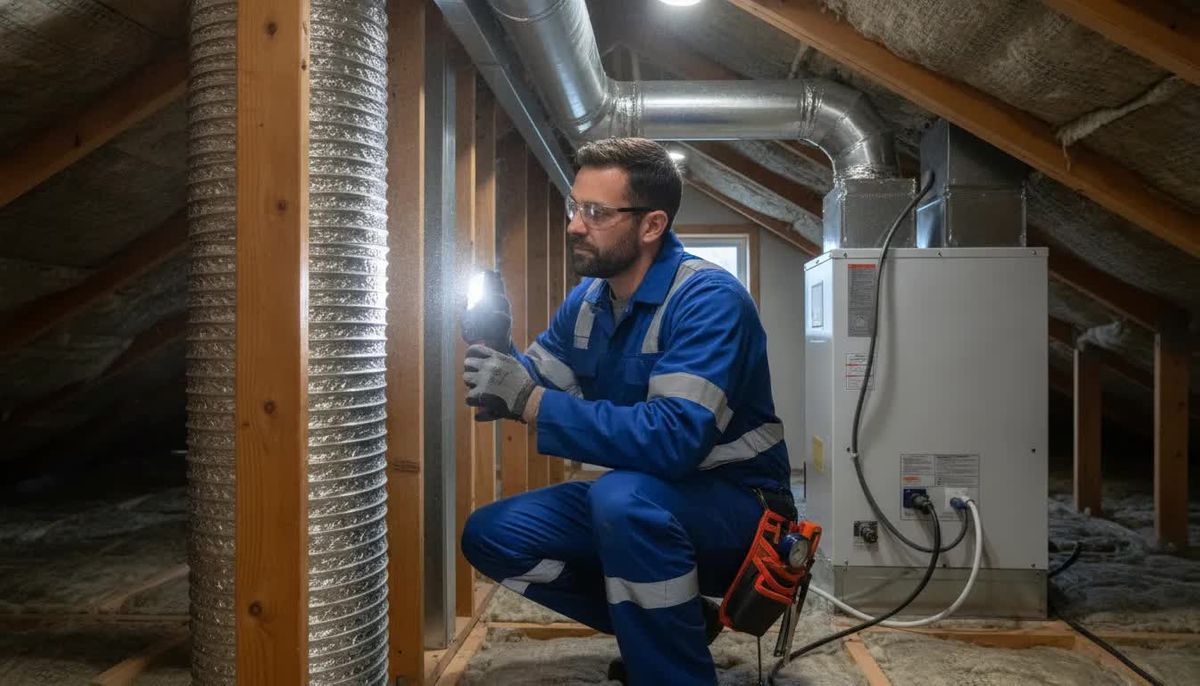
Bay Area homes can lose comfort and efficiency through ductwork that is dirty, damaged, or leaking into attics and crawl spaces. A system may run longer than expected while some rooms stay warmer or cooler, even when the heating or cooling equipment itself is operating properly.
When the evidence points to leaks, professional duct cleaning Bay Area homeowners arrange should be paired with an inspection and, when needed, sealing. The U.S. Department of Energy reports that a properly sealed duct system can reduce heating and cooling utility bills by up to 20%: energy.gov guidance. Cleaning removes accumulated debris, while sealing addresses the openings that allow conditioned air to escape.
That distinction matters in the Bay Area, where homes face varied microclimates, allergy seasons, and occasional wildfire smoke. Start by looking for the practical warning signs that indicate your ductwork deserves closer attention.
Signs Your Bay Area Home Needs Duct Cleaning and Sealing
Your ductwork can develop problems without making an obvious noise. In Bay Area homes, especially older construction with ducts routed through attics or crawl spaces. Small gaps, disconnected joints, accumulated debris, and damaged insulation can affect comfort and system performance. Watch for these practical warning signs.
Utility bills that keep climbing
A sudden or unexplained increase in heating or cooling costs may point to significant duct leaks or blockages. When conditioned air escapes before it reaches the rooms, the HVAC system may need to run longer to maintain the thermostat setting. Higher bills alone do not prove that ductwork is the cause, but they are a good reason to have the system and duct routes inspected. The U.S. Department of Energy's Building America guidance identifies high utility bills as a common indicator of duct problems: tight duct sealing and energy efficiency guidance.
Rooms that never feel the same temperature
Do you have a bedroom that stays warm while the living room is comfortable, or a hallway that receives very little airflow? Uneven temperatures throughout the home often suggest that conditioned air is not being distributed correctly. Disconnected, damaged, crushed, or leaking ducts can reduce airflow to individual rooms. Ducts in an attic or crawl space deserve particular attention because leaks in those unconditioned areas waste conditioned air outside the living space.
Dust around supply or return registers
Visible dust collecting around a register can indicate duct leaks, poor filtration, or debris bypassing the filter and entering the system. Clean the grille and check the filter first. If dust returns quickly, appears at multiple registers, or is accompanied by weak airflow. An inspection can help determine whether cleaning, sealing, filtration improvements, or another repair is appropriate.
Mold, pests, or heavy debris inside the ductwork
Visible substantial mold growth, evidence of pests or vermin, or heavy deposits of dust and debris are stronger reasons to consider professional duct cleaning. The EPA recommends cleaning when ducts are visibly contaminated in these ways, rather than treating cleaning as an automatic routine service: EPA guidance on air duct cleaning. A qualified technician should identify the source of moisture or intrusion as well as remove contamination, because cleaning without correcting the underlying problem may allow it to return.
How Leaky Ducts Impact Your Home's Energy Efficiency
Your HVAC system can be in good working order and still waste energy when the ductwork leaks. This is especially common in Bay Area homes with ducts routed through attics, crawl spaces, garages, or other areas outside the conditioned living space. Heated or cooled air may escape before it reaches the rooms that need it, while the system continues running to make up the difference.
Why duct leaks increase run time
When conditioned air escapes from a leaky supply duct in an attic or crawl space, your home receives less of the heating or cooling the system produced. The thermostat may continue calling for comfort, forcing the equipment to run longer. The U.S. Department of Energy Building Science Education and Solutions Center notes that leaky ducts in unconditioned spaces can require longer system operation to maintain comfortable temperatures. Longer run times can increase energy use and place additional wear on motors, compressors, and other components.
Sealing the duct system can address that lost capacity. According to the same energy guidance, a properly sealed heating and cooling duct system can reduce utility bills by up to 20%. Although actual savings depend on the amount and location of leakage, system condition, insulation, and household usage. This is one reason a duct inspection should consider more than visible dust. A clean duct is not necessarily a tight duct.
Duct location matters
Ducts inside conditioned space generally lose less energy than ducts exposed to unconditioned attics or crawl spaces. Relocating ductwork is not always practical, particularly in an existing Bay Area home, but thorough sealing and appropriate insulation can reduce the impact of those exposed runs. Conditioned air leaking into an attic does not help cool or heat your living space, and the resulting extended run times can accelerate equipment wear.
For homeowners planning a major HVAC upgrade, duct performance should be part of the conversation. Ortiz can evaluate whether the existing distribution system supports new HVAC system installation or needs corrective work first. Installing efficient equipment without addressing substantial duct losses may leave part of that investment unrealized.
How duct leakage is measured
A professional can use duct blaster testing to measure leakage in cubic feet per minute at a specified pressure. This provides a more useful picture than guessing from a high utility bill or an uncomfortable room. Test results can help identify whether sealing, insulation, layout changes, or broader duct replacement is the appropriate next step.
Duct Cleaning vs. Duct Sealing: What's the Difference?
Duct cleaning and duct sealing address different problems. Cleaning removes accumulated debris from the inside of the ductwork, while sealing closes gaps that allow conditioned air to escape or unfiltered air to enter. A professional evaluation can determine whether your Bay Area home needs one service, the other, or both.
How duct cleaning and duct sealing differ
Uses specialized tools to dislodge dust and other debris, then removes it with a high-powered vacuum. The EPA explains how professional duct cleaning works. Duct sealing: Uses materials and methods that close leaks at duct joints, seams, and openings, helping conditioned air stay in the intended rooms.
Is most appropriate when ducts are visibly contaminated with substantial mold growth, pests, or heavy deposits of dust and debris. Duct sealing: Is appropriate when testing or inspection identifies leaks, disconnected sections, or poorly sealed connections.
Addresses debris accumulation. It does not permanently change the airtightness of the duct system, so cleaning alone will not repair a leak. Duct sealing: May reduce energy loss and improve comfort. A properly sealed duct system can reduce heating and cooling utility bills by up to 20%, according to the U.S. Department of Energy Building Science Education.
Should be performed with proper containment and vacuum collection. Poor technique can release more dust and contaminants into the home. Duct sealing: Uses mastic or UL 181-approved tape for duct connections. Aerosolized sealing can help close small holes from inside hard-to-access duct systems.
Material choice matters when sealing exposed ductwork. Standard cloth-backed duct tape can dry out and fail, so it should not be treated as a permanent repair. For seams wider than 1/8 inch, fiberglass mesh tape should reinforce the gap before mastic is applied. These details help the repair remain durable instead of creating a short-lived patch.
Cleaning and sealing can sometimes be performed in sequence. Removing debris first may be necessary before aerosolized sealant is applied, because the sealant needs to adhere to the duct walls. However, cleaning is not automatically required for every home, and sealing is not a substitute for removing substantial contamination. The right recommendation depends on the duct condition, leak locations, and the symptoms you are experiencing.
Indoor Air Quality During Allergy Season and Wildfire Smoke
Bay Area homes face changing air-quality conditions throughout the year. Spring pollen can enter through gaps around duct connections. While smoke events create concern about what the HVAC system may draw from an attic, crawl space, or other unconditioned area. Duct sealing cannot replace proper filtration or other air-quality measures, but it can reduce one pathway for unwanted contaminants.
Sealed ducts help limit contaminant entry
A properly sealed duct system can improve indoor air quality by reducing the amount of dust, pollen, and moisture drawn into the heating and cooling system. This is especially important for return ducts. When a return duct is poorly sealed and located in an unconditioned space, it can pull contaminated air into the system and distribute it throughout the home. The U.S. Department of Energy's Building Science Education guidance identifies this as a potential source of contaminants moving through the house: learn more about tight duct sealing.
During wildfire smoke events, keeping doors and windows closed, using the appropriate HVAC filter, and following local air-quality guidance remain important. Sealing duct leaks supports those measures by reducing uncontrolled air movement through hidden gaps. It also helps the system deliver filtered, conditioned air more predictably instead of losing air before it reaches the rooms.
Moisture control matters for mold prevention
Duct sealing also has a moisture-related benefit. According to the EPA, controlling moisture is the most effective way to prevent biological growth in air ducts. If mold or other biological contamination develops, sensitive occupants may experience allergic reactions or other symptoms. Sealing leaks, addressing condensation, and correcting the source of moisture are more useful than cleaning alone when moisture is allowing growth to return. Ortiz can evaluate these concerns as part of its indoor air quality solutions.
When cleaning helps, and when it does not
Duct cleaning and duct sealing solve different problems. Cleaning removes accumulated debris with specialized tools and a high-powered vacuum, while sealing addresses openings that allow air and contaminants to move through unintended paths. The EPA states that duct cleaning alone has not been conclusively shown to prevent health problems or reduce household particle levels. It also notes that most dirt inside ductwork adheres to duct surfaces rather than entering the living space. And dirty ducts are only one possible source of indoor particles.
Cleaning is most appropriate when ductwork is visibly contaminated with substantial mold growth, pests, or heavy deposits of dust and debris. A professional inspection can help determine whether the priority is cleaning, sealing, moisture correction, filtration, or a combination of measures. For additional context on air purification options, review how different technologies address indoor contaminants.
How Often Should You Clean Your Air Ducts?
There is no universal calendar for air duct cleaning in a Bay Area home. Some industry sources suggest cleaning every two to three years, but that interval is only a general starting point. The right timing depends on your home's conditions, the condition of the ductwork, filtration, and whether there is evidence of contamination.
Look for evidence before scheduling a cleaning
The EPA does not recommend a blanket, routine-preventive schedule for every household. Instead, clean the ducts when they are visibly contaminated with substantial mold growth, pests or vermin, or heavy deposits of dust and debris. If you can see one of these conditions inside the duct system, cleaning may be appropriate. A professional inspection can help distinguish a genuine duct problem from ordinary dust around a register.
This measured approach matters because most dirt that collects inside ductwork adheres to the duct surfaces rather than automatically entering living spaces. Duct cleaning alone has not been conclusively shown to prevent health problems. So it should address a documented need rather than serve as a recurring add-on with no clear reason.
When Bay Area conditions deserve closer attention
Homes exposed to wildfire smoke, seasonal allergens, construction dust, moisture, or pest activity may warrant more frequent inspection, especially after a significant smoke event or a renovation. Inspection is also sensible when you notice unexplained dust, musty odors, declining airflow, or debris returning quickly after filter changes. These signs do not prove that cleaning is needed, but they provide a reason to investigate.
Regular filter replacement is one of the most effective preventive steps because it reduces the dust entering the HVAC system in the first place. Include filter checks in your regular HVAC maintenance routine, and ask an HVAC professional to assess the ducts when contamination or airflow concerns persist.
What to Expect From Professional Duct Cleaning and Sealing
A thorough service should address both debris and air leakage. The exact sequence can vary by home, but a qualified technician should explain the findings. Protect the living space, and verify the work instead of treating duct cleaning as a quick vacuuming job.
Inspect and test the duct system
The visit should begin with an inspection of accessible ductwork, registers, returns, plenums, and other system components. A duct blaster test can measure leakage under controlled pressure, helping identify whether air is escaping and how extensive the problem may be. If registers or sections are difficult to locate, an infrared camera can speed the process by identifying temperature differences and hard-to-reach components. A system that is too leaky to pressurize during testing may need sealing before other improvements can deliver their full value. Professional duct cleaning and sealing services should start with evidence, not a blanket recommendation.
Dislodge and remove debris
When cleaning is appropriate, specialized agitation tools loosen dust and debris from the interior surfaces. A high-powered vacuum with effective collection helps remove that material rather than allowing it to spread through the home. Improper cleaning can release more contaminants than were present before the work, particularly when the vacuum collection system or containment is inadequate. The provider should also clean all contaminated components, not just the visible duct runs. Leaving one component untreated can cause immediate re-contamination of the rest of the system.
Seal leaks with appropriate materials
After cleaning and locating leakage points, technicians may seal joints and gaps with mastic sealant or UL 181-approved tape. Standard cloth-backed duct tape is not a durable substitute because it can dry out and fail. For small holes or difficult-to-access sections, aerosolized duct sealing can work from inside the system. Provided the ducts are clean enough for the particles to adhere to their surfaces. Larger gaps may require direct access and reinforcement before mastic is applied.
Verify the finished system
Post-service verification should confirm that the components were cleaned, the visible leaks were sealed, and the system operates as expected. Testing can show whether leakage has decreased, while a final inspection can identify remaining gaps, disconnected sections, or airflow concerns. Ask for a clear explanation of what was found and what was completed so future HVAC maintenance can build on an accurate baseline.
Frequently Asked Questions
How do I know whether my ducts need cleaning or sealing?
Look for uneven temperatures between rooms, rising utility bills, visible dust around registers, or evidence of mold, pests, or heavy debris. These signs can point to different problems, so an inspection helps determine whether the priority is removing contamination, repairing leaks, or addressing both. The EPA recommends cleaning when ducts are visibly contaminated rather than treating it as routine preventive work: EPA guidance on air duct cleaning.
Can sealing ductwork lower my energy bills?
It can, especially when ducts run through an attic, crawl space, or another unconditioned area and lose a meaningful amount of heated or cooled air. The U.S. Department of Energy's Building Science Education and Solutions Center reports that a properly sealed duct system can reduce heating and cooling utility bills by up to 20%. Although actual results depend on the system's condition, layout, insulation, and household use: duct sealing efficiency guidance.
Does duct cleaning improve indoor air quality during allergy season?
Cleaning can remove substantial dust or debris when the ductwork is visibly contaminated, but it is not a guaranteed treatment for allergies or household particle levels. Sealing can help by reducing the chance that poorly sealed return ducts draw dust, pollen, moisture, or other contaminants from unconditioned spaces into the HVAC system. Good filtration and moisture control remain important parts of an indoor air quality plan.
How often should Bay Area homeowners have their air ducts cleaned?
There is no universal cleaning interval that fits every Bay Area home. Have the system evaluated when you see substantial mold, pests, or heavy deposits, after major renovation work, or when airflow and comfort change unexpectedly. Replace filters as recommended for your system, and ask a qualified technician to inspect the complete duct system rather than scheduling cleaning solely by the calendar.
Ready to Schedule Your Duct Inspection?
A professional inspection can help identify whether your Bay Area home's ducts need cleaning, sealing, or both. Schedule your duct inspection and cleaning today and let our team evaluate your ductwork.