
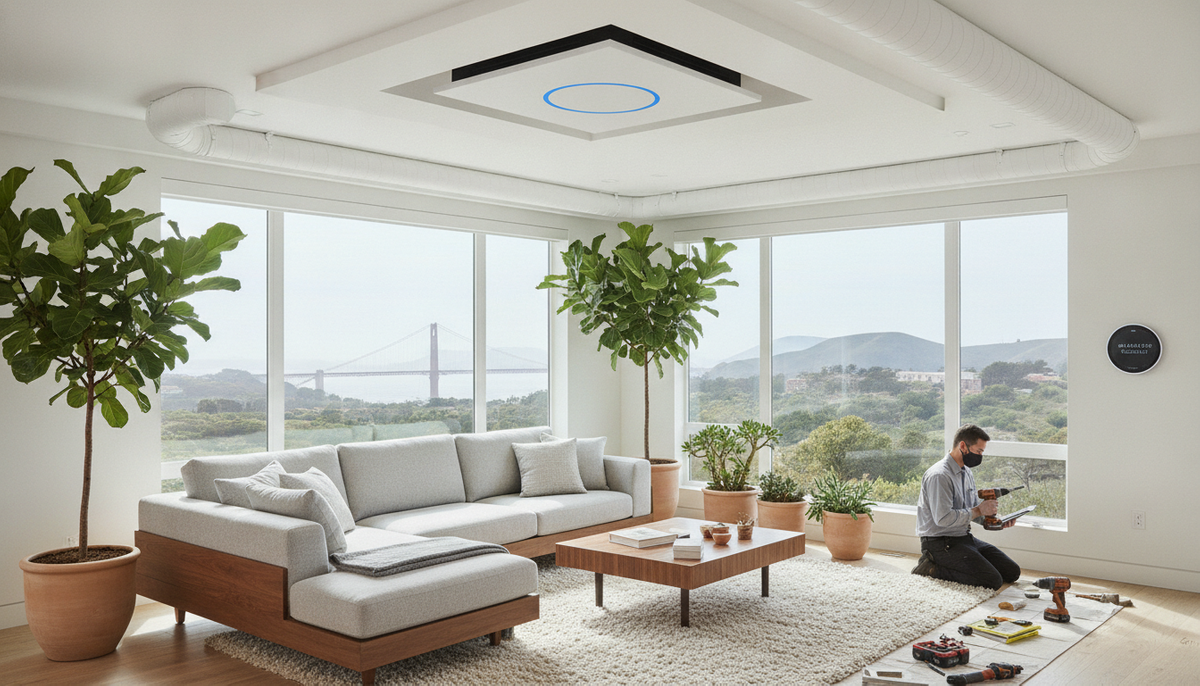
Bay Area wildfire season brings a gritty orange haze that penetrates closed doors and windows. Waking up with a scratchy throat and watery eyes has become a common ritual for local families.
Schedule a free estimate for a whole-home air purification system from Ortiz Heating and Air Conditioning. Call (925) 370-4323 today.
The short answer is yes. Do air purifiers work to reduce indoor pollutants? Research from the EPA confirms that air cleaners can significantly reduce fine particles in your home. HEPA filters capture 99.97% of airborne particles as small as 0.3 microns. However, these devices have limits. They cannot remove settled dust, gases, or radon without specialized carbon filters. For Bay Area homeowners, pairing air purification with source control and ventilation delivers the best indoor air quality.
How Do Air Purifiers Work? The Science Behind Air Filtration
Air purifiers use mechanical filtration to trap particles as air passes through a dense mesh of fibers. High-quality HEPA filters capture dust, pollen, mold spores, and smoke through a combination of impaction, interception, and diffusion. Whole-home systems integrate with your HVAC ductwork to filter air throughout every room.
Many homeowners ask, do air purifiers work to keep indoor air clean? The answer is yes, and the science is straightforward. According to the Environmental Protection Agency, air cleaners reduce indoor pollution by pulling air through specialized filters that trap particles.
How Filters Catch Particles
Air filters use three physical mechanisms. Large dust particles hit the filter fibers and get stuck through impaction. Medium particles cannot turn fast enough, so they brush against a fiber and adhere through interception. The smallest particles drift in random patterns and bump into molecules, a process called diffusion that pushes them into the fibers. This layered approach allows HEPA filters to trap 99.97% of particles at 0.3 microns.
Ortiz Heating and Air Conditioning recommends whole-home HEPA filtration for Bay Area homes because it treats all the air your HVAC system moves. Portable units work for single rooms, but a whole-home solution provides consistent coverage across every living space.
Four Common Filtration Methods
Different air purifiers use different technologies. Here are the most effective options for Bay Area homes:
HEPA Filters: The gold standard. A true HEPA filter traps at least 99.97% of particles at 0.3 microns, including smoke, pollen, and dust.
HyperHEPA Filters: Capture ultrafine particles down to 0.003 microns. Ideal for homes with asthma or allergy sufferers.
Activated Carbon Filters: Remove gases, odors, and VOCs that standard filters cannot capture. Essential for wildfire smoke odor removal.
UV Germicidal Lights: Installed inside ductwork to kill mold spores, bacteria, and viruses as air passes through your HVAC system.
For a deeper comparison of your options, read our guide on whole house air purifier vs portable systems.
Do Air Purifiers Actually Make a Difference?
Yes, but effectiveness depends on the pollutant type. Air purifiers excel at removing fine particles suspended in the air, such as wildfire smoke and cooking particulates. They are less effective for heavy allergens like pet dander and dust that settle quickly on surfaces. A complete indoor air quality strategy combines filtration with regular cleaning and ventilation.
To answer the question, do air purifiers work across different pollutants, we must look at how particles behave in a home. Fine smoke particles from wildfires can stay suspended for hours. A HEPA filter running continuously will capture these particles before you breathe them in. But heavier allergens like pollen, dust mite waste, and pet dander fall to the floor within minutes.
Particles Suspended in the Air
The EPA states that air cleaners are most effective at removing fine, respirable particles. During wildfire season, tiny ash and soot particles float in the air for extended periods. A high-quality filter with a strong fan pulls this contaminated air through the filter media and traps the debris. This is why Ortiz technicians recommend running your system continuously on smoky days.
The Limits of Surface Settling
Heavy particles that settle on carpets, furniture, and bedding cannot be captured by an air purifier. The EPA notes that filters are generally ineffective at removing these larger allergens because they settle before reaching the filter. Walking across the carpet stirs them back up briefly, but they fall again quickly.
To address settled allergens, combine filtration with regular vacuuming, dusting, and washing bedding in hot water. The indoor air quality solutions guide from Ortiz offers a complete approach to managing both airborne and settled pollutants.
A Complete Air Quality Plan
The EPA recommends a three-part strategy: source control, ventilation, and air cleaning. Air purifiers are the third line of defense, not a standalone solution. Removing pollutant sources like smoking indoors or using low-VOC products has the biggest impact. Ventilating with fresh outdoor air when conditions allow is the second step. Filtration fills the gaps, especially during wildfire season when outdoor air is unsafe.
Pollutant TypeCan Air Purifier Trap It?Best Combined SolutionFine smoke and dustYes, highly effectiveRun HEPA filter continuouslyPollen and pet danderNo, settles too quicklyVacuum carpets and wash bedding weeklyGases and VOCsOnly with carbon filterUse activated carbon + ventilationMold and bacteriaWith UV or HEPAUV light in ductwork + humidity control
Get a professional indoor air quality assessment from Ortiz. Call (925) 370-4323 to schedule your consultation.
What Are the Downsides of Air Purifiers?
Air purifiers require ongoing filter replacements every 6 to 12 months, which adds recurring cost. Some electronic units produce ozone, a lung irritant. Portable units only cover a single room, and noisy fans often get turned down to low speeds that reduce effectiveness. Whole-home systems installed by Ortiz avoid most of these drawbacks.
When you ask, do air purifiers work without downsides, the honest answer is no. Every system has trade-offs. Understanding them helps you make an informed choice.
Filter Replacement Costs
A standard HEPA filter must be replaced every 6 to 12 months. According to WebMD, dirty filters block airflow and force the unit to work harder. Replacement filters can cost $30 to $100 each, and over a few years the cumulative cost may exceed the price of the unit itself. Choosing a whole-home system with washable or longer-lasting media can reduce this expense.
Ozone and Gas Limitations
Some electronic air purifiers and ionizers emit ozone, which can irritate lungs and worsen asthma. Ortiz recommends avoiding ozone-producing units and sticking with mechanical HEPA filtration. Standard filters also cannot remove gases or odors. You need an activated carbon filter to trap cooking smells, chemical fumes, and wildfire smoke odor.
Noise and Coverage Limits
Portable units must run on high fan speed to clean effectively, which creates noticeable noise. Many users turn them down to sleep, reducing performance. A single portable unit only covers one room. To protect your whole home, you need multiple units or a whole-house air purifier system that integrates with your existing ductwork and operates quietly out of sight.
Why Bay Area Homeowners Should Prioritize Indoor Air Quality
Bay Area homes face unique air quality challenges: seasonal wildfire smoke, high pollen counts from diverse plant life, and urban pollution trapped by coastal weather patterns. These factors make indoor air filtration a year-round concern. Ortiz technicians have 25 years of experience solving local IAQ challenges for Bay Area families.
Bay Area homeowners have specific reasons to care about indoor air quality. Our region's microclimates create conditions that trap pollutants near homes. The EPA notes that the best way to improve indoor air combines source removal, ventilation, and filtration. During wildfire season, when outdoor air is hazardous, filtration becomes your primary defense.
Wildfire Smoke Protection
Wildfire smoke contains fine particles that can penetrate windows and doors. HEPA filters capture these particles effectively. During smoke events, Ortiz recommends running your HVAC system continuously with a MERV 13 or higher filter. Read our wildfire smoke indoor air quality guide for specific steps to protect your home during fire season.
Seasonal Allergies and Urban Pollution
Bay Area pollen seasons are longer than in many regions, with tree pollen in spring, grass in summer, and ragweed in fall. Urban pollution from traffic and industry adds to the burden. A whole-home air purification system from Ortiz can reduce indoor allergen levels while maintaining quiet, out-of-sight operation.
Whole-Home vs. Portable Purification: Which Is Right for You?
Portable purifiers work well for single rooms and have low upfront costs. Whole-home systems filter air throughout your entire house via existing ductwork, operate quietly, and require less day-to-day maintenance. Ortiz recommends whole-home systems for Bay Area homeowners who want consistent protection across every room.
When choosing between portable and whole-home systems, the answer to do air purifiers work best depends on your home layout and goals.
Portable Units: Pros and Cons
Portable purifiers are plug-and-play devices that cost $100 to $500. They are great for renters or targeting a single problem room. But they only clean one room at a time, require counter or floor space, and need regular filter changes. To cover a three-bedroom home, you would need three to five units.
Whole-Home Air Purification
Whole-home systems install directly into your HVAC ductwork and filter all the air your system circulates. Benefits include quiet operation, invisible installation, and consistent air quality across every room. Ortiz Heating and Air Conditioning offers professional installation of Carrier-compatible whole-home purifiers that pair with your existing furnace or air handler. For details, see our guide on whole-house air purifier installation.
FeaturePortable PurifierWhole-Home SystemCoverageSingle roomEntire homeInstallationPlug and playProfessional requiredNoiseNoticeable on highQuiet, hidden in ductworkFilter cost per year$60-$200 per unit$100-$300 for whole homeBest forRenters, single roomsHomeowners, full coverage
Steps to Build Your Air Quality Plan
Assess your needs. Identify the main pollutants in your home: wildfire smoke, pet dander, dust, or odors.
Check your HVAC system. Review your current filter MERV rating. Your system should support MERV 11 or higher for effective particle capture.
Choose the right system. Decide between portable units for targeted use or a whole-home system for comprehensive coverage.
Schedule a professional assessment. Ortiz technicians can evaluate your home and recommend the ideal setup. Call (925) 370-4323 today.
Ready for cleaner indoor air? Schedule your consultation with Ortiz Heating and Air Conditioning. Call (925) 370-4323 now.
Frequently Asked Questions
Is it okay to sleep with an air purifier on all night?
Yes. Running an air purifier at night is safe and recommended for improving sleep quality by reducing airborne allergens. Choose a unit that does not produce ozone and run it on a low or quiet setting to minimize noise while maintaining effective filtration.
Do air purifiers work for wildfire smoke?
Yes, air purifiers are effective against wildfire smoke when equipped with HEPA and activated carbon filters. The EPA confirms that air cleaners remove fine particles suspended in the air, which includes smoke. The carbon component is essential for removing smoke odor, which HEPA alone cannot capture.
What are signs you need an air purifier?
Common signs include frequent sneezing, coughing, or waking up with congestion. You may notice rapid dust buildup on surfaces, lingering odors, or visible pet dander in the air. If you live in an area with high outdoor pollution or seasonal wildfire smoke, these symptoms are often more noticeable.
Do air purifiers work for dust?
Yes, but only for dust that is floating in the air. Heavier dust particles settle on surfaces quickly. According to the EPA, air cleaners are less effective for settled particles. Combine air filtration with regular dusting and vacuuming with a HEPA-filter vacuum for best results.
Ready to Schedule an Indoor Air Quality Consultation with Ortiz?
Ignoring poor indoor air quality allows allergens, fine dust, and wildfire smoke particles to build up inside your living space. Taking action now ensures your home comfort system is fully prepared before local air quality drops and service demand spikes across the region. A professional assessment from Ortiz Heating and Air Conditioning helps you choose the right air purification setup for your Bay Area home.
Our local HVAC experts have served Bay Area families for 25 years. We are Diamond Certified and BBB accredited. We provide personalized solutions for your home's unique air quality challenges. Whether you need a portable HEPA unit for a bedroom or a whole-home purification system integrated with your ductwork, Ortiz has the expertise to guide you.
Schedule your indoor air quality consultation today. Call (925) 370-4323 or request your free estimate online.