
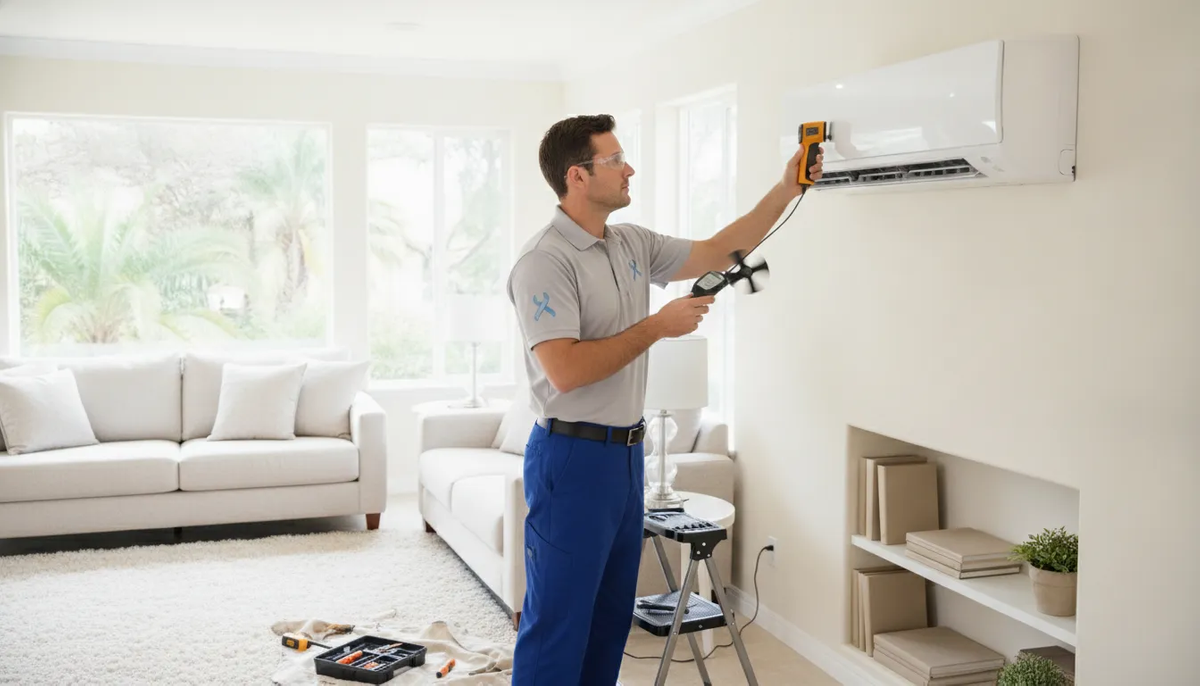
When Concord heat arrives, an air conditioner that blows warm air, cycles repeatedly, or loses airflow can make a home uncomfortable quickly. AC repair in Concord usually begins with identifying the symptom, checking what is safely accessible, and testing the system to find the actual cause. A thermostat setting or dirty filter may be simple to correct, but electrical parts, refrigerant circuits, compressors, and blower motors require professional diagnosis.
Schedule expert AC repair in Concord
This guide explains what homeowners can check without opening the equipment, which symptoms deserve prompt attention, and what to expect from a service visit. Ortiz Heating and Air Conditioning serves Concord and the surrounding East Bay as part of its San Francisco Bay Area coverage, with more than 25 years of local HVAC experience.
What does AC repair in Concord involve?
For a Concord homeowner, an AC repair visit is a process of tracing a cooling problem to its source rather than replacing the first part that looks suspicious. The technician starts by listening to what happened, when the problem began, and whether the system has shown the same symptom before.
Warm air, weak airflow, short cycling, unusual sounds, water near the indoor unit, or a system that will not start can have different causes. A symptom narrows the possibilities, but it does not confirm which component has failed. Testing matters because replacing a working part can leave the original problem unresolved.
Ortiz provides air conditioning repair service for problems involving airflow, electrical components, refrigerant concerns, compressors, blower motors, thermostats, and other system parts. The evaluation is intended to address the condition of the equipment and explain the available repair path without promising a specific result before the system is inspected.
Concord's East Bay climate can bring long cooling periods and sharp temperature changes. That makes reliable airflow and correct system operation important for comfort. Homeowners can learn more about AC service in Concord and request help when a safe check does not resolve the symptom.
Which AC symptoms need a professional diagnosis?
Several cooling symptoms can look similar from inside the home. The examples below are useful for deciding what to observe and report, not for diagnosing a failed part from a distance.
Warm air from the vents
Warm air may relate to a thermostat setting, restricted airflow, a refrigerant problem, an outdoor-unit issue, or a compressor concern. First, confirm that the thermostat is set to cooling and that the desired temperature is below the room temperature. If the system still runs without producing cool air, avoid repeatedly lowering the setting and arrange a professional evaluation.
Also check whether the outdoor unit is operating when the system calls for cooling. Do not remove access panels or touch wiring. If the indoor blower runs but the outdoor unit is silent, that observation can help a technician focus the initial inspection without making the homeowner responsible for an electrical diagnosis.
Weak airflow or uneven cooling
Weak airflow can result from a loaded filter, blocked return, closed supply register, duct problem, blower issue, or another restriction. Check that furniture, rugs, and stored items are not covering registers. If the filter is visibly dirty and the homeowner knows the correct replacement, changing it may be a reasonable maintenance step.
Uneven temperatures between rooms can also involve ductwork, insulation, system sizing, or airflow balance. A single room that stays warm does not automatically prove that the air conditioner needs more refrigerant. A technician should evaluate the whole system before recommending a component or duct repair.
Short cycling, ice, water, or unusual sounds
Short cycling means the air conditioner starts and stops frequently without completing a normal cooling cycle. The cause can involve airflow, controls, sizing, or another system condition. Frequent cycling increases wear and should be documented for the technician, especially if it began after a repair or maintenance visit.
Ice on a refrigerant line or indoor coil, water around the air handler, and loud buzzing or grinding are also reasons to stop treating the symptom as routine. Turn the system off if continued operation appears to be worsening the condition. Do not scrape ice from the equipment or open panels to investigate the source.
Electrical behavior or a system that will not start
A tripped breaker can sometimes result from an overloaded circuit or another equipment fault. If the breaker trips again after one safe reset, leave it off and arrange service. Repeated resets can create a safety risk and can make a developing electrical problem worse.
Burning smells, visible smoke, damaged wiring, sparking, or a hot electrical odor require immediate caution. Turn off the system if it is safe to do so, keep people away from the equipment, and contact the appropriate emergency service if there is smoke or an active fire risk. An HVAC technician can address the equipment after the immediate hazard is controlled.
What safe AC checks can a Concord homeowner do?
Safe checks are limited to accessible settings and visible conditions. They should help you describe the problem, not replace a professional inspection. If you are unsure whether a step is safe, skip it.
Confirm the thermostat is in cooling mode, the set temperature is below the room temperature, and the fan setting is appropriate.
Check whether the filter is visibly loaded with dust and replace it only with the correct size and type.
Make sure supply registers and return grilles are open and not blocked by furniture or stored items.
Look for unusual water, ice, damaged insulation, or debris around accessible equipment without touching wiring or refrigerant lines.
Listen for unusual sounds and note when they occur, such as at startup, during operation, or when the system shuts down.
Check whether the outdoor unit has clear space around it, but do not remove panels or reach into the equipment.
These steps complement broader safe AC maintenance checks, but they cannot confirm refrigerant charge, electrical condition, compressor operation, or motor health. Do not use a homemade jumper, bypass a safety control, handle refrigerant, or open a sealed panel.
How does a professional AC diagnosis work?
Starting with the symptom and system condition
A useful service visit begins with a clear account of the symptom. Tell the technician whether the issue affects the entire home or one area, whether it happens at a particular time, and whether anything changed before the problem appeared. Information about a recent filter change, power interruption, unusual noise, or prior repair can make the evaluation more efficient.
The technician may inspect the accessible equipment, airflow, filter, duct connections, thermostat operation, and visible electrical conditions. The exact checks depend on the symptom and system. A warm-air complaint and a water complaint may require different diagnostic steps even when both occur during cooling.
Testing components instead of treating symptoms
Component-level troubleshooting helps separate an airflow restriction from a control issue, refrigerant concern, mechanical failure, or electrical problem. A professional should explain what the tests show and which findings support the recommendation. This approach is more reliable than assuming that every warm-air complaint needs the same part.
Refrigerant work requires the right equipment and trained handling. The EPA Section 608 service requirements explain why technicians who work with regulated refrigerants need appropriate certification. Homeowners should not buy refrigerant or attempt to recharge an air conditioner themselves.
For a broader troubleshooting reference, see the related central AC troubleshooting guide. The Concord article is intentionally more local and service-oriented: it helps homeowners decide what to observe, when to stop experimenting, and how to prepare for a professional visit.
Turning findings into a repair plan
Once the cause is identified, the technician can explain the repair options and any limitations. Ask which component failed, what the repair is expected to address, and whether there are conditions that could affect the result. If the system has recurring problems, ask how age, reliability, repair history, and equipment condition affect the repair-versus-replacement decision.
A service recommendation should be based on the inspected system. Ortiz services all brands and models, so the next step should reflect the equipment's actual condition rather than a one-size-fits-all answer.
Request a clear AC repair recommendation for your home
Should you repair or replace the air conditioner?
Repair is often considered when the issue is identifiable, the equipment remains in suitable condition, and the expected repair makes sense for the homeowner's priorities. Replacement may deserve consideration when the system has recurring failures, major component damage, declining reliability, or repair needs that no longer fit the equipment's condition.
There is no universal age or dollar rule that can decide this question without an inspection. A homeowner should compare the condition of the equipment, the pattern of prior repairs, expected reliability, comfort needs, and the available options. Ortiz's related guide explains how to think through repairing or replacing an HVAC system without assuming that one answer fits every home.
If the next step is new equipment rather than repair, ask about the installation scope, system fit, and available estimate process. Free estimates apply to adding or replacing equipment such as an air conditioner, furnace, heat pump, or ductwork. They do not apply to repair diagnostics or inspections.
What should you expect from AC repair service fees?
Repair visits and equipment estimates are different services. An inspection or diagnostic visit has a service fee because the technician is evaluating the system and identifying the fault. After the problem is found, the company provides a repair quote based on the required work.
Ask what the service fee covers before the appointment and what information the technician will provide after the diagnosis. The exact repair recommendation depends on the equipment and the findings, so a responsible article should not describe repair diagnostics as free or promise a fixed price without an evaluation.
What the service visit may include
A review of the symptom, timing, operating history, and prior service.
Inspection of accessible system conditions related to the complaint.
Testing that helps identify the failed or restricted component.
An explanation of the recommended repair and any relevant alternatives.
A repair quote after the problem is identified, with the next step left to the homeowner.
Preparing a short symptom record can help. Note the thermostat setting, room temperature changes, sounds, water or ice, breaker behavior, and whether the issue is constant or intermittent. You can also use the HVAC tune-up checklist to identify routine maintenance questions, but do not turn maintenance advice into an attempt to repair sealed or electrical components.
When is an AC problem urgent in Concord?
A complete loss of cooling can be disruptive, especially for older adults, young children, or people with health conditions affected by heat. Arrange service promptly when the system will not cool, repeatedly shuts down, leaks water, forms ice, or makes a new loud sound.
Electrical smoke, visible sparking, burning odors, exposed wiring, or an active water leak near electrical equipment require immediate caution. Shut the system down only if you can do so safely, keep people away from the hazard, and contact emergency services for fire, smoke, or immediate safety threats. HVAC service should follow once the immediate hazard is controlled.
Do not keep running an air conditioner that is visibly iced, leaking heavily, repeatedly tripping the breaker, or making a severe mechanical noise just to see whether the symptom disappears. Stopping operation can protect the equipment and give the technician a clearer starting point.
Schedule expert AC repair in Concord
Frequently Asked Questions
What should I check first if my AC is not cooling?
Confirm the thermostat is set to cooling, the set temperature is below the room temperature, the filter is not visibly loaded, and registers are open. Check for unusual water, ice, or electrical odors without touching internal parts. If the system still blows warm air or will not start, request a professional diagnosis.
How much does an AC service call cost?
Ortiz states that inspections and diagnostics have a service fee. The repair quote follows the diagnosis and depends on the problem found. Repair diagnostics should not be described as free estimates. For current service details, ask about the fee when scheduling the appointment.
Can I handle an AC refrigerant problem myself?
No. Refrigerant diagnosis and service require qualified equipment and handling. A homeowner can record symptoms and check safe accessible conditions, but should not open the system, add refrigerant, or attempt to locate a leak.
How does a technician decide whether to repair or replace an AC system?
The decision considers the diagnosed failure, the equipment's condition, repair history, reliability, comfort needs, and available replacement options. A technician should inspect the system and explain the findings before a homeowner chooses repair or replacement.
Request AC repair service in Concord
For a homeowner, the best AC repair decision starts with safe observations and an accurate diagnosis. If your Concord system is not cooling, has weak airflow, cycles abnormally, or shows a warning sign, contact Ortiz to discuss the next service step.