
Find the best window AC unit for your room with tips on sizing, features, energy efficiency, and top brands to keep your space cool and comfortable.
How to Choose the Best Window AC Unit for Your Room
If your mental image of a window AC unit is a loud, dripping box from decades past, it’s time for an update. Today’s models have evolved significantly, offering features that make them quieter, smarter, and far more energy-efficient than their predecessors. Many now come with Wi-Fi connectivity, allowing you to control them from your phone, while advanced inverter technology helps maintain a consistent temperature without the noisy stop-and-start cycling. This guide will introduce you to the modern window AC, breaking down the key features that can improve your comfort, lower your energy bills, and make your summer much more pleasant.
Key Takeaways
- Match the BTU to your room size: Sizing is everything. Calculate your room's square footage to find the right BTU rating, as a unit that's too big or too small will struggle to cool your space efficiently and comfortably.
- Focus on features that fit your lifestyle: An ENERGY STAR label will save you money on utility bills over time. Also, think about practical features like Wi-Fi connectivity for remote control or a low decibel (dB) rating for quiet operation in a bedroom or office.
- Plan for maintenance and know when to upgrade: Simple tasks like cleaning the filter monthly are essential for keeping your unit running efficiently. Remember that window units are for single rooms, so if you need to cool your entire home or improve air quality, it’s time to explore a central HVAC solution.
How Do Window AC Units Work?
A window air conditioner can feel like a lifesaver on a hot day, transforming a stuffy room into a cool oasis. But how does that box actually work its magic? It’s not about creating cold out of thin air. Instead, it’s a clever process of heat transfer. Your AC unit is essentially a heat pump, pulling warmth from inside your room and moving it outside. This cycle continuously lowers the temperature, leaving you with refreshing, comfortable air. Understanding this basic principle helps you appreciate how these compact machines keep you cool all summer long.
How a Window AC Cools Your Room
Let's get one thing straight: air conditioners don't produce cold. They remove heat. The process starts when a fan inside the unit draws your warm room air over a set of chilled pipes called evaporator coils. A special chemical, known as a refrigerant, flows through these coils, absorbing the heat from the air like a sponge. Once the heat is removed, the fan blows the newly cooled air back into your room. The now-warm refrigerant travels to the back of the unit (the part hanging outside your window), where it releases the collected heat into the outdoor air. This cycle repeats until your room reaches the temperature you set on the thermostat. For larger spaces, you might consider more permanent air conditioning services.
What's Inside a Window AC Unit?
A window AC unit is packed with components working together. The main players are the evaporator coils (on the indoor side), condenser coils (on the outdoor side), a compressor, and fans. Think of the compressor as the heart of the system, pumping the refrigerant through the coils. The refrigerant is the lifeblood, carrying the heat. The coils are where the heat exchange happens, and the fans are responsible for moving air across them and into your room. The size and power of these parts determine how quickly and effectively the unit can cool your space. When one of these components fails, it’s often best to schedule an HVAC service call to get it diagnosed correctly.
How Do I Choose the Right BTU for My Room?
Choosing the right size for your window AC unit is one of the most important steps. If you get a unit that’s too powerful for your space, it will cool the room too quickly and shut off before it has a chance to remove humidity, leaving you with a cold, clammy feeling. On the other hand, a unit that’s too small will run constantly without ever reaching a comfortable temperature, which wastes energy and wears out the machine.
Getting the right fit ensures your room is both cool and comfortable, all while running as efficiently as possible. Let’s walk through how to find the perfect cooling power for your needs.
What Are BTUs?
First things first, what exactly is a BTU? The term stands for British Thermal Unit, and it’s simply a measurement of how much heat an air conditioner can remove from a room in one hour. The higher the BTU rating, the more cooling power the unit has.
Here’s a quick guide to help you match BTUs to your room size:
- 5,000 BTU: Cools rooms up to 150 square feet.
- 6,000 BTU: Cools rooms up to 250 square feet.
- 8,000 BTU: Cools rooms up to 350 square feet.
- 10,000 BTU: Cools rooms up to 450 square feet.
- 12,000 BTU: Cools rooms up to 550 square feet.
Think of this as your starting point. Most window AC units fall within this range, so you can use these numbers as a solid baseline.
How to Calculate Your Room's BTU Needs
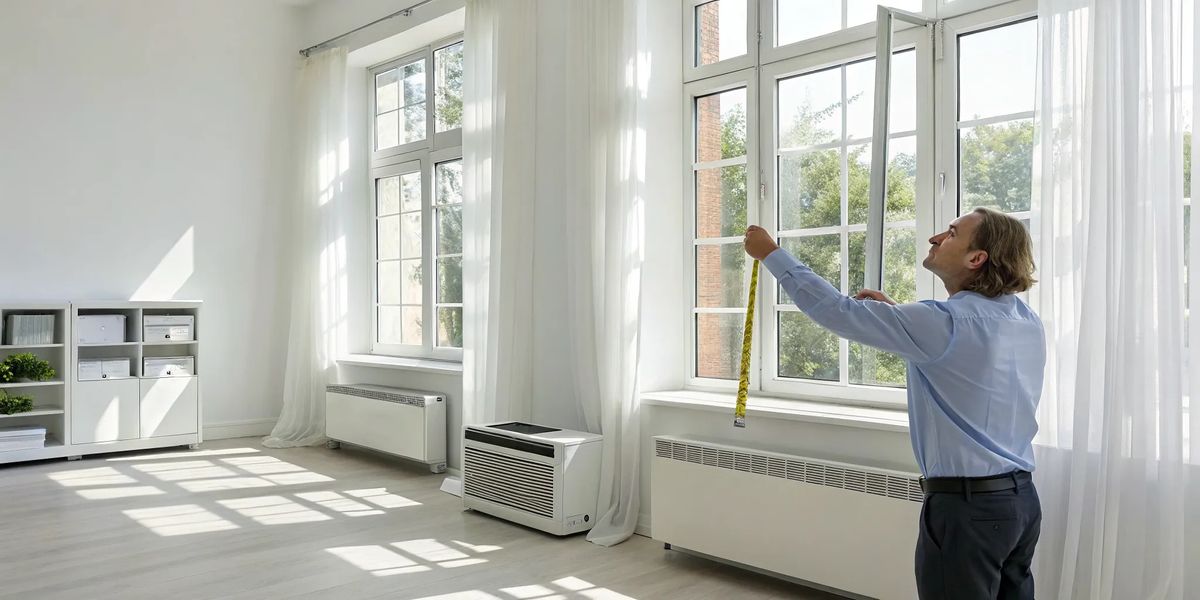
Ready for some simple math? To find your room’s square footage, just grab a tape measure and multiply its length by its width. For example, a room that is 12 feet long and 15 feet wide is 180 square feet (12 x 15 = 180).
Once you have your number, you can match it to the BTU guide above. In our example, a 180-square-foot room would need a 6,000 BTU unit. This basic calculation works well for most standard rooms with 8-foot ceilings. If you’re not sure about your measurements or want a more precise assessment, our team can help you with professional air conditioning services.
Other Factors That Influence Cooling Power
Your room’s square footage is the main factor, but it isn’t the only one. A few other details can affect how much cooling power you really need. You may need to adjust your BTU estimate based on your room’s specific conditions.
Consider these factors:
- Sunlight: If the room gets a lot of direct sun, increase your BTU needs by 10%. If it’s heavily shaded, you can decrease it by 10%.
- Occupancy: If more than two people will regularly be in the room, add 600 BTUs for each additional person.
- Location: For a kitchen unit, you’ll want to add an extra 4,000 BTUs to compensate for the heat from your appliances.
- Ceiling Height: If your ceilings are higher than 8 feet, you’ll need a bit more power to cool the larger volume of air.
What Key Features Should I Look For?
Once you’ve figured out the right cooling power for your room, it’s time to look at the features that will make your life easier and more comfortable. The right window AC unit does more than just blow cold air; modern models come with a variety of functions that can save you money, add convenience, and improve your indoor environment. Think about how you’ll be using the unit. Is it for a bedroom where noise is a major concern? Or a living room where you’d love to control it from your phone? Focusing on a few key features will help you narrow down your options and find the perfect fit for your home.
Energy Efficiency and ENERGY STAR Labels
An air conditioner is a significant energy user, so finding an efficient model is one of the smartest moves you can make. An inefficient unit can lead to surprisingly high electricity bills during the summer. The easiest way to find an energy-saving model is to look for the ENERGY STAR label. These certified units are designed to use about 10% less energy than standard models without sacrificing performance. Choosing an ENERGY STAR air conditioner not only helps lower your monthly utility costs but also reduces your carbon footprint. It’s a simple choice that pays off every time you get your energy bill.
Smart Features and Wi-Fi Connectivity
If you love the convenience of a connected home, you’ll appreciate the smart features available in many new window ACs. Wi-Fi connectivity allows you to control your unit from anywhere using a smartphone app. You can turn it on before you head home from work, adjust the temperature from the couch, or set a schedule that matches your daily routine. Many of these smart air conditioners also integrate with voice assistants like Amazon Alexa or Google Assistant, so you can change the settings with a simple voice command. This level of control helps you use energy more efficiently while keeping your space perfectly comfortable.
Finding a Quiet Unit
Nothing ruins a good night's sleep like a loud, rattling air conditioner. If you’re buying a unit for a bedroom, home office, or any other space where peace and quiet are important, the noise level should be a top priority. An air conditioner's sound is measured in decibels (dB), and you can usually find this rating in the product specifications. For comparison, a quiet library is around 40 dB. Look for models that operate under 55 dB for a more peaceful experience. Some of the quietest units on the market can run as low as 42 dB, which is about the sound of a gentle whisper.
Extra Modes like Dehumidification
The Bay Area can get humid, and that sticky feeling can be just as uncomfortable as the heat. Many window AC units come with extra modes that can help, including a dehumidifier function. This mode pulls excess moisture from the air, making your room feel cooler and more comfortable without having to blast the AC on its coldest setting. Another useful feature is a "fan-only" mode, which circulates air without cooling it, perfect for milder days when you just need a little breeze. These additional settings give you more flexibility to control your indoor climate and can even help you save energy when full cooling power isn't necessary.
What Are the Best Window AC Brands?
When you start shopping for a window air conditioner, you’ll quickly notice a few brand names popping up again and again. Sticking with a well-reviewed and popular brand is usually a safe bet for reliability and customer support. Based on consumer feedback and sales data, some of the top brands on the market right now include Midea, LG, Frigidaire, and GE. Midea, in particular, often has several models ranking as best-sellers, which speaks to their popularity and consistent performance.
Choosing a reputable brand means you’re more likely to get a unit that lasts, performs as advertised, and has accessible customer service if you run into any issues. While these brands offer a great starting point, the best unit for you will depend on your room size, budget, and the specific features you care about most. We’ll break down some top picks and what makes a brand truly stand out.
Our Top Recommendations
To give you a more concrete idea of what’s out there, here are a few specific models that consistently get high marks from users. These units cover a range of sizes and features, making them great options for different needs.
- For small rooms (up to 150 sq. ft.): The Frigidaire 5,000 BTU Window-Mounted Air Conditioner is a simple, effective choice. It’s a no-fuss unit that gets the job done.
- For medium rooms (up to 350 sq. ft.): The Midea 8,000 BTU U-Shaped Smart Inverter Window Air Conditioner is a fantastic option. Its unique U-shape design makes it incredibly quiet, which is a huge plus for bedrooms or home offices.
- For smart features: The LG 6,000 BTU Window Air Conditioner is a solid pick for rooms up to 250 sq. ft. and often comes with a remote control for easy adjustments from across the room.
What Makes a Brand Stand Out?
Beyond just cooling power, certain features can make one window AC unit much better than another. Many modern units now come with Wi-Fi connectivity, letting you control the temperature from a smartphone app or connect it to your Alexa or Google Assistant. This is perfect for cooling down a room before you get home.
Another key feature is inverter technology, which allows the compressor to run at variable speeds instead of just shutting on and off. This makes the unit quieter and improves its energy efficiency, saving you money on your electricity bill. Finally, look for units with washable filters. This simple feature makes maintenance much easier and helps keep the air in your home cleaner.
How to Compare Reliability and Performance
When you’re comparing models, think beyond the initial price tag and consider the long-term running costs. For example, a typical 8,000 BTU unit might cost around $27 per month to operate, while a larger 12,000 BTU unit could be closer to $43 per month. If you need to cool a very large space (around 1,200 sq. ft.), you’d be looking at a 20,000 to 25,000 BTU unit, which will have significantly higher energy costs.
Understanding these operating expenses can help you make a more informed decision about what you can comfortably afford each month. While a window unit is great for a single room, if you find yourself needing to cool multiple areas, the combined cost and hassle might mean it’s time to explore a more permanent, whole-home cooling solution.
How Much Do Window AC Units Cost?
Figuring out the true cost of a window AC unit goes beyond the price tag you see in the store. You’ll want to think about the initial purchase price, which is tied to its cooling power, and the long-term energy costs that will show up on your monthly utility bills. Knowing what to expect financially will help you find the right balance between upfront spending and future savings, ensuring you get a unit that cools your space without breaking your budget.
Upfront Costs by Cooling Power
The initial price of a window AC is closely linked to its cooling capacity, measured in British Thermal Units (BTUs). A small 5,000 BTU unit, perfect for a room up to 150 square feet, will be the most affordable option. As you go up in power to cool larger spaces, the price increases. For example, a 10,000 BTU unit can handle a 450-square-foot room, while a 14,000 BTU model is needed for areas up to 650 square feet. You can find a wide selection of window air conditioners online and in stores, with prices reflecting this range in power.
Factoring in Long-Term Energy Costs
The sticker price is just the beginning. Your window AC’s energy consumption will affect your electricity bill every month you use it. For instance, running an 8,000 BTU unit for eight hours a day could add around $27 to your monthly bill, while a more powerful 12,000 BTU unit might add closer to $43. This is why looking for an ENERGY STAR label is so important. A slightly more expensive, energy-efficient model can lead to significant savings over the summer. For cooling your entire home, a central system or a modern heat pump is often a more efficient long-term solution.
Where to Find the Best Price
You can find window AC units at most major home improvement and department stores. Retailers like Walmart often have a huge selection, with prices ranging from just over $100 for a small, basic unit to several hundred dollars for a large model with heating and cooling capabilities. To get the best deal, I recommend shopping around and comparing prices online. Keep an eye out for seasonal sales, especially during the spring before the first heat wave hits, as this is often when you can find the best promotions. Reading customer reviews can also help you find a reliable unit within your budget.
What Are the Pros and Cons of Window ACs?
Window air conditioners can be a lifesaver during a heatwave, but they aren't the right fit for every home or situation. Before you buy one, it’s helpful to weigh the benefits against the drawbacks. Understanding both sides will help you decide if a window unit is a smart temporary fix or if you might be better off exploring a more permanent cooling solution for your home. Let's walk through what you need to know.
The Pros of a Window Unit
The biggest draw for window AC units is their affordability and straightforward installation. You can often pick one up at a local store and have it running the same day, making it a fantastic solution for renters, dorm rooms, or cooling a single space like a home office. Many newer models also come with modern conveniences, including Wi-Fi connectivity and apps that let you control the temperature from your phone. They’re also quite effective at reducing humidity, which can make a stuffy room feel much more comfortable, even on moderately warm days.
The Cons to Consider
While window units are convenient, they have their limitations. They are designed to cool only one room, so they aren't an effective solution for an entire house. They can also be noisy, block your window view, and create a potential security issue if not installed properly. Another common misconception is that they require minimal upkeep; like any HVAC system, their filters need regular cleaning or replacement to run efficiently. A single unit can also use a surprising amount of electricity, which you'll notice on your utility bill if you run it constantly.
Window Units vs. Other Cooling Options
When you compare a window unit to other options, the differences become clear. While a simple fan uses very little electricity, it only circulates air and doesn't actually cool it. A window AC is a big step up, but it’s still much less efficient than a central air conditioning system. A window unit might have a lower upfront cost, but a central system cools your entire home more evenly and efficiently, potentially saving you money in the long run. Plus, central systems offer superior filtration, which greatly improves your home's indoor air quality by removing dust, pollen, and other allergens.
How Do I Install and Maintain My Window AC?
Once you’ve picked the perfect window AC, proper installation and regular care will ensure it keeps you cool for years to come. Taking the time to set it up correctly and perform a few simple maintenance tasks can make a huge difference in its performance and lifespan.
How to Install Your Unit Correctly
Getting your new window AC unit set up might seem like a big task, but it’s usually more straightforward than you think. Many air conditioners come with an "easy install kit" that includes everything you need for a secure fit. The key is to create a tight seal so cool air stays in and hot air stays out. Before you start, grab a friend to help you lift the unit safely into place. Once it's in the window, make sure it's securely fastened and tilted slightly downward toward the outside. This angle helps condensation drain properly instead of dripping inside. Use the accordion panels to fill any gaps on the sides for a snug, efficient setup. If you're not comfortable with the process, our team is always here to help with your home's air conditioning services.
Your Seasonal Maintenance Checklist
A little bit of care goes a long way in keeping your window AC running smoothly all summer. The most important task is cleaning the air filter. Plan to wash or replace it about once a month during the cooling season. A clean filter helps maintain strong airflow and keeps your energy bills down. At least once a season, wipe down the outside of the unit to clear away any dust or debris. It’s also a good idea to check and clean the cooling coils twice a year, once before summer starts and again after it ends. These simple steps will ensure your unit is cooling as efficiently as possible. For more comprehensive care of your home's climate systems, you can always schedule professional HVAC maintenance.
How to Store Your AC in the Off-Season
When cooler weather returns, properly storing your window AC will protect it from the elements and have it ready for next year. Before you put it away, give it a good cleaning. Remove and wash the filter, wipe down the exterior, and gently clean the coils. Let the unit dry completely to prevent any mold or mildew from growing while it’s stored. Once it’s clean and dry, carefully remove it from the window. The best way to store it is upright in its original box. If you don't have the box, find a dry, safe spot in a closet, basement, or garage where it won't get bumped or damaged. Taking these steps ensures your AC will be in great shape when the next heat wave hits.
What Are Some Common Window AC Myths?
When it comes to window air conditioners, there’s a lot of advice floating around. Some of it is helpful, but a lot of it is just plain wrong. Believing these common myths can lead to higher energy bills, an uncomfortable room, and a shorter lifespan for your unit. Let's clear the air and debunk some of the most persistent myths so you can get the most out of your window AC. Getting the facts straight will help you stay cool and save money, which is something we can all get behind.
Myths About Sizing and Efficiency
You might think that a bigger AC unit is always better, but that's actually not the case. An oversized unit will cool your room too quickly and then shut off, a process called short cycling. This prevents it from properly dehumidifying the air, leaving your room feeling cool but clammy. It also causes unnecessary wear and tear. Another common myth is that setting your thermostat to a super low temperature will cool the room faster. In reality, your AC cools at a consistent pace, so cranking it down to 60 degrees won't speed things up; it will just make the unit run longer until it reaches that frigid temperature. For consistent and efficient cooling, it's best to find the right size and set a comfortable temperature.
Common Installation and Care Mistakes
Many people believe they’ll save energy by turning their AC off every time they leave the house. While it seems logical, your AC actually uses more energy to cool a hot room from scratch than it does to maintain a consistent temperature. It’s more efficient to turn the thermostat up a few degrees when you head out. Another mistake is assuming DIY installation is always the best route. While many window units are designed for home installation ensures your unit runs safely and efficiently from day one.
Misconceptions About Performance and Lifespan
Some people are hesitant to invest in an energy-efficient model, thinking the savings won't justify the higher upfront cost. However, an ENERGY STAR-certified unit can significantly reduce your electricity bills over its lifetime. The savings add up season after season. Perhaps the biggest misconception is that window ACs don't need regular upkeep. Just like any other major appliance, they do. Neglecting basic tasks like cleaning the filter can lead to poor airflow, reduced cooling power, and a strained compressor. Consistent maintenance is the key to keeping your unit running smoothly for years and avoiding unexpected repair bills.
When Is It Time for a Professional HVAC Solution?
Window AC units are fantastic for cooling a single room, but there comes a point when you need a more powerful and permanent solution. If you find yourself running multiple window units, constantly moving them around, or still feeling hot spots in your home, it might be time to think bigger. A professional HVAC system is an investment in your home’s comfort and overall value, providing consistent cooling that a window unit simply can’t match.
Deciding to upgrade is a big step, but it often solves long-term comfort issues that temporary fixes can’t address. Instead of juggling several small appliances, a central system works quietly and efficiently in the background. If you’re wondering whether a whole-home system is the right move for your space, getting a professional opinion can clear things up. A consultation can help you understand your options for comprehensive air conditioning services and find a solution that fits your home and budget.
When You Need to Cool Your Whole Home
A single window AC unit is great for a bedroom or small office, but it struggles to cool larger spaces or multiple rooms. If you’re trying to cool your entire house, relying on window units becomes inefficient and costly. You end up with inconsistent temperatures, with some rooms feeling like a freezer while others are still warm.
A central air conditioning system is designed to deliver cool, even temperatures throughout your entire home. It eliminates the need for bulky, noisy window units in every room and provides a seamless cooling experience. A professional installation ensures the system is correctly sized for your home, giving you efficient and reliable comfort all summer long.
The Air Quality Benefits of a Central System
Beyond just cooling, a central HVAC system can significantly improve your home’s air quality. These systems use powerful filters to capture dust, pollen, pet dander, and other airborne pollutants that can trigger allergies and respiratory issues. As air circulates through the system, it’s continuously cleaned, helping your family breathe easier.
Window units, on the other hand, can sometimes allow outside allergens and pollutants to seep into your home. A central system creates a cleaner, healthier indoor environment by filtering the air you breathe every day. If you’re concerned about allergens or simply want fresher air, exploring indoor air quality solutions is a great next step.
Related Articles
- Spring Is Coming! Learn Maintenance Tips For Your HVAC System
- MYTH vs FACT
- Key Factors to Consider When Installing a Ductless HVAC System
- HVAC Heating Services - Call Today
- Heat Pump Services - Call Today
Frequently Asked Questions
Are all window AC units loud? Not anymore. While older models definitely had a reputation for being noisy, many new units are designed to be much quieter. The quietest options often use inverter technology or have a unique U-shaped design that separates the louder compressor from the indoor part of the unit. The best way to know for sure is to check the decibel (dB) rating in the product specifications; anything under 55 dB will be much more pleasant, especially for a bedroom.
Is it better to leave my window AC on all day or turn it off when I leave? It's generally more energy-efficient to leave your AC running at a higher temperature (for example, 78 degrees) when you're out instead of turning it off completely. Your unit uses a significant amount of power to cool down a hot, humid room from scratch. It takes less energy to simply maintain a consistent, moderate temperature throughout the day.
Can I use a fan with my window AC to improve cooling? Absolutely. Using a ceiling fan or a standing fan along with your window AC is a great strategy. The fan helps circulate the cool air more effectively throughout the room, which can make the space feel cooler without having to lower the thermostat on your AC. This simple trick helps you save energy and money.
How long should a window AC unit last? A well-maintained window air conditioner can typically last for about 10 years. The key to reaching that lifespan is consistent care, like cleaning the filter regularly and storing the unit properly during the off-season. If you neglect basic maintenance, you might find yourself needing a replacement much sooner.
When should I repair my window AC instead of replacing it? A good rule of thumb is to compare the cost of the repair to the price of a new unit. If the repair costs more than half the price of a comparable new model, it's usually better to replace it. Also, if your unit is older than eight years and needs a major fix, investing that money in a new, more energy-efficient model is often the smarter financial choice.