
Learn when central air conditioning unit repair makes sense and when it’s time to replace your AC. Get practical tips to keep your home cool and comfortable.
Central Air Conditioning Unit Repair: Fix or Replace?
Let’s be honest: for most homeowners, the inner workings of an HVAC system are a complete mystery. When it stops working, you’re left trying to decipher strange noises and technical jargon, all while your home gets warmer by the minute. It can feel overwhelming, but it doesn’t have to be. Our goal is to demystify the process of central air conditioning unit repair. We’ll break down the common signs of trouble in simple terms, explain the factors that determine repair costs, and provide clear, actionable advice you can use to keep your system running smoothly. Think of this as your straightforward guide to making confident decisions about your home’s comfort.
Key Takeaways
- Proactive maintenance is your best defense against breakdowns: Combining simple DIY tasks, like regularly changing your air filter, with an annual professional tune-up is the most effective way to extend your system's life and manage energy costs.
- Pay attention to your system's warning signs: Changes in your AC's performance, such as strange noises, weak airflow, or a sudden jump in your utility bill, are clear signals that it's time to schedule a service call before a minor issue becomes a major one.
- Know when to repair and when to replace: Use a few key factors to make a smart financial decision. If a repair costs 50% or more than a new unit, or if your system is over 10 years old and needs frequent fixes, investing in a replacement is usually the better long-term solution.
Telltale Signs Your AC Needs a Repair
Your air conditioner is one of the hardest-working appliances in your home, but it can be tough to know when it’s struggling. Most AC units don’t just stop working overnight. Instead, they send out subtle (and sometimes not-so-subtle) clues that something is wrong. Learning to spot these warning signs can be the difference between a quick, affordable fix and a costly system failure in the middle of a Bay Area heatwave.
Paying attention to how your system looks, sounds, and feels can help you catch problems early. If you notice any of the issues below, it’s a good idea to schedule a professional HVAC service call to get things checked out. Addressing a small problem now can save you a lot of money and stress down the road, ensuring your home stays comfortable all season long.
Hear Strange Noises or Smell Odd Odors?
Your AC unit should operate with a gentle hum, not a symphony of strange sounds. If you start hearing grinding, squealing, rattling, or banging noises, it’s your system’s way of crying for help. These sounds often point to mechanical problems, like a loose part, a failing motor, or a worn-out belt. Similarly, odd smells are a major red flag. A musty odor could signal mold growth in your ductwork or unit, while a burning smell might indicate an electrical failure. Don’t ignore these sensory warnings; they often signal an urgent need for professional repairs.
Feeling Weak Airflow or Inconsistent Temperatures?
Are you constantly adjusting the thermostat because some rooms feel like a sauna while others are ice-cold? This is a classic sign that your AC isn’t circulating air properly. The problem could be as simple as a clogged air filter, which restricts airflow and forces your system to work much harder than it should. In other cases, weak airflow can point to a more serious issue with the compressor or your home’s ductwork. If changing the filter doesn’t solve the problem, it’s time to have a technician investigate your duct system and AC unit.
Noticing a Sudden Spike in Your Energy Bill?
Your utility bill is a great barometer for your AC’s health. If you notice a sudden and significant increase in your energy costs without a corresponding change in your usage, your air conditioner is likely the culprit. An inefficient system has to run longer and harder to cool your home, which drives up your electricity consumption. This inefficiency can stem from a refrigerant leak, an aging compressor, or other failing parts. Scheduling regular preventative maintenance is one of the best ways to keep your unit running efficiently and your energy bills in check.
Seeing Leaks or Moisture Near Your Indoor Unit?
Water pooling around your indoor air handler is never a good sign. This moisture can indicate several problems, from a clogged condensate drain line that’s causing water to back up to a frozen evaporator coil. While it might just seem like a small puddle, these leaks can cause significant water damage to your walls, floors, and ceilings if left unaddressed. Low refrigerant levels can also cause ice to form and melt on the unit. If you see any moisture, turn off your system and call a professional to diagnose the source of the leak and perform the necessary air conditioning service.
Should You Repair or Replace Your AC Unit?
When your air conditioner stops working, the big question is always whether to fix it or get a new one. It’s a major decision, and the right answer depends on your specific situation. While a simple repair might seem like the easiest fix, it isn’t always the most cost-effective solution in the long run. To make an informed choice, you need to look at a few key factors: the cost of the repair, the age of your unit, how often it breaks down, and even the type of refrigerant it uses. Thinking through these points will help you decide whether to invest in your current AC or upgrade to a new, more reliable system.
Apply the 50% Rule to Repair Costs
A helpful guideline for this decision is the 50% rule. It’s a simple cost-benefit analysis: if the price of a repair is 50% or more of the cost of a brand-new air conditioning unit, replacement is usually the smarter financial move. For example, if a new system costs $6,000, and your current unit needs a $3,500 repair, you’re better off putting that money toward a full installation. Investing a large sum into an aging unit that might break down again soon just doesn’t make sense. This rule helps you avoid sinking money into a system that’s already on its way out and instead invest in a long-term solution for your home.
Consider Your AC's Age and Energy Efficiency
The age of your air conditioner is a huge factor. Most central AC units have a lifespan of about 10 to 15 years. If your system is approaching or has passed the 10-year mark, it’s time to seriously consider a replacement. Older units are not only more prone to breakdowns, but they are also significantly less energy-efficient than modern models. Upgrading to a new, high-efficiency system can lead to noticeable savings on your monthly utility bills. While the upfront cost is higher, the long-term energy savings and improved performance often make a new air conditioning service a worthwhile investment for your comfort and your wallet.
Track the Frequency of Breakdowns
Is your HVAC technician becoming a regular visitor? If you find yourself calling for repairs more and more often, that’s a clear sign your AC unit is failing. One or two minor issues over several years is normal, but multiple breakdowns in a single season indicate a larger problem. These frequent repairs can add up quickly, and they often signal that other components are about to fail. Instead of paying for one patch-up job after another, it’s often more economical to replace the entire system. A new unit will give you peace of mind and a reliable source of cool air without the constant worry of another breakdown.
Understand the R-22 Refrigerant Phase-Out
If your air conditioner was manufactured before 2010, it likely uses a refrigerant called R-22, also known as Freon®. The U.S. government began phasing out R-22 due to its harmful effects on the ozone layer, and as of 2020, it is no longer produced or imported. This means that if your older AC unit has a refrigerant leak, the repair will be extremely expensive because the remaining supply of R-22 is scarce and costly. In many cases, the high price of an R-22 recharge alone makes it more practical to replace the unit entirely. Upgrading to a new system ensures you have a modern, compliant, and more environmentally friendly cooling solution.
What Do Central AC Repairs Typically Cost?
When your air conditioner stops working, one of the first questions that comes to mind is, "How much is this going to cost?" The truth is, there’s no single price tag for an AC repair. The final bill can range from a minor service fee to a few thousand dollars, depending entirely on what’s wrong with your system. Think of it like a car repair: a flat tire costs much less to fix than a transmission replacement. The same principle applies to your HVAC system.
The cost of any professional AC repair is a combination of two things: parts and labor. Simple fixes that don't require new parts will naturally be on the lower end, while replacing a major component will be more expensive. Most professional HVAC companies charge a diagnostic fee to come to your home and identify the problem. This fee typically covers the technician's time and expertise to thoroughly inspect your system. At Ortiz, we believe in transparency, which is why we always provide a clear, upfront estimate for the repair after our diagnosis, so you can approve the cost before we get to work.
A Breakdown of Common Repair Costs
While every situation is unique, we can give you a general idea of what to expect for common issues. Keep in mind these are just ballpark figures, and a professional diagnosis is the only way to know for sure.
- Minor Repairs ($100–$300): These are often quick fixes that don't require expensive parts. Think of things like cleaning dirty coils, clearing a clogged drain line, or replacing a blown fuse or faulty thermostat.
- Moderate Repairs ($300–$800): This category includes replacing components that wear out over time, such as a fan motor, a run capacitor, or a contactor. These parts are essential for your system to run, but they are less complex to replace than the core components.
- Major Repairs ($800–$3,000+): These are the more serious and costly fixes. This can include repairing a refrigerant leak (which also involves recharging the system), replacing an evaporator coil, or, in the most expensive cases, replacing the compressor, which is the heart of your AC unit.
What Factors Influence Your Final Bill?
Several variables can affect the final price of your air conditioning repair. Understanding them can help you see why one repair might cost more than another. The most obvious factor is the part itself; a small capacitor is far less expensive than a large compressor.
Your AC unit's age and model also play a significant role. Parts for older, obsolete units can be difficult to find and more costly. Similarly, high-efficiency systems often have more advanced (and expensive) components. The accessibility of your unit matters, too. If your indoor unit is in a tight crawl space or the outdoor unit is on a hard-to-reach roof, the extra labor time will be reflected in the bill. Finally, check your warranty. If your system is still under a manufacturer's parts warranty, it could save you hundreds of dollars.
How to Make Repairs More Affordable
While you can't control when a part fails, you can take steps to keep repair costs down. The single most effective way to avoid expensive, unexpected breakdowns is by scheduling regular preventative maintenance. A professional tune-up allows a technician to spot small issues, like worn-out parts or low refrigerant, before they cause a major system failure. Consistent maintenance can extend your AC's lifespan and keep it running efficiently, saving you money on both repairs and monthly energy bills.
Another key strategy is to act fast. If you notice strange noises, weak airflow, or a sudden jump in your utility costs, don't wait for the problem to get worse. Addressing issues early often leads to a simpler and less expensive fix. When you do need a repair, always get a quote from a reputable, certified company. A professional diagnosis ensures the problem is fixed correctly the first time, saving you from the cost of a repeat visit.
Why You Should Always Hire a Pro for AC Repair
Avoid the Dangers of DIY Repair
When your AC stops working on a hot day, it’s tempting to search for a quick fix online. But trying to handle air conditioning repairs yourself can be a serious mistake. Your HVAC system is a complex piece of equipment with high-voltage electrical components and chemical refrigerants. Without proper training and tools, you risk electrical shock, exposure to harmful substances, or even causing a fire. What might seem like a simple issue could be a symptom of a bigger problem that a DIY attempt could make much worse. For your safety and peace of mind, it’s always best to leave AC repairs to a trained and certified professional who knows how to handle these systems safely.
Get an Accurate Diagnosis with Professional Tools
Guessing what’s wrong with your air conditioner can lead you down a rabbit hole of wasted time and money. A professional technician doesn’t guess; they diagnose. We use specialized tools to accurately pinpoint the root cause of the problem, whether it’s low refrigerant, a faulty capacitor, or a blocked drain line. These diagnostic tools allow us to measure airflow, test electrical connections, and check for leaks with precision. This ensures we fix the right problem the first time. An accurate diagnosis not only gets your system running again quickly but also prevents minor issues from turning into major, costly breakdowns. When you schedule a professional service call, you’re paying for certainty, not a shot in the dark.
Protect Your Manufacturer's Warranty
Your air conditioning unit is a significant investment, and its manufacturer's warranty is there to protect it. However, most warranties come with a critical condition: any maintenance or repair work must be performed by a licensed professional. If you open up the unit and attempt a repair yourself, you could instantly void your warranty. This means if a major component like the compressor fails later on, you’ll be on the hook for the full replacement cost, which can be thousands of dollars. Hiring a certified technician for all your HVAC services ensures your warranty remains intact, giving you a valuable safety net and protecting the long-term health of your system.
Don't Fall for These Common AC Repair Myths
The internet is full of advice, but not all of it is accurate, especially when it comes to AC repair. Common myths can lead you to make poor decisions that harm your system or cost you more money. For example, you might hear that an AC just needs a refrigerant "top-off," but this ignores the real problem: a leak that needs to be fixed. Another myth is that regular maintenance isn't necessary. In reality, preventative care is the single best way to avoid unexpected breakdowns. By trusting a professional, you get advice based on facts and years of experience, not misconceptions. We can help you understand how your system really works and make informed decisions for its care.
How to Extend Your AC's Lifespan
An air conditioner is a major investment, and you want it to last as long as possible. The good news is that you have a lot of control over your system’s longevity. With a bit of proactive care, you can keep your AC running smoothly for years, avoid surprise breakdowns, and manage your energy costs. Think of it like caring for a car; a little maintenance goes a long way. Here are four simple but effective habits that will help you get the most out of your central air conditioning unit.
Schedule Annual Professional Tune-Ups
If you do just one thing for your air conditioner, make it this. Scheduling an annual professional tune-up is the most effective way to extend your system’s life. In fact, regular check-ups can add 5 to 10 years to your AC’s lifespan and save you up to 15% on energy bills. During a service visit, a certified technician will perform a comprehensive inspection, clean critical components, check refrigerant levels, and test electrical connections. This preventative maintenance catches small issues before they become expensive emergencies, ensuring your system runs at peak efficiency all summer long.
Perform Simple DIY Maintenance Tasks
While most AC work should be left to the pros, there are a few simple tasks you can handle yourself. The most important one is regularly changing your air filter. A clogged filter restricts airflow, forcing your system to work harder and leading to unnecessary strain. Check your filter every month and plan to replace it every 30 to 90 days, depending on your home’s air quality and the type of filter you use. You can also check your thermostat batteries and make sure your indoor vents are open and unblocked. For anything more complex, it’s always safest to call a professional to ensure proper handling of electrical parts.
Keep the Outdoor Unit Clear of Debris
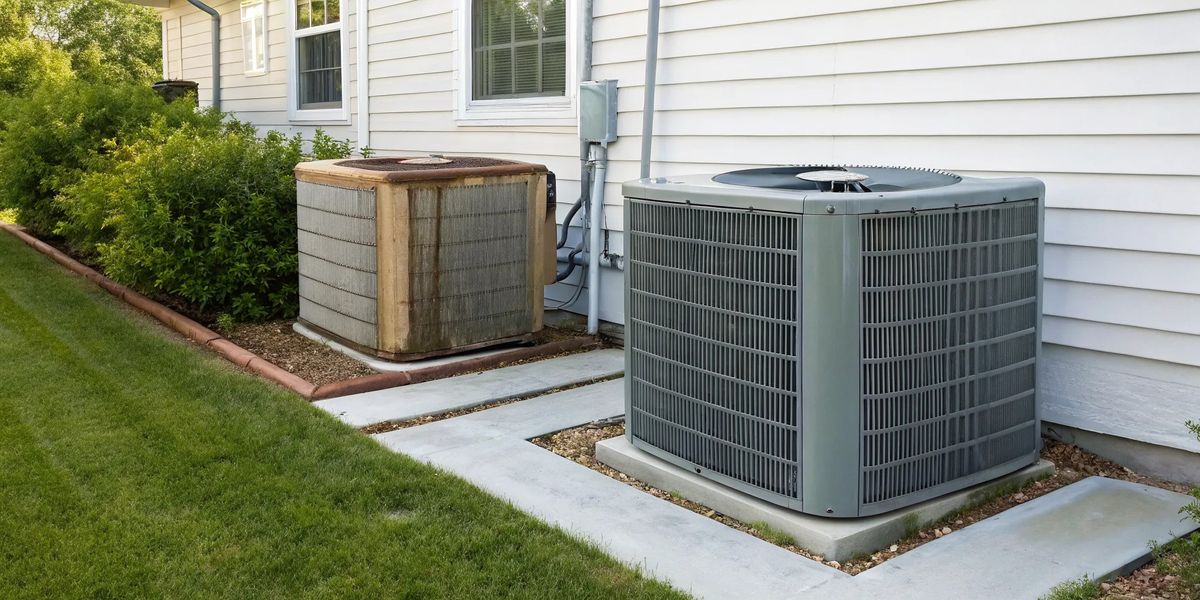
Your AC system has an outdoor component called the condenser, and it needs room to breathe. For it to work properly, it needs unobstructed airflow. Take a walk outside and check the area around your unit. Make sure there’s at least two feet of clear space on all sides. Trim back any encroaching shrubs, weeds, or tree branches. It’s also important to clear away fallen leaves, grass clippings, and dirt that can get pulled into the unit and clog the delicate fins. According to the Department of Energy, restricted airflow is one of the most common air conditioner problems that leads to reduced efficiency and system failure.
Double-Check Your Thermostat Settings
How you use your thermostat has a direct impact on your AC’s health. To prevent your system from running constantly, consider using a programmable or smart thermostat. You can set it to a higher temperature when you’re away from home and have it cool down right before you return. This simple adjustment reduces wear and tear and saves energy. Also, make sure your fan setting is on “Auto,” not “On.” The “Auto” setting only runs the fan when the system is actively cooling, while the “On” setting runs it 24/7, which can wear out the fan motor faster. Smart thermostat use is a key part of our air conditioning services.
How to Find a Trusted AC Repair Partner in the Bay Area
When your air conditioner stops working, the last thing you want is the added stress of finding a reliable technician. Choosing the right HVAC partner means finding someone who is not only skilled but also trustworthy. Here’s what to focus on to find a great local company that will get the job done right.
What to Look For in an HVAC Company
A true professional comes equipped with more than just a standard toolbox. Expert technicians use specialized diagnostic tools to accurately measure refrigerant levels, test airflow, and check for hidden leaks. This level of detail ensures they find the root cause of the problem instead of just treating a symptom. When you’re vetting companies, look for a team with a solid track record and proper certifications. These credentials show a commitment to quality and customer satisfaction, giving you peace of mind that your home is in capable hands.
AC Brands We Service and Repair
Your home’s AC system is unique, and you need a technician who has experience with a wide variety of brands. A versatile company is a sign of a well-trained team. Whether you have a Goodman, Mitsubishi, Trane, or another popular brand, an experienced technician will understand its specific design and common issues. This broad knowledge allows them to diagnose problems faster and perform more effective air conditioning services. You shouldn’t have to worry if a technician can handle your specific unit; a reputable company will have the expertise to work on almost any system.
Why Bay Area Homeowners Choose Us
In the Bay Area, reputation matters. Homeowners here value reliability and a strong connection to the community. The best way to gauge a company’s performance is to see what your neighbors are saying. Look for a business with years of local experience and a history of positive customer feedback. A company that consistently earns five-star reviews is clearly dedicated to providing high-quality, professional service. Choosing a local, family-owned business often means you get a partner who is invested in keeping your family comfortable for years to come.
Related Articles
- Signs Your Home's HVAC System Needs Repair
- Common Signs Your HVAC System Needs Repair and How to Address Them
- The Benefits of Hiring Professional HVAC Technicians for Repairs
- Choosing Between HVAC Repair and Installation
- Signs It's Time for a New HVAC Installation
Frequently Asked Questions
My AC is making a strange noise, but it's still cooling. Can I wait to get it checked? It's best not to wait. Strange sounds like grinding, rattling, or squealing are your system's way of telling you something is wrong internally. Even if it's still producing cool air, an unusual noise often points to a loose or failing part. Ignoring it can cause that small issue to turn into a much larger, more expensive system failure. Acting quickly usually leads to a simpler and more affordable repair.
What's the single most important thing I can do to make my AC last longer? Without a doubt, scheduling annual professional maintenance is the best way to extend your air conditioner's life. During a tune-up, a technician can clean essential components, identify worn-out parts before they break, and ensure the system is running at peak efficiency. This yearly check-up not only helps prevent surprise breakdowns but can also keep your energy bills lower.
My AC is over 10 years old but seems to work fine. Is it worth replacing? Even if it's still running, an air conditioner that's over a decade old is likely far less efficient than modern units. You might be paying much more on your monthly utility bills than you need to. Older systems are also more prone to breakdowns and may use the phased-out R-22 refrigerant, which makes repairs extremely expensive. It's worth getting a quote for a new system to compare the long-term energy savings against the cost of potentially frequent and expensive repairs on an aging unit.
Why can't I just "top off" the refrigerant in my AC myself? Refrigerant isn't like gas in a car; it doesn't get used up. If your system is low on refrigerant, it means there is a leak somewhere. Simply adding more without fixing the leak is only a temporary fix and doesn't solve the root problem. Plus, handling refrigerants requires special certification and tools for safety and environmental reasons. A professional can locate and repair the leak properly, which is the only permanent solution.
Besides a total breakdown, what's a clear sign my energy bill is high because of my AC? A key indicator is a sudden spike in your electricity costs that doesn't match a change in your habits or a major heatwave. If your bill jumps significantly from one month to the next, it often means your AC has become inefficient. It's having to run longer and work harder to cool your home, which consumes a lot more power. This inefficiency can be caused by anything from a clogged filter to a failing compressor.