
When Bay Area mornings start cool but afternoons turn warm, your HVAC system is making the seasonal switch before summer demand arrives. That transition is a useful window to catch restricted airflow, dirty coils, weak electrical connections, or thermostat problems while they are still manageable.
A spring HVAC tune-up Bay Area homeowners schedule should include air-filter replacement, condenser and coil cleaning, refrigerant and electrical checks, and thermostat calibration. These steps help the system operate efficiently and reduce the risk of a breakdown during the first sustained hot spell.
Schedule your spring HVAC tune-up before summer demand arrives.
Spring conditions also bring heavy pollen, marine fog, salty coastal air, and temperature swings across the region. Those factors affect equipment differently from one neighborhood to the next, so a practical checklist should account for both the home and its local microclimate. Understanding why this timing matters makes it easier to prioritize the maintenance tasks that protect comfort, efficiency, and system life.
Why Does Your Bay Area Home Need a Spring HVAC Tune-Up?
Spring is the brief transition between heating season and the first sustained cooling days. That makes it the right time to evaluate your HVAC system, before a hot afternoon exposes a weak capacitor, restricted airflow, dirty coil, or neglected electrical connection. A preventive visit gives you time to address small issues while the system is still operating, rather than waiting for an emergency service call.
A well-maintained system can move conditioned air more efficiently, which helps reduce wasted energy and may lower monthly utility costs. The EPA notes that regular HVAC maintenance supports both indoor air quality and energy efficiency, while replacing air filters helps maintain airflow and system performance. Read the EPA's maintenance guidance for additional context.
Maintenance also reduces avoidable wear. Cleaning and inspecting components, checking airflow, and identifying developing electrical or refrigerant problems can help prevent breakdowns during the first major heat wave. It can also support a longer service life by keeping the equipment from working harder than necessary. A technician can recommend the correct filter for your system. The CDC's guidance emphasizes that filters should be properly sized and within their recommended service life, and discusses MERV-13 or better filtration where appropriate for air cleanliness. Review the CDC's air-cleanliness recommendations.
Bay Area conditions create additional HVAC stress
Local systems face more than ordinary seasonal change. Marine fog and salty coastal air can contribute to corrosion and buildup on outdoor equipment, especially near the coast. Inland neighborhoods may see a sharper shift from cool mornings to warm afternoons, while spring pollen can load filters and affect airflow. These wide temperature swings and different microclimates mean a system that seemed fine in winter may be working under very different conditions by late spring.
Scheduling a visit for air conditioning services in the Bay Area before summer demand rises helps confirm that your system is ready when you need it. It is a practical step toward cleaner indoor air, fewer surprises, and dependable comfort through the warmest part of the year.
What Should Your Spring HVAC Tune-Up Checklist Include?
Your spring checklist focuses on the indoor components that directly affect airflow, air quality, and cooling performance. These homeowner steps are safe to perform yourself and help your system run efficiently when summer arrives.
Replacing your HVAC air filter is one of the simplest and most effective spring tune-up steps.
Replace the air filter. Start with a clean, properly sized filter before the first sustained stretch of cooling. For most Bay Area homes, a MERV 8-11 filter is a practical choice, but your system may require a different rating. Check the filter every 30 days during spring and summer, especially when pollen levels rise. A clogged filter restricts airflow and makes the equipment work harder. Regular replacement supports efficient operation and healthier indoor air.
Inspect accessible ductwork. Look for visible gaps, loose connections, crushed sections, or damaged insulation around exposed ducts in an attic, crawl space, or utility area. Leaky or damaged ducts can waste conditioned air and allow dust into the air stream. Mark anything that needs professional attention rather than attempting extensive repairs with household tape.
Clean the vents and registers. Turn the system off, then remove accessible register covers and vacuum away accumulated dust. Wipe the covers before replacing them, and keep furniture and curtains from blocking airflow. If dust quickly returns after cleaning, that may point to a ductwork problem rather than a surface-cleaning issue.
Check the condensate drain line for blockage. Locate the drain near the indoor air handler and look for standing water or algae buildup. A clogged line can cause water damage or shut the system down when cooling demand increases. If water is already leaking, turn off the equipment and contact a qualified technician.
Test and calibrate the thermostat. Set the thermostat to cooling and confirm that the system starts and runs steadily. Compare the displayed temperature with a separate indoor thermometer if the reading seems inaccurate. Replace weak batteries and verify that the schedule matches your spring routine.
What Does a Professional Spring Tune-Up Include?
A professional tune-up goes beyond changing a filter or brushing debris away from the outdoor unit. The technician evaluates the parts that affect cooling performance, electrical reliability, comfort, and safe operation. The EPA notes that a spring tune-up helps prepare an air conditioner for warmer months, improving reliability and preventing breakdowns. Learn more about HVAC maintenance and energy efficiency.
DIY vs Professional Tune-Up: What Each Covers
TaskHomeowner Can DoRequires a TechnicianAir filter replacementYes -- check monthly, replace every 30-90 daysNoVent and register cleaningYes -- vacuum covers, clear obstructionsNoCondensate drain inspectionYes -- visual check for standing waterIf clogged or leakingOutdoor condenser debris removalYes -- clear 2 ft of space, gentle rinseIf heavily impactedThermostat calibrationYes -- basic battery and schedule checkIf temperature reading is inaccurateEvaporator and condenser coil cleaningNo -- requires access and proper toolsYesRefrigerant level check and leak detectionNo -- EPA regulations require certificationYesElectrical component testing (capacitors, contactors, wiring)No -- risk of shock or component damageYesBlower motor amperage and lubricationNo -- requires specialized tools and experienceYesSafety control verificationNo -- involves live electrical testingYes
For a complete professional tune-up that covers all the items above, schedule an appointment with Ortiz's HVAC maintenance team in the Bay Area before summer demand fills the calendar.
Refrigerant and coil inspection
The technician checks refrigerant levels and uses electronic leak detection when the charge is low or the system's performance suggests a leak. Low refrigerant can lead to poor cooling and may place added stress on the compressor. Proper refrigerant charge is also critical for peak energy efficiency because the system needs the correct balance to transfer heat effectively.
Coil care is another central part of the visit. The evaporator coil is cleaned to remove buildup that interferes with heat transfer and reduces efficiency. The condenser coil is cleaned as needed so outdoor heat can leave the system effectively. The technician also inspects the surrounding airflow path and checks the insulation on accessible refrigerant lines.
Electrical and blower motor testing
Electrical inspection typically includes the capacitors, contactors, wiring, and connections that control and power the air conditioner. The technician looks for signs of wear, loose connections, or abnormal readings before a component fails during heavy summer use. The blower motor is lubricated when applicable and tested for amperage. An amperage reading can help identify a motor working harder than it should.
Controls, drainage, and safety checks
A complete visit includes thermostat calibration, safety shut-off testing, and condensate drain clearing. A calibrated thermostat helps the system respond to the temperature setting accurately. Safety controls are tested to confirm that the equipment can shut down when a protected operating condition occurs. Clearing the condensate drain helps reduce the risk of water backing up around the indoor unit.
Spring Maintenance Tips for Your Bay Area Microclimate
The Bay Area is not one uniform climate. Its five distinct microclimates can change how often your heating and cooling equipment runs, how quickly outdoor components collect debris, and when your system faces its heaviest demand. A practical maintenance plan should account for where you live, not just the calendar.
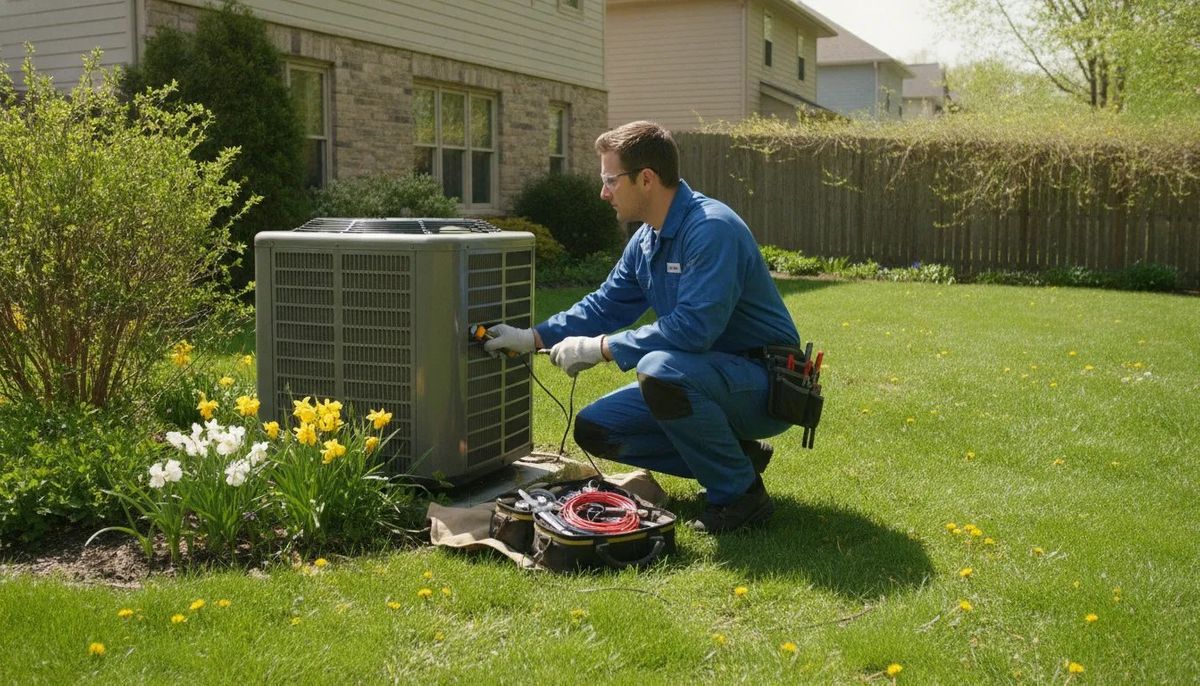
A professional HVAC technician performs electrical testing on an outdoor condenser unit.
Coastal homes need extra condenser protection
In San Francisco, Pacifica, and other coastal areas, mild temperatures may mean less cooling demand in spring. However, salty ocean air can accelerate corrosion on the outdoor condenser. Marine fog and coastal particulates may also accumulate on condenser and evaporator coils, restricting heat transfer and airflow.
Keep vegetation and debris away from the outdoor unit, and ask a qualified technician whether the condenser needs a more frequent washing schedule. Avoid bending delicate coil fins or spraying electrical components directly. Early attention can help identify corrosion before it affects performance.
East Bay and South Bay systems should be ready early
Homes in the East Bay and South Bay often move into heavy air-conditioning use by late spring. That makes early scheduling especially important. Once the first heat wave arrives, technician calendars fill quickly and a minor issue can become an uncomfortable emergency.
During a professional visit, the technician can assess the coils, refrigerant charge, electrical connections, blower operation, and duct system before sustained cooling begins. Spring is the best time to schedule a spring HVAC tune-up Bay Area homeowners can rely on, before summer heat waves put every component under pressure. Review Ortiz's HVAC maintenance services to keep the system prepared beyond the cooling season. For year-round system care, explore all available HVAC services from Ortiz.
Is Your HVAC System Telling You It Needs Repairs?
A spring inspection can identify routine maintenance needs, but some symptoms point to a developing repair. Reduced airflow from one or more vents may indicate a clogged filter, duct problem, failing blower motor, or another restriction. If replacing the filter and confirming that supply registers are open does not restore airflow, the system needs professional diagnosis.
Listen for changes and watch room-to-room performance
Grinding, squealing, buzzing, or rattling noises should not be dismissed as normal operating sounds. They can signal a worn motor, loose component, failing bearing, or electrical problem. Likewise, noticeable temperature differences between rooms may indicate duct leakage, airflow imbalance, thermostat trouble, or equipment that is no longer delivering consistent capacity.
Track your utility bills as the weather changes. A noticeable increase in energy use without a corresponding change in your household habits can mean the system is working harder than it should. The EPA explains the connection between HVAC maintenance, energy efficiency, and indoor air quality. Read EPA guidance on HVAC maintenance and energy efficiency.
Know when cooling problems require a repair
Ice on the refrigerant line or a frozen evaporator coil is not a simple tune-up reminder. A refrigerant leak, restricted airflow, or related fault may be allowing the coil to freeze, and adding refrigerant without finding the cause does not solve the problem. Turn the system off and arrange an assessment rather than repeatedly restarting it.
Capacitors and contactors can also fail when the first heavy-use days of summer place extra demand on the system. Call for service if the outdoor unit hums but does not start, the system will not start at all, or it starts and stops repeatedly. Short-cycling can increase wear and leave the home uncomfortable.
If basic homeowner checks pass but the symptoms continue, stop troubleshooting and schedule a professional diagnostic assessment. A spring tune-up can catch many developing issues before they become emergency repairs, but persistent warning signs deserve repair-focused attention now.
Schedule a professional HVAC assessment with Ortiz.
Your Outdoor Spring HVAC Checklist
Before the first warm stretch, give the outdoor condenser a careful visual inspection. These simple steps support airflow and help you spot conditions that deserve professional attention.
Clear space around the condenser. Remove leaves, grass clippings, branches, and weeds from around the outdoor unit. Keep at least 2 feet of open space on every side so air can move freely through the condenser.
Inspect and gently rinse the condenser coils. Turn off power to the unit, then rinse the exterior coil gently with a garden hose from the inside out when the equipment design allows it. Avoid a pressure washer, which can bend the fins.
Check the refrigerant-line insulation. Look at the insulated refrigerant line running between the outdoor unit and the home. Sections that are cracked or missing can reduce insulation effectiveness. Do not open the refrigerant circuit yourself.
Confirm the unit is level. Check whether the condenser appears to lean or rock on its base. An uneven installation can place strain on components and drainage.
Trim vegetation and account for your microclimate. Keep shrubs trimmed well away from the unit. In coastal communities, salt air can accelerate corrosion. East Bay and South Bay homes commonly see heavier pollen and debris buildup.
Request a professional spring tune-up before the next Bay Area heat wave.
Frequently Asked Questions
Why is spring HVAC maintenance important for Bay Area homes?
Spring maintenance prepares your system for the transition from heating to heavier cooling use. It can identify airflow restrictions, dirty coils, duct leaks, and electrical concerns before they contribute to poor comfort or a summer breakdown.
What should be included in a spring HVAC tune-up checklist?
Start with the air filter, supply and return vents, thermostat, condensate drain, ductwork, and outdoor condenser. A professional tune-up should also cover coil cleaning, refrigerant levels, electrical connections, capacitors, contactors, and blower operation.
When is the best time to schedule a spring tune-up in the Bay Area?
Schedule it early in spring, before the first sustained stretch of warm weather. This gives you time to address a worn component or refrigerant concern before the system is working at full cooling demand. East Bay and South Bay homeowners may benefit from booking earlier because cooling demand can rise quickly.
How often should an HVAC system be tuned up?
Most homeowners should plan professional maintenance at least once a year. Spring is a practical time to prepare the air conditioner for summer. Check air filters more often during periods of heavy use or when pollen levels are elevated.
Can a spring HVAC tune-up help lower energy bills?
Yes. A well-maintained system operates more efficiently. Clean coils, proper refrigerant charge, calibrated thermostats, and unrestricted airflow all help the system use less energy to cool your home. The EPA confirms that regular HVAC maintenance supports energy efficiency.