Replacing an aging HVAC system with a heat pump can improve year-round comfort. The financial side requires more than choosing equipment. San Jose and Santa Clara County homeowners also need to confirm whether the home, account, installation, and timing meet current program rules.
The san jose clean energy ecohome rebate is a San Jose Clean Energy incentive for qualifying home electrification projects, including heat pump HVAC equipment. It is separate from a federal or state tax credit. Eligibility, funding, rebate amounts, and application requirements can change. Confirm the current official terms before purchasing equipment or submitting an application.
A careful evaluation starts with the program itself. Then it moves through account status, property eligibility, equipment requirements, documentation, and reservation timing. Understanding what the incentive covers, and what it does not, can help you plan a heat pump upgrade without treating a possible rebate as a guarantee.
What Is the San Jose Clean Energy EcoHome Rebate?
The EcoHome program is a San Jose Clean Energy incentive for certain home electrification improvements. The program covers several qualified measures, including heat pump heating, ventilation, and air conditioning equipment. Heat pump water heaters, battery storage, attic insulation, pre-wiring, circuit devices, and electrical panel upgrades. Read the current official EcoHome program information before planning a purchase or submitting an application.
What heat pump HVAC means
A heat pump HVAC system can provide both heating and cooling from one system. Instead of creating heat in the same way as a combustion furnace, a heat pump moves thermal energy to heat the home. It can also operate in reverse to remove heat from indoors and cool the home. San Jose Clean Energy describes heat pump HVAC systems as an option that can provide more consistent comfort, greater control, and quieter operation.
Heat pump HVAC does not refer to one identical system for every property. Homes may use ducted equipment connected to existing or updated ducts, or ductless equipment such as a mini-split system. The right design depends on the home's size, layout, insulation, existing ductwork, and comfort needs. A professional evaluation can identify the configuration and related electrical work that fit the home.
A rebate is not the same as a tax credit
An EcoHome rebate is a program incentive administered under San Jose Clean Energy rules. A tax credit is a separate benefit governed by tax law and claimed through the applicable tax process. They may have different eligibility requirements, documentation, timing, and treatment. Do not assume that receiving an EcoHome rebate automatically means a project qualifies for a federal tax credit, or that both incentives can be combined.
Review the EcoHome Applicant Agreement for important program terms. The agreement states that the City may modify or terminate the program without notice. Check current requirements, funding, and application rules again before equipment is purchased or work begins.
Who May Qualify for the EcoHome Rebate?
Eligibility depends on more than living in San Jose or choosing a heat pump. The San Jose Clean Energy EcoHome Applicant Agreement, last updated June 3, 2026, sets project, property, account, and ongoing participation rules. Use the following as a planning checklist, not a guarantee that an application will be approved. San Jose Clean Energy verifies rebate claims, and program requirements can change.
Account and property checklist
Active SJCE account: The installation address must be connected to an active San Jose Clean Energy residential rate account with no overdue balance when the application is submitted.
Eligible dwelling: Covered property types include single-family homes, mobile or manufactured homes, accessory dwelling units, and multifamily buildings with 10 or fewer units.
Qualifying project: For a heat pump HVAC rebate, confirm that the proposed work meets the program's requirements for replacing eligible gas equipment with qualifying electric equipment. Do not assume that every heat pump installation or new construction project qualifies.
One rebate per equipment type: The agreement generally allows one rebate per equipment type per dwelling unit. A dwelling unit may have one heat pump HVAC rebate and one heat pump water heater rebate, subject to current program requirements.
Ongoing obligations after approval
Approval also creates responsibilities after installation. EcoHome equipment must remain installed and operational for at least five years. The applicant must not opt out of SJCE electric service for at least two years after receiving the rebate. The agreement also allows the City and its authorized representatives to access the property at mutually agreed times for equipment verification or follow-up during that two-year period.
Contractor selection matters as well. Projects using a contractor with Department of Industrial Relations labor violations during the previous three years are ineligible under the agreement. Applicants are also limited to 10 installation sites per year, except for EJC-qualified applicants. That limit may matter more to landlords or applicants planning upgrades at multiple properties than to a typical single-home project.
Because San Jose Clean Energy administers the rules, an HVAC contractor can help assess the replacement scope and prepare a compliant installation. A contractor cannot promise rebate approval. Verify the current agreement, account status, equipment requirements, contractor conditions, and funding before signing a purchase contract.
Read the current EcoHome Applicant Agreement for the complete terms and conditions.
How Should You Evaluate the Potential Incentive?
San Jose Clean Energy and partner incentive listings describe support for heat pump HVAC, heat pump water heaters, and related electrification work. However, an amount shown on a summary page is not the same as an approved payment. Program measures, equipment specifications, applicant circumstances, environmental justice qualification, and available funding can affect the result.
Questions to ask before relying on an EcoHome incentive
Project: Is the heat pump HVAC equipment eligible? Verify: Check the current SJCE equipment specifications and the exact model information.
Project: Does the home qualify? Verify: Confirm the active residential account, eligible dwelling type, and gas-replacement rules.
Project: Are add-on measures included? Verify: Ask whether panel work, insulation, pre-wiring, or circuit equipment is funded for the current application.
Project: Does the applicant qualify for an enhanced amount? Verify: Review current Environmental Justice Community and income-related requirements with SJCE.
Project: Is funding available? Verify: Confirm the current funding status before signing a purchase agreement or starting work.
The program agreement says rebates are subject to verification and available on a first-come, first-served basis. A third-party summary can help you identify questions, but it cannot establish that every heat pump installation receives a particular amount or that a household qualifies. Compare the proposed project scope with the current official requirements before building a budget around an incentive.
Ask a contractor to separate the heat pump work from electrical or other add-on work in the proposal. That makes it easier to compare the scope with the program measures. It also helps you see which work may proceed if a particular add-on is not eligible.
What Documents and Steps Should You Prepare?
A rebate application is easier to manage when you treat it as a project with two tracks. Follow the program's stated sequence and keep a complete record of the work. San Jose Clean Energy identifies eligibility requirements and important documents for EcoHome applicants. The program administrator, not the contractor, determines eligibility and approves payment. Review the current EcoHome rebate instructions before committing to equipment or relying on an incentive.
Check the home, account, and equipment first. Confirm that the installation address is tied to an active San Jose Clean Energy residential rate account without an overdue balance when you apply. Ask for exact model numbers and equipment specifications. Compare them with the current qualified-equipment rules. Save product data sheets and the written scope of work.
Reserve the rebate before acting on the project. San Jose Clean Energy's published process includes reserving the rebate, installing the equipment, requesting the rebate, and selecting a payment method. Do not assume that buying equipment or beginning installation will preserve funding. Keep the reservation number, approval message, and program version with your project records.
Plan permits and contractor responsibilities. Discuss the permit path before installation begins. San Jose Clean Energy provides permit instructions, including a homeowner option, but the correct requirements depend on the project and local rules. Clarify who will obtain permits, schedule inspections, and provide final documentation.
Keep invoices and proof of installation. Store the signed contract, itemized invoices, equipment specifications, permit records, inspection results, payment receipts, installation date, and photos of the completed system. Ask the program administrator which items are required for the specific project.
Request the rebate and choose payment. Submit the requested information through the current EcoHome process after installation. Confirm the payment method and review every field before submitting. Keep a copy of the final submission and follow-up correspondence.
San Jose Clean Energy also advises consumers to check contractor licenses, review complaints and litigation history, request at least three quotes, and ask for references. These are useful due-diligence steps. They do not guarantee rebate approval.
How Is a Rebate Different From a Tax Credit?
A San Jose Clean Energy EcoHome rebate and a federal tax credit are separate incentives with different administrators, application processes, and eligibility rules. The EcoHome program is administered through San Jose Clean Energy for qualifying home electrification work. A federal tax credit is claimed through a tax return when the taxpayer and improvement meet IRS requirements.
That distinction matters when you estimate the after-incentive cost of a heat pump project. The EcoHome agreement and IRS rules do not establish the same requirements. One program's approval does not automatically establish eligibility for the other. Do not assume that incentives can be stacked. Confirm current EcoHome terms with San Jose Clean Energy and current tax treatment with the IRS or a qualified tax professional.
San Jose Clean Energy EcoHome rebate compared with a federal energy-efficient home improvement credit
Who administers it? EcoHome rebate: San Jose Clean Energy, under its EcoHome program rules. Federal tax credit: The Internal Revenue Service, under federal tax law.
How is it received? EcoHome rebate: The applicant follows the program process, completes the work, requests the rebate, and selects a payment method. Federal tax credit: The taxpayer claims an eligible credit when filing the applicable federal tax return.
What determines eligibility? EcoHome rebate: Current SJCE account, property, equipment, application, verification, and program requirements. Federal tax credit: IRS rules for qualified improvements, the home, eligible expenses, and the taxpayer's federal tax situation.
What should you confirm? EcoHome rebate: Current program terms, equipment rules, reservation steps, and funding status. Federal tax credit: Current tax-year guidance, qualifying equipment, filing rules, and personal tax treatment.
The IRS guidance used for this research describes a federal credit for qualified improvements made after January 1, 2023. It also includes a stated availability period through December 31, 2025, along with rules for certain qualified expenses and heat pumps. Because those dates may not govern a later tax year, read the IRS energy-efficient home improvement credit guidance for the applicable year.
The IRS guidance also says the credit is nonrefundable and generally applies to improvements to an existing main home. A contractor cannot determine how a credit applies to your tax return. Ask a tax professional about your circumstances before relying on a federal incentive.
What Deadlines and Funding Rules Matter?
Timing matters because the San Jose Clean Energy EcoHome program is not an unlimited, guaranteed credit. The applicant agreement states that rebates are subject to verification and available on a first-come, first-served basis. An eligible project can still depend on whether funding remains available when the application is reviewed. The City may modify or terminate the program without notice. See the official EcoHome Applicant Agreement for the controlling terms.
Reservation timing affects the installation schedule
Do not treat a reservation as general approval to wait indefinitely. Under the agreement, installation must be completed within 120 days after the applicant receives a reservation. Before applying, make sure the project scope, equipment selection, permitting plan, and contractor availability are realistic for that window.
Purchasing equipment or starting work before following the current reservation process can create an avoidable eligibility problem. Confirm the required sequence with San Jose Clean Energy first. Coordinate equipment ordering, permits, and scheduling around the reservation window.
Check the official page immediately before you commit
The agreement used for this guide shows a last updated date of June 3, 2026. That date is useful context, but it is not a promise that the rules, funding balance, or application process will remain unchanged. No supported program end date was established in the available sources, so this article does not assign a closing date.
Instead, check the official EcoHome page and current applicant documents immediately before applying, signing a purchase agreement, or relying on a rebate in your project budget. Retain your reservation and project records. Ask for current rules in writing when a detail affects the purchase decision.
How Should You Plan a Rebate-Supported Heat Pump Upgrade?
Start with the home, not the incentive. A heat pump can provide both heating and cooling from one system. The best configuration depends on the home's layout, existing equipment, comfort goals, and electrical capacity. San Jose Clean Energy identifies ducted and ductless systems among the available configurations.
A ducted system may fit when existing ducts are accessible and serviceable. A ductless mini-split may fit a home with no ducts, an addition with separate comfort needs, or rooms where extending ductwork would be disruptive. If you are comparing technologies, review this guide to heat pump versus gas furnace.
Check the home's installation readiness
Ask whether the electrical panel can support the proposed equipment. Ask whether a panel upgrade or related electrical work may be needed. Also confirm whether existing ducts can deliver air effectively. The EcoHome agreement lists panel upgrades and pre-wiring among possible electrification measures, but program rules and funding can change.
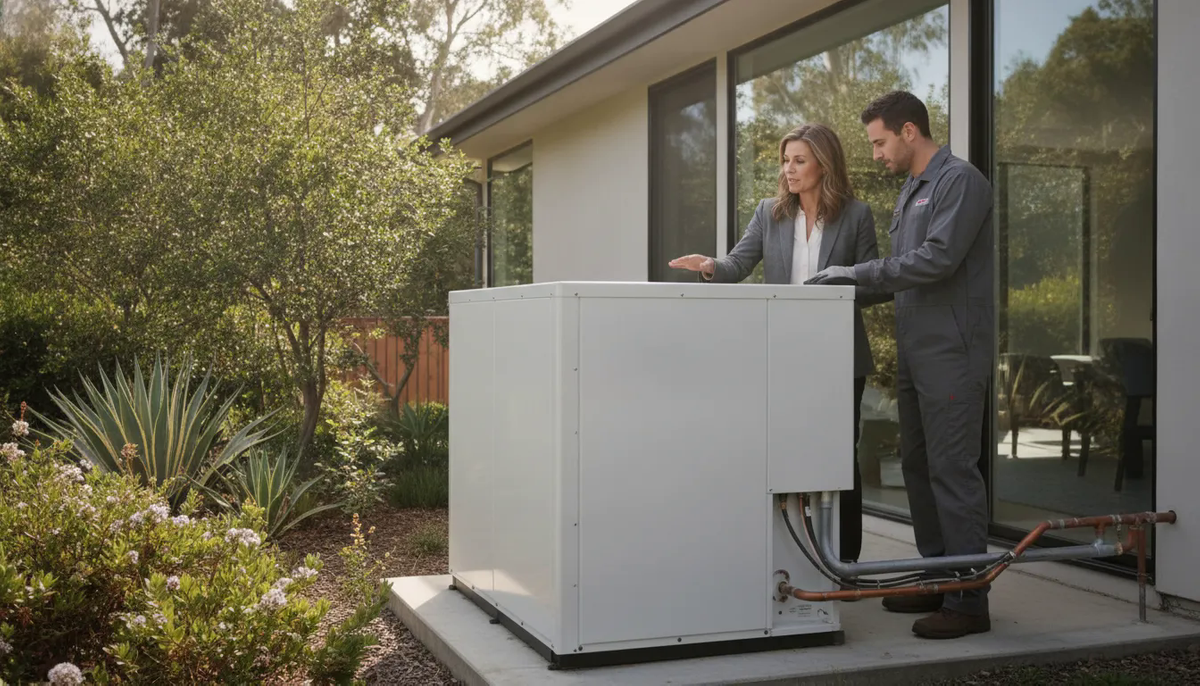
A site assessment should also identify equipment placement, condensate drainage, refrigerant-line routing, sound considerations, and access constraints. Equipment sizing deserves the same care. A contractor should evaluate square footage, insulation, window exposure, room arrangement, and existing system performance rather than selecting a unit by house size alone.
Choose the contractor carefully
San Jose Clean Energy advises consumers to check contractor licenses, review complaints and litigation history, request at least three quotes, and ask for references. Compare system design, electrical and duct scope, permit responsibilities, warranty terms, and documentation. Do not compare only the bottom-line figure.
Ortiz can discuss system options through its professional heat pump services, but San Jose Clean Energy determines program eligibility and rebate approval. A well-planned installation estimate can help you understand equipment fit before you decide whether to apply.
Request a heat pump upgrade quote
Frequently Asked Questions
Who may qualify for the San Jose Clean Energy EcoHome rebate?
The installation address generally needs an active San Jose Clean Energy residential rate account with no overdue balance. Eligible sites include single-family homes, manufactured homes, ADUs, and multifamily buildings with 10 or fewer units. Review the current EcoHome eligibility requirements before applying.
When should I apply for a heat pump rebate?
Review the current requirements and reserve the rebate before purchasing or installing equipment. The agreement says installation must be completed within 120 days after a reservation is received. Because reservations are subject to verification and funding is first come, first served, confirm timing directly with San Jose Clean Energy.
What documents should I keep for an EcoHome application?
Keep reservation information, equipment specifications, permits, invoices, and proof of installation as applicable to the project. San Jose Clean Energy provides important program documents. Ask the administrator which records and uploads are required for your specific equipment before work begins.
Can I combine an EcoHome rebate with a federal tax credit?
They are separate programs, and eligibility or stacking rules should be confirmed before relying on both. Tax guidance changes by year. Check current IRS guidance or ask a tax professional for the applicable tax year. Do not treat contractor advice as a tax determination.
Is EcoHome funding still available?
Do not assume funding remains available or that listed amounts are current. The agreement states rebates are first come, first served and that the City may modify or terminate the program without notice. Check the official EcoHome page and current agreement immediately before reserving funds or buying equipment.
Ready to Plan Your Heat Pump Upgrade?
A well-planned equipment replacement can help you compare heat pump options, confirm the right fit for your home, and organize questions about the EcoHome process. Ortiz can discuss equipment considerations for your San Jose or Santa Clara County home without promising rebate approval. Request an equipment replacement quote to get started and talk through your heat pump options.