
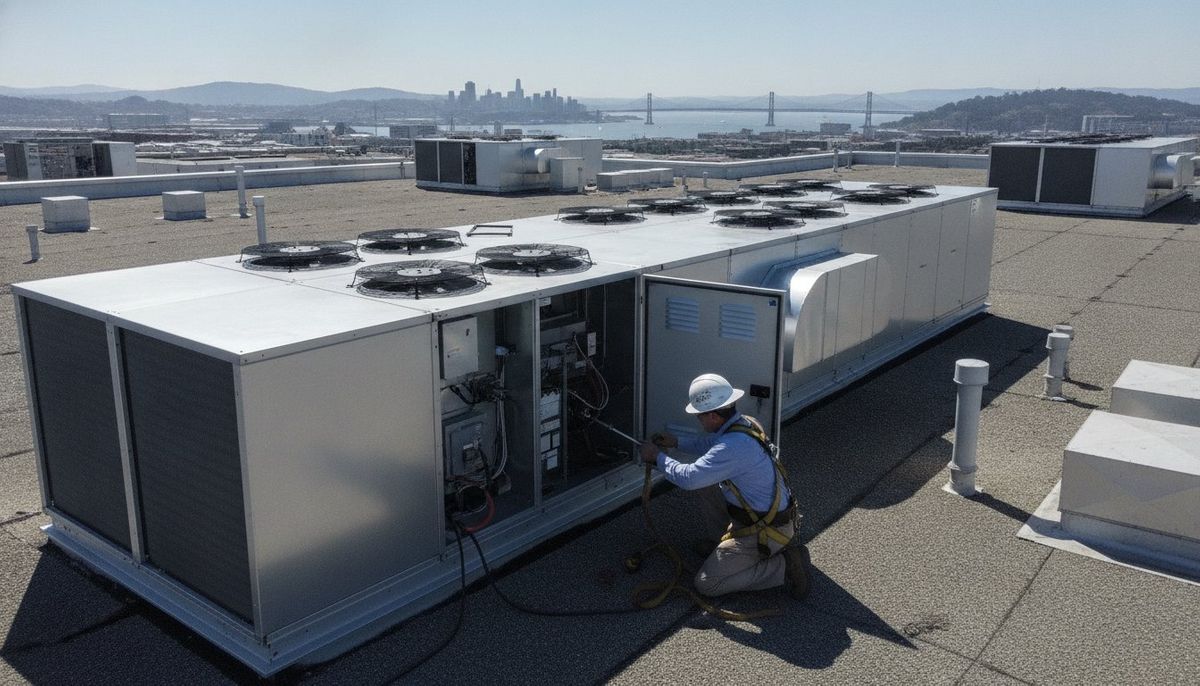
. A single failed rooftop compressor can cost a Bay Area business up to $6,000 in unexpected repairs. Routine inspections prevent these major expenses by finding small issues before they lead to system downtime. Staying ahead of wear and tear is the best way to protect your commercial investment.
Need professional commercial HVAC support? Schedule commercial HVAC services with Ortiz Heating And Air Conditioning, Inc. today or call us at (650) 676-7717.
A rooftop HVAC maintenance checklist includes inspecting air filters, cleaning coils, checking refrigerant levels, and verifying electrical connections to ensure system reliability. By following these specific steps, business owners can prevent a 20% increase in energy consumption and avoid the high costs of emergency labor for failed compressors. According to Binder Heating, a poorly maintained system often uses significantly more power while clearing cabinet debris and calibrating economizers prevents costly leaks and system energy waste. These proactive service plans help local companies extend equipment life. They maintain a healthy environment by finding aging components before they cause major business disruptions during peak working hours.
Understanding the specific needs of commercial units is the first step in avoiding these risks. You may wonder how much a routine check can truly impact your bottom line over time. We will explain exactly Why Rooftop HVAC Maintenance Matters for Bay Area Businesses and how it protects your operational budget. The path begins with
Why Rooftop HVAC Maintenance Matters for Bay Area Businesses
Rooftop units (RTUs) are the workhorses of many Bay Area retail shops and offices. These systems sit on the roof, where they face constant sun, wind, and salt air. Without regular care, these units can start to fail quickly. A system that does not get help can use up to 20% more energy than a clean one. This waste adds up fast on your monthly power bill. Regular care keeps your equipment running well and helps you avoid sudden breakdowns. Local businesses in San Francisco and San Mateo need their cooling to work well every day.
Regular professional inspections are critical for commercial rooftop HVAC maintenance.
Boost Energy Efficiency
When your rooftop unit is clean, it does not have to work as hard. Dust and dirt build up on the coils over time. This makes the system run longer to reach the right heat. Keeping your coils clean can prevent a 15% to 20% loss in power. Proper care is vital for indoor air quality and helps keep microbial contaminants from spreading through your building. This ensures your staff and customers breathe clean air while you save money on power. A well-tuned system also puts less stress on the motor and fan parts.
Avoid Costly Emergency Repairs
Ignoring small issues now often leads to big bills later. For example, a failed compressor in a business unit can cost $3,000 to $6,000 to swap. That does not include the high price of fast labor. Small checks on things like belt tension and gas lines keep your system safe. Using HVAC maintenance services helps you find these tiny leaks before they stop your business. Active care is the best way to make your gear last and keep your budget on track. It is much better to find a worn belt during a check than to have it snap during a heat wave.
Service TypeTotal CostsSystem ReliabilityEquipment LifeEnergy Use.Preventive MaintenanceLow, set feesHighLonger lifeOptimized.Emergency RepairsHigh, sudden costsLowShorter lifePoor.
A good commercial HVAC maintenance plan also checks your economizer. These parts use outside air to cool your building for free when the weather is nice. If they fail, you could lose up to $2,000 a year in free cooling. Our team uses a full rooftop HVAC maintenance checklist to look at every part of your unit to make sure nothing is wasted. We check filters, belts, and wires to keep your business running smooth all year long. This full check helps prevent water leaks into your building by keeping drains clear.
Regular checks also help the planet. The Environmental Protection Agency notes that keeping gear clean reduces wear and tear and ensures the best work. When your system runs well, it uses less fuel and lasts much longer. This saves you from having to buy a new system too soon. It also keeps your shop or office at a steady heat for your guests. A small cost for a plan today pays off in peace of mind and lower bills for years to come.
What Should Be Included in a Rooftop HVAC Maintenance Checklist?
A solid rooftop HVAC maintenance checklist helps you find small issues before they turn into big repairs. These units sit on top of buildings in the Bay Area and face harsh sun and salty air all year. Without a plan, small parts wear out and force the whole system to work harder. Keeping a tight schedule for commercial HVAC maintenance keeps your building cool and your energy bills low.
Replacing dirty air filters keeps airflow strong and reduces energy consumption.
A good list should focus on these key parts:
Air filters and coil health.
Belt tension and motor care.
Electrical wires and lugs.
Drain lines and roof pads.
Research shows that HVAC systems use a huge share of global energy. Keeping them in top shape is a key part of green building goals today. A pro will look at every part to keep the unit running well.
Air filter and coil care
Clean air filters are a must for good airflow in any office or shop. Filters catch dust, pollen, and dirt that can clog the system and slow down the fan. You should check them every few months and replace them when they look gray or full of lint. At the very least, you must clean the screen of a filter once a year to keep the air moving well. This simple task stops the motor from working too hard to pull in air.
Coils are just as important as filters for cooling your space. Both the evaporator and condenser coils need to stay clean to swap heat well. When dirt builds up on these coils, the unit cannot cool the air as it should. Cleaning these parts every three months and checking the fins can prevent a 15 to 20 percent drop in efficiency. This small step keeps your unit running like new and saves money on your monthly power bill.
Electrical parts and belt tension
The belts in your rooftop unit connect the motor to the fan that blows air into your rooms. Over time, these belts can stretch, dry out, or fray. If a belt is too loose, it slips and wastes energy. If it is too tight, it can damage the motor bearings. A tech should check the tension and look for cracks during every site visit. They can also oil the motor if needed to keep things running smooth and quiet.
Loose wires can also lead to big trouble or even a fire risk. Heat and shaking can make wires come loose over time. A pro will tighten every lug and check for signs of charring or burnt tips. They also look at the refrigerant levels to make sure there are no leaks. The Environmental Protection Agency notes that regular checks help find leaks early. This protects the air and keeps your repair costs low.
Drain lines and vibration isolators
Rooftop units pull water from the air as they cool the building. This water goes into a drain pan and then out through a line. If the line gets clogged with slime or dirt, water can back up into the unit. This can cause rust or even leak into the ceiling below. A good checklist includes flushing the lines to keep them clear of any blockage.
Vibration isolators are also key for units that sit on a roof. These pads or springs sit under the unit to keep it from shaking the roof deck. If they fail, the unit can be very loud and might even damage the roof seal. Checking these parts keeps the building quiet for your team and safe for your roof. Using expert commercial HVAC services ensures that every one of these parts gets a close look from a pro.
The Complete Seasonal Rooftop HVAC Maintenance Checklist
A clear rooftop HVAC maintenance checklist helps site leads avoid sudden system failures. These units face harsh weather on the roof, so they need regular care to last. A well-kept system uses less energy and costs less to run over time. We suggest that skilled experts handle these steps to keep the unit safe and ready.
Preparing for Peak Summer Cooling
Spring is the best time to get your cooling system ready for the hot Bay Area sun. High heat puts a lot of stress on rooftop units (RTUs). If your system is low on refrigerant, it has to work much harder to cool your building. This extra work can lead to parts breaking or a total system crash during a heatwave.
Techs will clean the coils and check for any leaks in the lines. Clean coils can prevent a big drop in how well the system works. Our team provides HVAC maintenance services that focus on these key cooling parts. Keeping the refrigerant at the right level also protects the compressor from damage.
Fall and Winter Heating Readiness
As the air gets cool, your focus should move to the heating parts of your RTU. Fall care makes sure that your furnace or heat pump is ready for the first cold day. Techs check the heat exchanger for cracks and test the burners for a clean flame. This keeps your staff and guests safe and warm all winter long.
Regular commercial HVAC maintenance also includes checking the belts and motors. If a belt is loose or worn, the system will not move air correctly. This makes the motor work too hard and raises your power bills. We also check the ignition system to make sure the unit starts up every time you need it.
Vital Steps for Year-Round Health
Some tasks must happen every few months to keep the unit in top shape. Air filters are the first line of defense for your indoor air quality. They need to be checked or replaced often to keep the air moving freely. A clogged filter blocks air and makes the whole system strain to do its job.
The EPA says that routine cleaning and checks reduce wear and tear on cooling parts. This helps keep your system running well for years. Proper care also helps the building stay sustainable by cutting down on total energy waste. Checking the drain lines is also key to stop water from building up on your roof.
Replace all air filters to keep the air clean and the airflow strong.
Clean the evaporator and condenser coils to stop power loss.
Check all power wires and parts for signs of heat or wear.
Test the economizer dampers to make sure you get free cooling when possible.
Clear debris from the unit cabinet and check the roof curb for leaks.
Inspect drive belts for cracks and set the right tension for the motor.
What Is the Role of an Economizer in Rooftop HVAC Systems?
An economizer is a smart part of your rooftop HVAC unit. It helps you save money on power bills. Think of it as a window for your building. When the air outside is cool and dry, the unit stops using its big parts. Instead, it pulls in fresh air to cool your space. This is called "free cooling." In the San Francisco Bay Area, our mild weather makes this tool very helpful for commercial HVAC maintenance. It lowers the stress on your system.
How Economizers Save Energy
Most big buildings need cooling even when it is cool outside. This is because of heat from lights, computers, and people. The economizer uses sensors to check the outside air. If the air is cool and not too damp, the system opens metal flaps called dampers. These flaps let in the fresh air. At the same time, the system turns off the cooling parts that use a lot of power. This is a vital part of any commercial HVAC services plan.
Using fresh air also keeps your building safe. It pushes out old air and brings in new air. This helps keep the air inside clean for everyone. Research on HVAC system sustainability shows that good air flow is key for a healthy building. Without this fresh air, dust and germs can build up over time. This makes the air less safe to breathe.
The High Cost of Failure
If an economizer stops working, you might not know it right away. Your building will stay cool, but your power bills will go up. The unit will use its main parts even when it does not need to. This waste of power adds up fast. Experts find that a broken economizer can cost $500 to $2,000 per year for each unit. This is why it must be on every rooftop HVAC maintenance checklist.
A broken part also puts more strain on your system. It can lead to leaks or parts failing too soon. The Environmental Protection Agency says that regular checks reduce wear. They also keep your system running well for a long time. When you skip these checks, you risk high repair bills later on.
Key Maintenance for Economizers
To keep your economizer working well, it needs care. Sensors can drift over time and give the wrong data. Dampers can get stuck from dirt or rust. The parts that move the dampers can also fail. A worker must check and set these parts to make sure they open at the right time. This tuning keeps the unit from wasting energy. It also saves you from high costs.
A pro will also check the seals around the flaps. If these seals are dry or have cracks, warm air can leak in. This happens while you are trying to keep the building cool. It makes the system work much harder and raises your costs. Adding these checks to your regular plan helps you get the most out of your rooftop unit.
How Often Should Rooftop HVAC Units Be Serviced?
Most commercial buildings need to service their rooftop units at least four times per year. This quarterly plan ensures that your system stays in good shape as the seasons change. Regular preventive maintenance plans help you find small issues before they turn into big leaks or failures. By checking the unit every three months, you can keep energy costs low and avoid sudden downtime for your business.
Quarterly light service
Each quarter, a technician should focus on basic tasks that keep the air flowing well. This includes changing air filters and checking the belts for any wear or loose tension. A system with dirty filters can use up to 20% more energy to cool your space, according to HVAC industry data. These short visits help maintain a high level of indoor air quality and prevent dust from building up inside the unit cabinet.
Annual deep inspection
Once a year, your rooftop HVAC unit needs a full professional check to set a performance baseline. During this visit, a pro will clean the coils and check the refrigerant levels to ensure everything meets the maker's rules. This deep look helps find aging parts before they fail and cause a total system shutdown. A failed commercial compressor can cost between $3,000 and $6,000 to replace, so catching wear early is vital to your budget.
Impact of neglect
If you skip regular service, you may face high energy bills and a shorter life for your equipment. Dirty coils can lead to a 15% to 20% loss in cooling efficiency, which forces the system to work much harder. You might also void your equipment warranty if you cannot show proof of routine care. Proper commercial HVAC services protect your investment and keep your staff and customers comfortable all year long.
Frequently Asked Questions
What should be included in a rooftop HVAC maintenance checklist?
A common list for rooftop HVAC care covers coils, air filters, and fan belts. You must also check all electrical parts and test the economizer to ensure it works well. These steps help your system last longer and keep your power bills low during the peak seasons. Based on notes from pro teams, you should also look for leaks in refrigerant lines and test the main system controls. Cleaning the unit cabinet and removing debris around the base are also vital tasks.
How often should rooftop HVAC units be serviced?
You should hire a pro to check your rooftop unit at least once each year. Many Bay Area businesses choose four visits a year to ensure their systems stay in top shape. Regular checks help find small problems before they turn into costly breaks that stop your work. Based on industry guides, these visits give you a baseline for how your unit works as it gets older. This early plan is the best way to avoid high repair costs.
Why is seasonal maintenance important for commercial rooftop units?
Seasonal care helps your HVAC system stay ready for the changing weather in the Bay Area. In the spring, you focus on cooling needs, while the fall is for heating prep. A system that is not kept up can use up to 20 percent more energy than a clean one. Studies show that regular tune ups prevent sudden failures and help you save money on your bills each month. Keeping your unit clean ensures it does not have to work too hard.
What is the role of an economizer in rooftop HVAC units?
An economizer saves you money by using cool air from outside to chill your building. This free cooling can save a business between 500 and 2,000 dollars each year for every unit. If this part fails, your power bills will rise and the system will undergo more wear. Regular tuning ensures that the sensors and dampers respond correctly to the signals from your main control board. This part is a key piece of any plan to cut energy waste.
Ready to schedule commercial maintenance support?
Waiting to fix your rooftop HVAC unit can lead to high costs for your local shop if a small leak turns into a broken system. You might be forced to close your doors and lose money on a hot day when your cooling fails and your team can not work. You can avoid these risks by acting right now to set up a pro visit that protects your building and helps your unit last long. You can check our HVAC maintenance services online to see how we find small faults today so you do not face a large repair later.
Ready to schedule commercial maintenance support? Call (650) 676-7717 to talk to a pro about your rooftop unit needs today.