
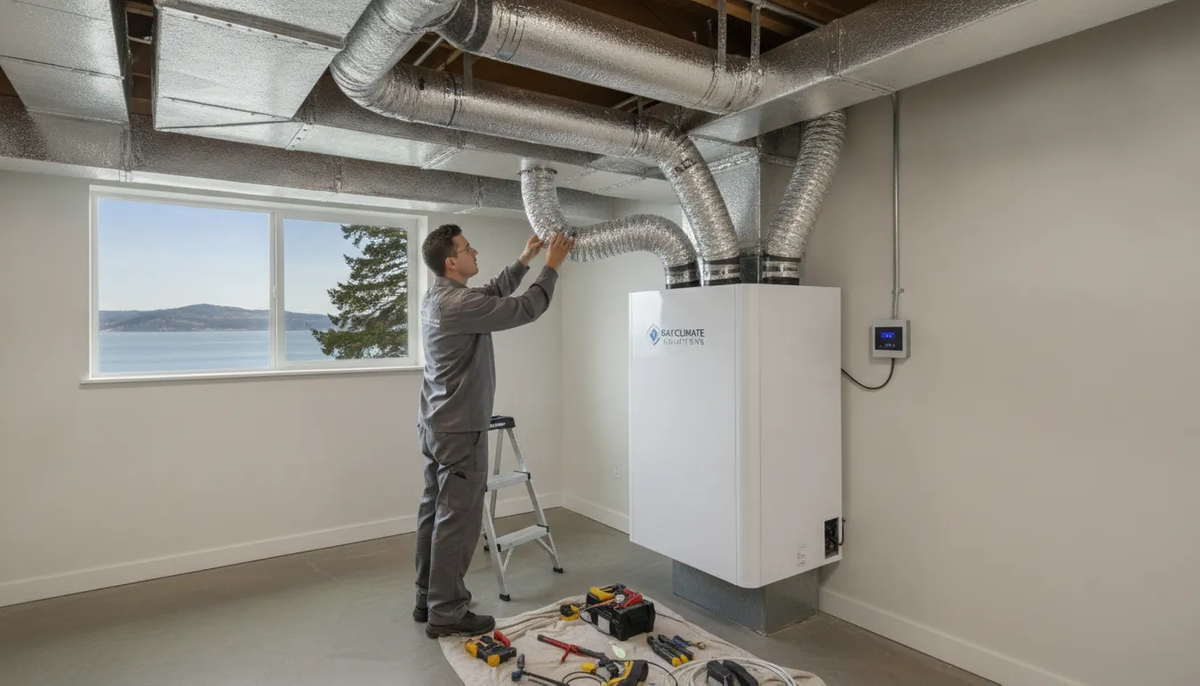
Damp air trapped in a crawl space or basement after a foggy morning is a warning sign. This excess moisture warps floors, ruins walls, and degrades your indoor air quality.
Call Ortiz Heating and Air Conditioning at 925-370-4323 to schedule your free estimate for professional dehumidifier installation today.
A professional dehumidifier installation is the most effective way to control excess indoor moisture in Bay Area homes. By adding a whole-house unit to your heating and cooling system, you can easily keep moisture levels stable in every room of your house. These professional systems keep your indoor air within the safe 30 to 50 percent relative humidity range recommended by the U.S. Environmental Protection Agency. Maintaining this balance prevents harmful mold growth, stops expensive wood rot, and helps your air conditioner work with much less daily strain. A licensed technician can set up your system to drain automatically, ensuring that you never have to empty heavy water buckets by hand. This permanent solution protects your family from indoor allergens while keeping your entire living space comfortable throughout the year.
Why Bay Area Homes Need Professional Dehumidifier Installation
Bay Area homes face a unique moisture challenge because of coastal fog, temperature swings, and damp crawl spaces. Without a professionally installed dehumidifier, indoor humidity often climbs above 50%, which creates ideal conditions for mold, dust mites, and wood rot. A whole-house system keeps your entire home dry and healthy.
The San Francisco Bay Area is famous for its unique microclimates. Cool coastal fog and daily temperature swings often trap damp air inside local homes. Many houses in cities like San Mateo or Pleasant Hill suffer from wet crawl spaces and cold basements. While local weather is mild, this dampness creates a real need for proper dehumidifier installation services. Without active humidity control, your home can become a breeding ground for pests and rot.
The Bay Area coastal climate challenge
Living near the ocean means dealing with high outdoor moisture. When damp ocean air moves inland, it enters your home through vents and gaps. Your cooling system can remove some moisture, but it is often not enough to handle the coastal air. This is why dedicated systems are a critical part of home comfort. Homeowners who want a dry indoor space often need a professional dehumidifier installation to manage these constant weather swings.
Health and structure risks of high indoor moisture
High moisture levels inside your home can cause serious trouble. When indoor relative humidity climbs above 50%, it creates the perfect environment for mold and dust mites to thrive. These tiny pests can ruin your indoor air quality and trigger allergy symptoms. Also, too much dampness can warp wood floors and rust metal fixtures over time. To protect your property, follow federal guidelines for moisture control to keep indoor humidity between 30% and 50%.
Why professional sizing and installation matters
Some homeowners buy small portable dehumidifiers for single rooms. These units are cheap and easy to plug in, but they only clear the air in a small area. They also have drip pans that you must empty by hand every day to prevent water spills. A whole-house system connects to your heating and cooling ducts. This setup cleans the air across your entire home and drains the water on its own. Getting a professional to size and set up this system ensures you get the right capacity for your space.
Choosing the right size for your dehumidifier is the most critical step. Improper sizing is one of the top reasons these systems fail or underperform. If the system is too small, it will run all the time and fail to keep your home dry. If it is too large, it will turn on and off too fast and waste energy. A professional contractor can assess your home and install a system that fits your needs just right.
Whole-House vs. Portable Dehumidifiers: Which Is Right for Your Home?
A whole-house dehumidifier connects directly to your HVAC ductwork and treats every room at once, while portable units handle only a single space and require daily manual draining. Whole-house systems cost more upfront but offer automatic operation, better energy efficiency, and permanent protection for your entire home.
Excess moisture in your living space can cause real damage. Damp air leads to mold, musty odors, and wood rot. To protect your home, you need a good system to control indoor moisture. According to the Environmental Protection Agency, you should keep your indoor relative humidity between 30% and 50% to prevent mold growth.
Portable units for single rooms
Portable dehumidifiers are small units that you can move from room to room. You can buy these systems for about $150 to $500. They work well for small spaces like a single bedroom or a damp basement corner. Most portable models collect water in a local tank that you must empty by hand. Some units let you hook up a small hose to drain the water into a floor sink.
Whole-house system benefits
A whole-house dehumidifier is a long-term fix for your whole home. These systems connect straight to your existing ductwork. They work with your cooling setup to dry the air in every room. A whole-house unit often costs between $1,500 and $2,800. Professional dehumidifier installation services cost about $500 to $1,000. An expert will connect the new system to your central air vents. This type of system pairs well with your existing air conditioning services to improve overall comfort and efficiency.
Recessed wall-mounted units
If you do not have central air ducts, you can use wall-mounted systems. These compact units are about five to six inches deep. They install recessed between standard wall studs to save floor space. Wall systems offer a great middle ground for homes with certain damp zones.
Key differences to consider
When choosing a system, look at daily capacity and maintenance. Standard single-family homes need systems that can remove 30 to 80 pints of water per day. According to the University of Missouri Extension, standard dehumidifier units use cold coils to pull water from the air and direct it to a drain. Portable units need you to empty the water tank daily. Whole-house systems run on their own and dump water straight into your home drain. If you want a healthy home, pairing these systems with whole-home humidity control solutions is the best path.
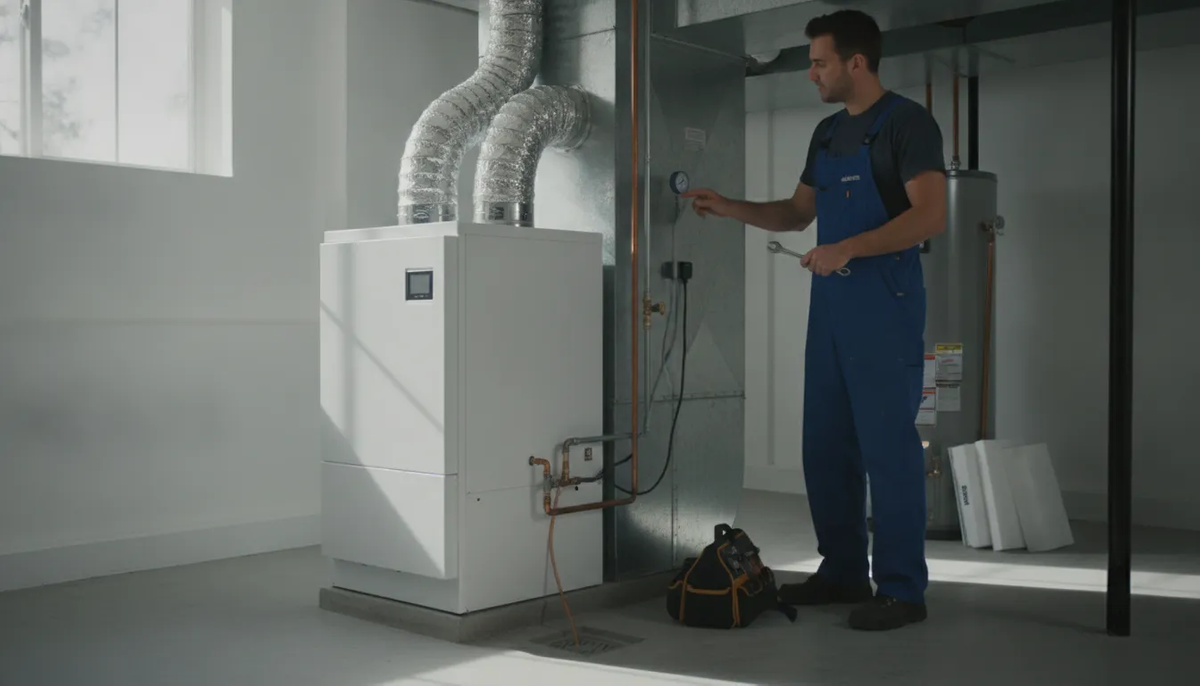
A whole-house dehumidifier connects directly to your existing HVAC ductwork for automatic moisture control.
Dehumidifier TypeCoverage and StyleCost RangeInstallation NeedsCapacity and DrainagePortable UnitsSingle rooms; visible floor units.$150 to $500.Plug-and-play design.30 to 70 pints daily; manual bucket.Whole-House DuctedFull home; hidden in ductwork.$1,500 to $2,800 unit; $500 to $1,000 setup.Hardwired and ducted into HVAC.30 to 80 pints daily; automatic drain.Wall-Mounted SystemsSpecific zones; recessed in-wall.$1,000 to $2,000 unit; $300 to $600 setup.Recessed between studs; hardwired.About 25 to 50 pints daily; direct drain.
What to Expect During Professional Dehumidifier Installation
A professional dehumidifier installation typically takes 6 to 10 hours and costs $500 to $1,000 for labor. The process includes a pre-installation assessment, load calculation, ductwork planning, electrical and drainage setup, unit mounting, and system testing. Proper installation ensures your dehumidifier works efficiently and lasts for years.
Installing a whole-home dehumidifier is a great way to protect your home from excess moisture. When you choose dehumidifier installation services, our team ensures the process is smooth and quick. It helps to know what happens during a professional setup.
Timeline and cost of setup
A standard setup takes about 6 to 10 hours to complete. The price for professional installation usually ranges from $500 to $1,000. If your home needs new ductwork or direct electrical circuits, the work will take more time and materials. Our crew handles all these complex tasks to make sure the unit works safely.
A structured installation path
Our crew follows a clear path to fit the system into your home. This process ensures that every part of the dehumidifier installation is set up to work at its best.
Pre-installation assessment. Our team checks your home layout and measures current moisture levels. This check helps us find the best spot for your new unit, such as below the HVAC return air grill.
Sizing and load calculation. We measure the moisture load of your space to choose the right system size. Sizing the unit correctly is vital because wrong sizing is a main reason these systems fail.
Ductwork planning. We plan how to connect the system to your current ducts. For compact spaces, we can recess a 5.75-inch deep unit between interior wall studs to save space.
Electrical and drainage setup. A direct power line is run to the unit for safety. We also set up a direct drain line so the collected water flows away on its own without a drip pan.
Unit mounting and connection. The technician mounts the dehumidifier and connects it to your HVAC system. We seal all joints to prevent air leaks and ensure steady airflow.
System testing and calibration. We run the system to test how it works and check the airflow. The setup ends with tuning the humidistat. This control starts and stops mechanical dehumidifiers based on real-time moisture levels.
Ensuring long-term system health
Working with an expert ensures your system works well from the start. Correct placement and tuning mean your system will last longer. Read our guide on professional dehumidifier installation to learn how these systems improve your indoor air. This extra guide helps you make the right choice for your home.
The Health and Home Benefits of Proper Humidity Control
Keeping indoor humidity between 30% and 50% protects your health and your home. Proper humidity control reduces mold and dust mites, improves respiratory health, prevents wood rot, and lowers energy bills. A professionally installed dehumidifier also takes the moisture removal load off your air conditioner, helping it run more efficiently.
Keeping indoor air within a healthy range is vital for your home and health. The U.S. Environmental Protection Agency suggests keeping indoor relative humidity between 30% and 50%.
When moisture levels rise past this range, your home becomes a breeding ground for mold and mildew. Damp air also invites dust mites to multiply. By using a dehumidifier, you can stop these pests from growing in your living space.
When you control your indoor air quality, you gain several clear benefits:
Less risk of toxic mold growth on your walls and ceilings.
Fewer dust mites, which need damp air to live.
Better safety for wood floors and furniture.
Lower wear and tear on your central heating and cooling systems.
Respiratory and allergy relief
High humidity can make it hard to breathe, mainly for those with allergies or asthma. Wet air traps dust, pollen, and other irritants. A clinical study on indoor relative humidity showed that dropping humidity from 75% to 45% led to a big drop in body inflammation. It also improved lung function. This means that professional dehumidifier installation can help you breathe easier and stay healthier.
Protection for wood and home structures
Too much water in the air does not just hurt your lungs. It also damages your house itself. High moisture can warp wood floors, doors, and window frames. Over time, damp wood can rot and weaken the structure of your home. It can also ruin your books, clothes, and furniture. Keeping your home dry protects these belongings and keeps your property safe.
Maintaining the right indoor humidity level keeps your home comfortable and protects your belongings.
Lower utility bills and HVAC strain
High humidity makes warm air feel much hotter than it is. This forces your air conditioner to work harder to cool your home. The cooling system must spend extra energy to remove water from the air. This is called latent cooling load. By using a dehumidifier, you take this heavy load off your AC. This helps your cooling system run better and can extend its lifespan. It also lowers your energy bills during warm, sticky months.
Damp air is harder to cool than dry air. A professional dehumidifier helps your HVAC system by doing the heavy lifting of moisture removal first. This teamwork means your air conditioner does not have to cycle on and off as often, which saves you money on costly repairs. Proper humidity control also protects your heating system during cooler months by preventing condensation in your ductwork.
Frequently Asked Questions
How much does it cost to install a dehumidifier?
Professional installation of a whole-house unit usually costs between $500 and $1,000, while the dehumidifier itself ranges from $1,500 to $2,800. These costs depend on your home size and whether your system needs new ductwork or electrical circuits. Ortiz Heating and Air Conditioning provides free estimates for any new dehumidifier installation to help you find the right system for your budget.
Can you add a dehumidifier to an existing HVAC system?
Yes, you can add a whole-house dehumidifier to your existing heating and cooling system. The unit is installed in your ductwork to pull moisture from the air before it moves through your rooms. According to the EPA, keeping indoor humidity below 50% helps prevent mold growth. This setup lets your air conditioner run with less energy while keeping your home dry.
Can I install a whole house dehumidifier myself?
It is best to avoid doing this job yourself. Putting in a whole-home system needs advanced ductwork skills, electrical wiring, and proper drain lines. A bad setup can damage your heating and cooling systems or cause water leaks in your home. Professional technicians can safely size and install the unit in six to ten hours so that it works perfectly.
Do I just plug in a dehumidifier?
Small portable dehumidifiers are simple plug-and-play units that you can place in a single room. However, whole-house dehumidifier installation is not that simple. These heavy systems must be wired into your electrical panel and connected to your central ductwork. They also need a dedicated drain line so you never have to empty a water tray by hand.
How long does a whole-house dehumidifier last?
A well-maintained whole-house dehumidifier typically lasts 10 to 15 years. Regular maintenance, such as cleaning the filter and checking the drain line, helps extend its lifespan. Professional installation also plays a key role in ensuring long-term reliability and performance.
Request Your Free Dehumidifier Installation Estimate
Damp air and excess moisture in your crawl space or basement will not go away on its own. Leaving high humidity alone can lead to major mold growth and costly wood rot over time. Addressing this problem today protects your family and stops home damage before it can spread.
Our crew has twenty-five years of local experience setting up custom moisture control systems in the Bay Area. We are Diamond Certified and BBB A+ accredited, which means we focus on giving you top quality service on every job. We will design a custom solution that fits your home and works for your budget.
Ready to protect your home? Call 925-370-4323 to schedule a free estimate for dehumidifier installation.