
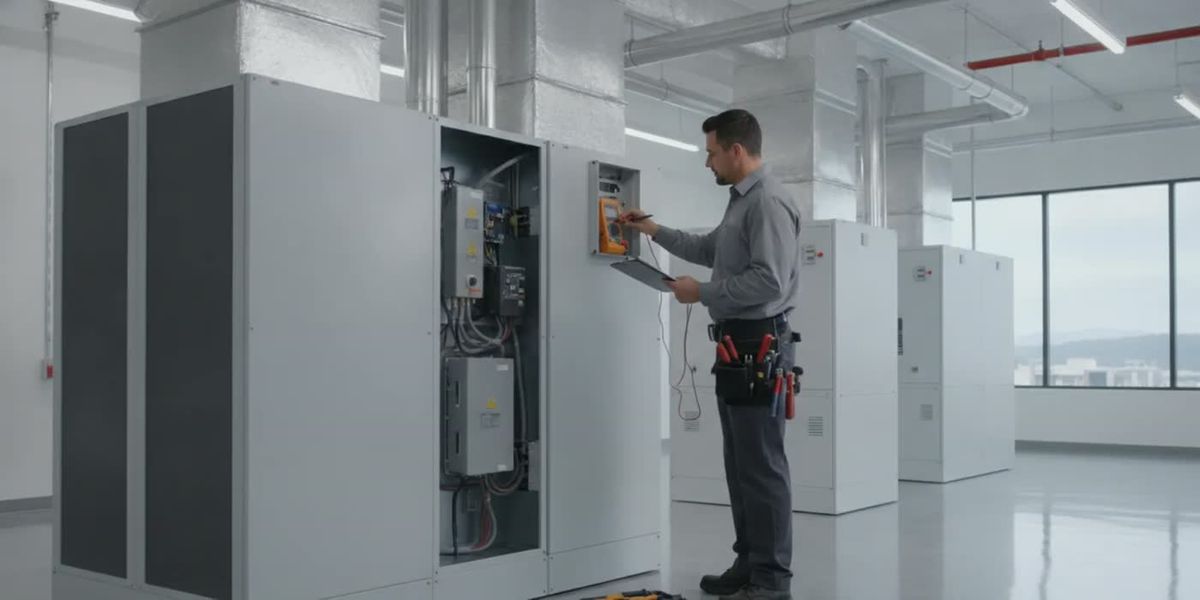
HVAC maintenance for property managers is easier to coordinate when each building has a clear equipment record, a predictable service rhythm, and a simple process for turning inspection findings into work orders. The right plan helps you prepare for seasonal demand while limiting avoidable disruption to tenants and operations.
Discuss maintenance planning for your properties
What should a property-wide HVAC maintenance plan accomplish?
A maintenance plan is more than a calendar reminder. It connects equipment, service visits, building access, tenant communication, and decisions about repairs. Without those links, a visit can happen but leave questions unresolved: Which unit was checked? What needs follow-up? Who approved the next step? When should the issue be reviewed again?
Start by defining the outcomes you need across the portfolio. For many property managers, the useful goals are steady system operation, fewer surprises during peak heating or cooling periods, minimal downtime, sensible energy use, and clear records. These are planning goals, not guarantees that maintenance will prevent every breakdown.
The service plan should also reflect the actual mix of properties. An office, a restaurant, a retail space, and a small warehouse do not have identical operating hours or occupant needs. Ortiz provides commercial HVAC services for business properties, and its maintenance plans can be tailored to specific business needs. For a property manager, that makes a conversation about building use and timing a useful starting point.
What records should you gather before scheduling service?
Before arranging a visit, assemble what is already known. The goal is not to create a perfect database in one afternoon. A concise, consistent record is more useful than scattered notes that cannot be connected to a particular system.
Property and area: Record the building name, address, mechanical room or equipment location, and the person who can arrange access.
Equipment identification: Note the system type, make and model if available, approximate installation date if known, and any existing asset or unit label. Do not guess when information is missing.
Operating context: Describe the spaces served, typical occupied hours, critical rooms, and any periods when work would interrupt business.
Service history: Gather prior maintenance dates, inspection reports, recommendations, completed repairs, and unresolved items.
Current observations: List comfort complaints, unusual operation, recurring service calls, or areas where airflow seems inconsistent. Include when the issue occurs and which spaces are affected.
Approval path: Identify who can authorize an inspection, who reviews recommendations, and who needs a status update. Confirm those roles internally before work is scheduled.
A short building profile can capture this information in one place. Keep separate records for separate systems, even when they serve the same property. A vague note such as 'check the HVAC' is difficult to track. A note that identifies the building, system, reported symptom, and requested next step gives the service provider and your team a clearer point of reference.
If the portfolio spans the San Francisco Peninsula and East Bay, the service area information can help you confirm whether a property is within the company's listed coverage. The same basic record format can then be used from one location to the next.
How often should commercial HVAC maintenance be scheduled?
Use the equipment's service history, its operating conditions, and the property's seasonal needs to plan timing. Ortiz's service operations recommend seasonal preventive maintenance, with bi-annual service recommended. That is a useful starting point for planning, but it should not be treated as a universal rule for every piece of equipment. Ask the service provider whether a particular system or use pattern calls for a different schedule.
For many Bay Area properties, planning around the transition into the main heating and cooling periods can make visits easier to coordinate. Make the schedule well ahead of those transitions, rather than waiting until occupants report a problem. If you manage several buildings, stagger appointments to avoid concentrating all visits in one week and to leave time for reviewing findings between properties.
A practical annual schedule can include these steps:
Review the portfolio early: Check the asset list, past findings, system age information if known, and open work orders before setting dates.
Propose seasonal windows: Ask the HVAC provider about appointments suitable for each building and how the visits can fit around operating hours.
Confirm building access: Coordinate keys, mechanical-room access, escorts, tenant notices, and any site-specific procedures before the appointment.
Reserve time to review results: Assign an internal owner to read reports and sort recommendations into immediate questions, planned work, and items to monitor.
Set reminders for the next review: Put the next seasonal planning point on the calendar and update it when operating needs or equipment change.
Ortiz describes flexible scheduling for commercial service to accommodate business hours and minimize disruption. When discussing timing, explain the building's occupied periods and the areas that should not be interrupted. You can also review the company's commercial HVAC maintenance services to understand the maintenance work it describes, including filter replacements and system tune-ups.
What can a maintenance visit cover?
The exact work depends on the equipment and the agreed scope. General HVAC maintenance may include assessment of air filters, ductwork, refrigerant levels, and electrical connections. The company's described maintenance program also includes filter replacement and airflow optimization, component cleaning and lubrication, performance testing and calibration, and safety checks. Commercial inspections are intended to identify potential issues and safety concerns.
Ask the provider to clarify which tasks apply to the systems at your property and what is outside the scheduled visit. A maintenance appointment should not be confused with a repair approval. If an inspection finds an issue, ask what was observed, what action is recommended, and whether a separate repair decision or diagnostic visit is needed. A separate diagnostic visit or repair may be needed; do not assume that investigation or repair work is included in routine maintenance.
Useful questions before confirming a scope include:
Which systems and areas are included in the visit?
Are filters included, and how will the appropriate replacement be determined?
Which inspection and performance checks are planned for this equipment?
What access or operating conditions does the technician need?
How will findings and recommendations be provided after the visit?
What should our team do if a new problem appears before the next scheduled appointment?
These questions keep expectations clear without assuming that every property has the same equipment or needs the same work. Ortiz offers HVAC service calls as a separate service path for service needs that arise outside a planned maintenance visit.
How can property managers triage HVAC reports?
Tenants and building staff are often the first to notice a change, but their observations may not identify the cause. Create a consistent intake process that captures the symptom without asking the reporter to diagnose the system.
Ask the person reporting an issue to note:
The affected room, floor, or business area.
Whether the issue concerns heating, cooling, airflow, noise, odor, or visible water.
When it started and whether it is constant or intermittent.
Whether nearby areas are affected too.
Any change in occupancy or operating hours that may help explain when the symptom occurs.
Then route the report according to its urgency and the property's own safety procedures. A comfort complaint, a system that has stopped operating, and a suspected safety concern are not the same kind of work order. If a report suggests an immediate safety risk, follow the building's established emergency procedures and contact appropriate emergency services when needed. Do not ask tenants to open equipment or attempt electrical, refrigerant, or combustion-related work.
For routine issues, consolidate duplicate reports and attach them to the correct system record. That can help distinguish a one-time complaint from a recurring pattern. If a repair is needed, Ortiz provides HVAC repair services; maintenance findings should still be reviewed and authorized through your organization's normal process.
How should you document findings and recommendations?
Documentation is valuable only when someone can act on it. Keep the service record tied to the property and equipment, then capture the date, work performed, findings, recommended next step, and current status. Ortiz describes commercial service as including detailed inspection reports and recommendations. Ask what information will appear in the report and how your team should raise questions about a finding.
After each visit, use a simple review sequence:
Match the report to the asset: Confirm the building and equipment references are clear enough to update your records.
Separate completed work from recommendations: Note what was done during the visit and what remains proposed or unresolved.
Clarify unfamiliar findings: Ask for plain-language explanation of the observation, its practical effect, and the recommended action.
Assign an owner: Give each follow-up item a responsible person and an internal target date. Do not leave recommendations in an inbox without an owner.
Record the decision: Note whether the work is approved, deferred, declined, or awaiting more information, according to your normal process.
Close the loop: When work is completed, add the outcome to the same equipment record and communicate the status to affected stakeholders.
Property and community association managers are grouped together as a recognized occupational category by the U.S. Bureau of Labor Statistics. That classification is not an HVAC maintenance standard, but it reflects why property responsibilities can involve coordinating many parts of a building. For maintenance planning, a clear handoff between the property team and the service provider matters as much as keeping the appointment itself.
How can you coordinate work with tenants and building staff?
Scheduling is a property-management task as well as a service task. Before the visit, decide who will notify occupants, who can provide access, and how questions will be handled while work is underway. For multi-tenant buildings, send a notice that states the affected area, expected date or service window, and any known access needs. Avoid promising that a visit will resolve a symptom before the technician has assessed it.
For restaurants, retail spaces, offices, and small warehouses, think about business rhythms. A restaurant may have operating periods when access to a particular area is difficult. An office may have meeting rooms or other spaces that are occupied at specific times. A warehouse may have operating activity that affects equipment access. Share those constraints early so the appointment can be planned with the least practical interruption.
After service, provide a concise update: what area was visited, whether the planned work was completed, whether follow-up is recommended, and who is responsible for the next decision. Keep technical details in the service record, but give occupants the information they need to understand any expected next step. This reduces duplicate requests and gives your team a reliable account of what has happened.
What should you review across a portfolio?
Once individual building records are in place, review the portfolio for patterns. This does not require complex software. A spreadsheet or existing property-management system can help if fields are used consistently and records have a clear owner.
Coverage: Which buildings have a current maintenance appointment planned, and which still need scheduling?
Open recommendations: Which items are waiting for clarification, approval, or completion?
Recurring symptoms: Are the same areas or systems generating repeated complaints?
Operational conflicts: Are visits being delayed because of access, tenant notification, or business-hour constraints?
Record quality: Can someone new to the property identify the equipment, service history, and current owner of each follow-up item?
Use this review to adjust the next planning cycle. For example, if one building repeatedly needs access coordination, update its scheduling notes before the next appointment. If a recommendation remains open, assign a review date rather than allowing it to disappear among new requests. This is a management framework, not a claim that every equipment problem can be anticipated.
How do you choose a commercial HVAC maintenance partner?
Look for a provider that can explain the work in plain language, accommodate the building's operating needs where scheduling allows, and give your team useful inspection findings and recommendations. Ask how the scope is tailored to different property types, what information is needed before the appointment, and how findings that need additional attention are handled.
Also clarify service boundaries. Confirm what is part of a planned maintenance visit, what would be treated as a separate diagnostic or repair, and how your team will receive recommendations for approval. Ortiz offers commercial services and maintenance plans tailored to business needs. You can review its full range of HVAC services and use its company information to learn more about the business.
If you manage buildings in the San Francisco Bay Area, share the property locations, equipment records, scheduling constraints, and current concerns when you make an inquiry. Ortiz serves communities across the San Francisco Peninsula and the East Bay, among its service areas. A focused discussion can help establish which maintenance approach fits the buildings you oversee.
Talk with Ortiz about commercial HVAC maintenance
Frequently asked questions
How often should a property manager schedule commercial HVAC maintenance?
Ortiz's service operations recommend seasonal preventive maintenance, specifically bi-annual service. Use that as a planning baseline and confirm whether the equipment, building use, or service history calls for a different schedule.
What information should I provide before booking a maintenance visit?
Share the property address, system locations and identifiers if available, operating hours, access requirements, prior service records, and any current symptoms. Clear information helps the provider understand the site and plan around building operations.
Does a maintenance visit include every repair that may be needed?
No. Maintenance checks and tune-ups are distinct from additional diagnostic or repair work. Ask which tasks are included in the planned scope, and review any findings and recommendations before authorizing follow-up work.
How can I reduce disruption during service?
Schedule ahead, explain occupied and high-priority areas, coordinate access with building staff, and notify affected occupants about the expected service window. Share any operating constraints with the provider before the appointment.
Plan your next maintenance cycle
A dependable property-wide approach starts with accurate equipment records, seasonal scheduling, clear work-order intake, and a consistent way to review and close out findings. Ortiz can discuss maintenance planning for commercial properties through its maintenance service page.
Contact Ortiz to discuss maintenance for your properties
With clear roles and a regular review rhythm, property teams can make HVAC service easier to coordinate across occupied buildings.