
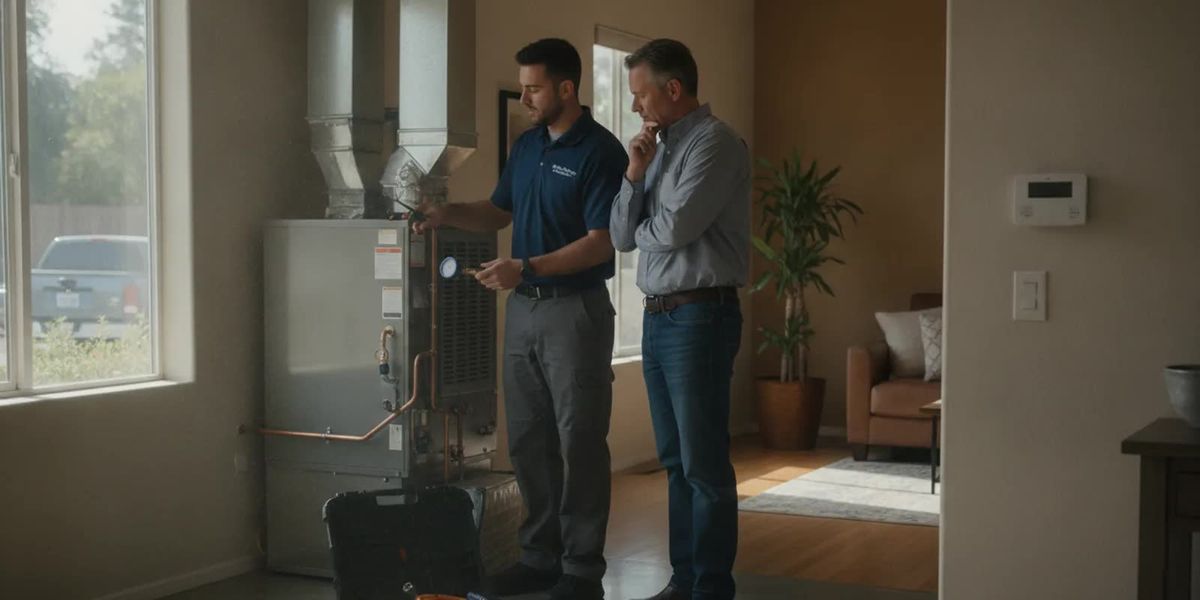
Choosing an hvac contractor livermore residents can rely on starts with understanding the work, asking how recommendations were reached, and comparing complete proposals rather than headline prices. Whether you need a repair, a replacement, or a system for a small business, a little preparation can make the conversation clearer and help you decide what fits your property.
What should a Livermore HVAC contractor be able to do?
Begin with the task at hand. HVAC work may involve troubleshooting, routine maintenance, ductwork, equipment replacement, or a new installation. Ask whether the contractor handles the specific work your property needs, who will perform it, and how the company will communicate what it finds.
For installation or replacement, the conversation should start with the building and the system already there. Describe rooms that feel too warm or too cool, the times those problems happen, recent equipment issues, and any planned renovation. A useful proposal explains why a particular system and scope are recommended. It should not merely name a model.
For repairs, ask how the technician will investigate the issue and what information you will receive before authorizing additional work. A diagnostic visit and an equipment replacement estimate are different. Ortiz offers free estimates for adding or replacing equipment; do not assume that a repair inspection or diagnostic is free.
Ortiz serves residential and light commercial customers across the Bay Area, including the East Bay Area. Review the company's service area information to confirm whether your address is covered.
How can you check a contractor's qualifications?
Ask for current California license information and verify it through the state licensing agency before work begins. A license check is a starting point, not a substitute for reading the proposal, understanding insurance responsibilities, and reviewing how the contractor communicates. Ask whether permits may apply and who will coordinate them.
Find out who will be on site and who is responsible for the work. If employees or subcontractors are involved, ask who supervises the job and handles follow-up. You can also review the company's background information and customer reviews as part of your research.
The California Contractors State License Board provides state contractor licensing resources at CSLB.ca.gov. Use the agency's current tools to check license information rather than relying only on a number printed in an advertisement.
What should you compare in an HVAC proposal?
Compare the work included, what is excluded, equipment details, and the responsibilities each contractor accepts. A smaller total may reflect a narrower scope; a larger total may include items another proposal omits. Ask each contractor to clarify the same points in writing so the comparison is fair.
Scope and site work
Look for removal and disposal of existing equipment, installation tasks, and any duct, electrical, or access work that is part of the recommendation. If the contractor identifies a condition that could change the scope, ask what would trigger extra work and how a change would be documented and approved. For example, if duct modifications may be needed, ask whether the proposal includes them or treats them as a separate decision after inspection.
Equipment and controls
Check that the proposal identifies the manufacturer, model or product family, system type, and relevant capacity information. Confirm whether thermostats, filtration components, or other accessories are included or optional. Ask why the equipment is appropriate for your home's layout and comfort concerns instead of assuming that the largest unit or most familiar brand is automatically the best fit.
Permits, schedule, and payment
Ask who determines whether a permit is required, who handles an application, and who coordinates inspection if applicable. The proposal should describe anticipated start timing, expected work duration, and factors that could affect the schedule. Review the total price, payment milestones, and how potential changes are handled. Do not rely on an oral explanation for an important exception.
Warranty and completion
Ask what manufacturer warranty applies, what paperwork you will receive, and how to request help if a problem comes up. Clarify what the contractor will check when the work is complete and whether you will be shown how to use any new controls. Keep the written proposal, revisions, equipment documents, and completion paperwork together for future reference.
How do Livermore conditions affect HVAC planning?
Livermore's inland setting can bring hot summer afternoons and cooler periods than some coastal parts of the Bay Area. Conditions differ by property, so a system that works well in another home may not suit yours. Building size, insulation, windows, layout, occupancy, and existing ducts all affect how equipment performs.
Be specific about when and where discomfort occurs. A room that overheats late in the afternoon could involve sun exposure, airflow, insulation, or equipment sizing. That observation is useful, but it does not establish that a larger air conditioner is the answer. Ask the contractor to explain what they checked and how the recommendation addresses the symptom.
For a heat pump, discuss how the proposed system will provide heating and cooling, whether changes to the electrical or duct system are needed, and how the equipment fits the building. Ortiz offers heat pump services and HVAC installation. Ask for the reasoning behind the design choices rather than assuming one configuration suits every property.
Should you repair or replace the system?
No single age or symptom determines the right choice in every case. Consider the pattern of failures, comfort problems, equipment condition, likely repair scope, and the cost and disruption of replacement. Ask for an explanation of both paths when both are reasonable.
When repair may make sense
A repair may be worth considering when the issue is limited, the rest of the system is in usable condition, and the proposed work is expected to address the immediate problem. Ask what caused the failure, whether other components raise concerns, and what result to expect. A repair to one component cannot be assumed to resolve unrelated airflow or comfort issues.
When replacement deserves a discussion
Discuss replacement if problems recur, the system struggles to maintain comfort, or substantial work is being considered. Compare the expected repair scope with replacement options, including how each choice affects operation and future service needs. Age is one factor, not a diagnosis by itself.
For a replacement conversation, Ortiz provides estimates for equipment installation and replacement. For an existing equipment problem, review the repair service information. Keeping these requests distinct helps ensure that the discussion matches the work you need.
How do system options compare?
Different equipment configurations can solve different problems. Instead of choosing by label alone, ask the contractor to connect each option to your home's layout, existing infrastructure, and comfort priorities.
Central ducted system
A ducted system uses the home's duct network to distribute conditioned air. Ask whether the existing ducts are in suitable condition and whether their layout can serve the rooms that concern you. If a proposal assumes the ducts will remain unchanged, ask what that means for any existing hot or cold spots.
Ductless or zoned approach
A ductless system or zoning arrangement may be worth discussing when parts of a property have distinct needs or duct access is limited. Ask where indoor units or controls would go, which rooms each zone would serve, and how occupants would operate the system. Consider appearance, placement, and daily use alongside equipment details.
Heat pump configuration
A heat pump can provide heating and cooling, but the right configuration depends on the building and project requirements. Ask about electrical capacity, duct compatibility, equipment location, and the control strategy. Compare the actual scope and expected operation instead of assuming every heat pump installation requires the same changes.
Whichever option is proposed, ask the contractor to explain its advantages, limitations, and any assumptions. A clear comparison should name the rooms or uses it addresses, identify work needed beyond equipment placement, and state what remains outside the proposal.
What questions help you choose between contractors?
Open questions invite an explanation rather than a sales pitch. Listen for answers tied to what the contractor observed and to the goals you described.
What did you observe, and how does it support this recommendation?
What alternatives should I consider, and what are the trade-offs?
Which tasks are included, and what could require a written change?
Who coordinates permits, inspections, access, and scheduling?
How will you protect the work area and check operation after installation?
What equipment, warranty, and completion documents will I receive?
Notice whether the contractor asks about how you use the building and what matters most to you. A recommendation should connect to those details, not rely only on a quick visual impression. You can review Ortiz's service offerings and project gallery for more context about the kinds of work presented.
What should a business consider?
For a small office or retail space, HVAC planning affects employees, customers, equipment, and business hours. Explain the operating schedule, occupancy patterns, rooms with different comfort needs, and periods when work could disrupt normal operations.
Ask how the contractor will coordinate access, noise, and temporary interruptions. Clarify whether the proposal covers every served area or only one unit or zone. If ventilation or specialized equipment is important to the business, describe those needs early and ask where they appear in the proposed scope.
Ortiz serves light commercial customers and offers commercial HVAC services. A business may also discuss maintenance services when planning routine care alongside a repair or replacement.
How should you prepare for a contractor visit?
Write down the system's make and model if accessible, approximate installation date if known, recent service history, and the conditions when comfort problems occur. Note which rooms are affected and whether the issue changes with weather, time of day, or occupancy. Photos of a thermostat display or affected area can help you describe what you observed, but they do not replace an on-site assessment.
Make sure the contractor can reach the equipment, thermostat, and relevant rooms. Mention pets, access restrictions, parking instructions, or business hours in advance. If multiple people will decide on the work, arrange for them to hear the explanation together when practical.
After the visit, compare proposals against the same checklist: scope, equipment, exclusions, permits, schedule, payment terms, warranty, and completion steps. Ask for unclear points in writing. Before work starts, confirm the final scope and how changes will be approved. If a proposal changes, compare the revised version rather than relying on notes from an earlier conversation.
A practical way to review two proposals
Imagine two proposals both recommend replacing a home's cooling and heating equipment. One gives a lower total but says little about duct work or removal. The other identifies removal, a thermostat, and a permit allowance but does not explain how it will address an uncomfortable upstairs room. Neither number alone shows which is the better fit.
First, ask the lower-price contractor whether disposal, duct adjustments, and controls are included. Then ask the second contractor what assessment supports the upstairs comfort recommendation and whether any duct work is included. Request written answers and revisions. You can then compare the same scope and decide whether the additional work is relevant to your priorities.
For another example, suppose a repair is recommended after a system has failed more than once. Ask what each failure involved, whether the current issue is independent, and what repair is expected to accomplish. If replacement is also proposed, compare its full scope and disruption against the repair option. The purpose is not to force one answer, but to understand the basis for each choice.
Explore HVAC installation options with Ortiz
Frequently asked questions
How many HVAC proposals should I compare?
There is no fixed number for every project. Compare enough proposals to understand available approaches, and make sure each contractor is responding to a similar scope. Ask follow-up questions when equipment, included tasks, or assumptions differ.
Should a contractor assess my ducts before replacement?
Ask whether the existing duct system is part of the assessment and how its condition affects the proposed equipment. The answer depends on the property and work. If duct work is recommended, clarify its purpose, scope, and whether it is included.
Does a new system always improve comfort?
Not by itself. Comfort can depend on system design, installation, airflow, controls, and the building. Describe the specific rooms or conditions that concern you and ask how the proposed work addresses them.
Can I ask for an estimate before deciding on replacement?
Yes. Ortiz provides free estimates for adding or replacing equipment. Repair diagnostics and service visits are different; ask what a repair visit includes and what charges may apply.
Plan your next step
A useful contractor conversation leaves you with a clear account of the problem or project, the options available, and what each proposal includes. Use your notes to compare scope and communication, then choose the plan that suits your property and priorities. To discuss installation or replacement, contact Ortiz Heating and Air Conditioning with your questions and project details.