
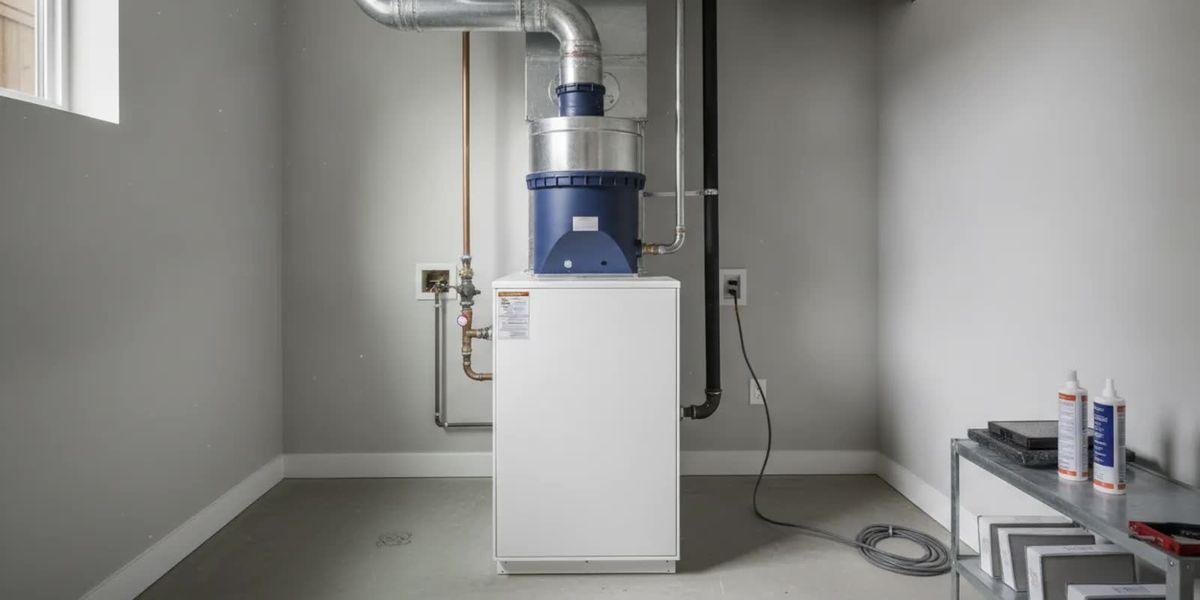
An HVAC air purifier can be part of an indoor air plan, but choosing equipment before defining the concern can lead to the wrong conversation. Bay Area homeowners comparing an HVAC air purifier should first understand what it is meant to do, how it fits the existing heating and cooling system, and what other indoor air measures may be relevant.
Discuss your indoor air concern
What does an HVAC air purifier do?
An HVAC air purifier is an air-treatment component intended to work in connection with a home's heating and cooling system. Ortiz provides air purifier installation as part of its indoor air quality services. Depending on what a home needs, the broader discussion may also include HVAC filtration options, ventilation improvements, humidifiers or dehumidifiers, and filter replacement programs.
The phrase can refer to different kinds of equipment, so a general label is not enough to predict how a particular model will perform. The system design, the location of the equipment, what the device is intended to address, and the conditions in the home all matter. Ask for an explanation specific to the proposed equipment rather than assuming every purifier works the same way.
It also helps to separate equipment from the goal. A homeowner may want to reduce a recurring concern, understand why a room feels different from the rest of the house, or learn whether existing filtration is appropriate. Those are useful starting points, but each needs a clear explanation before a device is selected.
Start with the air concern, not the product label
Indoor air quality is not one single issue. Dust, seasonal allergens, odors, moisture concerns, and other pollutants can call for different questions. An HVAC air purifier should not be presented as a universal answer for every indoor air concern. First identify what you notice, where it happens, and whether it follows a pattern.
Before contacting a contractor, write down a few observations:
Where is it happening? Note whether the concern is throughout the home, limited to one floor, or concentrated in a particular room.
When does it occur? Record whether it changes with the season, occupancy, cooking, cleaning, or operation of the heating and cooling system.
What do you notice? Describe visible dust, a recurring odor, or another specific condition without assuming its source.
What has changed? Mention recent remodeling, a change in room use, a new appliance, or a recent HVAC service if relevant.
What is already installed? Gather any information you have about the HVAC equipment, filters, or indoor air devices. It is fine if you do not know the technical details.
This record is not a diagnosis. It gives the person evaluating the concern a more useful starting point than a general request for a purifier. If the pattern is tied to one room, for example, the system may not be the only part of the discussion. If the concern appears across spaces served by central HVAC, system-level questions may deserve more attention.
How does an HVAC air purifier compare with other indoor air measures?
These options can be discussed together, but they do different jobs. A thoughtful plan starts with the observed concern and considers which measures are relevant instead of treating every option as an interchangeable add-on.
Air purifier installation
An HVAC air purifier adds an air-treatment component associated with the heating and cooling system. Before selecting one, ask what the specific equipment is intended to address and how the installer will determine that it suits the system. Ortiz includes air purifier installation within its indoor air quality services, along with other measures that may be part of a customized plan.
HVAC filtration and filter replacement
Filtration is another system-based consideration. Filter type and fit should be checked against the requirements of the actual equipment. A filter with a different rating or construction is not automatically the right choice for every system; ask how the proposed option fits the manufacturer's and system's requirements. Ohio State's health resource discusses HVAC filters, including MERV ratings and activated carbon, as factors to consider when choosing a furnace filter. Its guidance is useful background, but it does not establish compatibility for your particular equipment. Read the Ohio State overview of HVAC and home air quality, then confirm system-specific details with a qualified professional.
Filter replacement is also an ongoing task, not a one-time equipment decision. Ortiz offers filter replacement programs and HVAC maintenance. When discussing a plan, ask what upkeep applies to the selected setup, what instructions govern the filter, and how to tell when attention is due. Avoid relying on a generic interval when the equipment instructions or home conditions may differ. See the company's HVAC maintenance service for information about ongoing system care.
Ventilation improvements
Ventilation concerns air exchange or bringing air into a building. It is distinct from adding a purifier or changing a filter. Whether an improvement is appropriate depends on the building, the existing setup, and the concern being evaluated. Ask whether ventilation belongs in the discussion and what problem a proposed change is intended to address.
Humidity control
Humidifiers and dehumidifiers address moisture conditions, not the same goal as particle filtration. They may be worth discussing when humidity is part of the concern, but they should not be assumed to solve a dust, odor, or other unrelated issue. Ask how the proposed equipment would work with the existing HVAC system and what conditions it is meant to manage.
Duct services
Duct condition and air treatment are related but separate considerations. Ortiz offers duct cleaning to remove dust, debris, and contaminants, as well as other duct services. A duct service is not a substitute for choosing an appropriate purifier, and purifier installation does not establish that the ducts need cleaning. The condition and concern should guide whether duct work belongs in the plan. Learn about duct services if the distribution system is part of your question.
What should you ask before choosing a purifier?
Use a consultation to understand the proposed solution, not just its name. These questions help turn a product conversation into a practical review of the home's needs:
What specific concern is this option intended to address? Ask the provider to connect the recommendation to the observations or assessment findings.
Where would the equipment go? Ask how its placement relates to the existing HVAC system and the spaces where you notice the concern.
What system details need to be checked? The installer should confirm the actual equipment and relevant installation requirements instead of assuming compatibility from a broad description.
What does this option not address? Ask about its limits and whether other measures, such as ventilation or moisture control, need separate consideration.
What ongoing care is expected? Clarify cleaning, inspection, filter replacement, or other maintenance that applies to the specific equipment. Follow the applicable manufacturer's instructions.
How will the recommendation be explained? Ask for a clear description of why this option fits the concern, what alternatives were considered, and what information is still uncertain.
Ortiz's available service information does not specify particular purifier models, ratings, particle-size performance, replacement intervals, or compatibility rules. These are not details to infer from a generic article. They should be verified for the equipment and HVAC system under consideration.
How can an indoor air assessment make the decision clearer?
When the source or type of concern is not obvious, starting with an assessment can help keep the equipment decision grounded. Ortiz describes using equipment and tests to identify pollutants, allergens, and chemicals, then tailoring recommendations to the findings. The documented process includes assessment and testing, a customized improvement plan, equipment installation, and ongoing support.
A useful assessment conversation should connect four things: what you noticed, what was evaluated, what the findings suggest, and why a particular measure is being recommended. Ask which findings are relevant to an HVAC air purifier and which point toward another response. If an assessment does not establish that a proposed device addresses the concern, ask what additional information would help.
Ortiz's indoor air quality work can include filtration, ventilation, humidity control, and other options as appropriate. For a broader overview of how these measures can fit together, read the guide to indoor air quality solutions. That context can help you organize questions, but the right plan still depends on the conditions in the specific home or business.
An assessment is distinct from a free estimate for adding or replacing equipment. Diagnostic assessments may involve a service-call fee, so ask about the scope and applicable charges when scheduling. Quotes for indoor air quality solutions can be discussed with Ortiz; no particular equipment price or outcome should be assumed before the scope is established.
What does a practical decision process look like?
Homeowners can use the following sequence to avoid jumping from a symptom directly to a product:
Document the concern. Record locations, timing, changes, and any relevant system details. Separate what you observed from what you think may be causing it.
Discuss the system and the spaces it serves. Explain which rooms are affected and whether the central HVAC system serves them. If only one area is involved, make that clear.
Decide whether assessment is useful. If the source or type of pollutant is uncertain, discuss appropriate assessment and testing before settling on equipment.
Compare relevant measures. Consider purifier installation alongside filtration, filter replacement, ventilation, humidity control, and duct services only where each applies.
Confirm system fit and care. Have the installation requirements reviewed and get clear instructions for ongoing maintenance.
Keep the recommendation in context. Ask how the proposed measure relates to the findings and what concerns remain outside its purpose.
For example, suppose a homeowner notices a recurring concern in several rooms but does not know whether it comes from a pollutant, a filter issue, or another condition. The productive next step is to describe the pattern and discuss assessment, not to assume a purifier will fix it. If a concern is confined to one room, note that detail too; the evaluation can then consider whether the central system is likely to be the relevant focus.
Likewise, if a homeowner already knows that a filter is due for replacement, that maintenance question can be discussed separately from whether an additional air purifier is appropriate. Keeping the questions distinct helps avoid treating a routine filter task as proof that new equipment is needed, or treating new equipment as a replacement for ordinary system care.
How should Bay Area homeowners frame the conversation?
The San Francisco Bay Area includes varied homes, building layouts, and local conditions. A concern in a coastal home may not have the same pattern as one farther inland, and a single-room issue may differ from a concern across a building. Describe the location and timing rather than assuming one standard setup applies throughout the region.
Ortiz serves homes and businesses throughout the Bay Area, including the Peninsula and East Bay. You can review its San Francisco Bay Area service area, or see its broader areas served. If you are considering equipment as part of a larger HVAC project, the company's installation services page is another relevant point of reference.
For a light commercial space, describe occupancy, operating schedules, and which areas are served by the system. A workplace and a residence may have different use patterns, so recommendations should reflect the building's actual operation. Ortiz provides commercial HVAC services for Bay Area businesses. Homeowners with broader heating or cooling questions can also review the company's HVAC services.
How do you compare recommendations without overbuying?
When you receive a recommendation, make a short record of the reasoning so you can compare options on the same terms. Ask what concern the option is meant to address, what information supports that choice, what other measures were considered, and what care will be needed after installation. This keeps the discussion focused on your home's needs rather than on product labels alone.
Separate the concern from the proposed solution
Write down the observed condition in plain language before listing equipment. For example, describe a recurring odor in a particular room at certain times, rather than deciding in advance that an air purifier is the answer. Then ask what the evaluation indicates about the likely concern and whether the proposed device is intended to address it. If the reason for the recommendation is not clear, ask for a simpler explanation or what additional information would help.
Compare scope, not just equipment names
Two proposals may use different terms or include different work. Clarify whether each one addresses air treatment alone or includes assessment, installation, or follow-up support. Confirm which rooms or parts of the system are involved, whether any separate filtration or ventilation work is being suggested, and which tasks are not included. Do not assume that two options with similar names have the same purpose or scope.
Make maintenance part of the decision
Before agreeing to an installation, ask what routine attention the selected equipment requires and who should perform it. Find out which product documentation applies, what component may need replacement or cleaning, and how the homeowner should recognize when service is due. If filter replacement is part of the plan, clarify which filter is being discussed and how to obtain the correct replacement. These are equipment-specific questions; the available information does not support applying one schedule to all homes.
A clear recommendation should also state what it does not promise. An air-treatment device should not be treated as a guarantee that every pollutant, odor, or symptom will disappear. If a concern continues, ask how to reassess the situation rather than automatically adding more equipment. This approach leaves room to respond to what the assessment and the home's actual operation show.
Discuss your indoor air quality questions with Ortiz
Frequently Asked Questions
Is an HVAC air purifier the same as an HVAC filter?
No. They are related air-treatment options, but the terms do not mean the same thing. The right discussion depends on the system, the concern, and the specific equipment being considered.
Can any air purifier be added to any HVAC system?
Do not assume compatibility. The existing equipment and installation requirements need to be checked for the particular product and system. Ask the installer to explain what they verified.
Should I select a purifier before an indoor air assessment?
If the concern or its source is unclear, discussing assessment first can help connect a recommendation to what is found. Ortiz describes testing and assessment as part of its process for identifying pollutants and tailoring an improvement plan.
Does an HVAC air purifier address every indoor air concern?
No single device should be assumed to address every concern. Filtration, ventilation, humidity control, source identification, and duct conditions may be relevant depending on the situation and assessment.
Does Ortiz install HVAC air purifiers?
Yes. Ortiz provides air purifier installation as part of its indoor air quality services, which also include other options such as HVAC filtration, ventilation improvements, and humidity control.
Talk with Ortiz about an indoor air quality plan
Plan your next step
Write down what you notice, where it happens, and any HVAC details you know, then ask whether assessment or an HVAC air purifier is appropriate for the concern and system.
Request a conversation about indoor air quality options
A clear description of the concern is a practical first step toward choosing an air-quality measure that fits your home.