
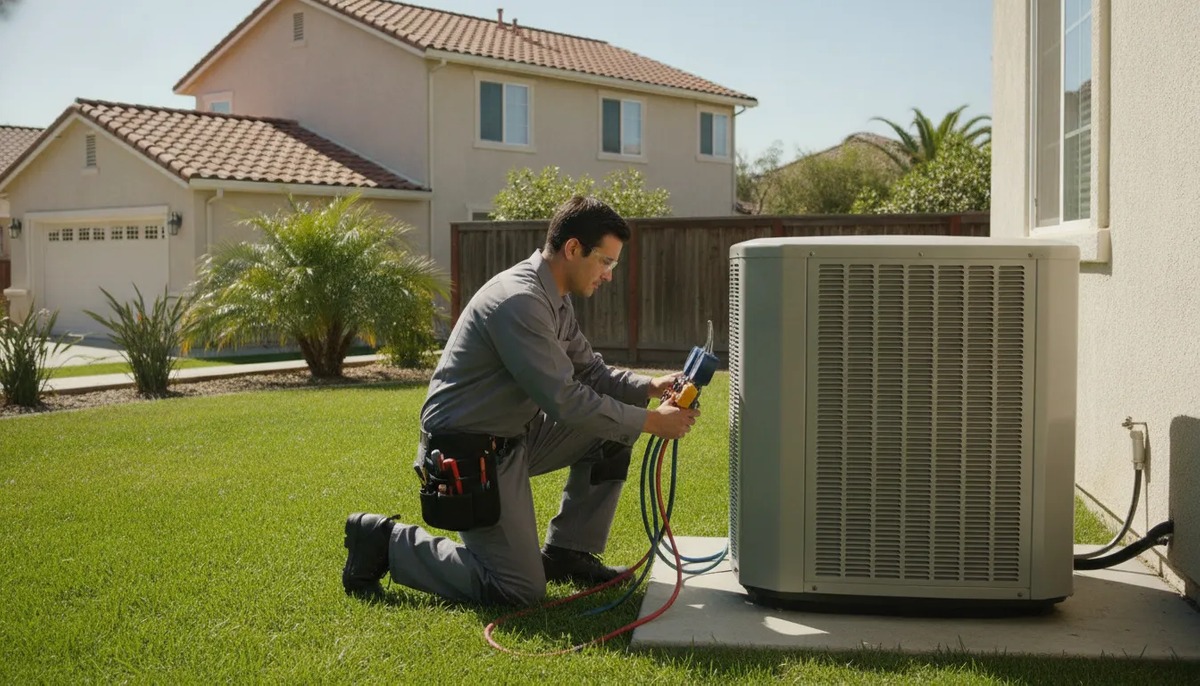
A heat pump can still run while quietly losing its ability to heat or cool your home well. Weak airflow, uneven room comfort, unusual sounds, ice, water near the equipment, short cycling, or repeated breaker trips are all reasons to pay attention. None of these symptoms identifies the failed component by itself, but each gives a technician useful direction.
When you need heat pump repair san jose, start by recording what the system is doing, checking only accessible settings and filters, and arranging professional diagnosis if the problem persists. Ortiz applies a service-call diagnostic fee to repair visits, with the fee credited toward repair according to its service operations summary. Repair work may involve airflow, electrical components, refrigerant, the blower motor, thermostat, or compressor. Opening electrical panels or handling refrigerant is not a safe homeowner task.
The right next step depends on the symptom, its urgency, and what a complete diagnostic visit finds. Here is how to recognize warning signs and decide when professional attention is warranted.
What Are the Signs You Need Heat Pump Repair in San Jose?
A heat pump can show several warning signs before it stops keeping your home comfortable. Weak airflow, uneven temperatures between rooms, or air that does not feel as warm or cool as the thermostat setting suggests may indicate a problem that deserves attention. Unusual buzzing, rattling, grinding, or clicking sounds are also worth noting, especially when they begin suddenly or become more frequent.
Watch for changes in the system's operating pattern. Short cycling, where the heat pump starts and stops repeatedly without completing a normal cycle, can affect comfort and place additional strain on system components. A heat pump that runs for unusually long periods, struggles to reach the setpoint, or repeatedly needs a thermostat adjustment may also need professional evaluation. These symptoms do not identify one specific failed part. Airflow restrictions, electrical issues, refrigerant problems, controls, and other conditions can produce similar results.
Some warning signs call for prompt attention
Ice on the outdoor unit, water where it does not normally collect, or repeated breaker trips should not be ignored. Turn the system off if you notice a burning smell, visible electrical damage, or a breaker that trips again after being reset once. Do not open an electrical panel, handle refrigerant, or bypass a safety control. Those steps require trained service personnel and the proper equipment.
A single comfort complaint may have a simple explanation, such as a closed supply vent or a dirty accessible filter, but persistent symptoms call for a closer look. Note when the problem occurs, whether it affects heating, cooling, or both, and any error code shown by the thermostat or equipment. This information can help a technician evaluate the system more efficiently.
Why symptoms can overlap
Heat pump components work together, so one underlying issue can create several symptoms at once. For example, reduced airflow can contribute to poor comfort and longer run times, while a control or electrical problem may appear as intermittent operation. A qualified technician can test the system rather than guessing from one symptom. Ortiz provides component-level troubleshooting for San Jose homeowners, with a service-call or diagnostic fee for repair visits. The diagnostic fee may be credited toward the repair according to the service operations policy. This approach gives you a clearer explanation of what was found and which next step is appropriate.
Safe Checks to Try Before Calling for Heat Pump Service
A few basic observations can help you describe the problem clearly and may resolve a simple operating issue. Keep the checks below limited to controls and components that are designed for homeowner access. If the system smells burnt, shows signs of water damage, repeatedly trips a breaker. Or makes a dangerous-sounding noise, stop and arrange professional service instead of continuing to troubleshoot.
Confirm the thermostat settings
Check that the thermostat has power and is set to the intended mode, such as heating or cooling. Confirm the temperature setting is appropriate and that the fan setting has not been changed unintentionally. If the thermostat uses batteries, replace them with the correct type when the display is blank or fading. Give the system a few minutes to respond after making a setting change. Avoid repeatedly switching modes, especially between heating and cooling, while the equipment is running.
Inspect the accessible air filter
Locate the filter in its normal homeowner-accessible compartment and look for heavy dust or blockage. Replace a disposable filter with the correct size and airflow rating, or clean a reusable filter according to its instructions. Do not operate the system without a filter. A dirty filter can restrict airflow, but replacing it will not correct every heat pump problem, so note whether comfort or airflow changes afterward.
Check vents and return airflow
Make sure supply registers are open and that furniture, rugs, or stored items are not covering them. Check that return grilles are unobstructed. Compare airflow at several registers rather than assuming one weak register identifies the source of the problem. If airflow remains poor after these simple checks, record which rooms are affected for the technician.
Look around the outdoor unit
From a safe distance, check for obvious leaves, branches, or other debris blocking the area around the outdoor cabinet. Remove only loose debris that is well away from the equipment, and never reach through the cabinet or touch internal components. Do not spray the unit, bend its coil fins, or attempt to clean parts you cannot safely access.
Record error messages and symptoms
Write down any thermostat or equipment error code exactly as shown, along with when the issue occurs, unusual sounds, ice, water, or repeated cycling. A photo of a display can help preserve the details. Do not clear an error repeatedly or bypass a safety control to keep the system running.
Never open an electrical panel, handle refrigerant, disconnect wiring, or attempt compressor, motor, or control repairs. Those tasks require proper training and equipment. When the safe checks do not resolve the issue, review Ortiz's HVAC repair and service options. A repair visit includes a service-call or diagnostic fee, so it should not be described as a free estimate.
What Happens During a Heat Pump Diagnostic Visit?
A heat pump can show the same symptom for several different reasons. Weak airflow may relate to a filter, ductwork, blower motor, or another system issue. Poor heating or cooling can involve airflow, electrical components, refrigerant levels, controls, or calibration. That is why a professional visit should focus on finding the cause rather than replacing the first part that appears suspicious.
During a diagnostic visit, the technician begins by listening to your description of the problem and reviewing what the system has been doing. Details such as when the symptom started, whether it affects every room, and whether the system cycles normally can help narrow the investigation. The technician may then inspect system components, check electrical connections, evaluate refrigerant levels, measure airflow and performance, and review thermostat operation and calibration.
These checks help distinguish a comfort complaint from a component failure. For example, a system that runs without adequately conditioning the home may need a different solution than one that repeatedly trips a breaker or produces unusual noise. A careful diagnosis also helps identify whether a repair is appropriate, whether more than one issue is present, and what work should happen next.
What homeowners should expect from the visit
Repair visits include a service-call or diagnostic fee. The fee covers the time and technical work required to evaluate the system, and it is not the same as a free repair estimate. According to Ortiz service information, the diagnostic fee may be credited toward the repair if you proceed with recommended work. Confirm the current terms when scheduling so you understand the service process before the visit.
A technician should explain what was found in clear language, identify the recommended repair, and separate confirmed findings from possibilities that need additional testing. You do not need to open an electrical panel, handle refrigerant, or bypass a safety control to help with the process. Instead, share error codes or changes you have noticed and leave hazardous testing to a qualified professional.
Regular heat pump maintenance benefits include inspections, filter and duct checks, electrical checks, performance testing, and calibration. Those checks can reveal developing problems before they become a larger interruption, but maintenance does not replace diagnosis when the system is already showing a failure.
Which Heat Pump Problems Usually Need Professional Repair?
A heat pump can show the same symptom for several different reasons. Weak airflow might involve the blower motor, a blocked duct, a dirty filter, or another airflow restriction. Poor heating or cooling could point to a thermostat problem, an electrical fault, refrigerant loss, or a compressor issue. That overlap is why a symptom alone is not a diagnosis.
A qualified technician needs to test the system and trace the problem to the affected component. For homeowners looking into heat pump repair in San Jose, the most common professional repair categories include the following.
Compressor problems
The compressor is a central part of the heat pump's refrigeration cycle. A system with a failing compressor may struggle to heat or cool, make unusual sounds, or stop operating. Those signs can also come from other components, so a technician should evaluate system performance and electrical conditions before recommending a repair or replacement.
Refrigerant leaks
Low refrigerant can affect how effectively the heat pump transfers heat. Homeowners may notice reduced comfort, ice, or longer and less effective operating cycles. Refrigerant work requires proper tools and procedures. Do not attempt to handle refrigerant or open sealed system components yourself. The technician must identify the cause, test the system, and determine the appropriate correction.
Electrical component failures
Electrical issues can affect controls, connections, capacitors, or other operating components. Repeated breaker trips, an intermittent system, or a heat pump that will not start can have multiple causes. Because energized equipment presents a safety risk, leave electrical testing and panel work to a qualified professional. Avoid bypassing a safety control to force the system to run.
Blower motor and airflow issues
A malfunctioning blower motor can reduce airflow through the home and make the system appear unable to heat or cool properly. However, airflow findings can also involve a dirty filter, blocked vents, ductwork concerns, or another restriction. A technician can separate a motor problem from a broader airflow issue and check the related components rather than replacing parts based on one symptom.
Thermostat and control problems
A thermostat that is miscalibrated, incorrectly configured, or failing can cause inconsistent temperatures, short cycling, or a system that does not respond to a setting change. Testing the thermostat and the heat pump controls helps determine whether the thermostat is the source or simply reporting a deeper system problem. A service visit includes a diagnostic fee for repair work, and that fee may be credited toward the repair according to the service operations policy.
When Should You Repair or Replace a Heat Pump?
A repair is often the right next step when the problem is isolated. The system is otherwise in sound condition, and the equipment can restore dependable comfort after the failed component is addressed. Replacement deserves more consideration when breakdowns keep returning, comfort remains inconsistent after service, or the system no longer fits the home's heating and cooling needs.
There is no responsible universal dollar rule for this decision. A qualified technician should evaluate the cause of the failure, the condition of related components, the system's operating performance, and your expectations for reliability. Ortiz can provide component-level troubleshooting and explain whether repair or replacement is the more practical path. A service-call or diagnostic fee applies to repair visits, and the fee may be credited toward the repair according to the service operations policy.
Factors that can guide a heat pump repair or replacement decisionConsider repair whenDiscuss replacement whenThe issue appears isolated, such as a thermostat, electrical component, blower motor, or other serviceable part.Multiple components are failing or the same type of breakdown keeps returning after prior repairs.The system can deliver consistent heating and cooling once the identified fault is corrected.Rooms remain uncomfortable, airflow stays uneven, or performance is unreliable even after appropriate repairs.The equipment's overall condition is good and the repair supports the home's current needs.The equipment's condition, capacity, controls, or configuration no longer fits the property or the household's comfort expectations.You want to preserve a system that has been dependable and can be maintained with appropriate service.You are weighing continued repair frequency against a planned equipment upgrade, rather than waiting for another disruptive failure.
Look for patterns, not a single symptom
One unusual noise or one cooling problem does not automatically mean the heat pump should be replaced. Symptoms can overlap: airflow problems, electrical faults, refrigerant issues, thermostat malfunctions, and other component failures may produce similar comfort complaints. Diagnosis matters before making a major equipment decision.
For a broader decision framework, review this guide to repair or replace HVAC. If you are considering replacement, ask how the proposed system will fit the home's layout, comfort needs, and existing ductwork. If repair is recommended, ask what failed, whether related components were checked, and what signs would indicate the problem is returning. Clear answers help San Jose homeowners choose based on condition and reliability rather than pressure or guesswork.
How San Jose Homeowners Can Reduce Repeat Heat Pump Problems
Once a heat pump has been repaired, a few practical habits can help you avoid the same disruption later. Prevention starts with understanding what caused the original symptom, then keeping the system's basic operating conditions consistent. Ask the technician to explain the failed component, contributing conditions, and any recommended follow-up. A clear explanation gives you a useful reference if the system behaves differently again.
Keep filters and airflow under control
Check the accessible air filter on a regular schedule and replace it when it is dirty or according to the equipment manufacturer's guidance. A restricted filter can reduce airflow and make the system work under less favorable conditions. Also make sure supply registers and return grilles are open and not blocked by furniture, rugs, or stored items. At the outdoor unit, keep leaves, overgrown plants, and other obvious obstructions away from the equipment. Do not remove panels or reach into the unit while checking it.
Use maintenance to find developing issues
Routine maintenance gives a technician an opportunity to inspect the system before a minor condition becomes a larger failure. A thorough visit may include filter and duct checks, refrigerant-level checks, electrical-connection checks, performance testing, and calibration. These checks do not guarantee that a future breakdown will never occur. But they can provide useful information about the system's condition and help identify items that need attention. Learn more about Ortiz's heat pump repair services and related service options.
Keep useful records and respond to warning signs
Save invoices, diagnostic findings, part information, and notes about when symptoms appeared. Record recurring issues such as weak airflow, unusual sounds, short cycling, ice, water, or repeated breaker trips. This history helps a technician compare the current problem with earlier service findings instead of starting with an incomplete picture.
If a warning sign returns, arrange professional service rather than repeatedly resetting the system or bypassing a safety control. Ortiz applies a service-call or diagnostic fee to repair visits, and the diagnostic fee may be credited toward the repair according to the service operations policy. Prompt, accurate information helps the technician focus the visit on the system's actual condition.
Schedule expert heat pump repair in San Jose when symptoms continue after safe checks.
Frequently Asked Questions
What is the most common problem with a heat pump?
There is no single most common failure because similar symptoms can come from different components. Weak airflow may involve the filter, ductwork, or blower motor, while poor heating or cooling may involve refrigerant, electrical components, the thermostat, or the compressor. A technician should test the system rather than diagnose it from one symptom.
How much does heat pump repair cost in San Jose?
The cost depends on the failed component, the condition of the system, and the work required. A repair visit includes a service-call or diagnostic fee, and Ortiz applies that fee toward the repair according to its service process. Repair diagnosis is not a free estimate. Free estimates apply to equipment installation or replacement, not repair visits.
What can I safely check before scheduling service?
Confirm that the thermostat is set to the correct mode and temperature. Replace a dirty accessible filter. Make sure supply and return vents are open, and check for obvious debris around the outdoor unit. Note any error codes and unusual sounds. Do not open electrical panels, handle refrigerant, bypass safety controls, or attempt hazardous repairs.
When should I repair or replace my heat pump?
Consider the system's condition, repeated failures, comfort reliability, repair frequency, and whether the equipment still fits the home's needs. A professional diagnostic can clarify whether a component repair is practical or whether replacement deserves consideration. The recommendation should follow the inspection findings, not a fixed age or dollar rule.
Schedule Expert Heat Pump Repair in San Jose
When your heat pump continues showing warning signs after safe checks, a professional evaluation can help identify the underlying issue and the right repair path. Ortiz Heating and Air Conditioning can review the system, explain the findings, and outline service options clearly. Repair visits include a service or diagnostic fee, so repair estimates are not presented as free. To schedule expert heat pump repair service, submit a repair request through Ortiz's service page.