
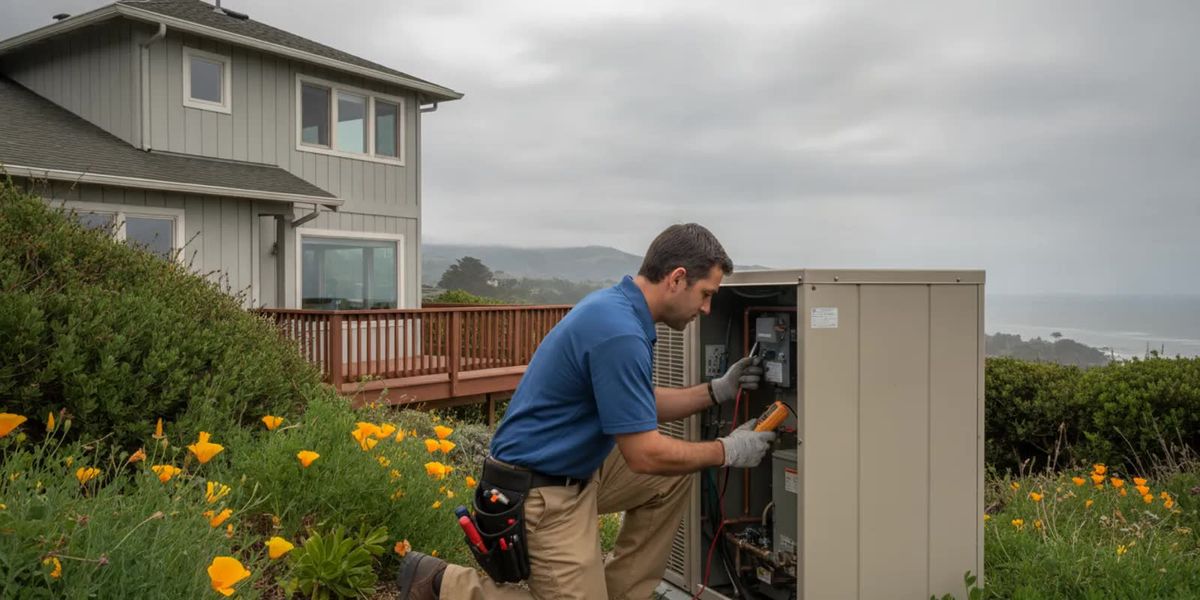
If your heat pump is running but your Richmond home still feels uncomfortable, the cause may be a simple airflow issue or a fault that needs professional diagnosis. Knowing what to observe, what to leave alone, and what to ask about can make a heat pump repair Richmond service visit more useful. This guide explains common warning signs, the diagnostic process, and how to weigh repair against replacement.
Contact Ortiz about your heat pump concern
What can a heat pump repair address?
A heat pump moves heat rather than creating it through combustion. In heating mode, it draws heat from outdoor air and transfers it indoors; in cooling mode, it moves heat out of the home. The system depends on coordinated electrical, refrigerant, airflow, and control components. A fault in one area can affect the entire cycle, so a symptom does not always point to the part that needs attention.
Repair service may address a control problem, a fan or motor issue, restricted airflow, a refrigerant-circuit concern, a sensor fault, or another component problem. The exact work depends on inspection and diagnosis. A system that is noisy, cycles repeatedly, fails to reach the set temperature, or trips a breaker should be assessed rather than treated as having one obvious cause.
Ortiz provides heat pump service and HVAC repair services. Share what the system is doing and when the problem began. A clear description can help the service team understand the concern before arranging the next step.
What signs suggest that a heat pump needs attention?
Pay attention to changes from the system's normal operation. One isolated sound or brief change may not mean the equipment has failed, but persistent or worsening symptoms deserve a closer look.
Little heating or cooling: The system runs, but rooms do not approach the thermostat setting. Check the thermostat and filter first, then note whether the problem affects every room or only some.
Repeated starting and stopping: Short cycles can have several causes, including control, airflow, or equipment issues. Record how often it happens instead of repeatedly changing the thermostat.
Unusual sounds: A new grinding, buzzing, rattling, or persistent loud hum can indicate a mechanical or electrical concern. Do not open the cabinet to investigate.
Unexpected ice or water: Some outdoor coil frost can occur in cold conditions, and heat pumps have a defrost cycle. A thick ice buildup that remains, or water where it should not be, merits professional attention.
Airflow feels weak: A clogged filter or obstructed return can limit airflow. If the filter and vents are clear but the issue continues, the cause may require a technician's assessment.
Controls behave oddly: A blank thermostat, error indicator, or setting that does not match the system's behavior can point to a control or power issue.
Electrical interruptions: If the system trips a breaker, do not keep resetting it. Repeated trips need investigation, and electrical panels and equipment wiring are not homeowner repair projects.
Write down when a symptom occurs: during heating or cooling, after a recent setting change, or at a particular time of day. Also note whether the indoor unit, outdoor unit, or both appear to be operating. These observations are useful context, not a substitute for a diagnosis.
What can a homeowner safely check first?
A few basic checks can rule out straightforward operating conditions. Keep them limited to items that do not require opening equipment, handling wiring, or touching refrigerant components.
Confirm the thermostat mode and set point. Make sure it is set to the desired heating or cooling mode, and that the temperature setting is intentional. If the thermostat has a schedule, check whether a programmed change explains the difference.
Check the air filter. If it is dirty or overdue for replacement, follow the filter and equipment instructions. Use the correct size and type; a filter that does not fit properly may not work as intended.
Look for blocked vents and returns. Move furniture, rugs, or other objects away from grilles. Do not close numerous vents to force air into another room; that can interfere with system airflow.
Observe the outdoor unit from a safe distance. Make sure leaves or loose items are not crowding the unit. Do not reach inside, remove panels, pour hot water on ice, or use tools on the coil.
Check for a visible power interruption. If a switch is clearly turned off, consult the equipment instructions before changing it. If a breaker trips again, leave it off and arrange professional help rather than repeatedly resetting it.
If these checks do not resolve the concern, or if you see smoke, smell burning, hear a severe mechanical noise, or notice repeated breaker trips, stop operating the equipment when it is safe to do so and seek appropriate professional assistance. Do not attempt electrical, refrigerant, or internal mechanical work yourself.
How does a professional heat pump diagnosis work?
A useful repair visit starts with the symptom history and proceeds through system checks. The technician may ask when the problem occurs, whether it is intermittent, what recent maintenance or work has taken place, and whether any thermostat settings changed. That context helps focus troubleshooting without assuming that a familiar symptom always has the same cause.
Depending on the reported issue, an assessment may include checking thermostat communication, system operation, airflow, filter condition, indoor and outdoor components, and accessible electrical or control functions. If the evidence points to a refrigerant-circuit issue, that requires appropriate professional testing and handling. The technician should explain what was observed and why a recommended repair relates to the symptoms.
Ask for a plain-language explanation before approving work. Useful questions include:
What did you find, and how does it explain the problem I reported?
Which repair do you recommend, and what other options are reasonable?
What parts or system functions are affected?
What is the expected scope of the work, and are there limits or uncertainties?
After repair, what operation should I expect, and what should I watch for?
For repair calls, diagnostic and repair charges depend on the service and the findings; do not assume an assessment is free. Ortiz's HVAC service-call information can help you understand the service path. If a technician identifies a separate duct or airflow concern, ask how that finding was established and whether it is related to the original symptom. Ortiz also offers duct services.
Why might a heat pump problem come and go?
An intermittent symptom can be harder to describe than a system that has stopped completely. It may appear only during one mode, at a particular point in the day, or after the equipment has run for a while. A symptom that disappears before the appointment is still useful information. Write down its timing and duration, and note what the thermostat displayed. Avoid changing several settings at once, since that can make it harder to tell what conditions were present when the problem occurred.
Room-by-room differences can also provide context. If the whole home is affected, the concern may involve system operation or overall airflow. If only one room is uncomfortable, note its location, whether its vent has normal airflow, and whether doors or vents are usually closed. These observations do not establish the cause; they help a technician decide what to examine. A thermostat located in one part of the home may also reflect conditions that differ from another room, so mention where comfort feels different.
Do not try to reproduce a troubling symptom by repeatedly switching the system on and off, forcing a breaker, or operating equipment that appears unsafe. If you have a thermostat app or a history screen, you can save an existing alert or operating note for the technician. Do not rely on an app message alone to identify a failed component. The aim is to preserve useful context while leaving diagnosis and equipment testing to a professional.
What routine care may help you notice problems early?
Routine attention does not prevent every repair, but it gives homeowners a chance to notice changes and keep basic airflow conditions in view. Follow the manufacturer's instructions for the specific equipment. Check the filter on a schedule appropriate to the filter and household conditions, and replace it with the proper size when needed. Keep supply and return grilles clear, and take a look around the outdoor unit periodically to make sure loose debris is not obstructing it.
Professional maintenance can provide a broader opportunity to review system operation and visible condition. Ask what the visit includes, what was checked, and whether any recommendations are urgent, optional, or simply worth monitoring. A maintenance visit is not a guarantee that a component will not fail later, nor is a list of recommendations the same as a diagnosis of a current repair issue. Keep records of service, equipment changes, and recurring symptoms so future assessments have a useful history.
If the same concern returns after work, note when it reappeared and whether it matches the original symptom. Contact the service provider with that information and refer to the prior findings or completed work. A clear follow-up description is more useful than assuming the new symptom has exactly the same cause. Ortiz offers HVAC maintenance services for ongoing system care.
How do you decide between repair and replacement?
There is no single age or symptom that makes replacement the automatic answer. The decision depends on the equipment's condition, the repair required, the system's performance, the home's comfort needs, and the cost and scope of each option. Ask for the diagnosis and a written description of the proposed work so you can compare alternatives on the same basis.
When might repair be a reasonable choice?
Repair may make sense when the fault is clearly identified, the proposed work addresses it, and the rest of the system is operating acceptably. It can also be a practical next step when the equipment is relatively recent, the concern is limited, or the homeowner wants to restore operation while considering longer-term plans. A technician should explain what the repair can and cannot be expected to resolve.
When should replacement be part of the conversation?
Discuss replacement if the system has recurring failures, major components are deteriorating, comfort remains poor despite appropriate repairs, or the repair proposal is extensive relative to the equipment's condition. These are reasons to compare options, not proof that a new system is required. Ask whether the existing issue is isolated or whether the technician found evidence of broader wear.
Ortiz provides HVAC installation services. Estimates for installing or replacing equipment are different from repair diagnostics: installation and replacement estimates are free, while repair evaluations may involve a service charge. If replacement is proposed, request an explanation of equipment choices, what is included in the installation, and how the system will be selected for the building.
What should you compare in a repair proposal?
Compare the diagnosis, repair scope, parts, labor, expected outcome, and any stated limitations. A proposal that names a component without explaining the evidence may leave you unsure whether it addresses the actual issue. Ask whether the technician has identified contributing factors, such as restricted airflow or a control problem, that should also be addressed.
For a replacement alternative, compare the complete scope rather than only the equipment label. Ask how the contractor will assess the home, existing ducts and electrical needs, thermostat compatibility, installation work, and start-up checks. Use the same questions with each option so you are comparing like with like.
What should Richmond homeowners consider?
Richmond is part of a broad Bay Area service region, but conditions and buildings vary from one home to another. A system in a compact home, a multi-level property, or a building with older ducts can show different comfort symptoms. Describe the rooms affected and whether the problem is consistent across the home. That distinction can help separate a whole-system operating concern from a possible distribution issue.
Heat pumps can change operating modes as outdoor conditions change. Some frost or a temporary shift in operation may be part of normal defrost behavior; persistent heavy ice, loss of heating, or repeated abnormal cycles should not simply be dismissed as weather. The equipment's manual can describe normal indicators for that particular model, while a technician can assess operation when behavior remains concerning.
Before arranging service, confirm that the property is within the provider's service territory and share the address or neighborhood. Ortiz lists its Richmond service area and broader East Bay service information. If the system serves a shop or office rather than a home, mention the building's use and any operating constraints when discussing the issue; Ortiz also provides commercial HVAC services.
For a general overview of heat pump technology and energy use, consult the U.S. Department of Energy. A general resource cannot diagnose an individual unit, so use the manufacturer's instructions and a qualified technician for equipment-specific concerns.
How can you prepare for a service call?
A few minutes of preparation can make the conversation clearer and help the technician understand the history. You do not need to diagnose the equipment yourself. Gather observations and make access straightforward.
Note the model information if it is visible without removing a panel, and take a photo of any thermostat message or indicator.
Write down when the symptom started, how often it occurs, and whether it appears in heating, cooling, or both modes.
List basic steps already taken, such as replacing a filter or clearing an obstructed vent, and say whether they changed anything.
Make sure the indoor unit, thermostat, and outdoor unit can be reached safely. Keep pets and stored items clear of the work area.
Tell the service team about unusual sounds, odors, water, ice, or breaker trips. If there is a safety concern, explain it when arranging the visit.
Ortiz serves homeowners and businesses across the San Francisco Bay Area. The company's HVAC service overview outlines its broader work, while the areas served page helps readers check regional coverage. Keep your questions focused on the current symptoms and the options supported by the inspection.
Talk with Ortiz about heat pump repair in Richmond
Frequently Asked Questions
Can I keep running a heat pump that is not heating well?
If the system is operating without a safety warning, you can check the thermostat, filter, and unobstructed vents. Do not continue running equipment that trips a breaker, smells burnt, makes a severe new noise, or has another apparent safety issue. If weak heating persists, arrange an assessment rather than repeatedly changing settings or attempting internal repairs.
Is ice on an outdoor heat pump always a sign of a breakdown?
No. Light frost can occur in some conditions, and a heat pump may use a defrost cycle. Heavy ice that remains, obstructs the unit, or accompanies poor heating should be checked. Do not chip ice off the coil or pour hot water on the equipment.
Does a repair visit include a free estimate?
Do not assume so. Free estimates apply to adding or replacing equipment, not repair diagnostics. Ask about the service-call and diagnostic charges when arranging repair service, and request an explanation of the recommended work before approving it.
Should I replace an older heat pump instead of repairing it?
Age alone does not settle the decision. Consider the confirmed fault, overall condition, repair scope, comfort, and the cost and scope of a replacement option. Ask the technician to explain both paths and what each is expected to address.
Plan your next step
A careful diagnosis helps connect the symptom to the right action, whether that means a focused repair or a discussion about replacement. Ortiz can review your heat pump concern and explain the service options for your Richmond-area property.
Request service information from Ortiz
Before the visit, note what the system is doing and keep the area around accessible equipment clear so the conversation can start with useful details.