
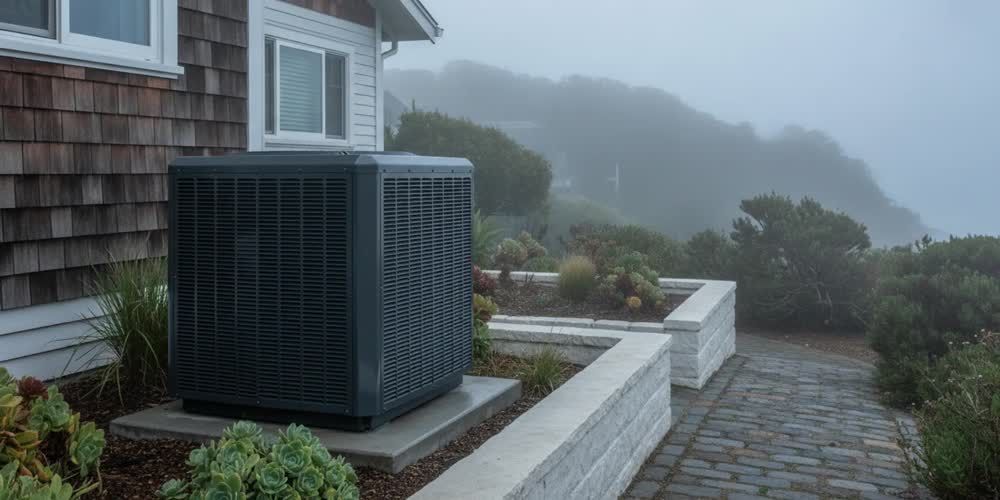
Searching for heat pump repair San Francisco homeowners can trust? A heat pump that stops heating, runs constantly, leaks water, or makes a new noise may have a simple airflow issue or a problem that needs professional diagnosis. San Francisco's cool, damp coastal weather and varied homes make it important to look at the whole system, not just the outdoor unit.
Ask about a heat pump repair visit
This guide explains common warning signs, safe checks you can make, what a technician may evaluate, and how to weigh repair against replacement. It is written for homeowners in San Francisco and nearby Bay Area communities. It does not replace an on-site diagnosis: heat pumps combine electrical components, refrigerant circuits, controls, airflow, and indoor equipment, so symptoms alone cannot confirm the cause.
How does San Francisco's climate affect a heat pump?
A heat pump moves heat rather than creating it through combustion. In heating mode, it collects heat from outdoor air and transfers it indoors. In cooling mode, it moves heat from inside the home to the outdoors. That makes the equipment useful in a region where heating and cooling needs can change from one neighborhood or season to another.
San Francisco's coastal weather is often mild compared with colder inland climates, but it can be cool, windy, and damp. The equipment may run for long periods during chilly spells, and outdoor coils can collect moisture. A heat pump has a defrost process to clear frost when conditions call for it. A brief change in sound or a pause in warm-air delivery during a defrost cycle can be normal. Persistent ice, repeated shutdowns, or indoor temperatures that do not recover deserve attention.
Location and installation details matter too. An outdoor unit placed where leaves, debris, or objects restrict airflow may struggle to move heat. A unit exposed to wind-driven rain or corrosive coastal air may require particular attention to its condition and clearances. This does not mean every coastal system will fail early; it means the equipment's surroundings and upkeep belong in the diagnosis.
Older San Francisco homes may have additions, compact closets, converted spaces, or rooms that are difficult to condition evenly. A problem that seems like a failing heat pump can sometimes involve a filter, duct restriction, thermostat setting, or distribution issue. If a system has ductwork, ask whether airflow and ducts should be considered alongside equipment. Ortiz describes its duct services separately because the air path is part of how a system delivers comfort.
What symptoms suggest a heat pump needs repair?
Pay attention to changes from the system's usual operation. Note when the issue started, whether it happens in heating or cooling mode, and whether it affects every room or only one area. These details help a technician narrow the problem without assuming that one symptom points to one failed part.
The system runs but the home is not comfortable
If the fan runs but rooms stay cold or warm, possible causes include restricted airflow, incorrect thermostat settings, a control issue, a refrigerant problem, or another equipment fault. First check that the thermostat is set to the mode and temperature you intend. Then check whether the filter is visibly dirty and whether supply registers are open. If the basic checks do not change the problem, arrange service rather than repeatedly adjusting settings.
Uneven comfort can also have more than one explanation. A closed or blocked register, a room with a strong draft, duct leakage, or a system that is not properly matched to the home can affect delivery. Tell the technician which rooms are affected and whether the issue is new or has always occurred. That distinction can help separate an emerging repair need from a longer-standing comfort concern.
The outdoor unit is unusually noisy, vibrating, or stopping
A new grinding, rattling, buzzing, or repeated clicking sound should not be ignored. Some operating sounds are normal, and a temporary change may happen during a mode change or defrost. A sound that is new, loud, persistent, or paired with poor performance needs a closer look. Do not reach through the grille or try to move a fan blade or internal component.
Also note whether the outdoor unit starts and stops frequently, fails to start, or appears to run continuously without bringing the home to the desired temperature. These patterns can relate to controls, electrical components, airflow, operating conditions, or equipment sizing and setup. A technician can test rather than guess from the noise alone.
You see ice or water where you did not before
Some moisture around an operating system can be expected, and a heat pump may briefly form frost that it later clears. A thick or persistent ice buildup, an outdoor coil that remains covered, or repeated freezing should be assessed. Do not chip at ice or pour hot water on the unit; doing so can damage equipment or create a safety hazard.
Water indoors may come from a condensate drain or another source, depending on the equipment and operating mode. If water is near electrical equipment, turn the system off if you can do so safely and contact a qualified professional. Take a photo from a safe distance and note whether water appears during heating, cooling, or both.
Energy use changes without an obvious reason
A sudden change in energy use can be a clue, but it does not identify a failed component. Weather, thermostat schedules, occupancy, filter condition, and other household loads can also affect energy consumption. Compare like periods and make a note of changes in runtime or comfort. If the system is running much longer than usual or performance has dropped, have it checked rather than assuming it needs a particular part.
What safe checks can you make before calling?
A few basic observations may resolve a simple issue or give a technician useful information. Keep the checks external and low risk. Do not remove access panels, handle wiring, open refrigerant lines, or attempt to bypass a safety control.
Confirm the thermostat mode. Check that it is set to heat or cool as intended, and that its schedule or temperature setting has not changed. If it uses batteries, follow its instructions for checking them.
Inspect the air filter. If it is visibly loaded with dust, replace it with the correct size and type specified for the system. A filter that is too restrictive or installed incorrectly can also interfere with airflow.
Look for blocked registers. Make sure supply vents and return grilles are not covered by furniture, curtains, or stored items. Do not close many registers in an attempt to force more air into other rooms.
Check the area around the outdoor unit. From the ground, look for leaves, branches, or stored items immediately around the equipment. Keep the manufacturer's required clearance and do not open or clean internal parts yourself.
Look for a visible error message. Write down a thermostat or equipment code. A code can help with diagnosis, but do not treat an online description as confirmation of a specific repair.
Record the pattern. Note the time, operating mode, weather, sounds, visible ice or water, and which rooms are affected. A short video from a safe distance may help show an intermittent symptom.
If a breaker trips again after being reset, do not keep resetting it. If you smell burning, see smoke, or suspect an electrical hazard, stop using the system and seek appropriate urgent help. Do not touch wet electrical components. For other issues, Ortiz provides HVAC repair services and service calls for equipment problems.
What may a technician check during heat pump diagnostics?
A useful repair visit starts with the reported symptom and the system's operating history. The technician may ask how long the issue has been present, whether it occurs in a particular mode, what changes you have already made, and whether the equipment has shown warning codes. Sharing these details can make the visit more focused.
Depending on the symptoms, professional checks can include thermostat operation, system controls, electrical connections and components, indoor and outdoor airflow, coil condition, fan operation, condensate drainage, and signs of refrigerant-circuit trouble. The technician may run the equipment in a particular mode and compare its operation with expected behavior. Some findings require measurements or further testing; a visual observation by itself may not settle the diagnosis.
Repair charges are not the same as a free estimate for adding or replacing equipment. Ortiz's customer guidance says repair service calls include diagnostic fees, so ask what the service visit covers and how approval works before authorizing work. If a repair is indicated, request an explanation of the failed part or condition, the work proposed, and any relevant warranty terms. Avoid choosing a repair based only on a vague symptom label.
Heat pump problems may overlap with general heating or cooling concerns. Ortiz also describes heat pump services and its air conditioning services. If the issue occurs only in one mode, mention that when scheduling; it can help frame the system checks.
How do you decide between repair and replacement?
There is no single age or symptom that automatically means a heat pump should be replaced. Consider the condition of the whole system, the scope and recurrence of repairs, comfort, operating behavior, compatibility with the home, and the cost and disruption of each option. A professional evaluation should explain the basis for a recommendation instead of treating replacement as the default response to every repair need.
Repair may make sense when the problem is limited
A repair can be a reasonable path when a specific fault is identified, the rest of the system is in serviceable condition, and the repair restores reliable operation. Ask whether the same issue has happened before and whether the proposed work addresses its cause. If a part is being replaced, ask about the part and labor coverage and what signs would suggest the problem has returned.
Consider the timing as well. A system that needs a repair during a cold or hot spell may require prompt attention, but pressure to make a quick decision should not replace clear information. Ask for the diagnosis, the recommended scope, and whether any temporary operating limits apply while you decide.
Replacement deserves a closer look when problems recur
Repeated breakdowns, major equipment deterioration, persistent comfort problems, or a repair that does not resolve the original symptom are reasons to discuss the system's remaining serviceability. They are not automatic proof that replacement is best. Ask the contractor to explain what was tested, what is known about the equipment's condition, and which repair and replacement alternatives are practical.
When considering a new system, the conversation should include the home rather than just the old equipment's label. Room layout, insulation, windows, existing ducts, electrical capacity, thermostat controls, and the way the household uses the space can all affect the design. Ortiz offers HVAC installation services; an installation discussion should clarify the proposed system and how it fits the home. A free estimate applies to new equipment installation or replacement, not to a repair diagnostic visit.
Compare the scope, not just the headline price
For a repair proposal, check that it identifies the diagnosed issue and the work included. For a replacement proposal, compare the equipment, included labor and materials, any duct or electrical work, controls, removal, warranty details, and the assumptions used to size and configure the system. Ask what is excluded and whether additional work could change the proposal. A lower initial figure may not represent the same scope as another offer.
You can also ask what service or maintenance the equipment may need later. Ortiz provides HVAC maintenance services. Maintenance does not prevent every breakdown, but routine attention can help identify visible issues and keep the system's operating condition on the agenda.
What should you ask before approving a repair?
Good questions make it easier to understand the work and choose the next step. You do not need to diagnose the equipment yourself. Ask the professional to connect the evidence to the recommendation in everyday language.
What did you find, and which test or observation supports that diagnosis?
Is the proposed repair intended to resolve the symptom I reported, or is more testing needed?
What parts, labor, and follow-up are included in the repair proposal?
Does the system have another condition that could affect the repair or its performance?
Is it safe to continue operating the heat pump while I consider the options?
If replacement is being considered, what repair alternative is available, and what are the reasons for comparing it with replacement?
What warranty applies to the work or parts, and what maintenance does the manufacturer require?
Write down the answer and keep the service record with the equipment information. A record of dates, symptoms, work performed, and replaced parts is helpful if a similar problem returns or you later compare replacement proposals.
How can you prepare for a repair visit?
Before scheduling, identify the equipment if you can do so without removing a panel. Note the model or serial number from an accessible label, the thermostat type, and whether the system serves the whole home or a particular zone. Take pictures of visible damage or error messages, but do not approach a unit if there is a safety concern.
Make a short symptom timeline: when it began, whether it is intermittent, what mode the system was in, and what happened after a filter change or thermostat adjustment. Tell the scheduler about leaks, repeated breaker trips, unusual smells, or any other condition that may affect safety. Keep the area around indoor and outdoor equipment accessible, and secure pets as needed.
San Francisco homes can have limited access, shared walls, tight side yards, or equipment on a roof or in a confined area. Mention any access limits when arranging a visit. If you are in the broader region, Ortiz lists its San Francisco Bay Area service area and San Francisco Peninsula coverage. Confirm that your specific address and equipment are within the service area when contacting the company.
Where can you find reliable heat pump information?
For general background on home energy use and heating equipment, the U.S. Department of Energy provides homeowner information at its official website. General educational material cannot diagnose a particular system or replace the instructions for your equipment. Use the manufacturer's documentation for model-specific operation, and ask a qualified HVAC professional to assess repair needs.
Keep the distinction clear between a general performance concern and an urgent safety issue. A system that does not heat well needs a timely diagnosis, but a burning smell, smoke, exposed wiring, or water near electrical parts calls for a more cautious response. Do not continue operating equipment when you believe it may be unsafe.
Contact Ortiz to discuss a heat pump repair visit
Frequently asked questions
Can a heat pump make cold air during a defrost cycle?
A heat pump may briefly change its operation while clearing frost from the outdoor coil, and the indoor air can feel cooler for a short time. If the system stays in that condition, the home does not recover, or ice remains on the unit, arrange a professional check rather than assuming the behavior is normal.
Should I turn off a heat pump that has ice on it?
Do not chip or scrape ice, and do not pour hot water on the equipment. If the ice is heavy or persistent, or the system is not working properly, contact a qualified HVAC professional for advice. If you see smoke, smell burning, or suspect an electrical hazard, stop using the equipment if safe to do so and seek urgent help.
Does a poor airflow problem always mean the heat pump is broken?
No. A dirty or incorrect filter, blocked return grille, closed registers, duct restrictions, or a fan or control issue can affect airflow. Check only the simple, accessible items described above. If airflow remains weak or comfort is poor, a technician can evaluate the equipment and air distribution together.
Is a repair diagnostic visit free?
Not necessarily. Ortiz's guidance states that repair service calls include diagnostic fees. Free estimates apply to adding or replacing equipment, not repair diagnostics. Ask what the service visit includes and what charges or approvals apply before the work begins.
When should I ask about replacing a heat pump?
Discuss replacement when the system has recurring failures, significant deterioration, ongoing comfort problems, or a repair proposal that makes you question the value of continued repairs. Ask for a clear explanation of the diagnosis and available options. A recommendation should consider the equipment and the home, not just a single symptom.
Plan your next step
If a basic thermostat or filter check does not resolve the issue, describe the symptoms and arrange a professional evaluation. To ask about service or equipment options, use Ortiz's online request page or contact page; for repairs, clarify the diagnostic fee and visit scope. Ortiz Heating and Air Conditioning serves Bay Area homeowners and businesses, and the right next step depends on what testing finds in your system.
Contact Ortiz Heating and Air Conditioning
Keep notes on the system's symptoms and any service performed so you can make informed decisions about its continued operation and future care.