
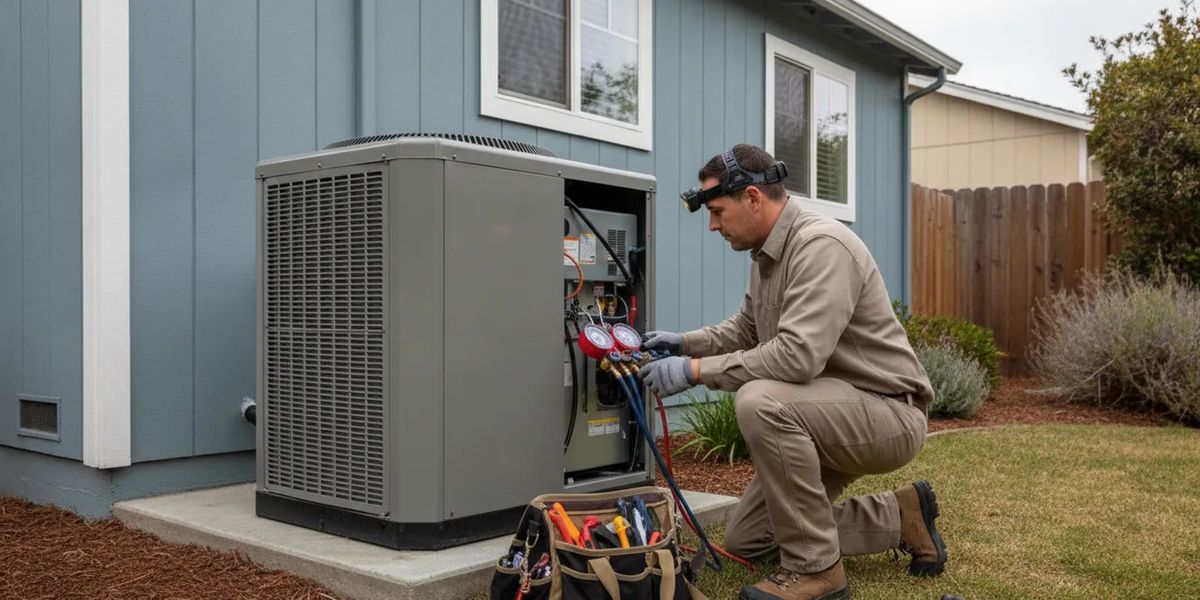
If your heat pump is running but your Redwood City home still feels uncomfortable, the cause may be a simple airflow problem or a component that needs professional diagnosis. This heat pump repair Redwood City guide explains what to check safely, what symptoms can mean, what a technician may investigate, and when repair or replacement deserves consideration.
Request help with your heat pump
What Should You Check Before Calling for Heat Pump Repair?
A few basic checks can help you describe the problem and rule out common causes. Do not open equipment panels, handle wiring, or attempt to repair refrigerant components. Heat pumps combine electrical and mechanical parts, and troubleshooting beyond normal homeowner controls can create safety risks or make a problem worse.
Check the thermostat mode and setpoint. Confirm that the system is set to heating or cooling as intended, rather than fan-only or off. If the setpoint is already satisfied, the system may not call for heating or cooling. Avoid making repeated large temperature changes while testing.
Look at the air filter. A heavily loaded filter can restrict airflow. If the filter is due for replacement, use the size and type specified for your system. A filter change may improve airflow, but it will not fix a failed component.
Check the breaker without repeatedly resetting it. If a breaker has tripped, you can note that and follow the instructions on the electrical panel. If it trips again, leave it off and contact a qualified technician. Repeated resets are not a repair.
Make sure supply and return vents are not blocked. Furniture, rugs, or closed registers can affect airflow in a ducted system. Do not close many vents to force more air into another room.
Observe the outdoor unit from a safe distance. Note unusual sounds, visible damage, heavy debris, or whether the fan appears to run. Keep children and pets away. Do not reach through the grille or try to remove ice with tools.
Write down what happens. Record when the symptom began, whether it occurs in heating or cooling, any thermostat message, and any recent power interruption or maintenance. This helps the technician focus the evaluation.
When noting the issue, describe what you can observe rather than deciding what part has failed. For example, “the living room feels warm, but the bedroom airflow is weak” is more useful than “the blower is broken.” If the problem comes and goes, note the time of day, outdoor conditions as you experience them, and whether the system had recently started or stopped. That pattern can help distinguish a persistent issue from one that appears only during a particular operating cycle.
If those checks do not resolve the issue, or if you notice a burning smell, smoke, sparking, water near electrical equipment, or repeated breaker trips, turn the system off if it is safe to do so and arrange professional help. For more information about the company’s HVAC repair services, review the service page before scheduling.
What Do Common Heat Pump Symptoms Mean?
A symptom can point toward several possible causes. It is a clue, not a diagnosis. For example, weak airflow may involve a filter or duct restriction, but it can also result from an issue with a blower or another system component. A technician needs to inspect and test the equipment to identify the cause.
What you noticePossible areas to investigateWhat to do nextLittle or no airflowFilter condition, blocked vents, duct restrictions, or air-moving componentsCheck the filter and vents; arrange service if airflow remains poor.System runs but the home does not reach the setpointThermostat settings, airflow, controls, or heating and cooling componentsNote the mode, setpoint, and how long the symptom has occurred.Outdoor unit is unusually noisyLoose or damaged parts, debris, or a component that needs inspectionKeep clear of the unit and describe the sound; do not remove panels.Ice or frost stays on the outdoor coilAirflow, sensors, controls, or defrost operationDo not chip the ice or pour hot water on the unit; contact a technician if it persists.Frequent cycling or unexpected shutdownsThermostat settings, airflow, electrical supply, controls, or system sizing and conditionTrack the pattern and stop resetting a breaker that trips repeatedly.Water near the indoor equipmentDrainage or condensation-related issues, among other possibilitiesProtect nearby belongings and request service if the leak continues.
Some operating changes can be confusing if you have not heard them before. In heating mode, a heat pump may periodically change its operation to manage frost at the outdoor coil. A brief change in sound or airflow does not by itself prove the system is broken. Persistent ice, repeated shutdowns, or a home that stops warming normally are different clues and should be shared with a technician. Similarly, a system can run longer during a period when the home needs more heating or cooling; run time alone does not identify a failed part.
Do not assume that one symptom means a particular part has failed. A unit that seems to run constantly, for instance, may be responding to a large difference between indoor temperature and the thermostat setting, or there may be a fault that needs testing. Ortiz provides heat pump service; a technician can evaluate the actual equipment rather than relying on symptoms alone.
What Happens During a Heat Pump Diagnostic Visit?
A useful service visit begins with your description of the issue and an inspection of the system. The exact checks depend on the symptom, equipment type, and what the technician observes. A diagnostic visit is not the same as a replacement estimate: repair diagnostics and service calls may involve a fee, so ask how the diagnostic charge works when arranging the appointment.
Depending on the situation, the technician may:
Confirm thermostat settings and review any displayed fault codes.
Check filters, accessible airflow paths, and the condition of indoor and outdoor equipment.
Inspect electrical connections and system controls using appropriate procedures.
Evaluate the blower, fan, coil condition, condensate drainage, or defrost operation when relevant to the reported symptom.
Test operating performance to narrow down whether the issue is related to airflow, controls, electrical components, or another part of the system.
The order of checks is guided by the reported behavior. If the unit does not start, the technician may first need to understand the thermostat call and power supply. If it runs but delivers weak airflow, attention may turn to the filter, air path, and moving components. If ice remains on the outdoor coil, the assessment may include airflow and defrost-related operation. These are examples of diagnostic reasoning, not a promise that any one test will identify the cause in every home.
Ask the technician to explain what was tested, what was found, and which repair options address the cause. Before authorizing work, clarify the scope, parts involved, any diagnostic charge applied, and whether another issue could remain after the proposed repair. If more than one option is presented, ask what each option is expected to solve and what limitations it has.
A clear recommendation should connect the evidence to the proposed work. You might ask: “What did the test show?”, “Will this repair address the symptom I described?”, and “What should I watch for afterward?” If the explanation is unclear, ask for the finding in plain language before approving anything. Keep the written scope or invoice for reference, especially if you later need to discuss a recurring symptom or a separate issue.
To prepare, make a short list of the symptoms and questions. Clear access to the thermostat and equipment if practical, and mention any recent work on the home or system. Ortiz also offers HVAC service calls for homeowners who need a technician to investigate an operating problem.
Should You Repair or Replace a Heat Pump?
There is no single age or symptom that decides this for every home. Consider the condition of the whole system, the repair being proposed, comfort concerns, and your plans for the property. A repair may make sense when the issue is clearly identified and the system otherwise meets your needs. Replacement may be worth comparing when the equipment has recurring problems, has difficulty maintaining comfort, or needs a repair that prompts broader questions about future reliability.
ConsiderationRepair may be worth discussing when…Replacement may be worth comparing when…Problem patternThe fault is identified and appears limited to a repairable issue.Problems recur or several parts show signs of deterioration.ComfortThe system generally heats and cools the home as expected outside this problem.Uneven comfort or inadequate capacity continues after appropriate repairs.Equipment conditionThe rest of the system is in serviceable condition.The equipment’s overall condition raises concerns beyond the current symptom.Project scopeA repair addresses the diagnosed cause without a major change to the home.A larger project could address equipment, duct, control, or electrical needs together.Long-term plansYou expect to keep the system and the repair fits your priorities.You want to assess a new system in light of future comfort and efficiency goals.
To make the comparison concrete, ask for the repair scope and the condition of the rest of the equipment, then consider them alongside your household priorities. A single diagnosed issue in a system that has otherwise been meeting your needs presents a different decision from repeated service problems plus rooms that remain uncomfortable. Neither situation automatically dictates a choice; it gives you questions to discuss. If you compare a repair with replacement, make sure you understand what is included in each proposal and whether related duct, electrical, or control work is part of the larger project.
Ask for a clear comparison rather than relying on a general rule such as “replace it after a certain number of years.” The decision depends on the equipment’s actual condition and the specific repair. For an installation discussion, Ortiz describes its HVAC installation services. New equipment estimates are separate from repair diagnostics; the company offers free estimates for equipment installation or replacement, not for repair inspections or diagnosis.
For a replacement project, check the applicable local permitting process and current incentives before making assumptions. Redwood City lists rebates for certain new heat pump equipment on its Environmental Initiatives Rebates page; eligibility, funding, and program terms can change, so confirm them directly with the city. A California Assembly document also describes a residential heat pump permit-fee provision; verify its current status and applicability with the relevant jurisdiction rather than assuming it applies to a specific project: California Assembly document on residential heat pump permit fees.
How Can You Prepare for Service in Redwood City?
Good information helps the visit start efficiently, especially when the problem happens intermittently. Before contacting a contractor, note:
Whether the issue occurs during heating, cooling, or both.
When it began and whether it happens at a particular time or under particular conditions.
Any error message, unusual sound, odor, visible ice, or water.
Whether the system recently lost power or had a filter or thermostat change.
Any rooms that feel different from the rest of the home.
It can help to make a short timeline rather than relying on memory. Write down the first day you noticed the problem, whether it is constant or intermittent, what the thermostat showed, and what happened after any simple check such as replacing an overdue filter. Avoid changing several settings at once while observing the system; if the symptom changes, you will have a clearer record of what was different. Photos of a thermostat message or visible water may also help communicate what you saw, but do not remove covers or approach unsafe equipment to take them.
Confirm what equipment the visit will cover, how diagnostic charges are handled, and whether someone needs to be home. Provide a clear path to indoor and outdoor units where possible. Do not promise yourself a same-day repair: the needed part, system access, and diagnostic findings all affect the next steps. A repair recommendation should follow the inspection, not precede it.
Ortiz serves communities across the Bay Area, including the San Francisco Peninsula and nearby cities. Homeowners can review the company’s Bay Area service area or contact the team to discuss their address and equipment.
When you contact a service company, be ready to identify the system as a heat pump if you know that it is one, and explain whether the concern involves heating, cooling, airflow, noise, or a visible condition. You do not need to diagnose the equipment. A concise description, along with any history of prior repairs you can provide, gives the technician a useful starting point. For Bay Area homeowners considering a larger project later, an installation assessment is a separate conversation from diagnosing the current fault.
Arrange a heat pump repair evaluation
Frequently Asked Questions About Heat Pump Repair
Can I keep using a heat pump that is making a new noise?
A new noise can come from several causes, so avoid guessing based on sound alone. If the noise is loud, worsening, or accompanied by poor performance, smoke, burning odor, or repeated shutdowns, turn the system off if safe and request professional help. Do not remove a panel to look for the source.
Should I turn off a heat pump with ice on the outdoor unit?
A light layer of frost can occur during some operating conditions, but ice that remains or builds up can signal a problem that needs evaluation. Do not chip it away or pour hot water on the equipment. If the system is not heating or cooling properly, contact a technician and describe how much ice you see and how long it has been there.
Is a heat pump repair diagnostic free?
Do not assume that repair diagnostics, inspections, or service calls are free. Ask about any diagnostic charge when booking and clarify how it relates to a repair if one is recommended. Free estimates apply to adding or replacing equipment, not diagnosing a repair problem.
What if a repair does not resolve the comfort problem?
Contact the contractor and explain what changed and what symptom remains. Ask whether the next step is to recheck the diagnosed issue or investigate a separate cause, such as airflow or controls. Keep notes about when the symptom returns so the follow-up evaluation has useful details.
Plan Your Next Step for Heat Pump Repair in Redwood City
If basic checks do not correct the problem, a professional evaluation can identify whether the issue is a repair, an airflow concern, or a broader equipment decision. Share the symptoms you observed, ask how diagnostic charges work, and request a clear explanation before authorizing repairs.
Contact Ortiz to discuss your heat pump problem
Careful diagnosis helps you choose a practical next step for your home.