
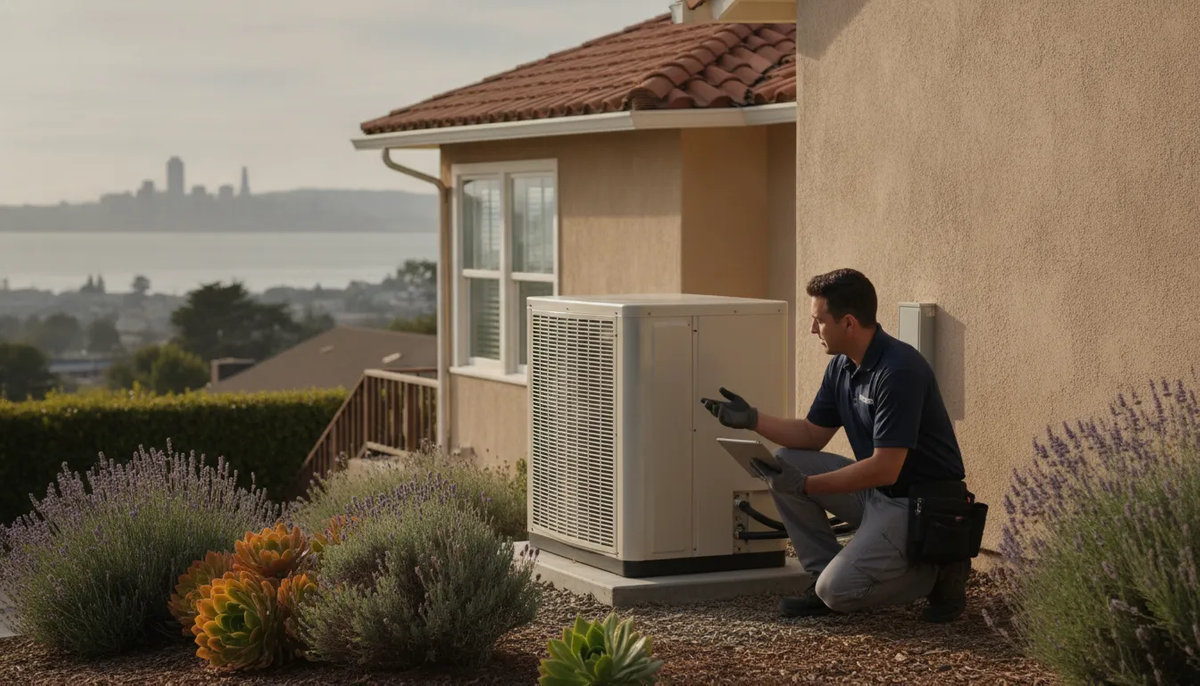
Planning heat pump installation in Richmond is easier when you evaluate the home before choosing equipment. Your existing ducts, room layout, electrical service, insulation, comfort goals, and installation site all affect the right design. This guide explains the decisions Richmond homeowners should make before approving a heat pump project, from the first assessment through final commissioning.
Request a free heat pump installation estimate
Why Consider a Heat Pump Installation in Richmond?
For many Richmond homeowners, a heat pump can provide both heating and cooling from one carefully designed system. The local climate and housing mix make a property-specific assessment important. A heat pump may be a strong fit for replacing aging equipment, improving comfort in selected rooms, or adding cooling where an existing heating system does not meet the household's needs.
Richmond homes vary widely in age, layout, duct condition, and available equipment space. A plan that works in a newer Marina Bay home may not be the right answer for an older home with limited ductwork or a constrained electrical panel. That is why professional heat pump installation should begin with the house, not a product label or a square-footage shortcut.
One system for two seasons: An air-source heat pump can move heat into the home during cooler weather and reverse the process to provide cooling.
Flexible system designs: Homeowners may be able to choose a centrally ducted, compact-ducted, ductless, or mixed configuration.
Comfort-focused planning: Proper sizing, airflow, controls, and commissioning matter as much as the equipment selection.
Local project coordination: A complete installation plan should account for Richmond permitting, equipment placement, electrical work, and homeowner expectations.
Ortiz Heating and Air Conditioning, Inc. serves Richmond and the wider Bay Area with residential and commercial HVAC installation, maintenance, and repair services. The company's Richmond service page describes customized heat pump and mini-split installations for local homes, which is a useful starting point when you are deciding what kind of project support you need.
Which Heat Pump System Fits Your Richmond Home?
The best heat pump configuration for a Richmond home depends on the existing HVAC system, ductwork, floor plan, comfort priorities, and available installation space. A ducted system may be the simplest path when the ducts are sound. Ductless or mixed systems can make more sense when extending ducts would be disruptive or inefficient.
Heat pump configurations to discuss during a Richmond installation assessment
Ducted heat pump: May fit when: Existing ducts are accessible, appropriately sized, and in good condition. Planning questions: Do the ducts distribute air evenly? Are sealing or modifications needed?
Ductless mini-split: May fit when: The home lacks usable ducts, or only certain rooms need conditioning. Planning questions: Where should indoor units go? How will outdoor access and condensate be handled?
Compact-ducted system: May fit when: You want concealed air delivery but have limited space for full-size duct runs. Planning questions: Can the equipment and smaller ducts serve the rooms consistently?
Mixed or multi-zone design: May fit when: Different parts of the home have different layouts or comfort needs. Planning questions: How will zones, controls, and indoor units work together?
ENERGY STAR explains that ductless mini-split heat pumps can be useful in homes without ductwork, additions, and spaces where extending ducts is impractical. That does not make ductless the automatic choice for every Richmond property. The installer should compare the home's layout, airflow needs, aesthetics, maintenance access, and long-term comfort goals before recommending a configuration.
Ortiz offers heat pump services for both ducted and ductless systems. Reviewing the heat pump installation and service options can help you prepare questions for an in-home assessment.
Discuss the right heat pump design for your Richmond home
What Should a Richmond Heat Pump Assessment Include?
A useful heat pump assessment examines the whole home rather than selecting capacity from square footage alone. The contractor should review heating and cooling loads, room-by-room comfort, insulation, windows, air leakage, duct condition, equipment location, electrical requirements, drainage, controls, and the household's plans for the property.
Load and comfort review
Ask how the installer will determine the home's heating and cooling needs. A professional design considers the building envelope and local conditions, then matches the system to the actual loads. Oversized equipment can cycle inefficiently, while undersized equipment may struggle to maintain comfort. The proposal should explain the design basis in language you can understand.
Ductwork and airflow inspection
If the home has ducts, the installation plan should say whether they will remain, be sealed, be modified, or be replaced. Ducts that are damaged, poorly routed, or unable to deliver balanced airflow can limit the performance of a new heat pump. An equipment upgrade cannot solve every distribution problem by itself.
Electrical and equipment placement review
The contractor should identify where the outdoor unit, indoor equipment, disconnect, controls, and condensate components will go. The proposal should also identify whether the existing electrical service can support the design or whether electrical work needs to be coordinated. Equipment placement should consider service access, drainage, clearances, sound, and the home's appearance.
How Does Heat Pump Installation in Richmond Usually Work?
A well-managed heat pump installation follows a sequence that connects the home's assessment to the finished system. The exact scope varies, but homeowners should expect a clear design review, equipment and site preparation, installation, testing, and an explanation of the controls before the project is considered complete.
Home assessment: The contractor reviews the existing equipment, comfort issues, ductwork, insulation, electrical service, and installation locations.
System design: You compare ducted, ductless, compact-ducted, or mixed options and confirm the proposed capacity, controls, airflow plan, and equipment locations.
Written scope: The proposal identifies equipment, included duct or electrical work, condensate handling, permits, startup testing, warranty terms, and homeowner responsibilities.
Permit coordination: The installer confirms which permits and inspections apply to the project and coordinates them with the proper local authority.
Installation: The old equipment is removed if applicable, the new system is installed, connections are completed, and the work area is protected and cleaned.
Commissioning: The technician tests operation, airflow, controls, refrigerant-related requirements, safety functions, and temperature delivery before explaining the system to you.
Richmond's Building Division accepts permit applications through its electronic portal and provides information about applications and inspections on the City of Richmond Building Division website. Because requirements can change with the project scope, ask the installer to confirm the current permit path rather than assuming that a replacement and a new installation follow the same process.
Permit responsibility should be clear in writing. A homeowner should know who will submit the application, schedule inspections, respond to questions, and provide final documentation. This is especially important when the project includes electrical changes, duct modifications, structural work, or a change in equipment location.
What Should You Compare in Heat Pump Installation Proposals?
Compare the complete installation plan, not only the equipment name or bottom-line number. A useful proposal explains how the system will serve the home, what work is included, how the installation will be tested, and who is responsible for permits and follow-up. Clear scope reduces surprises and gives you a better basis for comparing contractors.
System design: Confirm whether the proposal is ducted, ductless, compact-ducted, multi-zone, or a combination, and why that design fits the home.
Capacity and efficiency information: Ask for the proposed equipment model details and the design assumptions used to select it.
Duct and airflow scope: Look for duct sealing, modifications, balancing, filters, returns, and any exclusions.
Electrical scope: Confirm whether disconnects, wiring, breakers, panel work, and inspections are included or excluded.
Controls and zoning: Make sure the thermostat, indoor units, zoning strategy, and homeowner training are described.
Permits and inspections: Identify who coordinates permits and what documentation you receive when the work is complete.
Commissioning and cleanup: Confirm startup testing, system education, debris removal, and the process for reporting a concern after installation.
Ortiz Heating and Air Conditioning, Inc. is locally owned and brings 25 years of experience to Bay Area heating and cooling work. The company is also Diamond Certified and BBB certified. Those credentials are useful trust signals, but your decision should still be based on a proposal that explains the actual design and scope for your Richmond home.
How Can You Prepare for Heat Pump Installation?
Homeowners can make installation smoother by gathering information about the current HVAC system, identifying rooms with comfort problems, clearing access to equipment, and deciding what they want the new system to accomplish. A short preparation list helps the installer spend more time on the design questions that affect long-term performance.
Write down rooms that are too hot, too cold, noisy, or difficult to condition.
Locate the current thermostat, indoor equipment, outdoor equipment, electrical panel, and accessible duct areas.
Share any planned remodeling, room additions, insulation work, or changes in how the home will be used.
Ask whether the proposed system can reuse existing ducts, controls, line sets, or electrical components.
Confirm where the outdoor unit and indoor equipment will be installed and how technicians will access them later.
Request a written explanation of maintenance, filter replacement, warranty registration, and post-installation support.
Installation is also a good time to ask how the system will be maintained. Regular maintenance can include cleaning, inspection, tuning, airflow review, and timely repairs. Ortiz provides HVAC maintenance services for Bay Area homeowners who want a plan for ongoing system care.
Request a heat pump installation estimate for your Richmond home
Frequently Asked Questions About Heat Pump Installation in Richmond
Is a heat pump a good choice for a Richmond home?
A heat pump may be a good choice when its design matches the home's heating, cooling, ductwork, electrical, and comfort needs. Richmond properties vary, so a professional assessment is more useful than choosing from climate assumptions alone.
Should I choose a ducted or ductless heat pump?
Choose based on the home's existing ducts, layout, comfort goals, and installation constraints. Ducted systems may fit homes with usable distribution, while ductless or mixed systems can help when ducts are missing, difficult to modify, or limited to certain areas.
Does heat pump installation require a permit in Richmond?
Permit requirements depend on the project scope and the current rules of the City of Richmond. Ask the contractor to identify the required permits and inspections, state who will coordinate them, and provide the final documentation for your records.
What should be included in a heat pump installation quote?
A complete quote should describe equipment, capacity and design assumptions, ductwork, electrical work, controls, condensate handling, permits, installation, startup testing, warranty terms, cleanup, and exclusions. This detail makes it easier to compare proposals fairly.
How do I schedule a Richmond heat pump installation assessment?
You can contact Ortiz Heating and Air Conditioning, Inc. through its contact page to discuss an installation assessment. Share your current system, comfort concerns, home layout, and any planned renovations so the conversation starts with useful project context.
Request a heat pump installation estimate for your Richmond home