
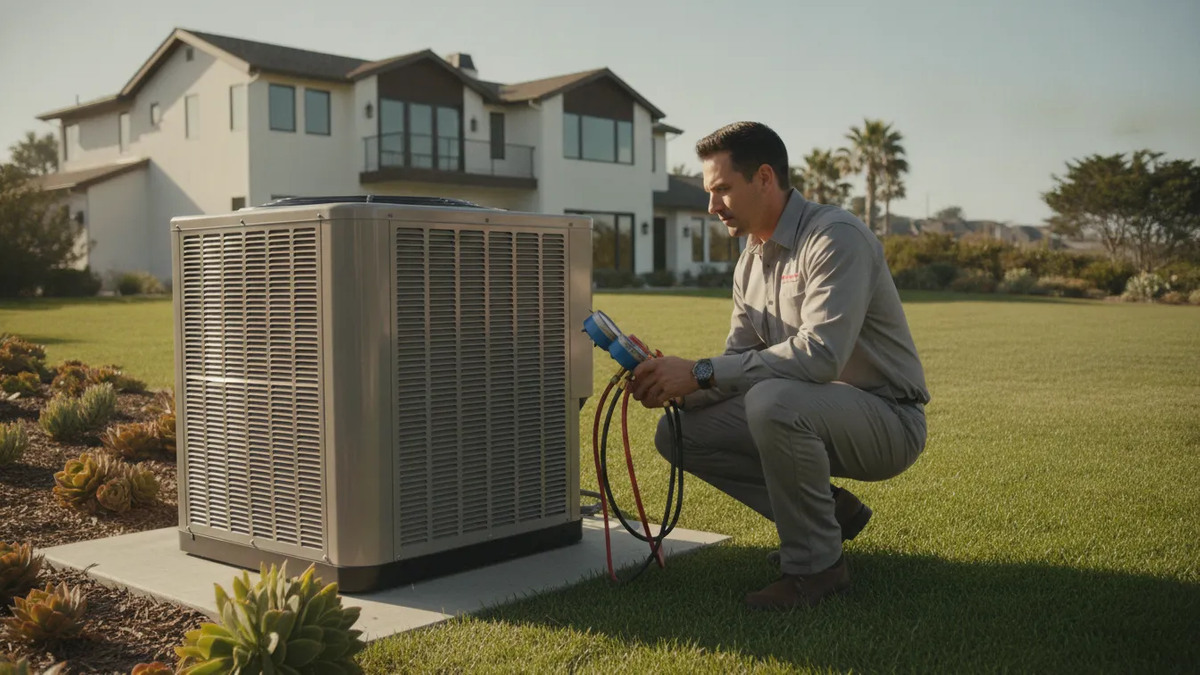
For homeowners planning a heat pump installation in Millbrae, the project is not simply a matter of choosing a unit with a high efficiency rating. The right plan starts with a home assessment and a defensible sizing calculation. It also requires a clear look at ductwork, electrical needs, equipment placement, and local installation requirements. This guide explains what Millbrae homeowners should expect before requesting an estimate.
Request a heat pump installation estimate for your Millbrae home
What Does Heat Pump Installation in Millbrae Involve?
A heat pump installation replaces or adds equipment that can provide both heating and cooling. Depending on the home, the project may use existing ductwork, update part of the air distribution system, or use a ductless system with separate indoor zones. The installation plan should fit the building, not just the equipment catalog.
Millbrae homes can differ substantially in age, layout, insulation, windows, available utility space, and access around the outdoor unit. A Peninsula location may have relatively mild outdoor conditions, but that does not make every home identical. A room over a garage, a remodeled addition, leaky ducts, or uneven solar exposure can all change the comfort requirements.
Ducted and ductless options
A ducted heat pump can work with suitable existing ductwork and can provide whole-home heating and cooling through the current registers. ENERGY STAR explains that a central air-source heat pump can connect to conventional forced-air ductwork, while ductless mini-split systems can serve spaces where ducts are not practical. Ortiz offers heat pump services for homeowners comparing these approaches.
Ductless equipment may be useful for an addition, a converted space, or a home where extending ducts would require too much disruption. It can also provide zone-level control. The tradeoff is that the indoor heads, line-set route, condensate management, and visual placement must be planned room by room.
How Is a Heat Pump Sized for a Millbrae Home?
Heat pump sizing should be based on the home's heating and cooling loads, not on a shortcut such as square footage alone. A contractor should evaluate the building envelope, window area, insulation, air leakage, orientation, occupancy, ductwork, and the design conditions used for the calculation. The result is a system selected to deliver steady comfort without unnecessary cycling.
ENERGY STAR recommends proper sizing and notes that contractors should verify the home's requirements with a load calculation such as ACCA Manual J. Oversizing can contribute to short cycling and uneven comfort, while undersizing can leave the system working too hard during demanding conditions. Ask for the method used to size the equipment and how the result was matched to the selected indoor and outdoor components.
Ortiz's installation process includes assessing the property before recommending equipment. The review considers size, insulation, layout, and ductwork. It is especially important when a Millbrae home has been remodeled or has multiple comfort zones. It also helps when replacing an older furnace and air conditioner with one heat pump system.
How Much Does Heat Pump Installation in Millbrae Cost?
There is no responsible single price for every Millbrae installation. The project cost depends on equipment capacity and type, duct condition, electrical work, line-set length, controls, permits, outdoor-unit placement, and access.
Removal of old equipment, commissioning, and finish work can also affect the final scope. A site assessment is the only reliable way to identify those variables.
A useful written estimate should separate equipment from labor. It should identify allowances for duct modifications, electrical upgrades, condensate routing, thermostat or zoning controls, permits, disposal, and follow-up work. It should also state what is included in startup testing and homeowner training. Comparing estimates line by line is more useful than comparing only the equipment name or a single headline price.
Ortiz provides free estimates for replacing or adding new equipment, including heat pump installations. This does not mean repair visits, inspections, or diagnostics are free. Those services carry a service fee, and a repair quote is provided after the problem is identified. Keeping that distinction clear helps homeowners compare an installation estimate with a service call accurately.
Request a written heat pump installation estimate for your Millbrae property
Cost questions worth asking
Does the proposal identify the selected indoor and outdoor equipment and how the combination is matched?
Does the price include removal and disposal of the existing system?
Are duct repairs, sealing, electrical work, permits, controls, and condensate management included or listed as options?
What testing will confirm airflow, refrigerant charge, thermostat operation, and system performance?
What documentation and manufacturer warranty steps will I receive after installation?
What Should You Expect on Installation Day?
A well-managed installation typically follows a defined sequence rather than jumping straight to equipment removal. The exact schedule depends on the home's configuration and the work identified during the assessment, but these stages help homeowners prepare.
Review the plan. The contractor confirms equipment, placement, access, controls, and the work included in the estimate.
Protect the home. The crew plans paths through the home and protects floors, walls, and nearby furnishings before work begins.
Remove or isolate old equipment. If the project is a replacement, the existing furnace, air conditioner, or other equipment is safely disconnected and removed as applicable.
Install and connect the system. The crew places the indoor and outdoor equipment, connects refrigerant lines and electrical components, and completes duct or condensate work included in the plan.
Set up controls. The thermostat, zoning controls, and operating settings are configured for the home's needs.
Commission the equipment. The installer checks airflow, refrigerant charge, safety functions, temperature response, and controls before turning the system over to the homeowner.
Explain operation and care. The homeowner receives an explanation of normal operation, filter care, maintenance needs, and any documentation supplied with the system.
For a replacement or upgrade, ask how long the home may be without heating or cooling. Confirm whether the crew needs access to an attic, crawl space, electrical panel, or exterior wall. Millbrae properties with compact side yards, stairs, shared access, or HOA considerations may need placement and delivery planning before the scheduled date.
Which Home Details Affect Heat Pump Installation in Millbrae?
Several details can change the recommended system and the final scope. Sharing them during the first consultation makes the estimate more useful.
Existing ductwork: Ducts that are undersized, damaged, poorly insulated, or difficult to access may limit equipment selection or require improvements.
Electrical service: The installer should confirm the available electrical capacity, disconnect requirements, and wiring route for the selected equipment.
Outdoor placement: The condenser needs stable support, adequate clearance, drainage, service access, and a location that works with the property.
Home additions: Rooms added or remodeled after the original system may need separate load and airflow attention.
Comfort priorities: Persistent hot or cold rooms, bedroom noise, indoor air quality concerns, and thermostat preferences can affect the design.
Permits and code requirements: California requirements can apply to new equipment, additions, and alterations. The California Energy Commission explains that HVAC requirements apply to applicable new construction, additions, and alterations.
For homeowners who are replacing an aging system, it can also help to review how a heat pump compares with a gas furnace in Bay Area homes before the equipment consultation. If the proposed system includes duct changes, ask whether maintenance access and future service have been considered. Ortiz also provides HVAC maintenance services to help keep a new system operating reliably after installation.
How Can You Compare Heat Pump Installation Estimates?
Start by comparing the design basis, not just the advertised efficiency rating. Two proposals may use different equipment, duct assumptions, controls, or electrical scopes. A trustworthy comparison should make those differences visible.
Confirm that each proposal is based on an assessment of your Millbrae home.
Ask how the heating and cooling loads were calculated and how the equipment was selected.
Compare the proposed system type, capacity, efficiency ratings, matched components, and warranty terms.
Review what happens to existing ductwork, wiring, refrigerant lines, condensate, and the old equipment.
Ask how the contractor will verify airflow, refrigerant charge, controls, and final operation.
Confirm who handles applicable permits, documentation, and post-installation questions.
A lower initial number is not necessarily the lower-cost project if it leaves out duct repairs, electrical work, controls, commissioning, or future maintenance access. The goal is a correctly sized and properly installed system that delivers dependable heating and cooling for the home.
Request a heat pump installation estimate in Millbrae
Frequently Asked Questions About Heat Pump Installation in Millbrae
Do heat pumps work well in Millbrae?
Heat pumps can be a strong fit for Peninsula homes because one system can provide both heating and cooling. The correct equipment still depends on the home's load, insulation, ducts, electrical service, and comfort goals. A professional assessment is more reliable than choosing by climate alone.
Can a heat pump use my existing ductwork?
Often, yes, when the ductwork is correctly sized, accessible, and in suitable condition. The installer should inspect the distribution system and identify sealing, insulation, airflow, or replacement needs before final equipment selection.
Does heat pump installation require a permit in Millbrae?
Permit and code requirements depend on the property and scope of work. New equipment, additions, and alterations can trigger California HVAC requirements. Ask the contractor to explain the applicable permit process and include it clearly in the project plan.
How long does a heat pump installation take?
The timeline depends on whether the project is a straightforward replacement or includes ductwork, electrical changes, zoning, difficult access, or other modifications. The contractor should confirm the expected schedule after inspecting the home.
What should I do before requesting an estimate?
Note rooms with uneven temperatures, recent remodeling, high energy use, unusual system noise, or recurring repair history. Have information about the existing equipment available, and tell the contractor whether you prefer a ducted or ductless system, room-by-room control, or a replacement that changes as little of the current system as possible.
Plan Your Millbrae Heat Pump Installation
Planning a heat pump installation in Millbrae is a home-specific project. A careful sizing review, transparent scope, and documented startup process give you a better basis for comfort and cost decisions than a generic equipment quote.
Before the appointment, gather the age and model information for the current system. Note rooms that stay too warm or too cool, recent remodeling, unusual noise, and any prior electrical or ductwork concerns. These details help the contractor focus the assessment on the issues that matter most to your household.
It is also useful to decide how much of the existing system you hope to retain. Some homeowners want a direct replacement with minimal changes. Others want quieter operation, room-by-room control, improved airflow, or a design that serves an addition. Stating those priorities early can make the proposal easier to understand and compare.
Ask how the design accounts for Millbrae's property conditions. A compact side yard may affect outdoor-unit placement. A finished attic may complicate access. A shared driveway may affect delivery. An HOA may have its own approval process. These are planning questions, not reasons to select equipment by price alone.
For Bay Area homeowners, the best installation plan balances equipment performance with the details of the property. A careful local assessment is the practical next step.
During that assessment, ask the contractor to explain the recommended capacity in plain language. You should understand what assumptions shaped the calculation and which existing conditions could change the design. Clear answers make it easier to compare proposals from different contractors without relying on a headline efficiency number.
Also ask what the crew will test before leaving. Airflow, controls, temperature response, refrigerant charge, and safety functions all matter to the finished system. A documented startup process gives you a useful record and helps identify questions while the installation team is still on site.