
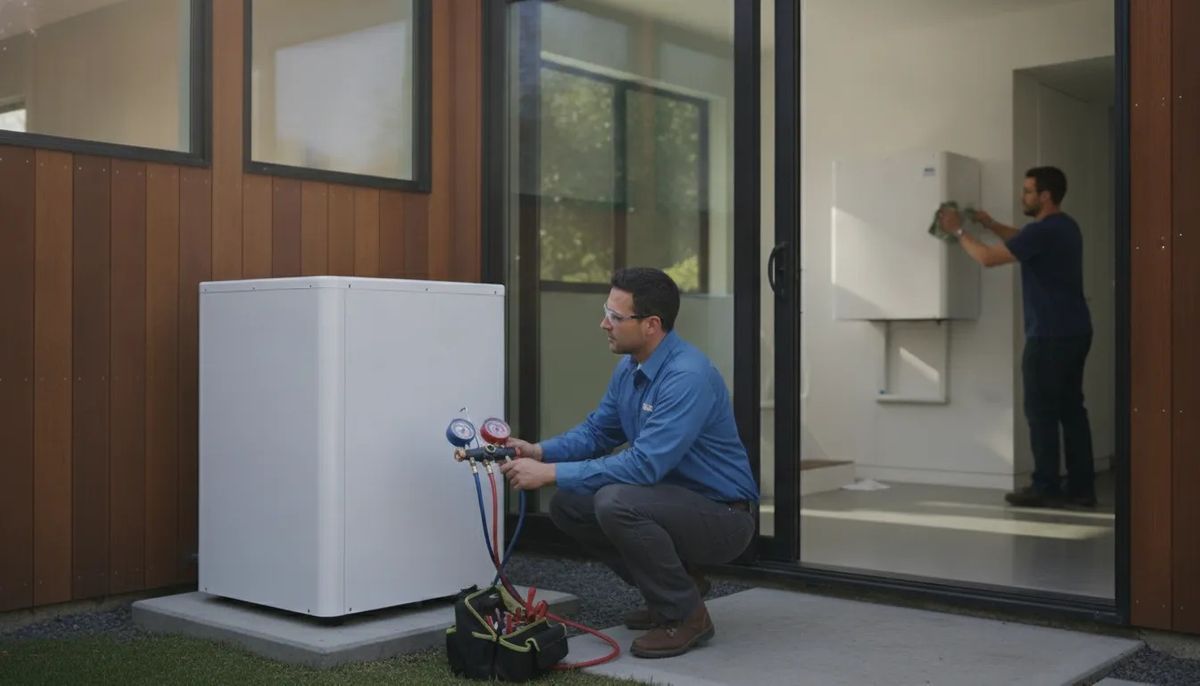
Heat pump installation Berkeley homeowners can trust starts with a careful plan. A successful project begins before equipment is delivered. Berkeley homes vary in age, layout, insulation, available space, and ductwork. A system that works well in one property may be a poor fit for another.
Request a Berkeley heat pump installation assessment
Homeowners should expect a property assessment, careful sizing, and a choice between ducted and ductless approaches. The plan should also review permits, electrical work, ductwork, controls, and installation scope. An accurate quote follows that evaluation rather than relying on a generic price.
Planning also means choosing an HVAC contractor who can explain recommendations, document the work, and verify that the completed system performs as intended.
What Makes Heat Pump Installation in Berkeley Different?
Berkeley homes do not share one standard HVAC layout. The East Bay includes a diverse housing stock, and conditions can vary across nearby neighborhoods. A project may involve an older home with limited equipment space, a condominium with shared exterior areas, or a property with existing ductwork that needs closer evaluation. Those details affect how a heat pump should be selected and installed.
Microclimate is another planning consideration. Berkeley and the broader East Bay include varied conditions, from moderate bay-influenced areas to warmer inland communities. A properly designed system should account for the home's layout, insulation, conditioned areas, and use. An assessment is more useful than assuming one equipment size will work for every address.
One system can provide year-round comfort
The City of Berkeley describes a heat pump HVAC system as an all-electric system that can provide both heating and cooling. Rather than directly generating heat, it moves heat into or out of the home. That makes it a practical option for homeowners who want one system for winter heating and summer cooling. The city also notes that heat pumps typically include indoor and outdoor components, so placement and access matter during planning.
The right configuration depends on the property. Ducted equipment can use existing or new ductwork to distribute air throughout the home. The ducts may need to be sealed, insulated, or sized appropriately. Ductless equipment can provide zone-based comfort without a full duct network. That may help in homes without usable ducts, additions, or areas with targeted comfort needs. Ortiz provides both ducted and ductless heat pump services.
Local planning includes more than equipment selection
Heat pump installation in Berkeley should include a review of the proposed scope and applicable local requirements. For projects using the City of Berkeley's Building Energy Saving Ordinance resilience upgrade measure, the city's heat pump guidance identifies permit and approved final inspection documentation as required verification. That guidance is specific to the measure. Homeowners should confirm current requirements for their own project.
A careful assessment brings these questions together: which areas must be conditioned, whether ductwork is suitable, where components can be placed, and what code considerations apply. This approach creates a system plan that fits the Berkeley property instead of forcing the property into a standard template.
Request a heat pump installation quote
How Do You Choose Between Ducted and Ductless Heat Pumps?
Both system types can provide heating and cooling, but the better choice depends on how your Berkeley home is built and used. A ducted heat pump uses an outdoor unit and indoor air handler connected to ductwork. A ductless system, often called a mini-split, sends refrigerant to indoor units mounted in the rooms or zones they serve. The City of Berkeley's BESO guidance identifies both as equipment options with different installation considerations.
Ducted and ductless heat pumps at a glanceConsiderationDucted heat pumpDuctless heat pumpDistributionUses existing or new ductwork to deliver conditioned air throughout the home.Uses indoor units to heat and cool selected rooms or zones.Existing ductworkFits homes with usable central ductwork, although sealing, insulation, sizing, or redesign may be needed.Does not require ductwork, which can help where ducts are impractical.Layout fitUseful when a home has central forced-air distribution.Useful for additions, renovations, older layouts, or targeted comfort.ZoningCan support zones through duct design and controls.Provides room-by-room control through multiple indoor units.
Start with the ductwork, not the equipment label
Existing ducts are useful only when they can support the new system. A professional assessment should look at condition, insulation, sealing, routing, and capacity. A home with undersized or poorly sealed ducts may need improvements even if the current furnace appears to work. For workable forced-air distribution, a ducted air-source heat pump may connect to that layout. ENERGY STAR explains that ducted air-source heat pumps can use conventional ductwork for heating and cooling.
Consider additions and difficult spaces
Ductless equipment can be practical when extending ductwork into an addition, converted room, or separated area would be disruptive. Multiple indoor units can create zones, but placement, line-set routing, airflow, and appearance need planning. Ductless does not automatically mean every room will be comfortable. The system still needs correct sizing and a plan for the areas it must serve. ENERGY STAR notes that mini-splits can serve homes without ductwork or supplement an existing system.
During heat pump installation in Berkeley, the recommendation should follow an evaluation of home size, insulation, layout, existing distribution, and future plans. Ask the installer what will be reused, what will be modified, and how each conditioned area will receive heating and cooling.
What Happens During a Heat Pump Installation?
A well-planned installation is more than replacing one box with another. The contractor needs to understand how the Berkeley property is built and how each area is used. Ducted and ductless systems follow different paths, so the assessment should guide the design.
Assess the property and existing system. Review the home's size, insulation, layout, current equipment, and available installation locations. For a ducted system, inspect condition, sealing, insulation, and sizing. For a ductless design, evaluate room comfort needs, indoor unit locations, line-set routing, and outdoor placement.
Calculate the heating and cooling load. Select equipment from actual requirements, not simply the size of an older furnace. Load work considers the building envelope, windows, insulation, floor plan, and zones. Correct sizing supports steady comfort and can reveal duct or zoning needs.
Plan equipment, ductwork, and electrical needs. The written scope should identify the outdoor unit, indoor air handler or zone heads, controls, condensate management, and refrigerant-line routing. The contractor should also review electrical capacity and disconnect requirements.
Confirm permits and documentation. Permit requirements depend on the project and jurisdiction. Berkeley's BESO guidance calls for a permit and approved final inspection documentation for that measure. The installer should confirm which approvals apply before work begins.
Install and connect the system. The crew places equipment, completes duct or line-set connections, addresses electrical and condensate connections, and protects the home during work.
Commission the equipment. The system should be started and tested for airflow, temperature response, controls, and electrical operation. The homeowner should receive guidance on thermostat settings, filters, zoning, and maintenance.
The best installation plan leaves the homeowner with a clear scope, realistic expectations, and a system that has been checked rather than merely switched on.
Request a heat pump installation quote
How Much Does a Heat Pump Installation in Berkeley Cost?
A reliable estimate for heat pump installation Berkeley homeowners can use begins with project scope, not a generic price list. Two homes may need different work even when they have similar floor areas. An assessment identifies the equipment, labor, and supporting upgrades required for a properly sized installation.
What shapes the project scope?
Home size and layout: Rooms, floors, and comfort zones influence equipment capacity and system design.
Insulation and existing conditions: The home's envelope, current system, and installation space matter.
Ductwork: Existing ducts may need inspection, sealing, modification, or redesign.
Electrical and controls: The installer may evaluate capacity, thermostat compatibility, disconnects, and placement.
Code and permits: Requirements should be confirmed for the specific property and project.
These details make an assessment more useful than an online number. Ortiz evaluates property size, insulation, layout, duct redesign, multi-zone needs, and challenging spaces before presenting a written scope. The estimate should explain included work, assumptions, and items requiring review.
Installation estimate versus repair diagnosis
New equipment installation, replacement, and system upgrades qualify for a free installation estimate through Ortiz. That policy differs from a repair visit. If an existing heat pump is malfunctioning, a technician must inspect and diagnose the problem. Service-call fees apply to diagnostic visits. After the cause is identified, the company can explain repair options and provide a repair estimate. Visit HVAC repair services when the immediate need is troubleshooting.
Which Heat Pump Features Matter for Berkeley Homes?
The best configuration is not simply the model with the longest feature list. Useful features match the home's layout, insulation, ductwork, occupancy patterns, and available installation space. A careful assessment should connect those details to comfort, airflow, sound, and serviceability.
Zoning and controls
Zoning can help different parts of a home receive the heating or cooling they need. Ductless systems may use multiple indoor units. Ducted systems can use zone controls where the design supports them. Controls should be easy to understand and placed where they can sense the space accurately.
Airflow, ducts, and filtration
Equipment cannot compensate for restricted or poorly distributed airflow. The contractor should evaluate duct sizing, connections, insulation, and sealing. ENERGY STAR explains that ducted air-source heat pumps can connect to conventional ductwork, while ductless equipment delivers conditioned air through indoor units. See the ENERGY STAR air-source heat pump guidance.
Filtration is another practical detail. The filter must suit the equipment and remain accessible for replacement or inspection.
Placement, sound, and service access
Outdoor-unit placement affects clearances, appearance, sound, and technician access. Indoor equipment should distribute air effectively without making service difficult. The ENERGY STAR ductless heat pump overview explains how indoor and outdoor units work together without conventional ductwork.
Maintenance planning
Ask how the system will be maintained before installation begins. Confirm filter access, outdoor-unit clearance, control settings, and the recommended inspection plan.
Confirm zoning and control needs.
Review duct sealing, insulation, airflow, and filter access.
Choose locations with sound and service access in mind.
Request commissioning and maintenance instructions.
Explore heat pump installation and service options
How Do You Choose a Qualified Berkeley Heat Pump Installer?
A good installer should explain the project in terms of your home, not just recommend a preferred model. Berkeley properties vary in age, layout, electrical capacity, insulation, and ductwork. Look for a contractor who evaluates those conditions before proposing equipment.
Verify licensing and insurance. Ask for California license information and proof of current insurance.
Ask how the system will be sized. The assessment should consider size, insulation, room layout, windows, and the existing system.
Clarify the duct and electrical scope. Find out whether ductwork will be inspected, sealed, redesigned, or replaced.
Confirm permits and inspections. The installer should explain which permits apply and who will coordinate them.
Require commissioning and handoff. Ask how airflow, controls, performance, and safe operation will be verified.
Get the full scope in writing. The proposal should identify equipment, labor, duct or electrical work, controls, permit responsibilities, warranties, and exclusions.
Ortiz Heating and Air Conditioning has served Bay Area communities for more than 25 years. The company identifies California Contractor License #CL803346, Diamond Certified recognition, BBB accreditation, and Carrier Authorized Dealer status. Its local service area includes Berkeley and other East Bay communities. Learn more on the Ortiz About page.
Request a heat pump installation quote
Request a Berkeley heat pump installation assessment
Frequently Asked Questions
Is a ducted or ductless heat pump better for a Berkeley home?
It depends on the home's layout, existing ductwork, installation space, and comfort goals. A ducted system can use existing or new ducts. A ductless system uses indoor units for zone-specific comfort.
How is a heat pump sized for my home?
Proper sizing starts with an assessment rather than a guess based only on square footage. The contractor should consider size, insulation, layout, windows, ductwork, and how rooms are used.
Does a Berkeley heat pump installation require a permit?
Permit requirements depend on the project and applicable local program. Berkeley's BESO heat pump measure specifies permit and approved final inspection documentation for BESO compliance. Ask the installer to confirm current requirements for your project.
Can I get a free quote if my existing heat pump needs repair?
A new installation, replacement, or upgrade can qualify for a free installation estimate. A repair begins with a diagnostic visit, and service-call fees apply. After the issue is identified, the contractor can explain repair options and provide a cost estimate.
Plan Your Berkeley Heat Pump Installation
A thoughtful assessment can match the system, sizing, and installation approach to your home's layout and comfort goals.
Request a heat pump installation quote from Ortiz Heating and Air Conditioning