
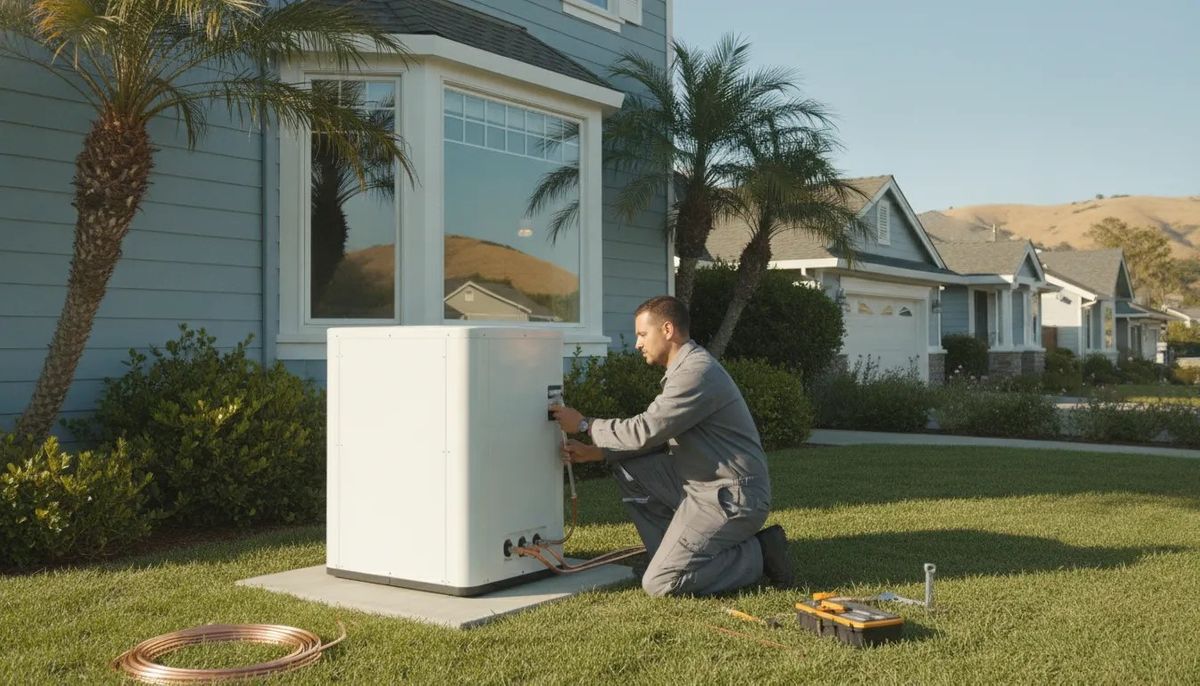
Replacing a gas furnace with an electric heat pump is not a simple equipment swap. Your project budget may include the heat pump, indoor air handler, ductwork adjustments, electrical work, permits, and any weatherization needed to keep an older Bay Area home comfortable. The right design depends on your home's size, insulation, existing ducts, electrical capacity, and local microclimate.
The gas to electric hvac conversion cost commonly falls between $8,000 and $15,000 for a high-efficiency heat pump conversion. Although equipment size and ductwork can move that figure substantially. A new 240-volt circuit or sub-panel upgrade may add about $1,500 to $3,000. While available rebates and tax incentives may offset roughly 15 to 30 percent of the total project cost. These are planning ranges, not a substitute for a home-specific assessment.
Request a gas to electric HVAC conversion quote and get a home-specific cost assessment before you plan your budget.
Beyond the installation price, a heat pump provides both heating and cooling in one system and transfers heat rather than creating it. The U.S. Department of Energy also recommends weatherizing existing homes before replacing gas heating equipment to improve comfort and maximize savings. Start by separating the major cost components, then evaluate your electrical requirements, incentives, installation timeline, and long-term operating value.
What Does Gas to Electric HVAC Conversion Cost in the Bay Area?
The gas to electric hvac conversion cost for a focused furnace-to-heat-pump replacement in the Bay Area typically falls between $8,000 and $15,000. The final price depends mainly on system size, the condition and layout of the existing ductwork. Equipment efficiency, and whether the electrical service can support the new heat pump. A conversion estimate should separate the heat pump installation from optional whole-home electrification work. Because replacing one heating and cooling system is usually far less expensive than converting every gas appliance at once.
As a California cost reference, one HVAC guide places a high-efficiency gas furnace to electric heat pump conversion at $8,000 to $15,000, with ductwork requirements affecting the total. If the installation needs a new 240-volt circuit and sub-panel upgrade, that electrical work can add approximately $1,500 to $3,000. Permits and labor are project-specific, so they should appear as separate line items in the contractor's written proposal rather than being hidden inside a broad equipment allowance.
Typical cost categories for a Bay Area gas-to-electric HVAC project
Furnace-to-heat-pump swap: equipment included in the $8,000 to $15,000 conversion range; $0 electrical work if existing service is adequate, or about $1,500 to $3,000 for a sub-panel and 240-volt circuit; permits and labor vary by city, access, ductwork, and installation scope; planning range of about $8,000 to $15,000 before any required electrical upgrade.
Full all-electric retrofit: about $22,000 for an air-source heat pump in a 2,000-square-foot home before other electrification measures; about $4,000 for a panel upgrade in the cited example; additional insulation, air sealing, ventilation, solar, water-heating, and labor costs may apply; much broader scope than an HVAC replacement, with the price set after a whole-home assessment.
The second row is a wider retrofit reference, not a standard HVAC replacement quote. That 2,000-square-foot all-electric example also included separate allowances for a heat pump water heater, insulation and air sealing, ventilation, solar, and an electric vehicle charger. Most Bay Area homeowners comparing heating systems start with the focused swap, then phase in other upgrades as their budget and home plans allow.
For help evaluating equipment size, ductwork, and electrical capacity, review this heat pump vs gas furnace comparison before requesting a project estimate. The right comparison is not just the purchase price. It is the cost of the complete installation, including code-required electrical work and any duct improvements needed for reliable comfort.
Why Bay Area Homeowners Are Switching From Gas to Electric Heat Pumps
For many Bay Area homeowners, replacing a gas furnace with an electric heat pump is about more than changing equipment. It is a way to combine heating and cooling in one system, improve household comfort, and prepare for an energy system that is becoming increasingly electric. A heat pump transfers thermal energy instead of creating heat through combustion or electric resistance. That approach can deliver substantial efficiency gains, particularly when the system is properly sized for the home's construction and local microclimate.
Efficiency without creating heat by combustion
The basic operating principle helps explain the shift. According to the U.S. Environmental Protection Agency, a heat pump typically uses about half the energy of other electric home-heating sources because it transfers heat rather than creates it. The EPA also notes that heat pumps are cleaner and more energy-efficient than most other types of home heating and can lower your heating bill.
Those figures do not guarantee the same savings for every household. Results depend on equipment efficiency, thermostat settings, insulation, duct condition, utility rates, and how effectively the system is installed. In older Bay Area homes, weatherizing the building can improve comfort and help the new system deliver better long-term value. A properly selected heat pump can also provide air conditioning, eliminating the need for separate heating and cooling equipment.
A response to changing California energy policy
Electrification is also becoming part of the region's building conversation. Cities such as San Francisco have passed laws limiting or phasing out natural gas in new construction, and local governments continue to encourage electrification retrofits. Existing homeowners are not all facing the same requirements, but these policies signal a broader transition. Choosing an electric system during a planned replacement can help homeowners avoid making a major equipment decision that conflicts with future renovation or energy goals.
Indoor safety and air quality considerations
Replacing combustion equipment can reduce concerns associated with burning gas inside the home. Electric systems eliminate the carbon monoxide risk from an indoor gas furnace and can reduce indoor pollutants associated with combustion. This does not replace the need for ventilation, filtration, or regular HVAC maintenance, but it removes one source of combustion from the living space. Electric equipment can also simplify future integration with solar panels or battery storage.
Every conversion still requires a site-specific evaluation. Ortiz Heating and Air Conditioning, Inc. is a Carrier Factory Authorized Dealer with 25 years of Bay Area experience. That local perspective matters when evaluating ductwork, electrical capacity, insulation, and the demands of different Peninsula and East Bay microclimates. Homeowners can review Ortiz's heat pump services to understand the available installation options before comparing project costs.
Are There Incentives for Converting From Gas to Electric HVAC?
Yes, Bay Area homeowners may be able to reduce the out-of-pocket cost of replacing a gas furnace with an electric heat pump. Potential assistance can come from federal programs, California initiatives, utility programs, and regional organizations. However, eligibility depends on the equipment selected, the home's existing system, household or project requirements, the location, and whether funding is still available.
For planning purposes, rebates and tax incentives for heat pump conversions typically range from about 15% to 30% of the total project cost. That is a broad guideline, not a guaranteed discount or a promise that every project will qualify. Incentive rules can change, and some programs require an application, approved equipment, income qualification, contractor participation, or documentation before installation begins. Review the current requirements before committing to the work. The U.S. Environmental Protection Agency outlines federal tax credit and consumer rebate details in its heat pump resources.
Bay Area and California rebate options
Two programs Bay Area homeowners should investigate are TECH Clean California and BayREN. TECH Clean California supports residential heat pump adoption through participating channels, while BayREN may offer regional rebates or related assistance in eligible Bay Area communities. The exact program, amount, and application path can depend on the property's county, utility territory, equipment efficiency, and project scope. A rebate listed online may also have limited funding or a deadline, so confirm the current terms directly with the program administrator.
Federal incentives may provide another opportunity to reduce the net cost of qualifying heat pump equipment and related electrification work. Federal rules commonly distinguish between equipment types and may include technical, income, or installation requirements. Do not assume that a federal tax credit and a local rebate can be combined in every situation. Confirm how programs interact, what documentation is required, and whether the benefit is a tax credit, an instant discount, or a later rebate.
For a broader overview of programs and questions to ask before applying, see our guide to Bay Area heat pump rebates.
Why the project quote matters
The incentive is applied to an eligible project, not to a generic conversion estimate. Before anyone can determine your likely cost after incentives. An HVAC professional should perform a load calculation and evaluate the home's ductwork, electrical capacity, insulation, and heating and cooling needs. The resulting equipment recommendation and written quote help identify which costs may qualify and which may remain your responsibility.
Ask for the pre-incentive price, the expected incentive category, assumptions about eligibility, permit or electrical work, and the estimated amount you would pay out of pocket. This makes the gas to electric HVAC conversion cost easier to compare and helps prevent a projected rebate from being mistaken for guaranteed savings.
Do You Need an Electrical Panel Upgrade to Convert to an Electric Heat Pump?
Possibly, but not every gas furnace replacement requires a full electrical service upgrade. A gas furnace uses natural gas as its primary heating fuel, while an electric heat pump needs a dedicated 240-volt circuit. Whether your existing electrical system can support that new load depends on the panel's capacity, the home's total electrical demand, and the specific heat pump selected.
This question matters particularly in older Bay Area homes. Many were built with 100-amp electrical panels, and the available capacity may already be used by appliances such as an electric range. Water heater, dryer, pool equipment, or electric vehicle charger. In that situation, the project may call for a sub-panel or a larger main panel. A licensed electrician should evaluate the service before equipment is ordered, and local permits may be required for electrical work.
Electrical upgrades that may affect the project cost
New 240-volt circuit: The heat pump may need a dedicated circuit routed from the panel to the outdoor unit or indoor equipment.
Sub-panel: If the main panel has limited breaker space or capacity, a sub-panel may provide a practical way to distribute the new load.
Main panel upgrade: A 100-amp service may need to be upgraded when the home's current and planned electrical demand exceeds its safe capacity.
Permits and inspections: Electrical changes can require permits and an inspection, depending on the home's jurisdiction and the scope of work.
As a planning range, Zodiac HVAC reports that adding a new 240-volt circuit for an electric heat pump often requires a sub-panel upgrade. Adding approximately $1,500 to $3,000 to the installation. That is an outside reference, not a guaranteed price for every Bay Area home. The final gas to electric hvac conversion cost depends on wire length, panel location, service capacity, equipment size, access, and permit requirements.
A proper evaluation should identify these requirements before installation begins. It may also reveal that the existing panel can accommodate the heat pump without a major upgrade. Ask the HVAC contractor and licensed electrician to coordinate their load assessment, equipment specifications. And permit plan so the electrical portion of the conversion is included in the budget from the start.
How Long Does a Gas to Electric HVAC Conversion Take?
A straightforward gas furnace to electric heat pump replacement is commonly completed in one to three days of on-site labor. That estimate assumes the home has usable ductwork, enough electrical capacity, and no major changes are needed to the equipment location. The project can take longer when the electrical panel requires an upgrade, ductwork needs repair or replacement, or local permit scheduling adds time.
The installation timeline also depends on the scope behind the gas to electric hvac conversion cost. A careful contractor should identify those variables before work begins rather than treating every conversion as a standard furnace swap. In the Bay Area, permit requirements and inspection schedules vary by municipality. Electrical work often requires a permit, so the city or county review process should be included in the project schedule.
Consultation and load calculation. The project begins with an evaluation of the home's insulation, room sizes, existing ductwork, current furnace, cooling needs, and electrical service. A load calculation helps determine the appropriate heat pump capacity. Oversizing or undersizing the system can affect comfort, efficiency, and operating costs, so equipment selection should follow the home's actual requirements.
Electrical evaluation and panel upgrade, if needed. The installer checks the main panel, available breaker space, service capacity, grounding, and the planned circuit route. If the existing service cannot support the heat pump, an electrician may need to install a new circuit or upgrade the panel. This work can extend the schedule because it may involve utility coordination, inspections, and additional permits.
Removing the gas furnace. Once the site is ready, the old furnace is disconnected and removed. The gas connection is handled safely, and the work area is prepared for the new indoor equipment. If the existing ductwork is damaged, poorly sized, or difficult to access, repairs at this stage can add labor time.
Installing the heat pump and line set. The crew places the outdoor heat pump, installs the indoor air handler or compatible equipment, connects refrigerant lines, completes electrical connections, and checks airflow and system operation. A simple replacement may fit within the one-to-three-day labor window. New ductwork, a difficult line-set route, or structural access issues can extend it.
Permits and final inspection. Required permits are finalized, and the work is inspected according to local rules. The installer then confirms safe electrical operation, refrigerant performance, drainage, thermostat controls, and heating and cooling output. Ask which approvals apply in your municipality and whether the inspection is scheduled before the project begins.
For an accurate schedule, request a site-specific plan that separates installation labor from permit, electrical, and ductwork timelines. That approach gives you a more realistic completion date and a clearer basis for comparing conversion proposals.
Is Gas to Electric HVAC Conversion Worth the Cost Long Term?
Usually, the long-term value depends less on the initial gas to electric HVAC conversion cost alone and more on the full cost of owning and operating the system. An electric heat pump may require a larger upfront investment than replacing a gas furnace, particularly if the project includes electrical work or weatherization. Over time, however, lower energy use, simpler equipment, and combined heating and cooling can improve the overall economics.
Lower energy use can offset the initial investment
A heat pump transfers heat instead of creating it through combustion or electric resistance. The U.S. Department of Energy reports that heat pumps can reduce electricity use for heating by up to 75% compared with electric resistance heating. The Environmental Protection Agency likewise says a heat pump typically uses about half the energy of other electric home-heating sources. These comparisons are not a guarantee of a specific monthly bill reduction, since savings depend on utility rates, home size, insulation, thermostat settings, and equipment performance. They do show why efficient operation matters when comparing lifetime costs.
For the best operating-cost results, look for an ENERGY STAR certified model. The EPA's heat pump resources note that heat pumps are cleaner and more energy-efficient than most other types of home heating: U.S. EPA heat pump guidance. A properly sized system also avoids the performance problems that can undermine expected savings.
One system can replace two major HVAC functions
A heat pump can heat and cool the home, eliminating the need for separate heating and air conditioning systems. That can simplify future replacement planning and reduce the number of major HVAC components to maintain. A conversion also removes the ongoing gas service charge for homeowners who can disconnect gas entirely. The actual benefit depends on the home's other gas appliances and the local utility rate structure. So include those details in a project estimate rather than assuming every household will see the same result.
Heat pumps generally have fewer combustion-related components because they do not burn fuel inside the home. That can mean fewer gas-specific parts and no furnace combustion process, although the system still requires professional inspection and routine care. Scheduling heat pump maintenance helps protect efficiency, airflow, and equipment life.
Weatherization protects the savings
Replacing equipment without addressing major air leaks or insulation gaps can limit comfort and increase run time. The Department of Energy advises homeowners replacing a gas heating system with a heat pump to weatherize the home for optimal cost savings and comfort. Especially in older homes. Sealing leaks, improving insulation where appropriate, and correcting duct problems can help the new system deliver more of the expected value.
In short, conversion is often worth considering when the home needs HVAC replacement, the electrical system can support the equipment. And the homeowner plans to remain in the property long enough to benefit from lower operating costs. Compare the installed price, available incentives, utility charges, projected energy use, weatherization needs, and maintenance plan together. That broader calculation is more useful than judging the conversion by its upfront price alone.
How to Budget for Your Bay Area Heat Pump Conversion
Planning a gas-to-electric conversion starts with a project budget, not a single advertised equipment price. The total can include the heat pump and indoor air handler, removal of the existing furnace, ductwork changes, electrical work, permits, and installation labor. Home size, insulation, window exposure, duct condition, and the requirements of the selected system can all change the final scope.
1. Start with a professional load calculation
A qualified contractor should first evaluate how much heating and cooling capacity your home actually needs. A load calculation considers the home's size, construction, insulation, windows, orientation, and local climate. This step helps prevent two common budgeting errors: paying for an oversized system or selecting equipment that cannot keep the home comfortable during Bay Area temperature swings. It also gives the contractor a defensible basis for recommending equipment rather than guessing from the existing furnace size.
2. Separate the project into cost categories
Ask for the estimate to identify each major component. Equipment is only one line item. The quote should explain whether it includes labor, permits, startup and testing, thermostat or controls, refrigerant-line work, duct modifications, and disposal of the old furnace. It should also state whether electrical work is included. An older electrical service may need a new circuit or other changes before it can support the heat pump. Homes without suitable ductwork may need a ductless design or additional distribution work.
Requesting these details makes it easier to compare proposals accurately. The lowest initial bid may not be the lowest total if important preparation work is excluded. A written scope should also identify equipment efficiency ratings, warranty coverage, project schedule, and any assumptions about access to the attic, crawlspace, or electrical panel.
3. Subtract eligible incentives, then confirm the net cost
Before approving work, check current programs that may reduce the out-of-pocket amount. Bay Area homeowners may qualify for incentives through programs such as TECH Clean California and BayREN, depending on the property, equipment, contractor, utility territory, and program rules. Rebates and tax incentives can change, so confirm eligibility and application requirements before treating an incentive as guaranteed savings. The Bay Area heat pump rebates guide can help organize that research.
4. Use the detailed quote as your real budget
Online ranges can provide context, but they cannot account for the conditions inside your home. The most reliable way to estimate your gas to electric HVAC conversion cost is to have a qualified contractor complete the load calculation. Inspect the existing system, verify electrical capacity, identify permit needs, and provide a line-item quote. Request clarification on anything marked as an allowance or excluded item before comparing the net project totals.
If you are weighing a gas-to-electric change, start with an accurate, home-specific estimate.
Contact Ortiz Heating and Air Conditioning to discuss your heat pump conversion options and plan your project.
Frequently Asked Questions
What is the total cost to swap gas heat for a heat pump in the Bay Area?
A typical conversion can range from $8,000 to $15,000, but the final price depends on equipment size, ductwork, site conditions, permits, and electrical work. A home that needs a panel or sub-panel upgrade will cost more than one with adequate electrical capacity.
Are there incentives to offset the cost of converting from gas to electric HVAC?
Potentially. Bay Area homeowners may qualify for federal tax credits, California programs such as TECH Clean California, and local utility or BayREN incentives. Available programs, eligibility rules, and funding change, so confirm current requirements before signing a contract. Rebates and tax incentives have historically covered roughly 15 to 30 percent of total project cost, and the U.S. Environmental Protection Agency outlines current federal tax credit and rebate details: U.S. EPA heat pump guidance.
Do I need an electrical panel upgrade for an electric heat pump conversion?
Not always. An electrician or HVAC professional should verify the panel's available capacity, breaker space, wiring, and the heat pump's electrical requirements. Older homes or systems requiring a new 240-volt circuit may need a sub-panel or panel upgrade, while many homes can use the existing service with limited changes.
Is switching from gas to electric heating worth it?
It can be, especially when you want one system to provide both heating and cooling, reduce combustion-related indoor risks, and prepare for future electrification. A heat pump transfers heat instead of creating it, and the U.S. Environmental Protection Agency notes a heat pump typically uses about half the energy of other electric home-heating sources: U.S. EPA heat pump guidance. Your home's insulation, duct condition, utility rates, and equipment selection still determine the long-term result.
Can I get a quote for converting my HVAC system?
Yes. A proper replacement quote should account for a load calculation, equipment efficiency, ductwork, electrical requirements, permits, and eligible incentives. Ask for these items separately so you can compare proposals accurately and understand your total gas to electric HVAC conversion cost.
Schedule Your Bay Area Heat Pump Installation Quote
A well-planned heat pump installation can help you choose equipment that fits your home's layout, comfort needs, and electrical requirements. Ortiz can review your conversion goals and help you understand the project scope before installation begins.
Schedule a heat pump installation quote with Ortiz Heating and Air Conditioning for a home-specific conversion estimate.