
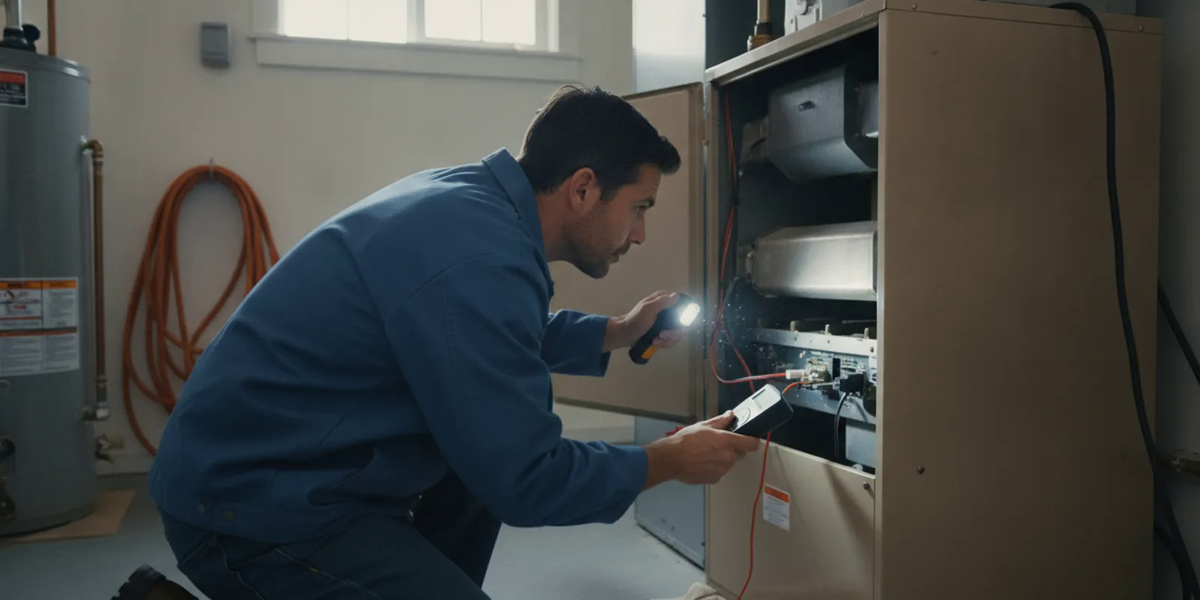
A furnace that runs without warming the house, starts and stops repeatedly, or makes an unfamiliar sound can be stressful, especially on a cold evening. This guide to furnace repair in Richmond explains what you can safely check, when to stop troubleshooting, and what to expect from a professional diagnosis. Because the cause is not always obvious from the symptom, avoid assuming that a single part needs replacement before the system has been evaluated.
Contact our team to discuss a furnace concern
Which Furnace Symptoms Should Richmond Homeowners Notice?
Furnaces often show a change in operation before they stop heating altogether. Note what happens, when it happens, and whether the symptom affects the whole home or only certain rooms. Those details can help a technician narrow down possible causes.
Thermostat calls for heat but the furnace does not start: The issue may involve the thermostat setting, power, a safety control, or a furnace component.
The furnace starts but shuts off quickly: Short cycling can have several causes, including restricted airflow or a control problem. Repeatedly restarting it does not identify the cause.
Air comes from the vents but feels cool: Check whether the thermostat is set to heat and whether the system has had time to start its heating cycle. If the problem continues, arrange an evaluation.
Some rooms are colder than others: Closed or obstructed registers, duct issues, or a system problem can contribute. A room-by-room pattern is useful information.
New or worsening sounds: Scraping, banging, rattling, or repeated clicking should be described rather than ignored. Different sounds can have different sources.
Unusual odors or a carbon monoxide alarm: Treat safety warnings seriously. Do not attempt to troubleshoot a possible gas or combustion issue yourself.
A symptom is a clue, not a diagnosis. For instance, weak airflow might be related to a filter, a blower, or ductwork. A furnace that does not respond might have a simple setting issue or a fault that requires professional testing. An evaluation of your heating system can help distinguish among these possibilities.
What Can You Check Safely Before Calling for Furnace Repair?
Start with checks that do not require opening the furnace cabinet or handling wiring, gas lines, or internal components. If you are unsure about a step, skip it and contact a professional.
Confirm the thermostat settings. Set the mode to heat and choose a temperature above the current room reading. If the thermostat uses batteries, check whether its display indicates they need attention. Smart thermostats may also have schedules or settings that affect when heat is requested.
Look at the air filter. If it is visibly loaded with dust, replace it with the correct size and type for the system, following the filter's airflow direction and the equipment instructions. A filter that does not fit properly may allow air to bypass it. Do not run the furnace without a filter unless its manufacturer specifically directs otherwise.
Check the supply and return vents. Move furniture, curtains, or other objects away from grilles. Make sure registers that should be open are not blocked. Avoid closing many vents in an attempt to force more heat to one room; that can interfere with system airflow.
Check the furnace switch and breaker once. If the furnace switch is plainly off, or a breaker is tripped, you may restore the switch or reset the breaker one time if it is safe to do so. If the breaker trips again, leave it off and call for service. Repeated resets can create additional risk.
Write down what you observe. Record when the issue started, whether the furnace tries to start, any sound or odor, and whether the thermostat display changes. Note recent filter replacement or power interruptions, if applicable.
Do not remove access panels, bypass safety switches, adjust gas pressure, or try to light equipment unless the manufacturer provides a procedure intended for the homeowner and you can follow it safely. For broader upkeep guidance, see the company's heating and HVAC maintenance information.
When Is a Furnace Problem an Emergency?
Leave the home and contact emergency services or the appropriate gas utility if you smell gas, hear a suspected gas leak, or have a carbon monoxide alarm sounding. Do not operate lights, appliances, phones, or switches inside if you suspect a gas leak; move to a safe location before calling. Follow instructions from emergency responders and the utility. Do not re-enter until authorities say it is safe.
If there is no immediate safety warning but the furnace is not heating, consider the indoor conditions and the needs of people in the home. A complete loss of heat during cold weather, a vulnerable occupant, or a problem that worsens may call for prompt service. For an unfamiliar noise, intermittent heat, or performance change without an urgent hazard, arrange a timely service visit rather than repeatedly cycling the system.
Ortiz provides HVAC repair services and service calls for HVAC concerns. When contacting a contractor, explain the symptoms and any safety concern clearly. Do not describe a suspected gas or carbon monoxide event as a routine repair request; use emergency channels first.
How Should You Think About Furnace Service Timing?
Service timing depends on the symptom and its safety implications, not simply on whether the furnace still turns on. A carbon monoxide alarm, suspected gas leak, or other immediate hazard calls for emergency action, not an appointment request. For a system that has stopped heating without an immediate danger, contact a qualified HVAC contractor promptly and explain the conditions in the home. Intermittent heat, repeated shutdowns, or a new mechanical noise also deserve attention before the system fails completely.
If the furnace is still operating but performance has changed, do not wait for a total loss of heat to start asking questions. Tell the service provider whether the change is getting worse and whether anyone in the home has particular heating needs. A contractor can advise on scheduling based on the reported concern and current availability; do not assume that a routine visit is an emergency response or that a particular arrival time is guaranteed.
Planning ahead can also reduce last-minute uncertainty. If you already know the furnace has an unresolved problem, arrange an evaluation before the next period when you expect to rely on it more often. Keep the equipment accessible and note the model information if it is easy to read without removing a panel. Do not delay urgent repairs to wait for a seasonal tune-up, and do not treat maintenance as a substitute for diagnosing a current malfunction. Learn more about Ortiz's heating services and ask what kind of visit fits the issue you are experiencing.
What May a Furnace Diagnostic Visit Include?
A technician will generally begin by asking what the equipment is doing, reviewing the thermostat call, and checking the system's overall operation. The exact steps depend on the furnace type, reported symptoms, and what the initial observations show. The goal is to identify the reason for the failure before proposing a repair.
Confirm the complaint: The technician may try to reproduce the issue and check whether the furnace starts, heats, and completes a cycle as expected.
Inspect accessible components and airflow: The filter, vents, blower operation, and visible condition of the equipment may be considered as relevant to the symptom.
Check controls and safety operation: A technician may test the thermostat call and applicable furnace controls or safety devices using appropriate procedures.
Evaluate the likely fault: Depending on the system, diagnosis may involve electrical measurements, inspection of ignition or combustion-related operation, or examination of a motor or other component.
Explain findings and options: Ask what failed, what evidence supports that conclusion, what work is proposed, and whether other concerns affect safe operation.
There is no single checklist that applies identically to every furnace. The published HVAC/R training overview of common repair problems provides general background on diagnosing repair issues, but a technician needs to assess the specific equipment at your home. Repair diagnostics are not the same as an installation estimate; ask about the applicable service-call and diagnostic charges before work begins.
Which Common Furnace Failure Categories Can Cause These Symptoms?
Several broad categories can lead to similar symptoms. The table below is a guide to what a symptom might prompt a technician to investigate, not a do-it-yourself diagnosis or a promise that a particular repair is needed.
What you noticePossible area to investigateUseful next stepNo response to a call for heatThermostat settings, electrical supply, controls, or a safety conditionCheck the thermostat and visible power switch once; note any display or indicator changes.Furnace starts, then stopsAirflow, temperature limits, ignition sequence, or another control issueCheck the filter and unobstructed vents; arrange service if the pattern repeats.Furnace runs but rooms stay coolHeating operation, airflow, distribution, or duct conditionRecord which rooms are affected and whether vent airflow differs.Rattling, scraping, or bangingLoose or moving parts, blower-related issues, or another mechanical sourceStop if the sound is severe or accompanied by a safety warning; describe when it occurs.Repeated ignition attempts or unusual odorIgnition or combustion-related operation, depending on equipment and conditionsDo not open or adjust the furnace. Treat gas odor or an alarm as an emergency.One room is uncomfortable while others heatRegisters, airflow balance, duct distribution, or room-specific conditionsCheck for blocked grilles and share the room pattern with the technician.
How Do You Compare Repair With Furnace Replacement?
A repair decision should consider more than the name of the failed part. Discuss the furnace's age and condition, the repair being proposed, how often it has needed attention, comfort or airflow concerns, and whether the equipment can be operated safely after the work. The technician can explain what the diagnosis supports; the homeowner decides how to proceed.
Repair may be a reasonable option when the problem is clearly identified, the system is otherwise in acceptable condition, and the proposed work addresses the concern. Replacement may be worth discussing when breakdowns recur, significant components have deteriorated, the furnace cannot be operated safely, or the equipment no longer meets the home's needs. These are decision factors, not an automatic rule based on age alone.
Before approving work, ask for a written explanation of the diagnosis, the scope of the proposed repair, the expected parts and labor, any warranty terms, and what is excluded. For replacement or adding new equipment, ask for an installation estimate and compare the proposed system, sizing approach, and scope. Ortiz offers HVAC installation services; an estimate for new equipment is distinct from a repair diagnostic visit.
Decision factorQuestions to ask about repairQuestions to ask about replacementKnown conditionWhat failed, and what test or observation confirmed it?What condition makes continued repair a poor fit?System performanceWill this work address the reported symptom? Are other issues still present?How will the proposed equipment address comfort and distribution needs?Scope and timingWhat parts and labor are included, and when can the work be completed?What is included in installation, and what planning or site work is needed?Cost comparisonWhat is the written repair amount and what is not included?What is the written installation estimate and how does its scope compare?Future planningWhat should be monitored after repair?What maintenance, controls, or duct considerations should be planned?
How Can You Prepare for a Furnace Service Call?
A little preparation can make the visit more productive. Make a short timeline of the problem, including whether it began suddenly or gradually and whether it is constant or intermittent. Note the thermostat setting, the rooms affected, and any sounds, odors, or warning indicators. If the filter was recently replaced, share that detail.
Clear access to the thermostat and furnace, and keep pets away from the work area. If the equipment is in a closet or utility space, move stored items that block access without handling the furnace itself. Gather any available system paperwork or prior repair records. If you are in Richmond or another nearby community, you can check Ortiz's Contra Costa County service-area information and contact the company to discuss the next step.
Before service proceeds, confirm the diagnostic charge and whether it is separate from any repair. Ask the technician to explain findings in plain language and request authorization before additional work. Ortiz serves homeowners and light commercial customers across the Bay Area; learn more about the company's background and approach.
Contact Ortiz to discuss furnace service in Richmond
Frequently Asked Questions About Furnace Repair in Richmond
Should I keep resetting a furnace that shuts off?
No. Repeated resets do not reveal the cause and may be unsafe if a fault is present. You can check basic settings and the filter, but if the furnace repeatedly shuts down or a breaker trips again, leave it off and arrange professional service.
Can a dirty filter keep a furnace from heating properly?
A loaded filter can restrict airflow and contribute to performance problems. Check it according to the equipment instructions and replace it with the correct filter if needed. If the symptom continues with a clean, properly installed filter, have the system evaluated rather than assuming the filter was the only issue.
Is a furnace diagnostic visit the same as a free installation estimate?
No. A repair visit may involve a service-call or diagnostic charge. Free estimates, when offered, apply to adding or replacing equipment, not diagnosing a repair. Confirm the applicable charge and scope before authorizing service.
When should I stop using my furnace?
Stop and move to safety if you smell gas, hear a carbon monoxide alarm, or have another immediate safety concern. Contact emergency services or the appropriate utility from a safe location. For a repeated shutdown or an unusual mechanical symptom without an emergency warning, turn the system off if needed and seek professional guidance.
What information should I give the technician?
Describe what the thermostat is set to, what the furnace does when heat is requested, when the problem began, which rooms are affected, and any unusual sounds, odors, or alarms. Mention recent filter changes or power interruptions. These details can help focus the evaluation.
Plan Your Next Step for Furnace Repair in Richmond
Pay attention to changes, make only basic safe checks, and treat gas odors or carbon monoxide alarms as emergencies. A clear diagnosis helps you compare repair and replacement options based on the condition of your furnace and the needs of your home.
Contact Ortiz Heating and Air Conditioning to discuss your furnace concern
With the symptoms and service scope clearly explained, you can make an informed decision about restoring heat in your Richmond home.