
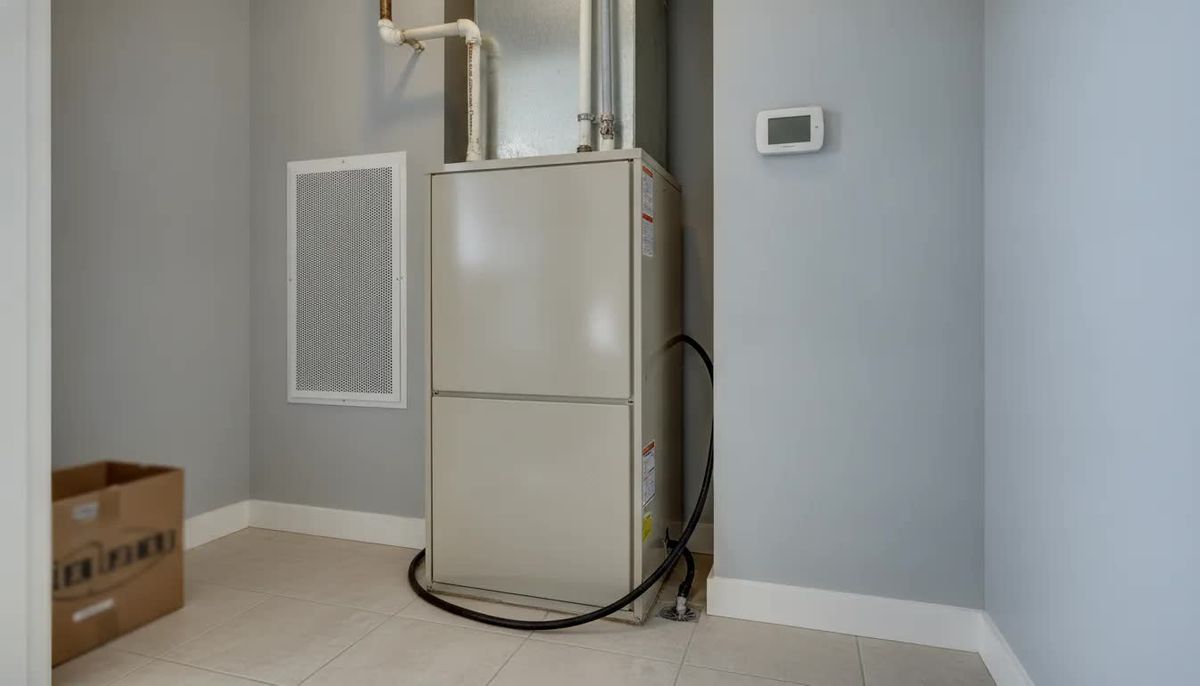
Furnace blower motor symptoms often show up as weak air, a new noise, or a furnace that makes heat while the vents stay still. The blower is the fan that pushes heated air through the ducts. A clogged filter or a closed register can look the same at first. The useful step is to sort a simple airflow problem from a motor that needs a furnace repair visit. This checklist is for Bay Area homeowners who want to know what they can safely check, and what they should leave to a technician.
Request a furnace diagnostic visit
What the blower motor does in a furnace
On a gas furnace, the burners or heat exchanger make the heat. The blower motor turns the fan wheel that moves that heat into the rooms. If the motor is weak, seized, or not getting the right signal, the furnace can try to run and still leave the house cold. The same motor often runs the fan for cooling in a shared air handler. A summer airflow complaint can be the same part.
Most homes we see around Burlingame, the Peninsula, San Francisco, and the East Bay use one of two motor types. An older PSC motor runs at set speeds and is common in furnaces that are 15 years or older. A newer ECM, or variable-speed, motor ramps up and down to match the call for heat. Both can fail. The symptom list is similar. The repair path is not. Guessing at a part from the hallway is a poor plan.
Ortiz Heating and Air Conditioning, Inc. diagnoses this on a service call from our Burlingame shop. We are a California-licensed contractor, license CL803346, a Carrier authorized dealer, and a Diamond Certified company. Technicians check the filter, the blower wheel, the capacitor or control board, and the motor itself before anyone talks about a replacement. A repair diagnostic is a paid visit. Free estimates are for replacing or adding equipment, not for a repair diagnosis.
Furnace blower motor symptoms to write down first
Start with what you can observe without opening the furnace cabinet. Note the time of day, whether the thermostat was calling for heat, and whether every room was affected or only one. That note saves time on the visit. A single cold room often points somewhere else.
Weak airflow from most or all vents
Hold a hand near a supply vent while the system should be heating. A healthy blower moves a steady stream. A failing motor may push a trickle. Air may also start strong and fade after a few minutes. If every open register is weak, the problem is usually at the furnace or the main trunk. It is not in one branch duct.
Check the filter before you assume the motor is done. A filter packed with dust makes the blower work harder and can overheat the furnace. The U.S. Department of Energy's Building Science Education materials on proper HVAC filter installation explain why the filter has to fit the rack. It also has to face the right direction. A wrong-size filter is a common Bay Area cause of weak air. So is a filter left in for a whole heating season.
Air from only one or two rooms
If the living room is fine and a back bedroom is not, start with the register. Check the damper before you blame the motor. A closed vent can starve one room while the blower itself is fine. A crushed flex duct or a leak at a joint can do the same. Our duct services page covers leaks, repairs, and replacement when the duct system is the real limit. Write down which rooms are weak. That pattern is useful on the diagnostic.
Heat at the furnace, little or no air at the vents
This is the clearest blower clue. You may hear the burners or feel warmth at the cabinet, then the system shuts off before the rooms warm up. Many furnaces have a high-limit switch that stops the burners when heat builds up and is not carried away. Repeated limit trips are hard on the heat exchanger. Turn the system off at the thermostat. Do not keep restarting it to see if it catches.
Squealing, humming, or rattling
A blower should be a low whoosh, not a shop tool. Match the sound to the moment it happens:
A squeal or screech at startup often means dry bearings. On older belt-drive blowers, it can mean a glazed belt.
A hum with no airflow can mean the motor is trying to start and cannot. A bad capacitor or a seized wheel can cause that.
A rattle or scraping sound can be a loose wheel or debris in the housing. A motor mount that has worked loose can do it too.
A buzz from the cabinet that continues after the fan stops is more often a control or transformer issue than the motor itself.
Do not spray oil into the cabinet and do not remove the blower panel to poke at the wheel. Furnace cabinets have line voltage, a gas valve, and sharp sheet metal. Listening from the hallway is enough for the checklist.
A burning or hot-metal smell
A light dusty smell on the first cold night of the season is common. A sharp electrical or hot-metal smell that returns every cycle is not. It can mean the motor is overheating, the wheel is rubbing, or dust on the motor is scorching. Shut the system off. If you also smell gas, leave the house and call your gas utility. Use the National Fire Protection Association's carbon monoxide home guidance if anyone feels ill while the furnace runs. Headache, dizziness, or nausea during a heating cycle is the warning. Those symptoms are an emergency, not a filter check.
Short cycling and rooms that never catch up
Short cycling means the furnace starts, runs briefly, and stops, over and over. A failing blower can cause that by letting the heat exchanger get too hot. A bad thermostat, a clogged filter, or restricted return air can do it too. If the fan never reaches a steady run of several minutes, stop testing it and book a diagnostic. Repeated starts are harder on the motor than one longer cycle.
Safe checks before you call
These checks stay outside the furnace cabinet. If any step feels unclear, skip it. The goal is to rule out the simple airflow items, not to repair the motor.
Set the thermostat to heat and the fan to Auto. Raise the setpoint a few degrees above the room temperature. Confirm the display says it is calling for heat.
Look at the breaker for the furnace. If it is tripped, reset it once. If it trips again, leave it off.
Find the filter slot, usually at the return or on the side of the furnace. If the filter is gray, collapsed, or past the date on the frame, replace it with the size printed on the old one. Do not run the furnace with the filter removed.
Walk the house and open supply registers. Move furniture or rugs that cover a return grille. One blocked return can make the whole system sound like a bad motor.
Stand at two or three vents in different rooms. Note strong, weak, or no air, and whether the air is warm or room temperature.
Listen for one heating cycle from the hallway. Write down squeal, hum, rattle, or a normal whoosh. Note whether the sound starts right away or after the burners.
If you smell burning, see scorch marks, or the breaker tripped twice, stop. Turn the system off and request a diagnostic.
A new filter and open registers fix a lot of weak-air complaints. They do not fix a motor that hums and never turns. They do not fix a wheel that scrapes, or a furnace that keeps shutting off on the limit. Those are repair symptoms.
Filter and duct problems that mimic a bad motor
Bay Area houses make this confusing. Many have long flex-duct runs in a crawlspace or attic. A return grille may sit behind a sofa. The filter may only get changed when someone remembers. Fog and damp weather also load filters with fine dust faster than a dry climate. The EPA's Inside Story guide to indoor air quality notes that dirty components affect the air people breathe. That is another reason not to run a furnace for weeks with a packed filter.
Use this split when you are deciding what you saw:
More likely a filter or vent: airflow improved right after a filter change. Or only one room is weak. Or a return was blocked by furniture.
More likely ducts: several rooms on the same side of the house are weak. You may hear whistling at a register. A crawlspace duct may look crushed or disconnected. Read signs you need ductwork repair before you assume the motor is the only issue.
More likely the blower: every open vent is weak. The cabinet hums or squeals. You smell hot metal. Or the furnace heats and shuts off while the fan never really moves air.
A dirty blower wheel can act like a weak motor even when the motor still turns. Dust on the fins cuts the air the wheel can move. Cleaning that wheel is a cabinet-off job. It is part of a professional visit, not a homeowner step. Our maintenance service is where that cleaning and the rest of the seasonal inspection belong, before a noisy motor becomes a no-air night.
When the symptom is a repair, not a new furnace
A blower problem does not automatically mean the furnace should be replaced. If the heat exchanger is sound, a motor, capacitor, or wheel repair is often the right fix. That is especially true when the furnace is not at the end of its life. If the furnace is old and has had repeated limit trips, replacement can be the safer long-term choice. A cracked heat exchanger points the same way. That call happens after someone opens the cabinet and tests the parts. It is not something a symptom list can decide.
For noises that are not the blower, and for what a San Francisco repair visit covers, read our guide. Talk with a furnace repair technician from there. That article owns general furnace repair signs and cost questions. This one stays on the blower checklist. If the furnace will not start at all, start with furnace not turning on. Those breaker and thermostat checks fit better than a blower diagnosis.
On a diagnostic visit, we start with the symptom you wrote down. We inspect the filter and the blower compartment. Then we test the motor, the capacitor, and the controls. You get an explanation before any repair. We serve homes across the San Francisco Bay Area from Burlingame, including the Peninsula and the East Bay. Office hours are 7:30 a.m. to 5:30 p.m. on weekdays. Heating trouble that cannot wait is handled as an urgent heating call, not as a promise that someone is dispatched all night.
If you want the visit scheduled, use our HVAC service calls page or the quote form. Say "blower" or "no airflow" in the note. Include the sound, and whether a new filter changed anything. That is enough for the technician to bring the right test gear.
Frequently asked questions
How do I tell a bad blower motor from a dirty filter?
Change the filter and open every supply register and return. Then run one heat cycle. If airflow at most vents is clearly stronger, the filter or a blocked return was the limit. If the air stays weak, treat that as a blower symptom. Stop resetting the furnace if it hums, squeals, or shuts off after a few minutes.
Can I oil the blower motor myself?
No. Many modern blower motors are sealed and are not meant to be oiled. Opening the blower panel exposes wiring and the gas furnace cabinet. A squeal is a reason to book a diagnostic, not a reason to spray lubricant into the unit.
Why does my furnace make heat but the vents barely blow?
The heat source and the blower are separate. Burners can fire while a weak, seized, or unpowered blower fails to move that heat. The furnace may then shut off on a high-limit safety. Leave it off until a technician checks the motor, the wheel, and the controls.
Does a noisy blower always mean the motor must be replaced?
No. A belt, a capacitor, a loose wheel, or heavy dust on the wheel can make similar noises. Sometimes the motor itself is worn. The only way to know is a cabinet inspection and an electrical test. Replacing the motor on a guess can leave the real fault in place.
When should I stop troubleshooting and call?
Call when a new filter and open vents do not restore airflow. Also call if you smell burning or hot metal, if the breaker trips again, or if the furnace short-cycles. Also call if anyone feels ill while the furnace runs. For the repair visit itself, start with a contact request and describe the symptom in one or two sentences.
If the checklist points to the blower, the next step is a diagnostic, not another restart. Tell us what you heard, which rooms were weak, and whether a new filter changed the airflow. We will take it from there.