
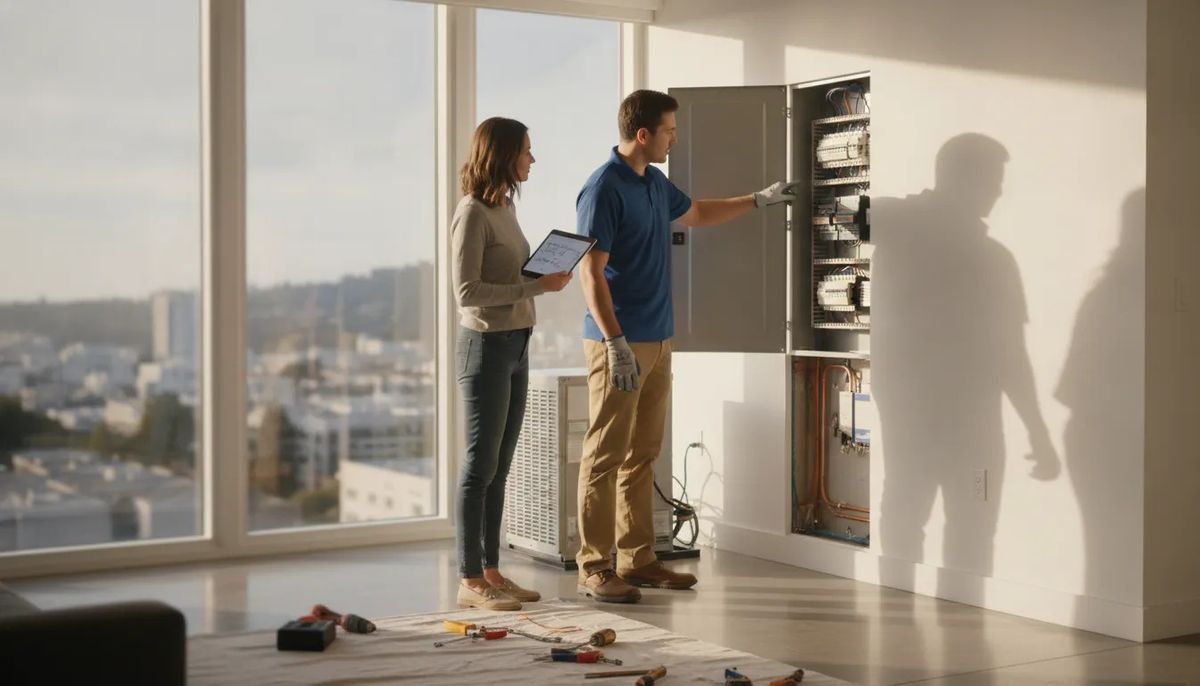
Planning a heat pump, induction range, heat pump water heater, or electric vehicle charger can raise an important question: can the home's electrical system support the new equipment? An older panel may have limited space or service capacity, but a replacement is not automatically required. The answer depends on the planned equipment, the home's calculated load, the utility territory, permits, and current incentive rules.
An electrical panel upgrade rebate Bay Area homeowners find is usually connected to a broader utility, local, or home-electrification program. It is not a guaranteed payment for panel work alone. Eligibility can depend on the address, household, equipment, contractor, application timing, and available funding. Use this guide to organize the questions that need answers before you sign a contract.
The central planning rule is simple: confirm the incentive first, then confirm the electrical scope. The program administrator decides whether a project qualifies. A qualified electrical professional determines whether the panel and service can safely support the proposed load. An HVAC professional can define heat pump requirements and coordinate the equipment plan, but those roles should not be confused.
What Is an Electrical Panel Upgrade Rebate in the Bay Area?
An electrical panel upgrade rebate in the Bay Area is financial assistance that may support electrical infrastructure when a qualifying home electrification project is completed. Some programs identify a panel or smart load-management device as an eligible measure. Others treat electrical work as supporting infrastructure for a heat pump, water heater, induction appliance, or vehicle charger. No single rebate applies to every Bay Area address.
Panel assistance and equipment incentives are different
A homeowner may need more electrical capacity to add a heat pump. That need does not, by itself, prove that panel work qualifies for an incentive. A program may require qualifying equipment, household income documentation, an approved contractor, an application, a reservation, or approval before construction starts.
Keep these questions separate when reviewing a proposal:
Which part of the project is the program designed to support?
Which electrical work is eligible under the current program terms?
What must be approved before equipment is ordered or construction begins?
The Bay Area Regional Energy Network incentive directory can help identify possible starting points. Its directory is not approval, however. The current terms published by the administrator control eligibility, funding, and application steps.
Why the property address matters
Bay Area homeowners may be served by different electric utilities, community choice arrangements, cities, and regional agencies. A program available in one part of Alameda County may not apply in another city. A Silicon Valley program may have requirements that do not apply to a Peninsula home. Start with the full service address and electric utility, not only the county name.
Also confirm whether the program is open. Funding may be reserved, placed on a waitlist, paused, or replaced by a new phase. A page that was accurate during an earlier project may not describe the rules when work begins.
Can an Electrical Panel Upgrade Rebate Help Bay Area Electrification Projects?
It may, but only when the proposed project matches a live program's rules. A rebate administrator may treat panel work as a qualifying measure, supporting infrastructure, or an excluded cost. The project type, address, equipment, household, contractor, and application timing all matter. Confirm the exact treatment of the panel before using an incentive in the project budget.
Start with the utility and regional directory
Identify the electric utility serving the home and look for current residential electrification, panel, appliance, managed-load, or energy-upgrade programs. Then use a regional source such as BayREN to find possible programs by geography and measure. Open the administrator's own page for the final eligibility language.
Regional directories are useful because they organize a fragmented market. They do not replace the current terms of a city, utility, or state program. Ask whether the program applies to the specific address and whether incentives can be combined. Some programs limit stacking or require one application to be submitted before another.
Review state and federal information carefully
The California Energy Commission's residential energy rebate page explains the state's current federal rebate status and related requirements. The page states that certain HEEHRA single-family retrofit rebates are fully reserved statewide as of February 24, 2026, with pending requests placed on a waitlist. It also explains that the federal home-electrification rebates currently available to Californians are provided through specially trained TECH Clean California contractors.
That status is a dated program update, not a permanent promise that no future pathway will open. Recheck the live page for application status, income verification, eligible measures, contractor requirements, and work-start restrictions. Do not present a historical announcement as current approval.
Do not treat a search result as proof
Search results, social media posts, and contractor advertisements may describe an earlier program phase. The result may also combine an equipment incentive with a separate electrical measure. Save the administrator's current instructions and ask which part of the proposed work is eligible. If the answer affects a major purchase, request it in writing.
Electric utility: Which territory and local programs apply? Eligibility often follows the service address.
Regional directory: Which programs should I investigate? It helps locate possible starting points.
Program administrator: Is this project eligible now? Its current terms control approval.
Contractor directory: Who is approved or trained? Some pathways require participation.
What Makes a Home Eligible for Panel Upgrade Incentives?
Eligibility usually depends on four parts of the project: the property, the household, the equipment, and the people completing the work. A panel that is old, crowded, or difficult to expand may need attention, but age alone does not create rebate eligibility. Review the complete program conditions before assuming that panel replacement will be reimbursed.
Property and utility requirements
Programs may limit participation by utility territory, city, property type, or housing category. A single-family home, condominium, townhome, accessory dwelling unit, and multifamily property may be treated differently. The applicant may also need to be the property owner or utility account holder.
Confirm the address exactly as it appears on the utility account. Ask whether the program covers the city, whether the electric service is supplied by the named utility, and whether a community choice arrangement changes the application path. A county name alone is not enough to determine eligibility.
Household and income documentation
Some programs use household income to determine eligibility or the level of assistance. They may require an income verification code, an approval document, tax information, or another record. The required document varies by program. Do not send sensitive financial information to an unsolicited salesperson or an unverified person offering to file an application.
Use the official instructions to learn what information is required, where it should be submitted, and who is allowed to review it. Keep copies of the application and approval records. If household circumstances or project scope change, ask whether the approval must be updated.
Equipment and contractor conditions
Many electrification incentives are connected to a qualifying appliance rather than a standalone panel replacement. The equipment may need to meet efficiency or performance rules. The contractor may need to be approved, trained, licensed, or listed in a program directory. A panel upgrade may be accepted only when it supports the qualifying measure.
Ask the administrator to identify the eligible measure and supporting electrical work in plain language. Then compare that answer with the written project scope. If a proposal includes work that is not listed in the program terms, treat that work as separate until the administrator confirms otherwise.
Does a Heat Pump Require an Electrical Panel Upgrade?
A heat pump does not automatically require a new electrical panel. The answer depends on the heat pump's electrical requirements, the home's existing service, available breaker space, wiring condition, and calculated demand from other appliances. A qualified electrical professional should evaluate the complete system before anyone promises that an upgrade is necessary.
Request a whole-home load review
Ask for a load assessment that considers the planned heat pump and existing or future equipment. This may include heating and cooling, water heating, cooking, laundry, solar or battery equipment, and an electric vehicle charger. The review should identify service size, panel rating, breaker space, wiring, and expected demand.
A crowded panel and an undersized service are not the same problem. A panel may have limited breaker space but adequate service capacity. Another home may have room in the panel but not enough capacity for planned additions. The assessment should explain which condition exists and what action, if any, addresses it.
Coordinate HVAC and electrical responsibilities
Your HVAC professional can identify the heat pump's equipment requirements, placement needs, duct or airflow considerations, and installation plan. A qualified electrical professional should evaluate the panel, service, wiring, permits, and electrical work. Ortiz provides heat pump services and can support the HVAC planning conversation, but this article does not represent Ortiz as a standalone electrical contractor.
Before approving the project, ask who will calculate the load, who will obtain electrical permits, who will complete panel work, and who will schedule inspections. The written scope should state how changes to electrical work affect the project schedule and incentive application.
Consider load management only when appropriate
Smart panels and load-management equipment may help organize electrical demand in some projects. They are not automatic substitutes for adequate service capacity, and they are not automatically rebate-eligible. Ask the electrical professional to explain the design, controls, limitations, maintenance, and future appliance compatibility. Then ask the administrator whether the equipment is an eligible measure.
For the HVAC portion of the project, review Ortiz heat pump services and compare the equipment requirements before ordering. Planning both scopes together can reduce late changes, but it does not replace a formal electrical evaluation.
When Should You Apply for a Rebate?
Investigate the program before signing a contract, ordering equipment, pulling permits, or beginning construction. Some programs require preapproval, income verification, an application reservation, an approved contractor, or specific equipment documentation before work starts. Completing the work first may make a project ineligible even when the equipment otherwise meets the rules.
Build the application into the schedule
Ask the administrator to list every step that must happen before installation. Record the application date, approval date, equipment requirements, contractor requirement, permit requirement, deadline, and post-completion documentation. Share those conditions with everyone responsible for the project.
Do not assume a contractor's estimate is an incentive reservation. Ask who submits the application, who receives approval, and what happens if equipment or scope changes. If the administrator requires a specific model or efficiency rating, confirm that requirement before equipment is ordered.
Recheck status before construction
Program pages change. Funding may be reserved, a waitlist may open or close, or a program may replace one measure with another. Recheck the official page immediately before work begins. If the project spans several months, check again before final submission.
Keep the current terms, approval notice, equipment specifications, permits, invoices, inspection records, and completion documents together. Ask whether photographs, serial numbers, or final verification are required. A complete file makes it easier to respond if the administrator asks for clarification.
Emergency work needs a specific answer
An emergency heating or cooling failure may make advance application difficult. Some programs publish a limited process for emergency replacements, while others do not. Never assume an emergency exception exists. Document the failure and ask the administrator what evidence and timing rules apply.
Ortiz offers free estimates for adding or replacing new HVAC equipment, including heat pumps, when that service fits the project. Repair diagnostics and inspections are different and carry a service fee. Do not describe a repair visit as a free estimate, and do not make an incentive decision based on an unverified promise.
Review HVAC installation planning
Electrical Panel Upgrade Rebate Bay Area Checklist Before You Sign
Use this checklist to compare the incentive rules with the electrical and HVAC scope. It is designed to help you find missing information before work starts. It is not a substitute for program approval or a qualified electrical evaluation.
Identify the service address and utility. Confirm the account territory and any city or regional program.
Open the current program terms. Check funding status, eligible measures, household rules, contractor requirements, deadlines, and work-start restrictions.
Ask whether panel work is eligible. Determine whether it is a standalone measure, supporting work, or outside the program.
Request a whole-home load assessment. Include the heat pump and current or planned high-load appliances.
Define responsibility. Put HVAC work, electrical work, permits, inspections, and application duties in writing.
Verify credentials. Use the official directory for any required contractor or training status.
Confirm equipment details. Check model, efficiency, controls, and other requirements before ordering.
Protect your records. Save approvals, terms, permits, invoices, and completion documents.
Recheck before work begins. Confirm that the program is still open and the approved scope has not changed.
If any item is unclear, pause the commitment and ask the administrator or qualified professional. A careful review is more useful than treating a rebate as guaranteed money in the project budget.
Request a Bay Area HVAC project review
Frequently Asked Questions
Are electrical panel upgrades always covered by a Bay Area rebate?
No. Panel work may be a standalone eligible measure, supporting work for a qualifying electrification project, or outside the program entirely. Eligibility depends on the address, utility, equipment, household, contractor, application timing, and current funding. Confirm the panel scope directly with the program administrator before including an incentive in your budget.
Does a heat pump always need a new electrical panel?
No. A heat pump may work with an existing panel when service, wiring, breaker space, and calculated whole-home load are adequate. A qualified electrical professional should review the planned equipment and other appliances. Do not approve a panel replacement solely because the home has an older panel or because a rebate may be available.
Can I apply after panel work is complete?
It depends on the program, but many incentives require an application, preapproval, reservation, or qualified contractor before work begins. Completing work first can make a project ineligible. Read the current terms and ask the administrator what must happen before equipment is ordered, permits are pulled, or construction starts.
What should I ask an HVAC contractor about a panel upgrade?
Ask what electrical requirements the proposed equipment has, who will perform the load assessment, who will complete electrical work, who will obtain permits, and how the HVAC and electrical schedules will be coordinated. Also ask whether the program requires a participating contractor. HVAC planning and electrical contracting should be clearly assigned rather than treated as one role.
Where can I find current Bay Area electrification programs?
Start with your electric utility, then use a regional directory such as BayREN to identify possible programs. Check city and state resources when relevant. The administrator's current page controls eligibility, funding, contractor rules, and deadlines. Recheck it before committing because rebate status and requirements can change.