
Many older San Francisco homes lack the space inside plaster walls to install bulky metal ductwork. For these homes, bringing in traditional central air conditioning means tearing down plaster walls and losing valuable closet space.
Choosing a ductless mini split vs central AC depends mostly on your home's existing ductwork, your monthly budget, and the specific comfort goals of your family. Traditional central systems require complex, built-in duct networks to distribute air throughout the house, which can be difficult and costly to install. According to the US Department of Energy, traditional central cooling systems can lose more than 30% of their energy to leaks and heat conduction. Ductless systems avoid these major energy losses by connecting outdoor units directly to indoor handlers, allowing you to cool and heat single rooms very efficiently. While central AC is excellent if your home already has ducts, ductless systems are the ideal choice for older local homes that lack existing duct networks.
Schedule a free consultation to compare ductless mini split vs central AC for your Bay Area home and get a personalized recommendation.
Determining which of these systems fits your unique house requires looking at how they perform, install, and affect your utility bills. Here is a closer look at how a ductless mini split compares with central AC, starting with the mechanics of each system.
Understanding Ductless Mini Split vs Central AC Systems
To choose the best cooling for your home, you must first see how each system works. Both systems aim to cool your living spaces. But they use very different parts and paths to do it. Comparing a ductless mini split vs central AC shows clear differences in how they use power.
Ductless mini split operation
A ductless system has two main parts. One is an outdoor compressor. The other is an indoor air handler that hangs on your wall. To link these parts, installers run a small conduit through a wall.
According to the U.S. Department of Energy, this tube houses the power line, refrigerant pipes, and a condensate drain. This simple design lets the system cool your home without any ducts.
Traditional central air systems
A central air conditioner works in a different way. It cools air in one central spot. Then, a blower fan forces the cold air through a network of ducts. These ducts run inside your walls, attic, or crawl spaces to reach vents in each room.
If your home already has these ducts, you can choose a traditional central AC installation to cool your whole space. But if you live in an older Bay Area home, you may not have ducts at all. Adding them later can be very hard. It can also cost a lot of money and disrupt your life.
The cost of ductwork energy loss
The biggest difference between these systems is how much energy they lose. Forced-air central systems are prone to energy waste. Small cracks, loose seams, and thin insulation let cold air escape before it reaches your rooms. This waste happens through air leaks and heat conduction through the duct walls.
A federal building report shows that duct systems in attics or crawl spaces lose from 25% to 40% of their cooling energy. These losses are worst in unconditioned areas, but ductless systems avoid them completely. The government reports that duct losses can account for more than 30% of cooling energy use, meaning you pay for wasted power.
Because a mini split has no ducts, it delivers all its cold air directly into your rooms. This makes it highly efficient. You get better comfort and lower power bills.
Efficiency and Energy Savings: Ducted vs Ductless in the Bay Area
The San Francisco Bay Area has many microclimates. Homeowners must think about heating and cooling costs because local energy bills can rise fast. When you compare a ductless mini split vs central AC, energy efficiency is a key factor. Choosing the right system can help you stay comfortable and save money all year.
Duct energy losses in central systems
Standard central systems use ducts to move air. But these ducts often leak. In fact, systems with ducts in attics or crawl spaces lose 25% to 40% of their heating or cooling energy. This happens through small cracks and heat transfer through duct walls. Even when ducts are sealed, their use can cause air pressure shifts that increase total air leaks in your home.
Ductless systems do not use any ducts at all. Because of this, they avoid the energy losses that central systems face. In a standard home, duct leaks can make up more than 30% of your total energy use for cooling. By removing the ducts, ductless systems avoid energy losses. This means more cool air goes where you want it, which cuts down on wasted power.
The dual-purpose advantage of mini-splits
Many mini-splits are also heat pumps. This means they do two jobs. They cool your home in the summer and heat it in the winter. One system does both tasks with high efficiency. You can enjoy these ductless mini-split benefits to help lower your yearly energy bills.
Energy Star certification and local climates
When you shop for a new unit, look for the ENERGY STAR label to get the most savings. This logo shows that the model meets strict federal rules. Highly efficient systems help lower your monthly power bills in any weather. They also keep your home cozy while using less fuel.
The Bay Area has unique weather zones. A home in breezy Burlingame has different heating and cooling needs than a home in a warm East Bay valley. We use our deep knowledge of these local microclimates to design the best comfort plans. Our team can help you choose the right setup for your local neighborhood to increase your savings.
Zoning and Comfort: Why Ductless Mini Splits Shine in Older Homes
Older Bay Area homes often have unique climate control needs. When you weigh a ductless mini split vs central AC for a vintage home, comfort and control are the main factors. Central systems cool the whole house at once. This often leads to hot and cold spots. A ductless approach solves this by placing small air handlers directly in the rooms you use most.
Room-by-room zoning for tailored comfort
Ductless mini-splits give you precise control over your home's temperature. According to the Department of Energy, mini-splits allow for zoning and cooling each room. This means you do not waste energy cooling empty guest bedrooms or formal dining areas. You can keep your bedroom cool at night while keeping the living room warmer during the day. Some models support up to four indoor units connected to one outdoor unit. This lets you create separate comfort zones.
Flexible options for older structures
Installing ductwork in an old craftsman or Victorian home is often hard and costly. Ductless systems are a great retrofit add-on for homes with non-ducted heating like radiators or space heaters. Since they do not need ducts, you can preserve the old walls, ceilings, and plaster. We often see older homes where installing big metal ducts would ruin the classic charm of the space. These systems are also great for room additions, finished basements, or small apartments.
The role of proper system sizing
To get the most out of your system, correct sizing is crucial. Homeowners have several choice locations to place the air handlers. These sleek indoor units can be:
Mounted high on your walls
Suspended from your ceilings
Placed standing on your floor
But oversized or poorly placed air handlers can cause short cycling. This happens when the system turns on and off too quickly. It cannot remove moisture from the air, which leaves your home feeling damp. Our local microclimates make proper sizing even more vital for your year-round comfort.
Knowing these ductless mini-split benefits helps you design the best cooling setup. Our team at Ortiz Heating and Air Conditioning can help you choose the right system. We assess your home layout, sunlight, and insulation. This custom plan ensures each room gets the exact amount of heating and cooling it needs.
Installation and Cost Differences for Bay Area Homes
The Installation Process and Home Impact
Installing a new cooling system can impact your home in major ways. When comparing a ductless mini split vs central AC, the setup differs quite a bit. For a traditional central AC installation, we must connect the unit to your existing ductwork.
If your home has no ducts, central systems require major changes to your walls and ceilings. This work is dusty, loud, and takes many days. By contrast, a ductless setup is much simpler. According to the U.S. Department of Energy, a mini-split setup only requires a small hole through a wall for the conduit.
Upfront Equipment and Ductwork Costs
When we look at system costs, a mini-split system is often more costly than a central unit. But this cost does not include ductwork. If you must add or change ducts, central AC costs can rise fast. For older Bay Area homes without existing ducts, adding them is often too costly.
Ductless options are the best choice for room additions and old homes where adding ducts is not easy. While the system has a higher price, you save money by skipping duct work. You also get long-term savings from the unique ductless mini-split benefits, like lower power bills and better comfort.
Our team can help you look at your budget to find the best fit. A mini-split heat pump cools and heats your space with one system. This dual use gives you great value all year. If you want to know more, you can contact Ortiz to plan your project.
Comparing Mini-Split and Central AC Systems
To help you choose, we have compared both systems below. We look at setup, efficiency, zoning, looks, and cost to show you the best choice for your home.
Comparison FeatureDuctless Mini-SplitCentral ACSetup ProcessRequires a simple three-inch wall hole for the conduit. No ducts needed.Requires old ducts or major home changes to add them.Energy EfficiencyHighly efficient because it avoids duct energy losses.Can lose over 30 percent of its cooling energy through duct leaks.Zoning and ComfortCool single rooms on demand for custom comfort.Cools the whole house at once, making zoning very hard.Visual StyleSleek indoor units are seen on your walls or ceilings.Hidden system with only small, flush vents on display.Upfront CostHigher system cost, but saves money if you lack ducts.Lower system cost, but very costly if you must add ducts.
Aesthetics and Home Design Considerations
When weighing a ductless mini split vs central AC, you must look at how each system fits your home design. Bay Area homes have distinct styles, from classic houses to modern condos. The choice you make will change how your rooms look and feel.
Fitting classic Bay Area homes
Classic Bay Area styles like Victorians and bungalows have fine plaster walls and high ceilings. Adding central AC to these homes is often invasive. It needs cutting into your walls and ceilings to run thick metal ducts. This work can ruin old details and take up precious room.
Ductless systems offer a clean choice for these old homes. They do not need big ductwork, which makes them ideal for older spaces and new additions. Homeowners often choose them to enjoy ductless mini-split benefits without changing their old layout.
Indoor units versus central vents
The main visual difference lies inside your living spaces, where central AC is hard to see. It sends cool air through small, flat vents in your floor or ceiling. The big parts stay hidden in an attic, basement, or crawl space. This keeps your walls clear.
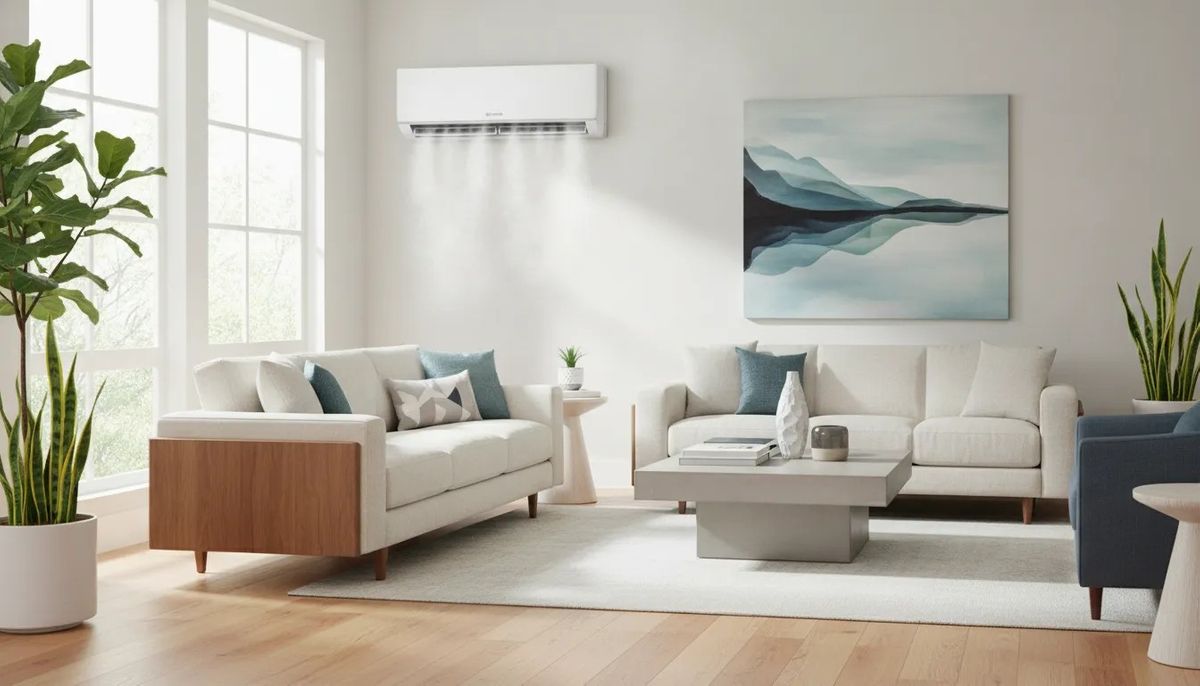
By contrast, a ductless system uses indoor air handlers that sit right in your rooms. These units are visible, but they offer many setup choices. Based on facts from Energy.gov, these indoor units can mount on walls, hang from ceilings, or stand on the floor.
Designing for condos and converted rooms
Many Bay Area homes also include converted attics, garages, or sleek new condos. These spaces often do not connect to a central heating or cooling system. Trying to run new ducts to a converted garage or attic is hard and costs too much.
A ductless setup is the perfect fit here. You can place a single indoor unit on the wall of a converted loft or guest room. It gives direct comfort right where you need it without taking up floor space or needing heavy build work.
Which Cooling Option Is Best for Your Bay Area Home?
Choosing between a ductless mini split vs central AC is a major choice for any Bay Area homeowner. The right system depends on your home's current layout, your budget, and your comfort goals. To make the best choice, you need to look at your existing setup and how you use each room.
Home structure and layout
If your home already has air ducts, a traditional central AC installation might be the simplest route. But central AC systems need existing ductwork to work well. In older Bay Area homes, installing new ducts is often very hard and costly. For these homes, ductless mini-split benefits make them a highly common choice.
Ductless options also save a lot of power. Standard duct systems in attics or crawl spaces lose 25% to 40% of their cooling energy. This is based on studies from the U.S. Department of Energy. By skipping these ducts, you keep more cool air inside your home and save money on your bills.
Key steps to decide
Use these simple steps to find the right path for your household comfort needs. We recommend walking through each factor to find the best fit:
Check for existing ductwork. Central systems need pre-installed ducts to distribute air. If your older home lacks them, a ductless setup is usually much simpler to set up.
Consider the age and design of your home. Many older Bay Area homes were built without ducts. Adding them can require tearing open walls and losing valuable closet space.
Analyze your zoning needs. Mini-splits let you cool rooms on demand instead of wasting power. Central systems cool the whole house at once, which can run up your utility bills.
Identify new additions or converted spaces. According to Energy.gov, mini-splits are ideal for room additions and small spaces where extending ducts is not practical.
Compare long-term energy efficiency and your budget. Ductless systems avoid duct energy losses that often account for more than 30% of space-cooling energy use. These monthly savings help offset the initial purchase cost of your equipment.
The value of expert guidance
Every house in our region is unique, with distinct microclimates and build styles. Before you buy any system, it is best to get expert advice on your space. You can contact Ortiz to get a professional, personalized in-home assessment for your next installation.
Talk to a local HVAC expert about ductless mini split vs central AC for your home and get honest advice before you invest.
Frequently Asked Questions
Is it cheaper to run a mini split or central AC?
Yes, ductless mini-split systems are mostly cheaper to run than central air conditioning. Central systems lose a lot of energy through their ducts. Indeed, reports from the U.S. Department of Energy show that ducted systems in attics lose 25% to 40% of their cooling. Since mini-splits do not use ducts, they avoid these losses and use less power.
What are the disadvantages of a ductless mini split?
The main downsides of a mini-split are high upfront costs and the need for expert placement. As noted by Energy.gov, these systems often cost more than central systems if you already have ducts. Also, if a tech installs a unit that is too big or puts it in a bad spot, it can short-cycle. This wastes energy and leaves the air damp.
How much does a mini split cost for a 2000 sq ft house?
The cost of a mini-split for a 2000 square foot home depends mostly on the number of zones you need. As stated by Energy.gov, these systems often cost more than central units if you do not count ductwork. Since a larger home needs many indoor units, the layout of your rooms will set the final price. You can contact Ortiz for a free estimate on new systems.
Ready to Find the Best Cooling Option for Your Bay Area Home?
Going through a hot summer without proper cooling makes your older Bay Area home very warm, wastes a lot of energy, and leads to high power bills. Setting up a smart, modern system now ensures your family stays cool and cozy before the next major heatwave hits your neighborhood. You can also check our ductless mini-split guide to learn how these modern units keep you cool without needing any complex ductwork changes.
Ready to contact us? Schedule a free consultation today with our local experts to set up your new, high-quality cooling equipment. Our expert team is always here to make sure your home stays nice and cool during the warmest months of the year.