
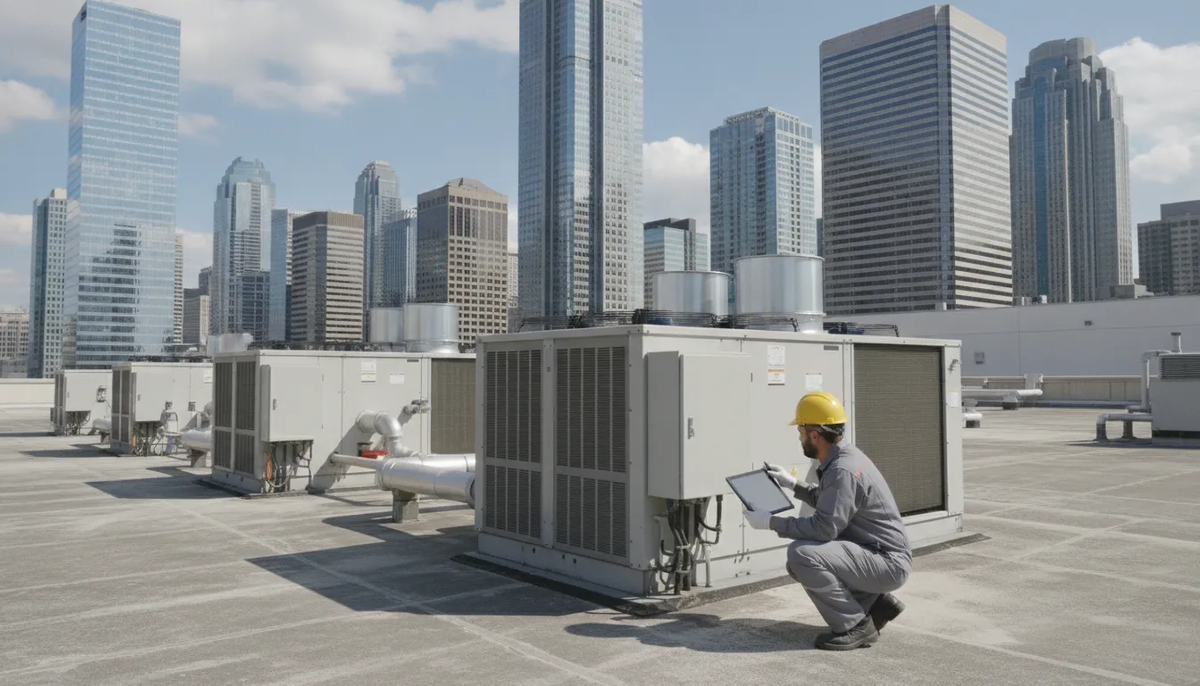
A commercial building can feel comfortable in one area and noticeably too warm or cold in another, even on the same Bay Area day. Interior zones often need cooling throughout the year because of lighting, equipment, and occupant heat, while perimeter rooms may switch between heating and cooling as outdoor conditions change.
Choosing commercial HVAC Bay Area businesses can rely on starts with matching the system to the building's zones, occupancy, equipment loads, local climate, and applicable codes. Commercial systems may range from stand-alone units serving one room to centrally controlled equipment serving multiple zones. So the right solution depends on how the space is used and how its needs change over time.
The U.S. Environmental Protection Agency identifies building use, climate, age, codes, and budget as key influences on HVAC design (EPA guidance). Understanding those differences makes it easier to compare system types, plan maintenance, and protect indoor comfort without treating a commercial building like a larger home.
Why Commercial HVAC Systems Are Different from Residential
Commercial buildings rarely have one uniform comfort need. A single property may contain open offices, conference rooms, server or equipment areas, storage space, retail areas, and perimeter rooms with exterior walls. Each zone can gain or lose heat at a different rate, so a commercial HVAC system must respond to several thermal loads at the same time.
Different zones can need heating and cooling simultaneously
Interior spaces often stay warm because of lighting, occupants, computers, and other equipment. In large modern office buildings, those heat gains can make year-round cooling necessary even during cooler weather. At the same time, perimeter rooms are affected by changing outdoor conditions through windows, walls, roofs, and floors. One side of a building may need heat while an interior zone still needs cooling. The U.S. Environmental Protection Agency describes this contrast as a defining commercial HVAC challenge: interior areas may require year-round cooling. While perimeter areas may need heating or cooling as weather changes throughout the day.
Residential systems generally serve a smaller number of spaces with more similar schedules and loads. Commercial equipment must coordinate airflow, temperature control, and ventilation across occupied areas that may have different uses and operating hours. Poor zoning can leave one room uncomfortable while another is over-conditioned.
System scale and design vary with the building
Commercial HVAC is not one standard equipment category. Systems can range from stand-alone units serving individual rooms to large, centrally controlled systems serving multiple zones. The right approach depends on the building's age, climate exposure, applicable codes, available budget, and planned use, according to the EPA's commercial HVAC guidance.
That evaluation matters for businesses seeking commercial HVAC Bay Area solutions. A design that works for a small office may be unsuitable for a restaurant, medical space, warehouse, or multi-zone commercial property. Equipment capacity, controls, distribution, ventilation, and future operating needs all deserve consideration before installation or replacement. A professional assessment connects the system to the way the building is actually used, rather than treating the entire property as one room.
Key Commercial HVAC System Types for Bay Area Buildings
Commercial buildings rarely have identical heating and cooling needs from room to room. Interior spaces may need cooling through much of the year because of people, lighting, and equipment, while perimeter rooms can require heating or cooling as outdoor conditions change. The right equipment depends on the building layout, occupancy, zoning goals, available space, and the level of control the business needs. The U.S. Environmental Protection Agency notes that commercial HVAC systems range from stand-alone units serving one room to centrally controlled systems serving multiple zones. Read the EPA overview of commercial HVAC systems.
Common HVAC options for Bay Area commercial buildings
Rooftop unit (RTU): A packaged heating and cooling system installed above the occupied space, typically serving one or more zones through ductwork. | Retail stores, offices, restaurants, and other buildings with suitable roof access. | Roof condition, duct layout, access for service, and the way perimeter and interior zones are divided.
VRF system: A variable refrigerant flow system that connects multiple indoor units to outdoor equipment, allowing more individual zone control. | Buildings with several rooms or tenants that need different temperature settings. | System design is more involved, so refrigerant piping, controls, zoning, and long-term service support matter.
Packaged unit: A self-contained system that combines major heating and cooling components in one cabinet. | Small commercial buildings where a straightforward, compact configuration is practical. | Confirm capacity, airflow, ventilation requirements, and replacement access before selecting equipment.
Split system: Indoor and outdoor components work together, with the indoor equipment connected to ductwork or air distribution. | Offices, small retail spaces, and additions where equipment placement can be separated. | Indoor unit location, outdoor clearance, duct condition, and the number of zones influence performance.
Heat pump: A system that transfers heat to provide cooling and reverses operation to provide heating. | Businesses seeking one system for both heating and cooling, subject to the building's design and electrical capacity. | Evaluate load requirements, backup heat, controls, and how the system will serve both perimeter and interior areas.
For light commercial properties under 20,000 square feet, Ortiz specializes in matching equipment and zoning strategy to the building rather than treating every installation as the same. As a Carrier Authorized Dealer, Ortiz can support Carrier equipment with factory-backed resources and genuine parts. A professional evaluation should account for the full system complexity, including controls, ductwork, ventilation, and service access, not just the outdoor unit or equipment label.
Navigating Bay Area Energy Codes and Regulations for Commercial HVAC
Commercial HVAC planning in the Bay Area involves more than choosing equipment with a high efficiency rating. A compliant design must account for California's Title 24 energy code, local air-quality requirements, building use, and the conditions at the property itself. Because the region includes five distinct microclimates, a system that performs well in a coastal office may not deliver the same comfort or efficiency in an inland facility. Zone-specific load planning is essential.
Title 24 and the move away from gas equipment
Title 24 compliance affects equipment selection, controls, ventilation, and documentation for many commercial projects. It is important to evaluate these requirements during planning rather than after installation, when changes can be costly. California's scheduled 2027 phase-out of new gas furnace installations adds another consideration for businesses replacing aging equipment. Owners should discuss electric heat pump options, electrical capacity, zoning, and anticipated operating conditions early in the project.
Dynamic climate loads make that evaluation especially important. Exterior rooms may need heating or cooling as weather changes throughout the day, while interior areas can continue requiring cooling because of people, lighting, and equipment. The U.S. Environmental Protection Agency describes this contrast in its commercial HVAC guidance. Correct zoning and controls help the system respond to those changing demands instead of conditioning every area the same way.
BAAQMD service and maintenance expectations
The Bay Area Air Quality Management District's commercial HVAC service benchmarks call for regular and on-call heating, ventilation, and air conditioning services. These benchmarks reinforce the value of documented maintenance, timely repairs, and qualified technicians who understand the equipment serving a facility. Maintenance also supports reliable ventilation and helps identify issues before they affect comfort or indoor air quality.
Ortiz Heating and Air Conditioning brings 25 years of local experience to commercial HVAC projects. That experience matters when Title 24, the 2027 gas transition, BAAQMD expectations, and Bay Area microclimates all intersect. A local evaluation can connect the code requirements to the building's actual zones, occupancy, and operating goals.
Preventive Maintenance Protects Your Commercial HVAC Investment and Air Quality
Commercial HVAC maintenance is about more than avoiding an uncomfortable office. These systems typically support several building functions at once: heating, cooling, filtering outdoor air, and humidity control. When a component falls out of adjustment, the result can affect employee comfort, equipment performance, energy use, and indoor air quality.
Maintenance supports healthier indoor air
The U.S. Environmental Protection Agency notes that many office buildings contain significant indoor air pollution sources. While some mechanical ventilation systems are not designed or operated to provide adequate outdoor air. That makes routine inspection especially important in commercial settings. Filters, outdoor-air intakes, dampers, coils, and controls all need to work together so the building receives the ventilation its design requires.
A preventive visit can identify restricted filters, obstructed intakes, unusual airflow, humidity problems, and controls that no longer match the way a space is being used. These checks help building managers address developing issues before occupants begin reporting persistent odors, stuffiness, hot and cold spots, or declining comfort. The EPA explains the relationship between HVAC equipment, filtered outdoor air, humidity control, and comfort in its HVAC and indoor air quality guidance.
Commercial systems need a planned service schedule
Commercial equipment often serves multiple zones and operates under changing loads throughout the day. A maintenance plan should account for the system type, building use, occupancy patterns. Seasonal conditions, and the condition of components that are difficult to monitor from a thermostat alone. Regular service can also reveal when a system needs adjustment, repair, or replacement rather than waiting for a disruptive breakdown.
For businesses evaluating commercial HVAC Bay Area support, Ortiz Heating and Air Conditioning provides commercial HVAC maintenance for facilities that need dependable operation and closer attention to air quality. A qualified technician can review the equipment, ventilation performance, and service priorities, then recommend a practical maintenance approach for the building. Preventive care protects the investment you have already made while helping your team maintain a more comfortable, better-managed indoor environment.
Choosing the Right Commercial HVAC Partner in the Bay Area
For a business owner, selecting an HVAC contractor is about more than finding someone who can replace a component or install a rooftop unit. The right partner should understand your building, communicate clearly, respect your operating schedule, and remain accountable after the work is complete. Those standards matter whether you manage a professional office, retail location, restaurant, warehouse, or another light commercial facility.
Start by looking for demonstrated local experience. Bay Area buildings operate across distinct microclimates. And a contractor familiar with local conditions can make more practical recommendations than a large corporate provider applying a generic regional formula. Ortiz Heating and Air Conditioning brings 25 years of local experience and serves businesses across San Francisco, San Mateo, Alameda, and Contra Costa counties. That reach provides local familiarity while keeping the relationship personal.
Credentials are another useful screening tool. Ortiz is Diamond Certified, BBB A+, and a Carrier Authorized Dealer. These designations do not replace a detailed project conversation, but they give business owners meaningful signals about professionalism, manufacturer support, and accountability. As a Carrier Authorized Dealer, Ortiz can provide factory-backed support and genuine parts for qualifying Carrier equipment.
Ownership structure also affects the service experience. Ortiz is owner-operated, with Alex Ortiz personally involved in the business and its customer relationships. That direct accountability can be valuable when a project involves several decisions, coordination with other trades, or an urgent comfort problem. Instead of being passed through layers of a corporate organization, you have a local team that knows the work and stands behind the relationship. Learn about our team.
Scheduling and estimating policies deserve attention before you sign. Ortiz offers one-hour appointment windows, helping managers plan around employees, customers, and deliveries. Free estimates are available for qualifying new equipment additions or replacements, such as a furnace, air conditioner, heat pump, or duct system. Repairs and diagnostics are different: they carry a service fee, followed by a repair quote once the issue is identified.
Finally, compare the contractor's actual scope with your facility's needs. Ortiz focuses on light commercial systems for facilities under 20,000 square feet. Review the available expert commercial HVAC services, ask who will oversee the project, and confirm how maintenance and follow-up support are handled. For businesses seeking a commercial HVAC Bay Area partner with local knowledge and owner-level accountability, those questions can separate a dependable long-term relationship from a short-term transaction.
Frequently Asked Questions
What does a commercial HVAC company in the Bay Area handle?
A commercial HVAC contractor can assess building loads, recommend appropriately sized equipment, install or replace systems, maintain existing units, troubleshoot failures, and improve ventilation and indoor air quality. Services may support offices, retail spaces, restaurants, warehouses, and other light commercial facilities. The right approach depends on the building's size, layout, age, occupancy, use, and local requirements.
How much does a new commercial HVAC system cost in the Bay Area?
There is no reliable flat price because commercial HVAC costs depend on equipment capacity. The number of zones, ductwork, electrical or gas connections, controls, access, permitting, and the condition of the existing system. A qualified contractor should evaluate the building and provide a written proposal that separates equipment, installation, and any required upgrades. Ortiz provides free estimates for qualifying new or replacement equipment, while repairs and diagnostics include a service fee.
Why is preventive maintenance important for commercial HVAC systems?
Preventive maintenance helps identify worn components, restricted airflow, refrigerant issues, and control problems before they become disruptive failures. It also gives a technician the opportunity to inspect filters, outdoor-air intake, coils, drains, and safety controls. Because commercial HVAC manages heating, cooling, filtered outdoor air, and humidity control, maintenance supports comfort and air quality as well as equipment reliability. The EPA notes that some office buildings may not provide adequate outdoor air through their mechanical ventilation systems: EPA guidance.
What should Bay Area businesses ask about indoor air quality?
Ask whether the system is delivering adequate outdoor air, whether filtration matches the building's needs, and how often filters and ventilation components are inspected. Also discuss humidity control, occupancy changes, odors, dust, and areas that feel consistently stuffy. Temperature alone does not measure indoor air quality, so a maintenance plan should address ventilation and filtration alongside heating and cooling performance.
Ready to Plan Your Commercial HVAC Installation?
The right equipment and installation approach can support dependable comfort, healthier indoor air, and compliance across your Bay Area facility. Schedule a free consultation for qualifying new commercial HVAC equipment and discuss your building's needs with the Ortiz team. Request your free estimate online or call to get started.