Many business owners assume that a commercial HVAC system is just a bigger, more powerful version of the one they have at home. In reality, they are fundamentally different machines. Commercial systems are built to handle larger, more complex spaces with varying needs, from a hot kitchen to a cool server room. They are designed for heavy-duty, constant use and often require sophisticated zoning and ventilation strategies. This complexity means that choosing, installing, and maintaining one requires specialized expertise. This article will demystify the world of commercial HVAC, explaining the key differences and guiding you through the process of finding the perfect solution for your business.
Key Takeaways
Prioritize a custom fit for your building: A commercial HVAC system is not an off-the-shelf product; a professional assessment of your space's size, layout, and usage is essential for efficient performance and consistent comfort.
Treat maintenance as an investment, not a cost: Proactive care is the smartest way to manage your HVAC expenses, as a regular maintenance plan lowers energy bills, extends equipment life, and helps you avoid disruptive emergency repairs.
Your HVAC partner matters as much as the hardware: The best equipment will underperform if installed incorrectly, so choosing a qualified contractor is critical for ensuring proper installation, long-term reliability, and expert support.
What is a Commercial HVAC System?
If you’re a business owner, your HVAC system is one of the most important pieces of equipment in your building. It’s the unsung hero that keeps your employees productive, your customers comfortable, and your environment healthy. But a commercial system is a bit different from the one you have at home. Let's break down what makes it unique and why it’s so crucial for your business operations.
Understanding the Core Components
When you hear the term "commercial HVAC," it simply stands for Heating, Ventilation, and Air Conditioning. Think of it as the hardworking system that keeps your business comfortable and safe for everyone inside. Its main job is to heat, cool, and ventilate your building to maintain a pleasant temperature, usually around 72 degrees, with balanced humidity. But it does more than just temperature control. A quality system is also essential for maintaining healthy indoor air quality. It works constantly to remove stale air, pollutants, and odors while bringing in fresh, clean air from outside. This process helps keep CO2 levels in check and creates a healthier environment for your team and customers.
Commercial vs. Residential: What's the Difference?
You might be wondering if a commercial system is just a bigger version of the one you have at home. While the basic principles are similar, commercial and residential HVAC systems are fundamentally different. Commercial units are much larger and more powerful, built to handle the demands of bigger spaces and more people. They're also designed for more frequent, heavy-duty use. Because businesses often have varied needs, like a hot kitchen in a restaurant or specific ventilation for a lab, their commercial HVAC systems are far more complex. They often need to manage multiple temperature zones within the same building, ensuring every area from the front office to the warehouse stays comfortable. This complexity requires specialized expertise for proper installation and maintenance.
Exploring Common Types of Commercial HVAC Systems
When it comes to heating and cooling your business, there’s no single solution that works for everyone. The right system depends on your building's size, layout, and specific needs. Understanding the most common types of commercial HVAC systems is the first step toward making a smart investment for your space. From compact, all-in-one units to powerful systems designed for large-scale facilities, each type offers unique benefits for keeping your employees and customers comfortable. Let's look at five popular options you'll encounter.
Packaged Systems
Think of a packaged system as an efficient, all-in-one solution where every component is housed in a single cabinet. Because they contain everything in one box, these units are fantastic for businesses with limited indoor space. You’ve likely seen a common type, the packaged terminal unit, in hotel rooms where guests control their own temperature. This self-contained design simplifies installation and maintenance, making it a practical choice for commercial applications where you want to maximize interior square footage. They are a go-to for buildings that can't spare an indoor mechanical room.
Split Systems
If you’re familiar with your home’s HVAC setup, you already have a good idea of how split systems work. They operate similarly to residential HVAC systems, with separate indoor and outdoor units connected by ductwork. The outdoor unit holds the compressor and condenser, while the indoor unit has the evaporator coil and air handler. This setup is ideal for smaller commercial buildings, like retail shops or cafes. Split systems provide reliable heating and cooling, offering a familiar and effective way to manage the climate in more modestly sized business environments.
Rooftop Units (RTUs)
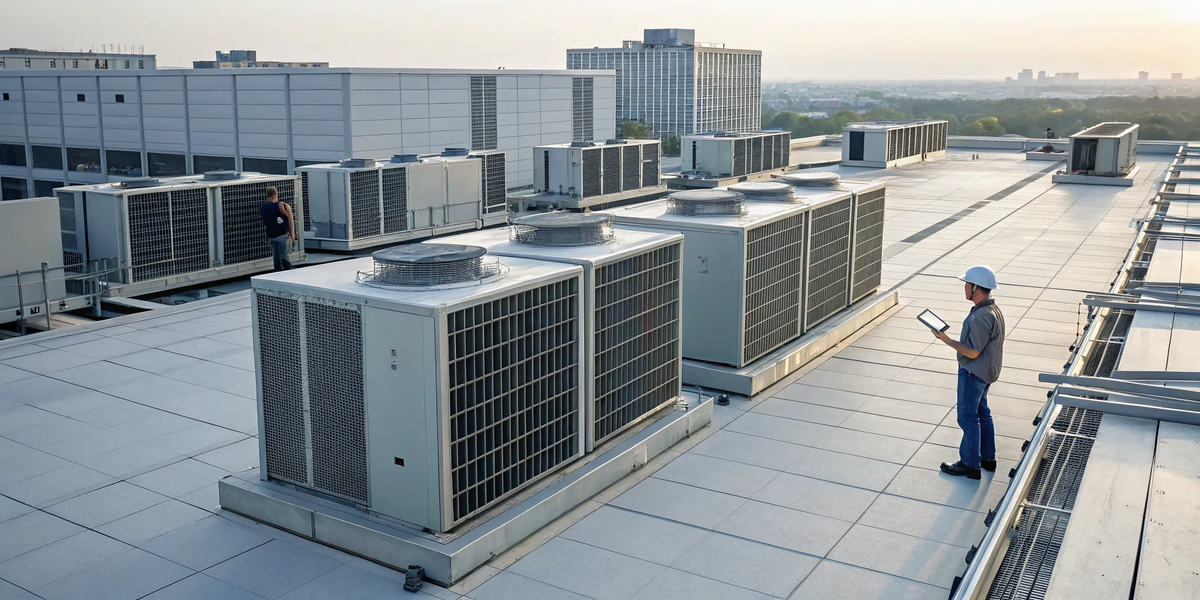
Rooftop units, or RTUs, are a popular type of packaged system designed to be installed on the roof of a building. Because they arrive fully assembled and are placed out of the way, they offer two major advantages: they save valuable indoor space and operate quietly without disturbing anyone inside. RTUs can provide heating, cooling, or both, making them a versatile choice for many commercial buildings, from restaurants to big-box stores. By moving the equipment outside and overhead, you free up prime real estate inside your business for operations.
Variable Refrigerant Flow (VRF) Systems
For businesses needing precise temperature control in different areas, Variable Refrigerant Flow (VRF) systems offer a modern, ductless approach to climate management. These systems use refrigerant to move heat between zones, allowing you to simultaneously heat one room while cooling another. This is perfect for buildings with diverse needs, like an office with a hot server room and a chilly conference room. By delivering the right amount of heating or cooling to each zone, VRF systems enhance comfort and can significantly improve energy efficiency, since you aren't wasting energy on unoccupied spaces.
Chiller Systems
When it comes to cooling large commercial buildings, chiller systems are the heavy-duty solution. You’ll find these powerful systems in places like hospitals, universities, and large office towers where maintaining a consistent, cool temperature is critical. Chillers work by removing heat from a liquid, which is then circulated through pipes to cool the building's air. While they are a component of a larger HVAC setup, their ability to provide efficient cooling for extensive spaces makes them essential for many large-scale commercial operations. They are truly built for performance on a grand scale.
The Benefits of Different Commercial HVAC Systems
Choosing the right commercial HVAC system is a strategic business decision that impacts your operating costs, employee productivity, and customer comfort. The right system can deliver significant energy savings while creating a perfectly tailored environment for your Bay Area business. When you understand the key benefits, you can make an informed choice that pays off for years. Let's look at some of the biggest advantages.
Saving Energy and Money
Your HVAC system is a major energy consumer, so efficiency is everything. Modern systems are designed to minimize waste, which translates directly into lower utility bills. Many now use eco-friendly refrigerants and high-efficiency designs to reduce their carbon footprint and your operating costs. But the savings don't stop there. Committing to a preventive maintenance plan is one of the smartest financial decisions you can make. Regular tune-ups can lower energy expenses by up to 40% by preventing costly breakdowns and extending the life of your equipment. It’s a simple way to protect your investment.
Finding the Right Fit for Your Space
Every commercial space is unique, and your HVAC system should be, too. A system that’s too small will struggle to keep up, while one that’s too large will cycle inefficiently, wasting energy. The first step is always a thorough evaluation of your building’s specific needs, from square footage and ceiling height to window placement. This careful planning ensures your system provides consistent comfort and operates at peak efficiency. Getting expert advice on your commercial HVAC services helps you avoid the common pitfalls of an improperly sized system and ensures you get the performance you expect from day one.
Controlling Comfort with Zoning
Zoning solves the classic "too hot here, too cold there" problem by dividing your space into distinct areas, each with its own thermostat. This allows you to set different temperatures for different needs. For instance, you can keep the customer-facing lobby comfortable, the server room cool, and an unused conference room at an energy-saving temperature. This level of control keeps everyone happy and prevents you from wasting money heating or cooling empty spaces. A well-designed zoning system is a key feature to discuss during your HVAC installation, as it provides customized comfort and impressive energy savings.
How to Choose the Right HVAC System for Your Business
Selecting the right HVAC system for your business is a major decision that affects your employees' comfort, your customers' experience, and your bottom line. It’s not a one-size-fits-all situation. The best choice depends on your unique space, how you use it, your budget, and even our local Bay Area climate. By thinking through these key factors, you can find a system that works efficiently for years to come.
Consider Your Building's Size and Layout
The first step is to evaluate your physical space. A system that’s too small will struggle to keep up, while one that’s too large will cycle on and off constantly, wasting energy and leading to premature wear. We look at more than just square footage. We consider ceiling height, the number and type of windows, the quality of your insulation, and the overall layout of your building. A professional assessment ensures you get a system that’s perfectly sized to heat and cool your space effectively without wasting a dime. Proper sizing is the foundation of an efficient commercial HVAC system.
Factor in Occupancy and Usage
Think about how your space is used day-to-day. An open-plan office filled with people and heat-generating computers has very different needs than a spacious retail store or a quiet warehouse. Do you have a server room that needs constant cooling or a commercial kitchen with specific ventilation requirements? The number of people in your building and the activities they perform create a unique thermal load. A well-chosen HVAC system maintains a comfortable and productive environment for everyone, which is crucial for keeping both employees and customers happy. It also plays a big role in maintaining healthy indoor air quality.
Analyze Your Budget and Long-Term Costs
While the initial price tag is important, it’s only one piece of the puzzle. The true cost of an HVAC system includes the upfront purchase, installation, monthly energy bills, and ongoing maintenance. Investing in a high-efficiency model might cost more initially, but it can lead to significant savings on your energy bills over the life of the unit. It’s helpful to think about the total cost of ownership. We can help you explore different options and provide a free estimate that balances upfront costs with long-term operational savings, ensuring you make a smart financial decision for your business.
Account for Your Local Climate
Here in the Bay Area, the weather can change in an instant. It can be foggy and cool in San Francisco while just a few miles away in the East Bay, it’s sunny and hot. Our unique microclimates demand an HVAC system that is both powerful and adaptable. A system designed for our specific climate will operate more efficiently, saving you money on energy costs, which are among the highest in the country. As a local business, we understand the specific challenges and regulations of the areas we serve and can recommend a system that’s perfectly suited to handle our coastal mornings and inland heatwaves.
What to Expect During a Commercial HVAC Installation
A commercial HVAC installation is a significant upgrade for any business, and knowing what the process involves can make it feel much more manageable. It’s more than just swapping out an old unit for a new one. A professional installation is a detailed process that involves careful planning, precise calculations, and expert execution to ensure your new system runs efficiently for years to come. From the initial assessment of your space to the final checks, every step is designed to create a comfortable and healthy environment for your employees and customers. At Ortiz, we believe in transparency, so let’s walk through the key stages of a professional commercial HVAC installation. This will help you understand what to expect when you partner with a trusted team to handle this important project for your business.
Following Professional Standards
When it comes to your business, you can't afford to cut corners. A professional installation is crucial because improper work can lead to a host of problems, from reduced efficiency and higher energy bills to a shorter lifespan for your entire system. A certified team follows strict industry standards and local building codes to guarantee everything is done correctly and safely. This commitment to professional standards ensures your system provides consistent, reliable comfort throughout your commercial space. It’s about more than just getting the system running; it’s about a quality installation that protects your investment and gives you peace of mind knowing the job was done right the first time.
Sizing and Designing Your System
Choosing the right commercial HVAC system isn't like buying an off-the-shelf appliance. Size and capacity are critical, and a system that’s too big or too small for your space will struggle to work efficiently. That’s why a key part of the installation process is a thorough assessment of your building. A technician will perform a detailed load calculation, considering factors like square footage, ceiling height, insulation, window types, and even the amount of heat generated by people and equipment. This data is used to design a system that is perfectly tailored to your needs, creating a space that’s both cost-effective and functional. This customized approach ensures optimal performance and energy savings.
Planning for Ventilation and Air Quality
A great HVAC system does more than just control the temperature; it also manages your building's air quality. Proper planning is the first step to ensure your system meets your building’s unique ventilation requirements. During the design phase, your HVAC partner will map out the ductwork to ensure efficient and balanced airflow to every corner of your space. This is also the perfect time to discuss indoor air quality solutions, like advanced filtration or humidification systems. A well-designed ventilation plan helps remove stale air and pollutants, creating a healthier and more productive environment for everyone who walks through your doors.
Integrating Zoning and Automation
Modern commercial buildings often have diverse needs. An open-plan office has different heating and cooling requirements than a server room or a corner conference room. This is where zoning comes in. By dividing your building into different zones, you can control the temperature in each area independently, which optimizes both comfort and energy efficiency. During your installation, you can integrate a zoning system controlled by smart thermostats. This allows for automated scheduling and remote adjustments, giving you precise control over your environment. It’s a smart way to stop paying to heat or cool unused spaces and ensure every part of your building is perfectly comfortable.
Keeping Your System Running: Commercial HVAC Maintenance
Your HVAC system is one of the most significant investments in your commercial property, working hard behind the scenes to keep your employees and customers comfortable. Just like any other critical piece of equipment, it needs regular attention to perform at its best. Proactive care is the key to preventing costly disruptions and ensuring your system runs smoothly for years to come. Setting up a consistent maintenance plan isn't just about ticking a box; it's about protecting your investment, managing your budget, and creating a consistently pleasant environment for everyone in your building.
Think of it as a health checkup for your building's most important system. A little preventive care goes a long way in avoiding emergency calls and extending the life of your equipment. With a solid commercial maintenance plan, you can catch small issues before they turn into major headaches, ensuring your business operations continue without a hitch.
Why a Preventive Maintenance Schedule Matters
Waiting for your HVAC system to break down before calling a technician is a recipe for stress and unexpected expenses. A preventive maintenance schedule shifts your approach from reactive to proactive. Regular checkups are essential for keeping your commercial HVAC system operating efficiently and reliably. They help prevent sudden failures that can shut down your business and extend the overall lifespan of your equipment. By having a professional inspect your system on a consistent basis, you can ensure it’s always ready to handle the Bay Area’s changing weather, giving you peace of mind and predictable operational costs.
The Importance of Clean Filters and Coils
It might sound simple, but one of the most common causes of HVAC problems is dirt. Over time, dust and debris accumulate on filters and coils, forcing your system to work harder to heat or cool your space. This strain not only drives up your energy bills but can also lead to equipment damage. In fact, just a tiny layer of dirt on your system's condenser coils can reduce its cooling efficiency by over 20%. Regular cleaning and filter changes are non-negotiable for performance. Professional maintenance services ensure these crucial components stay clean, helping you avoid much larger repair needs in the future.
Spotting Common Warning Signs
You know your building better than anyone, so you’re in the best position to spot when something is off. If your HVAC system starts making unusual noises like squeaking, rattling, or hissing, it’s a clear signal that it needs immediate attention. Other red flags include strange odors, inconsistent temperatures from room to room, or a sudden, unexplained increase in your utility bills. Don't ignore these signs. Turning off the system and calling for professional HVAC repairs right away can prevent a minor issue from becoming a catastrophic failure that impacts your business.
How Regular Maintenance Saves You Money
While a maintenance plan has an upfront cost, it pays for itself many times over. Consistent, preventive care can lower your business’s energy costs by as much as 40% by ensuring the system runs at peak efficiency. It also helps you avoid the high price of emergency repairs and premature system replacement. A well-maintained HVAC unit can last up to 15 years longer than one that's neglected. This small investment in routine checkups protects your budget from big, unexpected hits and keeps your system running reliably for the long haul.
Understanding Commercial HVAC Costs
Investing in a commercial HVAC system involves more than just the initial price tag. To make a smart financial decision for your business, it's helpful to look at the full picture, from the day of installation to long-term operating expenses. A well-planned system is one that fits your budget today and saves you money for years to come. Understanding these different costs will help you prepare your budget and choose a system that delivers comfort and value. Let's break down the key financial components you'll encounter.
Upfront Purchase and Installation
The initial cost of a new commercial HVAC system is a significant investment, but it’s important to balance this with long-term energy efficiency. The right system for your business depends on your building's unique needs, and proper planning is the first step to ensuring it performs correctly. A cheaper unit might save you money at first, but if it’s inefficient or improperly sized, it could lead to higher energy bills and more frequent repairs. Working with a professional ensures your commercial HVAC installation is designed for cost-effective and reliable operation from day one.
Ongoing Maintenance and Repairs
Think of routine maintenance as a necessary investment, not an optional expense. Regular check-ups are essential for keeping your commercial HVAC system running efficiently and extending its lifespan. Skipping cleanings and tune-ups can cause your system to work harder, consume more energy, and break down sooner. A proactive maintenance plan helps you catch small issues before they become expensive emergencies, ensuring consistent comfort for your employees and customers while protecting your bottom line. Delaying standard care will almost always lead to bigger, more costly problems down the road.
Monthly Energy Bills
Your monthly energy bill is a major part of the total cost of owning an HVAC system. An energy-efficient unit can make a huge difference in your operating expenses. Modern systems are designed to provide powerful heating and cooling while using less energy, which is great for both your budget and the environment. Simple practices, like using a programmable thermostat to adjust the temperature when your building is empty, can also lead to significant savings. Proper planning and professional installation are key to maximizing the energy-saving potential of your commercial HVAC services.
Exploring Financing and Leasing
The upfront cost of a new commercial HVAC system can be a hurdle for many businesses. Fortunately, financing and leasing options are often available to make this essential investment more manageable. These plans allow you to spread the cost over time, freeing up capital for other business needs. It’s important to discuss the pros and cons of different systems and payment options with a trusted HVAC partner. They can help you find a solution that fits your budget and functional requirements. When you're ready, you can get a free estimate to start exploring what works best for your space.
Finding a Trusted Commercial HVAC Partner
Choosing the right HVAC system is a big decision, but finding the right team to install and maintain it is just as critical. A great HVAC partner acts as a consultant, guiding you through the process to ensure you get a solution that fits your business perfectly. They’ll help you avoid common pitfalls and set you up for long-term efficiency and comfort, making them an invaluable asset for your business operations.
What to Look for in a Quality Brand
When you're vetting potential HVAC companies, look for a team that prioritizes a custom approach. They should start with a thorough assessment of your building, because proper planning is the first step to getting a system that meets your unique needs. A one-size-fits-all solution rarely works for commercial spaces. The right partner will carefully size the system based on your square footage, layout, and usage to ensure optimal performance without wasting energy. They should also be transparent about cost and energy efficiency, helping you weigh the upfront investment against long-term savings. Look for a company with a proven track record, clear certifications, and positive customer reviews that speak to their reliability and expertise.
Why Choose Ortiz for Your Commercial HVAC Needs
At Ortiz, we believe in a partnership approach for all our commercial clients. We begin every project by assessing your specific needs, from your building’s layout to your budget, ensuring the system we recommend is the right fit. Our 25 years of experience in the Bay Area means we understand the unique demands of our local climate and business community. Our certified technicians handle every installation with precision, optimizing zone controls, thermostats, and airflow to support maximum energy savings. We’re committed to providing a solution that not only keeps your space comfortable but also contributes positively to your bottom line. When you work with us, you get a dedicated team focused on quality, efficiency, and your complete satisfaction.
Common Commercial HVAC Problems to Watch For
Even with a top-of-the-line system and a solid maintenance plan, issues can still pop up. The key is catching them early before they turn into major headaches that disrupt your business and your budget. Being aware of the common culprits can help you spot trouble right away. Here are a few of the most frequent commercial HVAC problems we see and what they mean for your system.
Dirty Coils and Clogged Filters
It might not seem like a big deal, but a little bit of dust can cause a lot of trouble. When dirt builds up on your system's coils and clogs the air filters, it forces the unit to work much harder to cool or heat your space. In fact, just a tiny layer of dirt on the condenser coils can slash your cooling efficiency by over 20%. This not only leads to higher energy bills but also puts extra strain on the equipment, shortening its lifespan. The best defense is a good offense: regular HVAC maintenance that includes cleaning coils and swapping out filters is essential for keeping your system running smoothly and efficiently.
Refrigerant Leaks
Refrigerant is the lifeblood of your air conditioning system, responsible for absorbing heat and cooling the air. When it starts to leak, your system's performance takes a nosedive. You might notice it isn't cooling as effectively, or you might see your energy costs creep up as the unit struggles to compensate. Ignoring a refrigerant leak is a recipe for disaster, as it can lead to serious compressor damage. If you suspect a leak, it’s important to call for professional HVAC repairs right away. A technician can locate the source of the leak, fix it, and recharge the system to the proper levels, restoring its efficiency and preventing further issues.
Economizer Issues
Many commercial HVAC systems have a feature called an economizer, which is a fantastic energy-saving tool. It works by pulling in cool outside air instead of running the compressor when the weather is mild. The problem is, they often go unnoticed when they stop working correctly. Studies have shown that a majority of rooftop units have malfunctioning economizers, which means businesses are missing out on significant energy savings. A faulty economizer can get stuck open or closed, wasting energy and compromising your indoor air quality. Regular checks during your commercial service appointments can ensure this valuable component is doing its job and saving you money.
Strange Noises or Poor Performance
Your HVAC system should operate relatively quietly in the background. If you suddenly start hearing squealing, rattling, booming, or hissing sounds, it’s your system’s way of telling you something is wrong. These noises are never normal and often point to mechanical problems, like a failing motor, a loose part, or a ductwork issue. Don't just turn up the music and hope it goes away. The best thing you can do is shut the system down to prevent further damage and place an HVAC service call immediately. A quick response can often mean the difference between a simple fix and a complete system failure.
Making a Smart Commercial HVAC Investment
Choosing a new HVAC system for your business is a big deal. It’s one of the most significant investments you’ll make in your physical space, and the right choice can pay off for years to come. A great system keeps your employees and customers comfortable, improves indoor air quality, and helps manage your monthly utility bills. But the wrong one can lead to high energy costs, frequent repairs, and a lot of headaches.
Making a smart investment means looking beyond the initial price tag. You need to consider the system's long-term performance, energy efficiency, and ability to adapt as your business evolves. It’s about finding a solution that fits your needs today and supports your goals for tomorrow. This decision impacts everything from your team's productivity to your bottom line. A well-chosen system operates quietly in the background, creating a pleasant environment, while a poor choice can become a constant distraction and financial drain. By focusing on a few key areas, you can confidently select a system that serves as a true asset for your company. We can help you find the perfect fit with our expert commercial services.
How to Read Energy Efficiency Ratings
When you start comparing HVAC units, you'll see a lot of acronyms and numbers. Don't let them intimidate you. Understanding energy efficiency ratings is actually pretty straightforward, and it’s the key to controlling your operating costs. Ratings like SEER (Seasonal Energy Efficiency Ratio) for cooling and AFUE (Annual Fuel Utilization Efficiency) for heating tell you how much output you get for each unit of energy consumed.
Think of it like a car's miles per gallon: a higher number means better efficiency. Choosing a system with strong efficiency ratings can lead to significant savings on your energy bills over the unit's lifespan. It’s a practical way to make your business more sustainable and keep more money in your budget.
Why You Need a Qualified HVAC Contractor
You can pick the best system on the market, but it won’t perform well if it’s installed incorrectly. That’s why working with a qualified, experienced HVAC contractor is so important. Proper installation ensures your system runs at peak efficiency from day one, preventing issues like energy waste, uneven temperatures, and a shorter lifespan for your equipment.
A true professional will do more than just connect the hardware. They’ll perform a detailed assessment of your space to make sure the system is sized correctly for your needs. With over 25 years of local experience, our certified team ensures every installation is done right, giving you peace of mind and reliable performance for the long haul.
Planning for Future Growth
Your business isn't static, and your HVAC system shouldn't be either. When selecting a new unit, think about where your company is headed. Are you planning to hire more employees, expand your office, or reconfigure your layout in the next few years? These changes can impact your heating and cooling needs.
Discuss your long-term vision with your HVAC partner. A forward-thinking contractor can help you choose a scalable or modular system that can adapt to your growth. Planning ahead ensures your investment continues to meet your needs, saving you from a costly replacement down the road. When you're ready to talk strategy, we're here to help you get a quote and plan for the future.
Related Articles
Exploring Preventive Maintenance Plans for Commercial HVAC Systems - Ortiz Heating and Air
The Benefits of Upgrading to a New HVAC System - Call Today - Ortiz Heating and Air
A Handy HVAC Glossary to Help You Manage Your System More Effectively - Ortiz Heating and Air
Common Signs Your HVAC System Needs Repair and How to Address Them - Ortiz Heating and Air
Blog - Ortiz Heating and Air Conditioning, Inc - Ortiz Heating and Air
Frequently Asked Questions
How often should I have my commercial HVAC system maintained? For most businesses, we recommend professional maintenance at least twice a year, once in the spring to prepare for cooling season and again in the fall for heating season. This consistent schedule allows a technician to clean the system, check for wear and tear, and ensure everything is running at peak efficiency. Sticking to a regular plan is the best way to prevent unexpected breakdowns and keep your energy costs under control.
Can I use a residential HVAC unit for my small business? While it might seem like a cost-saving idea, using a residential unit for a commercial space is not recommended. Commercial systems are built to handle a much heavier workload, including cooling larger areas, managing air for more people, and running for longer hours. They also have different drainage, ventilation, and power requirements. Installing the wrong type of system often leads to poor performance, premature failure, and even code violations.
How long does a commercial HVAC system typically last? A well-maintained commercial HVAC system can last anywhere from 15 to 20 years, and sometimes even longer. The single most important factor in its lifespan is consistent, professional maintenance. Regular tune-ups prevent the kind of strain and wear that causes major components to fail early. Neglecting your system can easily cut its functional life in half.
My utility bills seem high. Could my HVAC system be the cause? Yes, it absolutely could be. Your HVAC system is one of the biggest energy consumers in your building, so if it's not running efficiently, you'll see it on your bill. An aging unit, clogged filters, dirty coils, or even an improperly sized system can all force the equipment to work harder and use more power. An energy assessment from a professional can quickly determine if your HVAC is the source of the high costs.
What are the first signs that my commercial HVAC system needs a repair? You should call for a service check if you notice anything out of the ordinary. The most common red flags include strange noises like rattling or squealing, unpleasant odors coming from the vents, or inconsistent temperatures that leave some rooms too hot while others are too cold. A sudden, unexplained spike in your energy bill is another clear sign that something isn't right.