
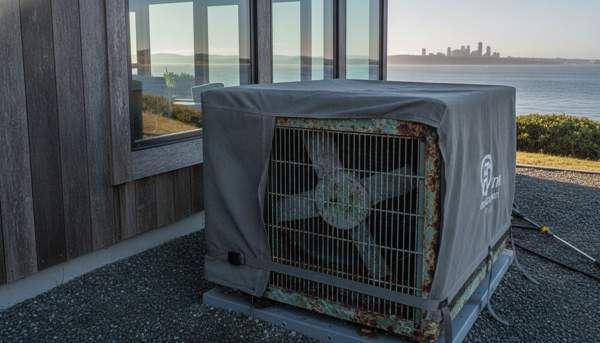
Coastal moisture and salt air act as a quiet threat to every outdoor HVAC unit in the Bay Area. These elements cause a chemical reaction that weakens metal and leads to costly leaks. A clear plan is needed to fight off rust and wear.
Coastal HVAC corrosion prevention involves regular care, protective coatings, and smart installation to stop salt air from destroying your unit. According to AC Direct, rinsing your outdoor unit with fresh water can remove salt before it causes deep damage. You should also think about adding thin resin coatings to coils and using stainless steel hardware to prevent rust. In the Bay Area, these actions help your system run well and can even lower your monthly power bills by fifteen percent. Frequent checkups from a pro are the best way to find early signs of wear before the whole system fails. Taking these steps helps your heating and cooling unit last for many years despite the harsh sea air.
Understanding how our local marine environment affects your equipment is the first step toward effective system defense. Salt air and high coastal humidity accelerate metallic degradation through several biochemical mechanisms, making it critical for Bay Area homeowners to recognize the early signs of damage.
Why is coastal HVAC corrosion prevention essential for Bay Area homes?
ttps://www.ortizheatingacinc.com/services/maintenance">Schedule your professional coastal HVAC maintenance checkup today with Ortiz Heating and Air Conditioning.
Living near the ocean brings fresh air and cool breezes. But for your home's cooling system, that same air can be a major threat. Salt air and high humidity are a harsh mix for metal parts. These factors can speed up the way metal breaks down over time. If your home is within two miles of the coast, your unit faces a constant risk. This exposure can lead to early failure and higher energy bills.
Why distance from the coast matters
The air in the Bay Area carries tiny salt bits that settle on your outdoor unit. When mixed with damp coastal air, these bits act like a glue that traps moisture against the metal. This mix is very hard on standard units that do not have extra care. Over time, it can eat through the outer layers of your system. This often leads to a shorter life for the whole unit.
Salty air does not just stay at the beach. The risk is highest for homes right on the water that face a daily blast of salt spray. Without the right care, a new unit can start to show signs of decay in just a few years. This is why local knowledge is so vital when you choose a new system for your home.
The science of metal decay
When salt and moisture hit your outdoor unit, they start a process called oxidation. This is a chemical reaction that eats away at the metal. It often leads to leaks in the coils that hold refrigerant. Without enough refrigerant, your system must work much harder to keep you cool. This stress means the unit does not work as well and leads to more wear on the parts.
One specific type of damage is called ant-nest corrosion. It creates tiny, pin-sized holes in copper tubes. This problem often comes from a mix of moisture, oxygen, and certain acids in the air. Research from the Environmental Protection Agency shows that this can cause a unit to fail in just a few months. It is a leading cause of early copper tube failure in the industry.
The holes are so small that you might only notice when the air from your vents is no longer cold. In some cases, the damage happens so fast that a unit fails within its first year. This is why choosing the right gear and keeping it clean is so vital for coastal homes.
Warning signs for homeowners
It is helpful to know what to look for when you check your unit. Early signs of rust can tell you that the salt air is doing damage. Look for orange rust on the steel cabinet or green spots on the copper parts. You might also see a white, powdery substance on the metal. This is known as white rust, and it often forms on coated steel in salty areas.
Finding these signs early can save you from a full system crash. Regular checks help find small issues before they become big, costly repairs. If you live in a coastal zone, you may need more frequent care than people who live further inland. Our team provides expert HVAC services in coastal Bay Area towns to help protect your home. Getting a regular AC unit tune-up is the best way to keep your unit running strong.
When you look at your unit, check the fins on the back with care. These thin metal pieces help move heat out of your home. In salty air, they can become brittle and turn to dust if you touch them. If the fins are falling apart, your system cannot cool your home well. This leads to higher power bills and a home that never feels quite cool enough.
What is the best protective coating for coastal HVAC systems?
The best protective coatings for coastal HVAC systems are thin, specialized marine-grade resins or polymers that seal the copper coils and metal fins. Applied at a thickness of 0.003 inches or less, these coatings block salt and moisture from contacting raw metal surfaces without trapping heat or reducing energy efficiency.
A professional anti-corrosion coil coating provides a protective barrier against salt air and humidity.
Coastal air has high salt and moisture. These things cause metal to rust fast. In the San Francisco Bay Area, sea air can reach many miles inland. To keep your unit safe, you need a plan for coastal HVAC corrosion prevention. A special coating is often the best shield for homes near the sea. These layers act as a wall for your system.
How coil coatings block damage
Safety coatings use resins or polymers to cover the metal. This layer creates a tight seal that salt and water cannot pass through. Salt is a big risk for metal parts. The EPA says copper tubes can fail in just a few months without care. A thin coating stops this fast decay. It keeps the unit running even in harsh sea air. Without a shield, salt eats the metal and causes leaks.
Most experts say these layers should be very thin. A thickness of 0.003 inches or less is best for most coils. This size is small enough to keep the metal safe. If a layer is too thick, it can trap heat inside. That would make the unit work too hard. A thin layer protects the metal but lets heat move freely. This balance is key to keeping your unit strong and cold. You can find more help with a comprehensive HVAC maintenance checklist in your town.
These coatings also help stop white rust on the outer case. Many units have steel cabinets. Salt air can turn that steel into a mess of rust and holes. A good coating for the coils and the case is the best way to save the whole system. This step prevents the need for a full unit swap too soon.
Energy savings and heat flow
Many people worry that a coating will make their unit slow. They think it acts like a blanket that traps heat. But new coatings help the system work well. These layers are made to move heat fast from the coils to the air. This means your unit does not have to work as hard to cool your home. It saves wear on the motor and other parts.
A good coating can lower your power bills by up to 15 percent. This saving grows over the life of the unit. Salt and dirt on bare metal make the system less efficient. The coating keeps the metal clean. It sheds water and salt fast. This keeps the air flow high and the bills low. It is one of the best ways to get the most from your cooling setup.
Corrosion costs the world a lot of money each year. This fact is in studies by the National Institutes of Health. By using a coating, you avoid these high costs. This step helps you protect your home and save on repairs. It is a smart move for those who live near the ocean. Taking care of your unit now saves a lot of stress later.
Feature.Standard Coatings.Coastal Resins. Average Thickness.0.005 to 0.010 inches.0.001 to 0.003 inches. Heat Flow.Medium to Low.High. Energy Savings.Minimal.Up to 15%. Salt Shield.Standard.High Barrier. Typical Life.3 to 5 years.7 to 10 years.
What are the warning signs of early-stage HVAC corrosion?
Early-stage HVAC corrosion is identified by white powdery spots of galvanized steel rust, orange scaling on cabinets, and green oxidation on copper tubing. Catching these early surface warnings before they cause refrigerant leaks or brittle fins can prevent complete system failure and save thousands in repair bills.
Coastal air is tough on home comfort systems. If you live near the ocean, salt and moisture can eat away at your unit. Finding these signs early helps you avoid big bills for HVAC repairs.
Visible rust and surface damage
One of the first signs of trouble is white rust on steel parts. This looks like a chalky powder on the case of your unit. It shows that the top coat of the metal is breaking down. You might also see dark spots or flakes on the metal fins. These fins help move heat. Any damage there makes your unit work much harder.
Copper tubes are also at risk. A type called ant-nest corrosion can ruin copper parts very fast. This happens when moisture and oxygen react with acids in the air. As noted by the EPA, this damage causes about 10% of all early copper tube failures in our field. It can cause a full system fail in just two to three months.
Leaks and loss of cooling power
When salt eats through a pipe, the coolant starts to leak out. You might notice that your home feels warmer. The air from your vents may not feel as cold as it used to be. A unit with a leak will run longer and use more power. This leads to higher power bills each month. If you hear a soft hiss near the outdoor unit, it may be a sign of a salt leak.
Reduced airflow and efficiency
Salt damage does not just cause leaks. It also blocks the small paths where air flows through your coils. As salt builds up, it acts like a wall. This makes it hard for the fan to pull air through. When your unit cannot breathe, it strains the motor. Regular professional AC unit tune-ups can find these blocks before parts fail.
Step-by-Step DIY Maintenance to Prevent Coastal Rust
Living near the ocean brings fresh air, but it also exposes your home to salt spray. This salt air can cause eference/1144549/" rel="nofollow" target="_blank">coastal HVAC corrosion, which may shorten the life of your unit. By taking a few simple steps, you can help protect your outdoor equipment from rust and damage.
How to rinse your unit
One of the best ways to fight salt build up is to rinse your outdoor unit. Use a garden hose with low pressure to gently wash the metal fins and the cabinet. Do not use a high pressure washer, as this can bend the soft fins and block air flow. Regular rinsing helps remove salt before it starts to eat into the metal.
Keeping the area clear
Make sure to keep the space around your unit clean. Remove leaves, dirt, or grass that might trap moisture and salt against the base. If debris stays stuck to the unit, it can lead to white rust on steel surfaces. Keeping the area open also helps your system breathe and run better.
Check for signs of rust. Look for orange rust on the cabinet or green spots on the copper tubes. If you see these signs, you may need a comprehensive HVAC maintenance checklist process or a pro to fix the issue before it grows.
Rinse with fresh water. Use a hose to wash the coils once every few weeks. This simple task is key for removing salt deposits before they cause long term damage to your system.
Clear all debris.g> Sweep away dirt and leaves from the base of the unit. Keeping the area clear prevents salt and moisture from sitting against the metal for too long.
Inspect the seals. Take a look at the electrical box seals on your unit. These seals stop salt water from getting inside, which could cause a short circuit or parts to fail.
Look at the mounting base. Check that the unit is level so water drains away fast. Stagnant water can lead to corrosion near the bottom of the system.
Schedule expert help. While DIY steps help, signing up for professional HVAC maintenance services ensures a pro checks every part of your system twice a year.
Why routine care matters
Coastal air moves salt into every small gap in your HVAC system. Without care, this can lead to leaks and low efficiency. Taking ten minutes each month to check and clean your unit can save you money on big repairs later. A clean system lasts longer and keeps your home cool all summer long.
Smart Equipment Selection: Choosing Coastal-Ready HVAC Units
When you live near the ocean, your choice of heating and cooling systems matters more than usual. Salt air can cause standard units to fail fast. At Ortiz Heating and Air Conditioning, Inc., we help you find the best HVAC installation options for our local climate. Choosing the right build now can save you thousands of dollars in future repairs.
Welded aluminum technology
One of the best moves for coastal homes is picking units with welded aluminum technology. Older systems often use copper tubes with aluminum fins. But salt air causes a chemical reaction between those two metals. This leads to fast wear and leaks. Modern units use all-aluminum coils to stop this issue before it starts.
These units use tubing walls that are 71% thicker than standard copper. This extra strength helps the system resist the harsh sea air. Data shows that these coastal-ready units can offer an up to 81% longer lifespan than older copper models. This is a big win for homeowners in the San Francisco Bay Area who deal with salt spray every day.
Protection and peace of mind
We stand by the quality of the systems we set up. Many coastal-ready models come with 10-year warranties on parts and compressors. This gives you long-term safety from environmental damage. As a Diamond Certified and BBB A+ team, we focus on doing the job right the first time. We want your home to stay cool and comfortable for a full decade or more.
If you need to replace your old unit or add a new one, we make it easy to start. We give free estimates for areas-we-serve/san-francisco-bay-area">HVAC services in coastal Bay Area neighborhoods when you are buying new equipment. While repairs and check-ups have a service fee, our team is happy to help you plan your new system at no cost. This helps you see the value of better technology without any risk.
Durability and testing
Before we suggest a model, we look at the facts. High-end coastal units undergo tough testing. Some have shown no wear after seven years of salt spray tests. This is vital because about 10% of all copper tube failures in the HVAC field come from ant-nest corrosion. This type of damage can ruin a system in just two to three months. Moving to aluminum avoids this risk and keeps your air flowing well.
How does strategic unit placement protect marine HVAC systems?
Strategic unit placement protects coastal HVAC systems by positioning the outdoor condenser on the landward side of the home away from prevailing ocean winds. Utilizing natural windbreaks, physical structures, or specialized marine shading reduces salt-spray exposure while maintaining the necessary clearances for proper system airflow.
Where you put your AC unit makes a big impact on how long it lasts. Homes within two miles of the coast face salt air often. This salt can rust metal and break down parts fast. For optimal ultimate-hvac-maintenance-checklist-for-your-home">coastal HVAC corrosion prevention, start by finding a smart spot for your unit.
Why does the spot for your unit matter?
Coastal breezes carry salt spray that sticks to your HVAC system. This spray starts a process called corrosion. This can lead to leaks and loss of power. By placing the unit away from direct sea air, you can block much of this salt. Local teams focus on finding these safe spots to keep your system clean.
Expert teams look for areas that face away from the wind. If a home is right on the water, placing the unit on the landward side helps. This simple move acts as a shield. It keeps the salt away from the thin coils. Less salt means your system will not need cleaning as often. This protects your costly unit from the harsh local weather.
How can shading and guards help?
Shading your outdoor unit does more than keep it cool. It can also act as a wall against the salt. A well-placed shade or wall blocks the path of the sea spray. This reduces the amount of grime that builds up on the fins. But the unit still needs enough room to breathe so it can work well and not break.
You can also use protective metal cages or guards to protect your system. These cages block large debris and some salt spray from hitting the coils. They help extend the life of the unit by keeping the outside surface clean. Just make sure the guard does not block the air, or the unit will get too hot. This balance is key to keeping the system safe and running well.
What are the benefits of a higher spot?
Raising your unit off the ground is a smart move for coastal homes. Units on the ground are more likely to sit in salt air and wet mist. Lifting the unit on a stand or roof can keep it away from the worst spray. This also helps with water flow during the rainy months. It keeps the base of the unit dry and safe from rust.
Correct setup is another key part of a good project. It makes sure that water flows out of the unit and does not sit in the tray. Still water can lead to rust and other types of ant-nest corrosion in copper tubes. A level unit helps prevent these early breaks and keeps your system running for years. This care is the best way to avoid a costly repair later.
Frequently Asked Questions
Does salt air ruin HVAC units?
Salt air does lead to rust and damage on your HVAC unit. When you live within two miles of the coast, the moist air carries salt that sticks to metal parts. This causes a slow change that eats away at the coils and wires. Over time, this leads to leaks and makes the system work harder to cool your home. According to low" target="_blank">Carrier, this salt air can shorten the life of your gear and make it work less well.
How long do AC units last in coastal areas?
Standard AC units often last about 10 to 15 years in most places. However, near the sea, they may only last 5 to 7 years due to salt rust. You can extend this time by choosing a unit built for the coast. According to Carrier, units with welded aluminum tech can have an 81 percent better life than those with copper coils. Regular care and rinsing the unit with fresh water can also help it last longer in the Bay Area.
What is the best HVAC protective coating for coastal areas?
The best coatings for coastal HVAC units use special resins or polymers to block salt. These coatings should be very thin, usually less than 0.003 inches, so they do not stop the unit from moving heat. According to Lester Air Conditioning, these coatings can help you save up to 15 percent on your power bills. They work by creating a shield that keeps salt and wet air from touching the metal coils inside your system.
Are coastal HVAC protection kits worth it?
Yes, these kits are a good choice for homes near the Bay. They provide a shield against salt spray that can cause parts to fail in just a few months. While there is a cost to add this protection, it saves you money in the long run by stopping leaks. According to the EPA, about 10 percent of copper tube failures in HVAC systems come from a type of rust called ant-nest corrosion. Using a kit helps prevent this fast damage.
Ready to schedule a professional coastal HVAC inspection?
Salt air can eat away at your metal parts and cause your unit to fail much sooner than it should. If you let rust and salt build up, you may face costly leaks or a full system breakdown. Taking care of this now means you avoid the high price of a new unit in the future. A quick look from a pro can find small issues before they turn into big ones. This keeps your home at the right heat or cold and saves you money on your bills. Waiting too long can lead to a sudden loss of comfort and high repair costs. You get the best results when you catch these problems early. Making a plan today gives you one less thing to worry about and helps you book a check for your system.
Ready to book? Call (650) 676-7717 to schedule a professional coastal HVAC inspection.
Ready to protect your system? Book a professional coastal HVAC inspection with Ortiz Heating and Air Conditioning today.
<strong>Ready to protect your system? Book a professional coastal HVAC inspection with Ortiz Heating and Air Conditioning today.