
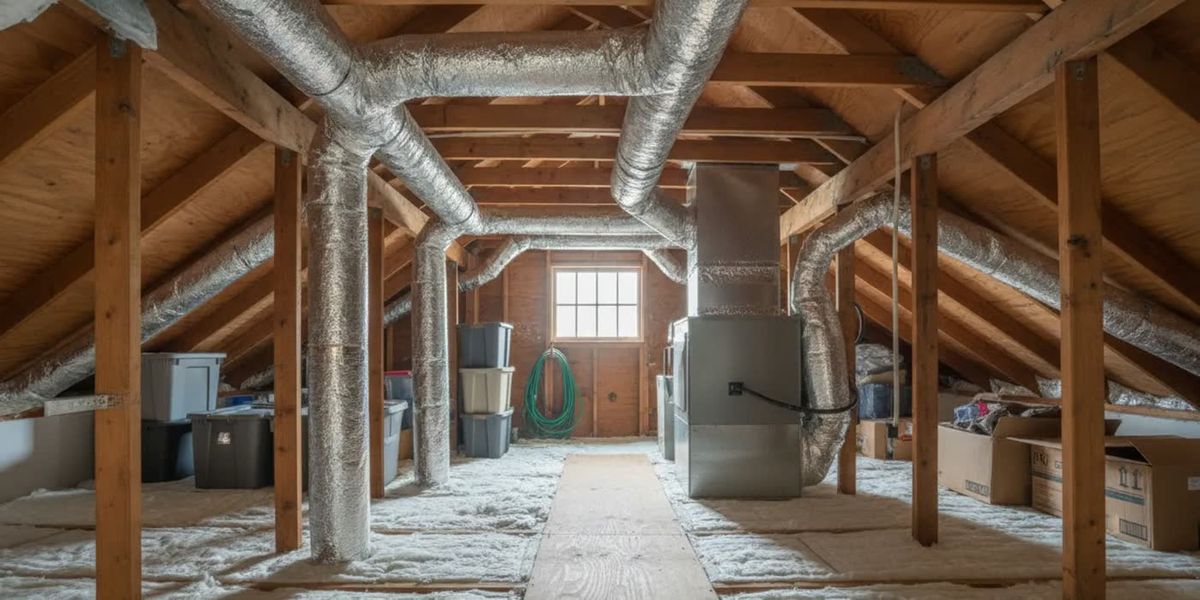
Air duct insulation can affect how consistently heated or cooled air reaches rooms, especially when ducts run through an attic, crawlspace, garage, or other area outside the conditioned living space. In Bay Area homes, additions, remodels, and older layouts can leave ducts in different environments across the San Francisco Bay Area. Uneven comfort is a reason to investigate the system rather than assume insulation alone is the cause.
Where does air duct insulation matter most?
The U.S. Department of Energy Building Science Education overview explains that ducts outside conditioned space can experience heat gain or loss, and that insulation helps reduce that transfer. In an individual Bay Area home, the practical question is whether the duct route, surrounding space, insulation condition, leakage, or airflow helps explain the reported symptom. Insulation does not create heating or cooling or correct every airflow problem. Read the DOE overview of high-R duct insulation.
Start by identifying the duct route, if it is safely visible. Common locations include:
Attics: Ducts may be exposed to hot conditions in sunny weather and cooler conditions at other times.
Crawlspaces: Long runs below the floor may cross spaces with temperatures different from the rooms above.
Garages or utility areas: Ducts routed through an unconditioned space may exchange heat with that space.
Exterior walls or chases: Concealed ducts can be harder to inspect and may be affected by surrounding conditions.
Across a Bay Area home, duct runs can have different exposures. A duct in a shaded crawlspace does not experience the same surrounding conditions as one in a sun-exposed attic. Treat those differences as inspection questions, not conclusions about the cause. The route and condition of the duct matter more than the thermostat setting alone.
What signs could point to a duct insulation issue?
Insulation is only one possible cause of uneven comfort. Notice patterns and timing before deciding what remedy may fit. Useful observations include:
A room takes noticeably longer to feel comfortable than nearby rooms.
Air from a register feels different from what you expect during a heating or cooling cycle.
Comfort varies by time of day or weather, especially in rooms served by long duct runs.
Visible duct insulation is damaged, missing, compressed, or separated at seams.
There are gaps or loose connections around accessible duct sections.
These clues do not prove insulation is the problem. A closed or obstructed register, dirty filter, duct leak, poor balancing, equipment performance, or room-specific heat gain can produce similar symptoms. Write down which rooms are affected, when the issue occurs, and whether it happens during heating, cooling, or both. That record helps focus an evaluation.
How can insulation influence comfort and system operation?
When supply air travels through a space with a very different temperature, heat transfer can change the air temperature before it reaches the register. The impact depends on duct length, location, insulation condition, airflow, and the difference between the surrounding space and the air inside the duct. A short, well-insulated run through a moderate space differs from a long run through an exposed attic.
Insulation is not a substitute for a properly designed and sealed duct system. If ducts leak, insulation may not stop conditioned air from escaping. If airflow is restricted, adding insulation alone will not remove that restriction. A room can remain uncomfortable because of windows, sun exposure, layout, or equipment sizing even when its duct insulation is intact.
The DOE explanation is a general building-science principle, not a guarantee for any one Bay Area home. A professional assessment should connect any recommendation to observed duct conditions and the rooms affected.
How does duct location change the question?
Two houses with the same thermostat setting can have different duct-related concerns because their duct routes and surrounding spaces differ. A useful first distinction is whether the duct sits inside the conditioned envelope or crosses an area that is not intentionally heated or cooled.
Ducts in an attic
Attic ducts may face large temperature differences from the living space. Long supply runs can be more exposed than a short branch close to the air handler. Look for visible insulation damage only from a safe position; do not step onto ceiling drywall or move stored items in a way that risks a fall. A contractor may need to assess routing, insulation condition, connections, and whether the attic access allows a complete review.
Ducts in a crawlspace
A crawlspace may be difficult or unsafe to enter, and its conditions can differ from the rooms above. A symptom in a room over a crawlspace does not by itself establish that insulation is deficient. The inspection may need to distinguish a loose connection, sagging or damaged duct, an airflow restriction, or heat transfer through the duct surface.
Ducts inside walls and ceilings
Concealed runs are harder to observe without opening finished surfaces. Homeowners can map the affected rooms and note nearby remodels, additions, or changes in room use. An evaluator can explain what is visible, what remains concealed, and whether testing or access work is warranted before proposing a repair.
For commercial spaces, the same logic applies, but occupied hours, room use, and system configuration may also shape when symptoms appear. Ortiz provides commercial HVAC services as part of its broader Bay Area work.
What should a duct insulation assessment cover?
A useful assessment connects the duct route and condition to the rooms experiencing problems. Depending on access and the concern, the review may include:
Duct location: Which sections pass through attics, crawlspaces, garages, or other unconditioned areas?
Insulation condition: Is material present, intact, secure, and free of obvious compression or damage?
Duct condition: Are there visible gaps, loose joints, crushed sections, or other issues that could affect delivery?
Room symptoms: Which registers and rooms are affected, and under what operating conditions?
System context: Could filter condition, register obstruction, airflow, or equipment operation contribute?
Access and scope: Which sections can be inspected, and what additional access might be needed for concealed runs?
Ask the evaluator to separate observations from recommendations. A visible insulation gap is an observation. Insulating every duct is a proposed scope, and the reason for that scope should be explained in relation to the duct route, condition, and reported symptoms.
Questions to ask about findings
Which specific duct sections were observed, and which could not be reached?
Is the concern insulation, leakage, physical damage, airflow, or a combination?
How does each finding relate to the rooms and times I described?
What work is essential to address the identified condition, and what is optional?
Will the proposed work require access panels, removal of existing material, or changes to other duct sections?
How will the contractor confirm the completed work addresses the stated scope?
Clear answers help homeowners compare proposals on scope rather than on a single label such as insulation repair. If an assessment cannot inspect a concealed section, that limitation should be understood before making a decision about work behind a wall or ceiling.
Can you check anything safely before arranging service?
Homeowners can gather useful information without entering unsafe or difficult spaces. Keep checks simple:
Confirm the thermostat is set to the intended mode and temperature.
Check that the air filter is installed correctly and is not visibly clogged; follow the equipment and filter manufacturer's guidance for replacement.
Make sure supply and return grilles are not blocked by furniture, rugs, or curtains.
Note which rooms feel different, when the difference appears, and whether heating or cooling is running.
From a safe, accessible location, look for obvious damage to visible duct insulation or disconnected duct sections.
Do not step onto attic drywall, crawl into a tight or unsafe area, disturb suspected hazardous material, or handle electrical components. Do not pull apart duct insulation to inspect hidden surfaces. If the duct route is inaccessible or the system behaves unusually, leave the investigation to a qualified HVAC professional.
Keep a short symptom log
A few observations over several operating cycles are more useful than a single impression. Record the date and time, whether the system is heating or cooling, which rooms feel different, and whether the difference follows sunny afternoons, cold mornings, or another repeatable condition. Note if a door is usually closed, if a register is blocked, or if the room has recently changed purpose. Avoid changing several settings at once, since that can make it harder to understand what changed.
For example, if an upstairs room is uncomfortable only during sunny afternoons, that timing may point the evaluator to compare attic exposure, window sun, and the room's air delivery. It does not identify one cause on its own. If a room stays uncomfortable throughout both heating and cooling seasons, the contractor may also consider airflow balance, duct condition, and the room's layout. The log is context, not a diagnosis.
When is insulation work different from duct repair or replacement?
The right scope depends on what is wrong. These options address different conditions and should not be treated as interchangeable.
Insulation repair or improvement
This may be relevant when the duct itself is suitable and insulation is missing or damaged in a specific accessible area. A recommendation should identify affected sections and explain why those locations matter. It should also account for whether existing material is secure and whether the underlying duct surface and connections can be assessed before work.
Duct sealing or repair
Loose connections, gaps, damaged sections, or airflow restrictions require attention to the duct itself. Insulation placed over a problem connection does not necessarily correct leakage or restore airflow. A proposal should describe whether the concern is a joint, a puncture, a crushed run, or another condition, and explain how the repair relates to the reported comfort issue.
Duct replacement
Replacement may be considered when sections are substantially deteriorated, poorly routed, or unsuitable for the home's needs. The scope should state what will be removed, what will be installed, and whether access or related changes are part of the work. For a broader discussion of scope and planning, review the ductwork service options.
For broader information about Ortiz duct services, review the service page. In some projects, more than one issue is present. A careful recommendation explains which findings support each proposed task, rather than presenting insulation as a cure-all for uneven comfort.
Request a quote for the duct scope you need
How should you compare possible next steps?
When reviewing recommendations, compare what each option addresses, what evidence supports it, and what it leaves unresolved. These distinctions can keep a discussion focused:
Insulation repair or improvement
May address: Missing or damaged insulation on a duct that is otherwise suitable.
Ask: Were joints and visible duct surfaces reviewed before insulation was recommended?
May leave open: Leaks, crushed sections, or rooms that are uncomfortable because of airflow or sun exposure.
Duct sealing or repair
May address: An identified leak, loose connection, puncture, or other physical damage.
Ask: How will the repair be accessed and checked?
May leave open: Heat transfer on long runs through an attic, crawlspace, or garage.
Duct replacement
May address: Substantial deterioration, poor routing, or sections that are not suitable to repair.
Ask: Which runs are included, what remains, and how will access change?
May leave open: Room-level issues that are not caused by the replaced section.
Further diagnosis
May address: Clear symptoms when the cause is not yet identified.
Ask: What test would clarify the issue, and what diagnostic fee applies?
May leave open: A repair or replacement decision until the findings are specific.
A written scope makes comparisons more meaningful. One recommendation might address only an exposed section; another might cover multiple runs. Those are not equivalent simply because both use the word insulation. Check the area covered, material condition, access assumptions, repairs included, and any exclusions. For equipment work rather than duct-specific work, Ortiz also describes its HVAC installation services.
How should Bay Area homeowners plan next steps?
Before contacting an HVAC contractor, gather a few practical details:
Approximate age of the home and any known remodels or additions.
Rooms with comfort differences and whether they are upstairs, over a crawlspace, or near an exterior wall.
Whether the issue occurs in heating, cooling, or both, and what weather conditions seem to affect it.
Any safely visible damage or unusual duct routing.
Recent changes to equipment, registers, or room use.
This context helps connect symptoms to the layout. If you are considering broader work, the HVAC services overview outlines service areas, and the San Francisco Peninsula and East Bay communities pages describe regional coverage. Ortiz also serves the wider San Francisco Bay Area.
When arranging an evaluation, explain the symptoms and ask what the inspection will cover. Inspection and diagnostic work may have a service fee. Once a problem is identified, a repair scope can be discussed. Avoid assuming that every uneven room requires insulation work or that every duct must be replaced. A sound plan follows the observed condition and the limits of what could be inspected.
For general background on Ortiz and its approach, see the company information page. You can also review its HVAC repair services when the findings point to a repair rather than insulation alone.
Request a ductwork consultation
Frequently asked questions
Does insulating ducts always improve comfort?
No. It can reduce heat transfer through duct walls in relevant locations, but comfort also depends on airflow, duct leakage, equipment operation, room exposure, and system design. Identify the cause before choosing work.
Can I add insulation over existing ducts myself?
Do not cover ducts without first understanding their condition and applicable material and installation requirements. Damaged ducts, loose connections, moisture, or unsuitable existing materials may need attention before insulation work. Have inaccessible or questionable areas assessed by a professional.
Why is one room uncomfortable while the rest of the home feels fine?
A room-specific symptom can relate to its duct run, register, airflow balance, windows, sun exposure, or layout. Comparing when the room changes and whether the issue happens in heating or cooling helps narrow possibilities, but does not establish a diagnosis.
Is duct insulation the same as duct sealing?
No. Insulation slows heat transfer through duct walls. Sealing addresses leakage at joints or openings. A system may need one, both, or neither, depending on its actual condition.
Plan a focused duct evaluation
Air duct insulation is one part of a larger system, so a sound next step starts with the duct route, visible condition, and room-by-room symptoms. Share what you have observed and ask for recommendations tied to the specific findings in your home.