
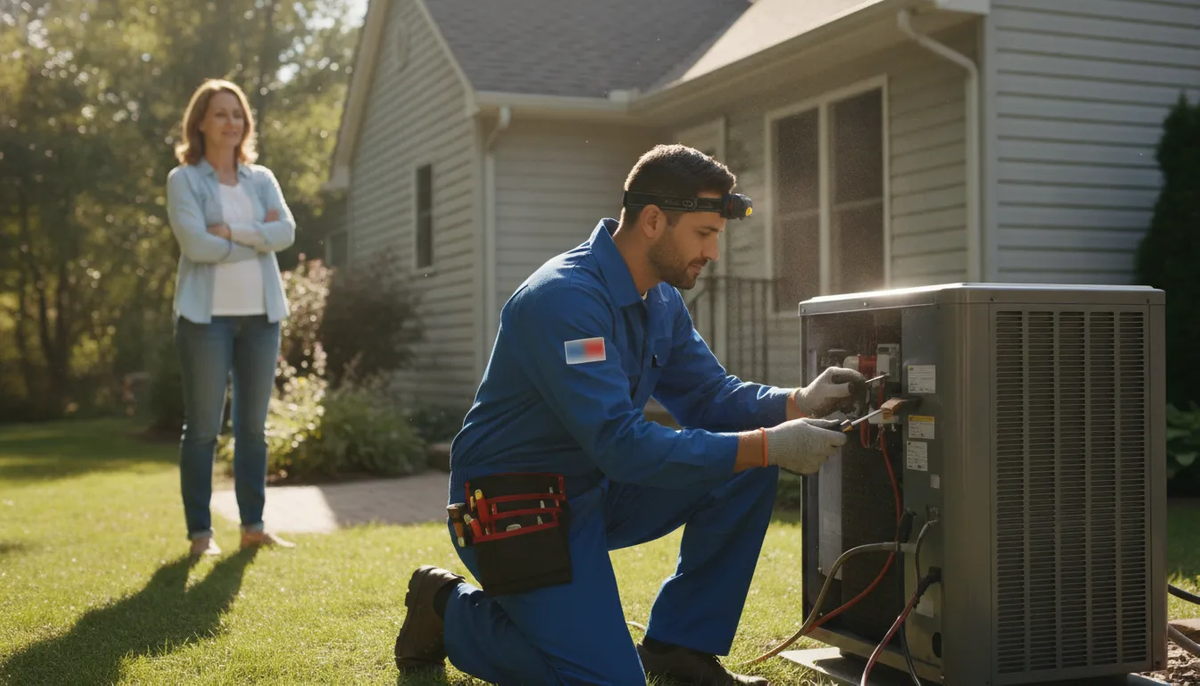
When an air conditioner stops cooling in Richmond. The first priority is separating a simple airflow or thermostat issue from a failure that could damage the system or create a safety risk. A few careful checks can provide useful information, but refrigerant, electrical, compressor, and blower problems require professional diagnosis.
Schedule expert AC repair
For AC repair Richmond homeowners should start by checking the thermostat setting, filter, registers, and power only when it is safe to do so. If the system still blows warm air, cycles unusually, leaks, smells burnt, makes abnormal noises, or will not start, turn it off and arrange a diagnostic visit. A technician can identify the failed component, explain repair or replacement options, and provide a transparent quote before work begins.
Ortiz serves Richmond as part of its Contra Costa County territory, with repair support for all brands and models. Understanding the warning signs below can help you describe the problem clearly and decide when a professional visit is the responsible next step.
Common AC problems Richmond homeowners should not ignore
Air conditioning symptoms often begin as a small change in comfort, sound, or system behavior. In Richmond and nearby Contra Costa communities, do not assume an uncomfortable room is only a thermostat issue. A system that continues running while delivering poor results may be struggling with airflow, controls, ductwork, refrigerant, or an electrical component. The symptom alone cannot identify the failed part, but it can help you decide when professional evaluation is appropriate.
Warm air or weak airflow
If the vents deliver warm air, check whether the thermostat is set to cooling and whether the setpoint is below the room temperature. Also look at the filter and make sure supply registers are not blocked. A dirty filter can restrict airflow, while duct problems can contribute to weak delivery or uneven comfort between rooms. If the system still runs without cooling, possible causes include a thermostat malfunction, refrigerant leak, compressor problem, or another component issue. Refrigerant and compressor work require professional diagnosis, not a homeowner recharge or repair.
Weak airflow can also point to a blower motor problem or ductwork concern. Ortiz technicians perform component-level troubleshooting and service all brands and models. You can learn more about
HVAC service in Richmond
before deciding on the next step.
Short cycling, water, and unusual noises
Short cycling occurs when the system starts and stops repeatedly without completing a normal cooling cycle. It may relate to airflow restriction, thermostat control, equipment condition, or another issue that cannot be confirmed from the symptom alone. Repeated cycling deserves attention because it leaves the home uncomfortable and can signal that the system is not operating as intended.
Water around the indoor unit, drain area, or nearby flooring should not be ignored. It may indicate a condensate drainage concern or another system problem. Turn the system off if water is creating a slip hazard or approaching electrical equipment, then arrange an evaluation. Grinding, scraping, rattling, buzzing, or loud clicking can similarly indicate a loose, worn, obstructed, or electrical component. Do not open the equipment to investigate moving parts or wiring.
Odors and electrical warning signs
A persistent musty, burning, or unusual odor needs attention, especially when it appears with smoke, visible scorching, sparks, or a tripped breaker. Those electrical symptoms should be treated as urgent: turn the system off and avoid resetting a breaker repeatedly. A single breaker trip may have several causes, and the source must be diagnosed safely. Refrigerant leaks, electrical issues, blower motor failures, compressor failures, and thermostat malfunctions are among the problems Ortiz is equipped to investigate.
Safe checks are limited to thermostat settings, the filter, unobstructed registers, and a breaker or disconnect observation only when it can be done safely.
Do not attempt refrigerant, electrical, compressor, or blower repairs. Schedule a diagnostic visit so the failed component and repair options can be explained before work begins.
Ortiz follows a diagnostic-first process and applies a service fee to repair visits. A transparent repair recommendation and quote can follow the diagnosis. That approach is more reliable than replacing parts based only on a symptom.
What can you safely check before calling for AC repair Richmond?
A few low-risk observations can help you determine whether the problem is a setting, airflow restriction, or a larger equipment issue. These checks are useful because they give a technician clearer information, but they should never involve opening the equipment cabinet or working on energized components. If the system has a burning smell, visible smoke, sparking, or a tripped breaker that will not stay on, turn the system off and seek professional help. For more urgent situations, review this
emergency AC repair guide
.
Check the thermostat mode and setpoint.
Confirm that the thermostat is set to cooling rather than heat, off, or fan-only mode. Make sure the setpoint is lower than the current indoor temperature, then allow a few minutes for the system to respond. If the fan is set to "on," the blower may continue running between cooling cycles, which can feel different from normal operation. Note what the thermostat displays and whether it responds when you adjust the setting.
Inspect the accessible air filter.
A heavily loaded filter can restrict airflow and contribute to weak cooling or uneven temperatures. If the filter is easy to reach, look for visible dust buildup and replace it with the correct size if needed. Do not remove panels or reach into the indoor unit. Keep the old filter available if a technician is coming, since its condition can help explain the symptom.
Look at registers and returns.
Confirm that supply registers are open and that furniture, rugs, curtains, or boxes are not blocking them. Also check that return grilles have clear space around them. If one room is unusually warm, note whether airflow is weak there or throughout the home. Duct problems can contribute to poor airflow and uneven comfort, so record which rooms are affected instead of trying to open or repair ductwork yourself.
Observe power status only when it is clearly safe.
You may look at the thermostat display and, from a safe standing position, check whether a nearby disconnect or electrical panel appears switched off. Do not remove an electrical-panel cover, touch exposed wiring, reset a breaker repeatedly, or investigate a breaker that trips again. Electrical components can remain hazardous even when the system appears inactive. A recurring trip needs professional diagnosis.
Write down useful details for the technician.
Record when the problem began, whether the system blows warm air or does not run, unusual sounds or odors. Water near the equipment, recent filter changes, and whether the issue affects the whole home or only certain rooms. Include the thermostat reading and any visible error message. These details help an HVAC professional narrow the possibilities during a diagnostic visit.
Do not add refrigerant, test electrical components, open the compressor compartment, repair a blower motor, or attempt to bypass a safety control. Refrigerant leaks, compressor failures, electrical issues, blower problems, and thermostat malfunctions require component-level diagnosis and appropriate equipment. Ortiz serves Richmond as part of its Contra Costa County territory and can evaluate the system across brands and models. A professional visit identifies the failed component, explains the available repair or replacement options, and provides a transparent quote after diagnosis. A service or diagnostic fee applies, so the safest approach is to share your observations and leave hazardous repairs to a qualified technician.
How a professional AC repair visit works
A professional visit should give you more than a quick guess about why your system is not cooling. The goal is to identify the failed component, explain the available options, and let you approve the work with a clear understanding of what it involves. For homeowners seeking
AC repair Richmond
, Ortiz uses a diagnostic-first process for systems throughout Richmond and the broader Contra Costa County service area.
1. The technician starts with your symptoms and system history
The visit begins with a conversation about what you have noticed. You may be dealing with warm air, weak airflow, unusual cycling, a water issue, a noise, or a system that will not start at all. Details such as when the problem began, whether it affects every room, and whether anyone has already adjusted the thermostat can help guide the inspection. If you know the equipment brand, model, or age, that information is useful, but you do not need to diagnose the problem yourself.
2. The system receives a complete inspection
Next, the technician examines the equipment and its operating conditions rather than replacing a part based only on a symptom. The inspection may include the thermostat, electrical components, airflow, indoor and outdoor equipment, blower operation, refrigerant-related conditions, and visible connections. A clogged filter or blocked register may contribute to a comfort problem, while a refrigerant leak, compressor failure, blower motor issue, or electrical fault requires professional troubleshooting. Homeowners should not open electrical panels or attempt refrigerant work during this process.
3. Component-level troubleshooting identifies the cause
Once the technician has gathered the initial findings, testing narrows the problem to the component or condition responsible for the failure. Ortiz services all brands and models and performs component-level troubleshooting. That matters because two systems can show the same symptom while needing very different solutions. A failed thermostat, for example, calls for a different repair decision than a compressor problem or an airflow restriction. The diagnosis should connect the observed symptom to the recommended repair in plain language.
4. Repair and replacement options are explained
After the failed part or contributing condition is identified, the technician explains whether repair is appropriate and whether replacement should also be considered. This is not a decision that should be based on a label alone. The recommendation should reflect the actual condition of the equipment and the scope of the failure. Ortiz technicians are in-house and are expected to be professional, thorough, and able to explain technical issues clearly, so you can ask questions before deciding.
5. You receive a transparent quote before work begins
Ortiz follows diagnosis with transparent recommendations and a quote before repair work is performed. A service or diagnostic fee applies to a repair visit. Repair diagnostics and repair estimates should not be described as free. According to the service-operations information, the diagnostic fee is credited toward the repair when you authorize that work. Confirm the details with the technician, then approve the repair only when you understand the scope and recommendation.
For an overview of the company process and available solutions, visit
Ortiz HVAC repair services
. A careful diagnosis helps prevent unnecessary part changes and gives Richmond homeowners a more informed path toward dependable cooling.
Can Ductwork Be Repaired, or Does It Need Replacement?
Not every damaged duct requires complete replacement. A loose connection, small leak, or isolated section of crushed flexible duct may be repairable when the surrounding material remains sound. Replacement becomes more appropriate when damage is widespread, the duct has lost its shape, or the existing layout cannot deliver air effectively.
The right answer depends on the condition of the entire system, not one visible problem. A professional evaluates the accessible ductwork, connections, supply and return airflow, and how the system performs after the work. Ortiz provides diagnostics and repair-versus-replacement recommendations rather than assuming that replacement is always the best outcome.
How professionals weigh duct repair versus replacement
Repair may fit when
Replacement may fit when
A professional evaluates
A connection is loose or disconnected, or a localized section is crushed, punctured, or tangled.
Damage is extensive, repeated, or affecting multiple sections.
The whole duct system, including accessible areas as needed.
A leak or joint can be properly sealed with an appropriate material, such as mastic or approved metal tape.
The material is deteriorated or deformed enough that sealing would not restore reliable airflow or structural integrity.
Supply and return air balance, visible condition, connections, insulation, and uneven comfort.
Repair can restore the intended path and the system responds normally after the work.
The layout or installation creates a recurring airflow problem that a simple patch cannot correct.
Airflow after repairs, so the result is checked rather than judged only by appearance.
Federal guidance identifies damaged, disconnected, tangled, and crushed flexible ducts as conditions that need attention. It also recommends sealing leaks and connections with suitable materials and evaluating airflow after repairs. Those steps help distinguish a durable repair from a temporary surface fix.
In some homes, duct repair and replacement are not opposites. A technician may repair sound sections, replace a failed segment, and correct a connection or airflow issue in the same visit. Ortiz includes ductwork and airflow checks within its
HVAC maintenance and airflow checks
. The goal is dependable airflow and a sound system, not replacement for its own sake.
How Richmond conditions and ductwork affect cooling
Richmond is part of Ortiz's broader Contra Costa County service territory, where hot summer conditions meet a wide range of homes, condos, townhouses, and light commercial buildings. That combination matters because an air conditioner can be operating while some rooms still feel warm. The problem may not be the outdoor unit alone. Airflow restrictions, return-air problems, and ductwork routed through an attic, crawlspace, garage, or other unconditioned area can all affect how effectively cooled air reaches living spaces.
Why duct leaks create uneven comfort
Ducts carry conditioned air from the indoor equipment to each room and return warmer air to the system. If a supply duct has a loose connection, hole, or crack, some of that air can escape before it reaches the register. A return-side problem can also reduce the air available for the system to cool. The result may be weak airflow, rooms that never reach the thermostat setting, or noticeably different temperatures from one side of the home to another. ENERGY STAR explains that sealing and insulating ducts can improve comfort and help prevent conditioned air from being lost through the distribution system. See the
ENERGY STAR duct sealing guidance
for background on these issues.
Routing makes a difference. Ducts in an attic or crawlspace are exposed to surrounding conditions that are different from the indoor rooms they serve. Poor insulation, damaged duct coverings, or disconnected sections can make the system work harder to deliver the expected cooling. The Pacific Northwest National Laboratory's guidance on
air sealing and repairing ducts
also emphasizes inspecting connections and sealing leaks rather than assuming the equipment itself is the only source of trouble.
Filters, returns, and blocked registers
A dirty filter can restrict the amount of air moving through the system. Furniture, rugs, or closed dampers can limit airflow at individual registers, while an undersized or obstructed return can prevent the system from circulating air properly. These conditions can make cooling feel weak and may contribute to longer, less effective cycles. A homeowner can check that the filter is clean and that supply registers and return grilles are open and unobstructed. Do not remove panels or attempt to adjust electrical, refrigerant, compressor, or blower components.
When uneven rooms continue after basic checks, a professional evaluation can separate a duct problem from a thermostat issue, refrigerant leak, blower concern, or another component failure. Ortiz provides
air conditioning services
for all brands and models, including component-level troubleshooting. A diagnostic-first visit can assess filters, ductwork, airflow, system performance, and the equipment itself before explaining the repair options. Preventive maintenance can address these areas together, helping identify airflow problems before they become a larger cooling complaint.
How to reduce repeat AC breakdowns
A repair should address the cause of the problem, not only restore cooling for the moment. After an AC failure, a few consistent habits can help protect the system from avoidable strain and make recurring symptoms easier to identify. The goal is not to make repairs yourself. It is to keep basic maintenance current, notice changes in performance, and give a technician useful information when professional service is needed.
Keep the filter and airflow path in good condition
Check the air filter regularly and replace it when it is dirty or according to the equipment manufacturer's instructions. A loaded filter can restrict the air moving through the system, which may contribute to poor comfort and added operating strain. Also check that supply registers and return grilles are not blocked by furniture, rugs, storage, or other household items. Rooms that become unusually warm, weak airflow from several registers, or a system that runs for long periods can indicate an airflow concern.
Do not assume the filter is the only possible restriction. Ductwork can develop damage or leaks that affect how conditioned air reaches different rooms. If one part of the home remains uncomfortable after a repair, mention that pattern during service. It can help direct attention toward airflow, ductwork, or another system component instead of treating each symptom as an isolated failure.
Schedule maintenance before small concerns become repeat calls
Preventive maintenance gives a qualified technician an opportunity to review the parts of the system that are difficult or unsafe for a homeowner to evaluate. Ortiz's maintenance service can include checking filters, ductwork, refrigerant levels, electrical connections, system components, airflow, and overall performance. This type of review can improve efficiency, extend equipment life, and reduce the risk of unexpected breakdowns. Although no maintenance visit can guarantee that a component will never fail.
For ongoing care, see Ortiz's
preventive AC maintenance
service. A maintenance visit is especially useful when the system has already needed more than one repair. Cooling varies between rooms, or the equipment has developed new noises, odors, or cycling patterns.
Track warning signs and service history
Keep a simple record of when the system was serviced, what symptoms appeared, which component was repaired, and whether the same issue returned. Note changes such as warm air, water around the indoor unit, unusual sounds, short cycling, or a breaker that trips again. These details can help separate a recurring component problem from a new issue elsewhere in the system.
Act promptly when a warning sign returns. Repeatedly resetting equipment, ignoring weak airflow, or continuing to run a system that makes an abnormal noise can allow a small issue to become more extensive. Refrigerant, electrical, compressor, and blower problems require professional diagnosis. If the same breakdown continues after service, request a diagnostic review and share the service record so the technician can evaluate the system as a whole. A careful, diagnostic-first approach is more useful than replacing parts based only on a recurring symptom.
Request expert AC repair in Richmond
Frequently Asked Questions
What should I check before calling for AC repair in Richmond?
Confirm that the thermostat is set to cooling, the temperature is set below the indoor temperature, and the air filter is not heavily clogged. Check that supply registers are open and unobstructed. If the system still will not run, you may observe the breaker or disconnect only when it is safe to do so. Do not open electrical panels or attempt component repairs.
When does an AC problem require a professional?
Call for professional diagnosis when the system has warm air, weak airflow, repeated short cycling, unusual noises, water leaks, burning odors, or recurring electrical shutdowns. Refrigerant leaks, compressor problems, blower motor failures, and electrical repairs require the right equipment and technical training. Continuing to operate a damaged system can make the problem harder to isolate.
What happens during an AC repair visit?
A diagnostic-first visit identifies the failed component and explains the available repair or replacement options. Ortiz performs component-level troubleshooting on all brands and models, then provides transparent recommendations before work begins. A diagnostic or service fee applies to repair visits, and the repair quote follows the diagnosis.
Can ductwork cause uneven cooling in my home?
Yes. Holes, cracks, disconnected sections, or other duct problems can let conditioned air escape before it reaches the room. That may contribute to weak airflow and uneven comfort. A professional can inspect the ductwork and determine whether sealing or related duct service is appropriate.
How can I reduce the risk of another AC breakdown?
Replace or clean filters as appropriate for your equipment, keep registers clear, and arrange preventive maintenance before cooling problems become urgent. A maintenance visit can review filters, ductwork, refrigerant levels, electrical connections, airflow, and overall performance. Keep notes about symptoms and repairs so a technician can spot recurring issues more efficiently.
Schedule AC Repair in Richmond
If your air conditioner is still struggling after safe basic checks, a professional diagnosis can help identify the problem and the right next step. Ortiz Heating and Air Conditioning provides a diagnostic-first process, with a service fee for diagnostics and repair estimates. Free estimates apply only to new equipment replacement or additions.
Schedule expert AC repair in Richmond
or request a repair quote through the online form.