
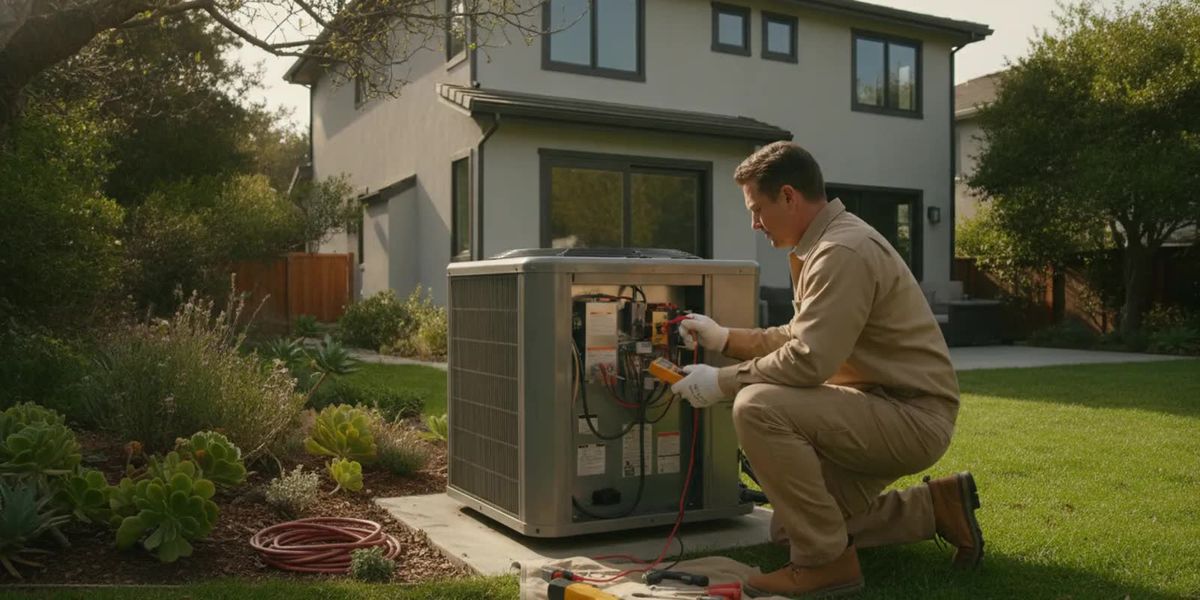
When cooling stops or weakens, the cause may be simple or may require a trained technician. This AC repair Burlingame guide covers safe first checks, common failure categories, what a diagnostic visit can clarify, and how to compare repair with replacement. In Bay Area homes, local conditions and the design of the existing system both matter.
Contact Ortiz about an AC problem
What should you check before arranging AC repair in Burlingame?
Start with observations that do not require opening equipment or handling wiring or refrigerant. A few basic checks can identify a setting or airflow issue, and they can give a technician useful context if the problem continues.
Thermostat: Confirm it is set to cooling, the desired temperature is below the room temperature, and the display is active. If it uses batteries, check whether they need replacement.
Air filter: Look at the filter and replace it if it is visibly loaded, following the size and direction markings. A clogged filter can restrict airflow; it does not explain every cooling problem.
Supply vents: Make sure registers are open and not blocked by furniture, rugs, or curtains. Compare airflow in several rooms rather than judging from one vent.
Power controls: Check whether the system switch or accessible breaker has been turned off. If a breaker trips again after being reset once, stop resetting it and arrange professional service.
Outdoor unit: From a safe distance, note whether the unit is running, unusually noisy, or surrounded by leaves or debris. Do not remove panels or reach inside.
Give the system a little time after correcting a thermostat setting. If it still does not cool, shuts off repeatedly, leaks water, or makes a new grinding or buzzing sound, stop testing and request help. Do not use an open flame or attempt to repair electrical components, capacitors, refrigerant lines, or condensate drains.
Which AC symptoms point to different problems?
A symptom is a clue, not a diagnosis. Several faults can produce similar signs, so avoid buying parts based on a single observation. A technician can test the system and determine whether the problem is isolated or connected to another component.
The system runs, but the air is not cool
First confirm the thermostat mode and filter. If the outdoor unit is not operating, the issue could involve its power supply, controls, or electrical components. If it runs but cooling remains poor, possible categories include airflow restriction, a control fault, a refrigerant-circuit issue, or a problem with the indoor coil. Refrigerant work requires appropriate equipment and training; do not try to add refrigerant yourself.
Airflow is weak or uneven
A dirty filter or blocked register is a reasonable first check. Persistent weak airflow can relate to a blower, duct restriction, coil condition, or system setup. If one room is affected while others are comfortable, note which rooms and whether the problem changes when doors are open or closed. This helps distinguish a whole-system symptom from a distribution issue.
Ortiz provides duct services as well as equipment service, which can be relevant when airflow concerns appear to involve the air distribution system.
The system starts and stops frequently
Frequent cycling may reflect a thermostat or control issue, restricted airflow, equipment sizing, or another operating fault. Write down how often the system starts and how long it runs. Avoid repeatedly changing settings to force it to stay on; recurring short cycles deserve a professional assessment.
Water appears near the indoor equipment
Condensation is part of normal cooling operation, but water in an unexpected place may indicate a drainage or coil issue. If there is active leakage, turn the system off at the thermostat if safe to do so, protect belongings, and arrange service. Do not pour chemicals into a drain line or open the equipment cabinet unless the manufacturer specifically identifies a safe homeowner procedure.
There is an unusual sound or smell
Rattling, squealing, or a sudden loud buzz can signal a loose part, motor issue, or electrical concern. A burning smell is a reason to switch the system off and seek assistance. If you smell gas, leave the area and contact the appropriate emergency utility or public service; do not operate switches near the odor.
What should a professional AC diagnostic visit cover?
A useful diagnosis begins with the symptom history and proceeds through checks relevant to the equipment. The technician may review the thermostat settings, inspect accessible filters and components, check airflow and operating behavior, and test electrical or refrigeration-related components as appropriate. The exact process depends on the reported issue and the system design.
Before the visit, write down when the issue began, what the system does when switched on, any sounds or odors, and whether the problem affects the whole home or particular rooms. Mention recent filter changes, power interruptions, or work near the equipment. Clear access to the indoor unit, thermostat, and outdoor condenser where possible.
Ask what the findings indicate, which repair is recommended, and whether there are options. Repair service may include a diagnostic fee; ask about the applicable fee and proposed work before authorizing service. A diagnostic charge should not be assumed to be free or credited toward a repair. For details about the repair process, see Ortiz AC and HVAC repair services.
Which common failure categories can affect an air conditioner?
Electrical and control components
Thermostats, contactors, capacitors, wiring, and control boards help start and operate the system. A failed component may cause no start, intermittent operation, or a unit that runs without cooling. Electrical diagnosis involves hazards and should be left to a qualified technician.
Airflow and heat-transfer components
Filters, blower parts, coils, and ducts affect how air moves and how heat transfers. Restricted airflow can reduce comfort and strain operation. A technician can check whether the restriction is at the filter, equipment, or duct system rather than treating every weak-airflow complaint as the same repair.
Refrigerant circuit
A refrigerant leak or other circuit problem can reduce cooling. Refrigerant is not a routine homeowner refill item. If a technician identifies a leak, ask what testing supports that finding, what repair is proposed, and whether the system should be checked again after the repair.
Condensate drainage
Cooling removes moisture from indoor air, and the resulting condensate must drain properly. A blocked drain or related safety control can lead to water or a shutdown. If water is present, turn the system off rather than continuing to run it and risking additional leakage.
How can you decide between repair and replacement?
There is no single age or symptom that makes replacement the right choice for every home. Consider the equipment's condition, how reliably it cools, the likely scope of the repair, and whether the current system suits the home's needs. A technician can explain the options, but the decision should reflect your priorities and the written findings.
When repair may be practical
The problem is clearly identified and the proposed work addresses it.
The equipment otherwise provides acceptable comfort and operation.
The repair scope is proportionate to the expected remaining use of the system.
Parts and service are available, and the repair plan is understandable.
When it is sensible to explore replacement
The system has repeated or increasingly disruptive failures.
There are multiple concerns, not just one isolated component.
The equipment no longer provides dependable comfort or fits the home's requirements.
You want to compare a repair plan with a new system's design, efficiency, and installation scope.
Do not compare only a repair price with a replacement price. Ask what is included in each proposal, whether duct or electrical modifications are needed, what the schedule looks like, and what warranty terms apply. For a new system, Ortiz offers HVAC installation services and free estimates for equipment installation or replacement. That estimate policy applies to new equipment work, not repair diagnostics.
How do Burlingame conditions affect AC troubleshooting?
The Bay Area includes varied local conditions, and the cooling load can differ from one home to another. A home near the coast may have different comfort patterns from an inland property. Sun exposure, insulation, window area, room layout, duct condition, and thermostat location also affect how cooling feels. These factors do not prove that a system is defective, but they matter when assessing uneven comfort or deciding whether equipment is appropriately designed.
When discussing a recurring issue, describe the time of day and rooms where it occurs. Tell the technician whether the problem is limited to warm afternoons, persists in mild weather, or happens throughout the home. Ortiz serves the San Francisco Peninsula Area, including Burlingame, and works across the San Francisco Bay Area.
How can you prepare to request service?
Describe the symptom plainly. Say whether the unit will not start, runs without cooling, cycles, leaks, or makes a sound.
Share what you checked. Mention thermostat mode, filter condition, and any breaker issue without repeatedly resetting a tripping breaker.
Note equipment details. If easy to see without removing a panel, provide the system type and model information from its label.
Identify access and comfort concerns. Explain whether you have pets, limited access, or rooms that are especially affected.
Clarify the service terms. Ask about the diagnostic fee, appointment window, and what approval is needed before additional work begins.
For an issue that appears to involve a heat pump rather than a conventional AC system, you can also review Ortiz's heat pump services. If you are unsure which equipment you have, share the model information when arranging service rather than guessing.
For general background on safe home cooling and energy use, see the U.S. Department of Energy's air-conditioning guidance.
Request AC repair help in Burlingame
Frequently Asked Questions
Should I keep running an AC that is not cooling?
If it runs without cooling, stop it if you notice a burning odor, loud unusual noise, repeated shutdowns, or water leakage. Continuing to run a malfunctioning system can worsen the problem. If no warning sign is present, basic thermostat and filter checks are reasonable, but arrange service if normal cooling does not return.
Can I clean or repair the outdoor unit myself?
You can remove loose leaves around the exterior while keeping a safe distance, but do not remove panels, reach into the unit, or handle wiring or refrigerant. Turn to a trained technician for internal cleaning or repair.
Does weak airflow always mean the AC needs repair?
No. A blocked register or dirty filter may be the cause, but persistent or uneven airflow can also involve the blower, ducts, or coil. Check accessible items first, then describe which rooms are affected if the issue continues.
Is an AC repair diagnostic free?
Do not assume so. Repair visits may have a diagnostic fee. Ask about the fee and service terms when arranging the appointment; free estimates apply to installation or replacement of equipment, not repair diagnostics.
How should I compare repair and replacement proposals?
Compare the diagnosis, scope of work, equipment condition, expected comfort, schedule, and warranty terms. Ask the contractor to explain what is included and what might require separate work before you decide.
Request help with your AC system
Plan your next step
Safe basic checks can rule out a setting or airflow issue, but persistent cooling trouble needs a clear diagnosis. Gather the symptoms and equipment details, ask about repair terms, and choose the option that best fits your home's comfort and system condition.