
Get practical tips for HVAC filter replacement, including how often to change your filter, common mistakes to avoid, and how to choose the right type.
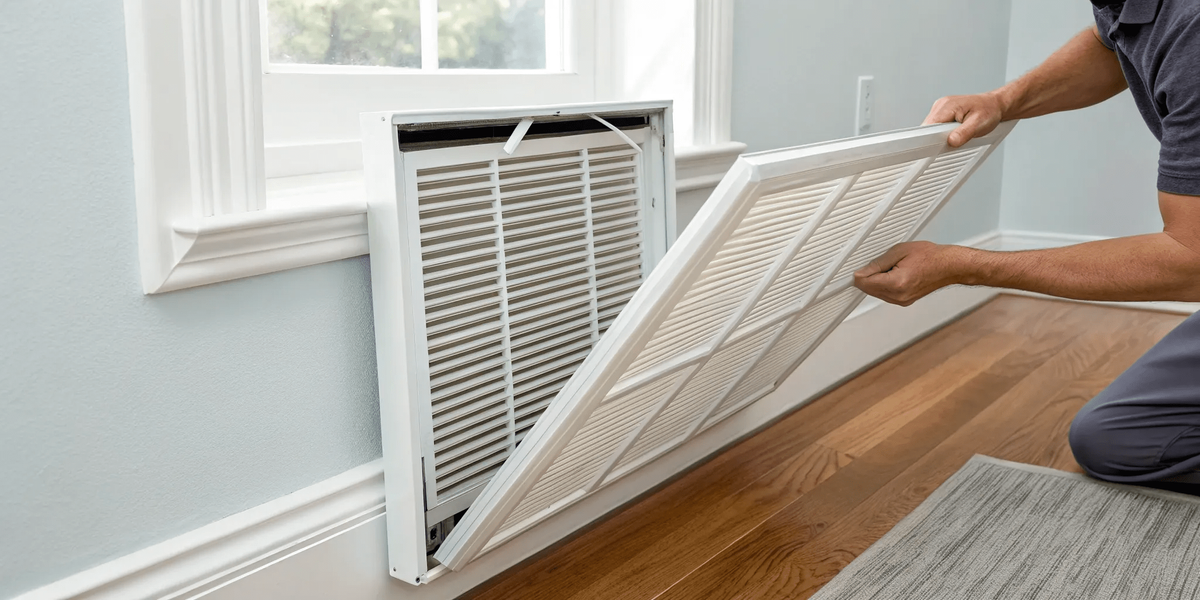
HVAC Filter Replacement: A DIY Homeowner's Guide
If you’re constantly dusting your furniture or find your allergies acting up indoors, the problem might be hiding in your HVAC system. A dirty, clogged air filter can’t effectively trap dust, pollen, and pet dander, allowing them to circulate endlessly through your home. It also forces your system to work harder, driving up your energy bills. The solution is surprisingly simple: a consistent hvac filter replacement routine. This guide will show you how to choose the right filter for your Bay Area home, how often to change it, and the correct way to install it for cleaner air and a more efficient system.
Key Takeaways
- Prioritize regular filter changes: Aim to replace your filter every 1 to 3 months to protect your HVAC system, maintain good air quality, and manage energy bills. Check it monthly, especially if you have pets or allergies.
- Choose the right filter for your home: A pleated filter with a MERV rating of 5 to 11 is a great starting point for most households. If you have pets or allergies, consider a higher MERV rating, but first confirm your system can handle the reduced airflow.
- Install your new filter correctly: Double-check that you have the right size to prevent air leaks. When you slide the new filter in, make sure the arrow on the frame points toward your furnace or air handler to ensure proper airflow.
What Is an HVAC Filter?
Think of an HVAC filter as the unsung hero of your home’s heating and cooling system. It’s a simple, replaceable screen, usually made of pleated paper or fiberglass, that sits inside your air return duct. Its main job is to protect your expensive HVAC equipment from getting clogged with dust, pet dander, and other airborne particles. As air cycles through your system, the filter acts as a gatekeeper, trapping these contaminants before they can cause damage to sensitive internal parts.
But it does more than just protect your machinery. By capturing all that gunk, your filter also plays a huge role in your home’s indoor air quality. A clean filter means cleaner air for you and your family to breathe, which is especially important for anyone with allergies or asthma. It’s a small component that has a massive impact on both your system’s efficiency and your home’s overall comfort. Regularly changing it is one of the easiest and most effective ways to keep your entire HVAC system running smoothly and your air fresh.
How Your HVAC Filter Works
The process is pretty straightforward. Your HVAC system pulls air from your home through a return vent to be heated or cooled. Before that air reaches the main unit, it has to pass through the filter. The filter’s mesh-like material is designed to catch and hold onto particles like dust, pollen, and lint while allowing clean air to flow through freely. This prevents debris from building up on sensitive components like the evaporator coil and fan motor. A clean system doesn’t have to work as hard, which saves energy and extends its lifespan. It’s a simple but critical step in all of our HVAC services.
Signs It's Time for a New Filter
Not sure if your filter needs changing? Your house will give you a few clues. The most obvious sign is a visible layer of gray dust and grime on the filter itself. You might also notice more dust settling on your furniture, or that your allergy symptoms are acting up. Another common indicator is reduced airflow coming from your vents. If the system seems to be running constantly without effectively heating or cooling your home, a clogged filter is a likely culprit. An unexpected jump in your energy bill is another red flag, as the system works harder to pull air through the blockage. As part of a regular maintenance plan, we recommend checking it monthly.
A Quick Guide to HVAC Filter Types
Walking down the filter aisle at a home improvement store can feel a little overwhelming. With so many options, how do you know which one is right for your home? The truth is, filters aren't one-size-fits-all. They vary in material, design, and what they're built to capture. Choosing the right one is a key part of your system's overall maintenance and can make a big difference in your home's air quality and your HVAC's efficiency. From basic fiberglass models to high-efficiency HEPA filters, each type serves a different purpose. Understanding these differences is the first step toward picking a filter that fits your home, your health needs, and your budget. Let's break down the most common types you'll find so you can make a confident choice.
Fiberglass Filters
Think of fiberglass filters as the basic, entry-level option. They are the most budget-friendly choice and are typically made from spun fiberglass. Their main job is to protect your HVAC system from large particles like dust, lint, and debris that could cause damage. While they do a great job of that, they aren't designed to catch smaller contaminants like pollen, pet dander, or mold spores. If your primary goal is simply to keep your furnace and AC unit clean and you don't have concerns about allergies or air purity, a fiberglass filter can be a perfectly fine and economical solution.
Pleated Filters
Pleated filters are a popular step up from fiberglass, and for good reason. Made from polyester or cotton paper, these filters have a folded, accordion-like design. This pleating creates a much larger surface area, allowing them to trap a wider range of particles without quickly clogging up. They are more effective than their fiberglass counterparts at capturing smaller irritants like pet dander and mold spores, making them a great middle-of-the-road option for most households. They offer a solid balance of filtration performance and affordability, which is why they've become a go-to choice for many homeowners in the Bay Area.
HEPA Filters
If you or someone in your family struggles with allergies, asthma, or other respiratory issues, a HEPA filter might be exactly what you need. HEPA stands for High-Efficiency Particulate Air, and these filters are the gold standard for filtration. They are designed to capture at least 99.97% of airborne particles, including dust mites, pollen, and pet dander. However, there's a catch. Their dense material can restrict airflow, and not all residential HVAC systems are powerful enough to handle them. It's crucial to check if your system is compatible before installing one. For those serious about improving their indoor air quality, a HEPA filter is a powerful tool.
Washable Filters
For those who prefer a more sustainable, long-term solution, washable filters are an interesting option. Instead of throwing them away every few months, you can simply remove, clean, and reinstall them. This eco-friendly approach can save you money over time since you aren't constantly buying replacements. The downside is that they require consistent upkeep. You have to be diligent about washing them regularly according to the manufacturer's instructions. If not cleaned properly, they can become less effective and even grow mold or bacteria. They may also offer slightly lower filtration performance compared to high-quality disposable pleated filters.
How Often Should You Change Your HVAC Filter?
This is one of the most common questions we get, and for good reason. Changing your filter is one of the simplest and most effective ways to keep your heating and cooling system running smoothly. But the truth is, there isn't a one-size-fits-all answer. The ideal replacement schedule for your home depends on the type of filter you use, your lifestyle, and even the air quality in your Bay Area neighborhood.
Think of the manufacturer's recommendation as a starting point, not a strict rule. While some filters are designed to last up to six months, factors like having pets or family members with allergies can significantly shorten that lifespan. The best approach is to understand the general guidelines and then adjust them based on your specific household needs. Getting into a regular rhythm of checking and changing your filter will not only improve your air quality but also protect your HVAC system from unnecessary strain and premature wear. It’s a small task that pays off in big ways, from lower energy bills to a healthier, more comfortable home.
A General Replacement Schedule
As a solid rule of thumb, you should plan to change your HVAC filter every one to three months. For the most common 1-inch pleated filters found in many homes, the 90-day mark is a great target to aim for. However, it's always a good idea to physically check the filter once a month, especially when you're getting used to a new home or system. If you hold it up to the light and can't see light passing through, it's time for a change, regardless of how long it's been. This simple habit is a core part of any effective HVAC maintenance routine and helps your system operate at its best.
What Shortens a Filter's Lifespan?
Several common household factors can clog your filter faster than you might expect, requiring more frequent changes. If you have furry friends at home, pet dander and hair will quickly accumulate, so plan on swapping the filter every 60 days. For households where someone suffers from allergies or asthma, a clean filter is non-negotiable. Changing it every 20 to 45 days helps preserve your home's indoor air quality and keeps everyone breathing easier. Additionally, if you run your HVAC system constantly or live near a construction zone, you'll likely need to replace your filter more often to keep up with the increased workload.
How to Replace Your HVAC Filter: A Step-by-Step Guide
Changing your HVAC filter is one of the easiest and most impactful home maintenance tasks you can do. It keeps your air clean and your system running smoothly. Don't worry, you don't need to be an expert to get it done. Just follow these four simple steps, and you'll be breathing easier in no time.
Step 1: Power Down Your System for Safety
First things first: safety. Before you do anything else, turn off your HVAC system completely. You can usually do this at your thermostat or the breaker box. This simple action prevents any moving parts from starting up while you're working and protects you from any electrical risks. It also stops the system from sucking in dust and debris while the filter slot is empty. If you're ever unsure about working on your system, it's always best to schedule an HVAC service call with a professional.
Step 2: Locate and Measure Your Current Filter
Next, you need to find your current filter. It’s typically located in a slot on your indoor air handler (the furnace or AC unit, often in a closet, basement, or attic) or in a return air vent in a wall or ceiling. Once you find it, slide the old filter out and look for the size printed on the cardboard frame. It will look something like "16x25x1." Write this down! Using the correct size is essential for a snug fit that prevents unfiltered air from sneaking around the edges. This is a key part of routine HVAC maintenance.
Step 3: Remove the Old Filter
With the old filter in hand, carefully slide it all the way out of its slot. It will likely be covered in dust, pet hair, and other particles, so handle it gently to avoid shaking anything loose into the air. A great tip is to have a trash bag ready right there. You can immediately place the dirty filter inside the bag to keep your home clean and contain the mess. This simple habit makes the whole process much tidier and prevents you from spreading the very dust you're trying to eliminate.
Step 4: Insert the New Filter Correctly
Now it's time to put in the new filter. Before you slide it in, look for an arrow printed on the frame. This arrow indicates the direction of airflow and must point toward the furnace or air handler, not away from it. Installing the filter backward can restrict airflow and reduce its effectiveness. Slide the new, clean filter into the slot, making sure it fits securely. Once it's in place, replace the cover or close the grille. Now you can turn your system back on and enjoy cleaner, fresher indoor air quality.
Common Filter Replacement Mistakes to Avoid
Changing your HVAC filter seems straightforward, but a few simple missteps can undo all your good work. These common mistakes can lead to poor air quality, higher energy bills, and even strain on your system. The good news is they are incredibly easy to avoid once you know what to look for. Let's walk through the two most frequent errors so you can get your filter replacement right every time.
Choosing the Wrong Size or MERV Rating
Getting the right size is non-negotiable. A filter that’s too small allows dust and debris to sneak around the edges, entering your HVAC system and your home's air. One that’s too big simply won’t fit. Always check the dimensions printed on the side of your old filter before you buy a new one. Beyond size, you need to consider the MERV (Minimum Efficiency Reporting Value) rating. This number tells you how effective the filter is at trapping particles. A filter with a MERV rating that's too low won't clean your air effectively, while one that's too high can restrict airflow, forcing your system to work harder. This can lead to unnecessary wear and tear and higher energy costs. Finding the right balance is key to great indoor air quality.
Installing the Filter Backwards
Believe it or not, your air filter has a right way and a wrong way to be installed. Filters are designed for air to flow through them in a specific direction. To help you out, manufacturers print arrows on the filter's cardboard frame. These arrows must point toward the furnace or air handler and away from the return air duct. Installing it backward can restrict airflow, reduce the filter's effectiveness, and put extra strain on your system's fan motor. It’s a small detail that makes a huge difference in performance and efficiency. If you’re ever unsure, it’s a great question to ask during a routine HVAC maintenance visit.
What Happens if You Don't Change Your Filter?
Forgetting to change your HVAC filter is an easy mistake to make, but it can lead to some surprisingly big problems. This simple task is one of the most important parts of home maintenance, directly affecting your home’s air quality, your energy bills, and the lifespan of your entire heating and cooling system. Skipping it can set off a chain reaction of issues that are much more difficult and expensive to fix than swapping out a filter.
Declining Air Quality and Health Concerns
Your HVAC filter’s main job is to trap airborne particles like dust, pollen, pet dander, and other allergens before they can circulate through your home. When the filter gets clogged, it can’t do its job effectively. Even worse, a dirty, damp filter can become a breeding ground for mold and bacteria. Your system may then push this contaminated air throughout your home, which can trigger allergies, asthma, and other respiratory issues. If you’ve ever wondered why the air in your home feels stuffy or irritates your throat, a dirty filter could be the culprit. Improving your home’s indoor air quality starts with this simple step.
Reduced Efficiency and Higher Bills
A clogged air filter forces your HVAC system to work much harder to pull in air. Think of it like trying to breathe through a thick cloth; it requires a lot more effort. This extra strain means your system runs longer and uses more energy to heat or cool your home to the temperature set on your thermostat. That wasted energy translates directly into higher monthly utility bills. Over time, the constant struggle can also wear down critical components like the fan motor. Regular HVAC maintenance, including filter changes, ensures your system runs as efficiently as possible, saving you money every month.
Risk of Costly System Damage
The continuous strain from a dirty filter doesn't just impact your energy bills; it puts significant stress on your entire HVAC system. This can cause the system to overheat, leading to automatic shutdowns or, in worse cases, complete component failure. What starts as a forgotten five-dollar filter can quickly turn into a call for expensive HVAC repairs. Consistently changing your filter is one of the easiest and most affordable ways to protect your investment and extend the life of your heating and air conditioning equipment, helping you avoid unexpected breakdowns.
How to Choose the Best Filter for Your Home
Walking down the filter aisle at a home improvement store can feel overwhelming. With so many options, how do you know which one is right for you? Choosing the best filter goes beyond just finding the right size. It’s about matching the filter’s performance to your home’s specific needs, which can make a huge difference in your home’s air quality and your HVAC system’s efficiency.
Think of it as finding the perfect balance. You want a filter that traps dust, pollen, and other particles without making your system work too hard. Let’s break down the key factors to consider so you can pick your next filter with confidence.
Understanding MERV Ratings
Every air filter has a MERV rating, which stands for Minimum Efficiency Reporting Value. In simple terms, it’s a score from 1 to 20 that tells you how effective the filter is at trapping airborne particles. The higher the MERV rating, the smaller the particles it can catch.
For most homes, a filter with a MERV rating between 5 and 11 is a great choice. This range effectively captures common irritants like dust, pollen, and pet dander. If you’re looking for even better filtration, you can go up to MERV 16. Filters with extremely high ratings (MERV 17-20) are typically reserved for sterile environments like hospitals, as they can restrict airflow too much for a standard residential system. Improving your home's indoor air quality often starts with selecting a filter in that sweet spot.
Matching a Filter to Your Household's Needs
Now, let’s connect those MERV ratings to your daily life. The right filter for your neighbor might not be the right one for you. For most households, a MERV 8 filter provides a good balance of filtration and airflow, making it a popular and effective option.
However, if your home has specific challenges, you might want to choose a filter with a higher rating. Do you have furry friends shedding dander? Do members of your family suffer from allergies or asthma? If so, consider a MERV 11 filter or higher to capture more of those tiny irritants. The goal is to find the highest-rated filter your system can handle without straining it. If you're unsure, our team can help you find the perfect fit as part of our comprehensive HVAC services.
Where to Buy Your Next HVAC Filter
Once you know the right size and MERV rating for your home, the final step is buying the filter. You have more options than you might think, from a quick trip to the local hardware store to convenient online services that do the remembering for you. The best choice really comes down to your schedule, your filter's specific requirements, and how you prefer to shop. Let's walk through the most common places to find your next filter so you can pick the one that works best for you.
Online vs. Local Home Improvement Stores
If you need a new filter right away, your local home improvement store is a great place to start. They typically stock all the common sizes, so you can grab what you need and get it installed the same day. However, if your system requires a less common size or a specific type of filter, you might have better luck online. Massive online retailers like Amazon carry thousands of different replacement filters, making it easy to find exactly what you need. Specialty sites like Filterbuy go a step further, offering custom-sized filters if your unit has unique dimensions. Shopping online often gives you better pricing and a wider selection, but you will have to wait for shipping.
Considering Subscription Services
Do you have a hard time remembering to change your filter on schedule? If so, a subscription service might be perfect for you. These services take the guesswork out of filter maintenance by automatically shipping new filters to your home based on your chosen replacement schedule. It’s a simple way to make sure you always have the right filter on hand exactly when you need it. Companies like FilterTime are built around this model, delivering filters straight to your door with free shipping. Many online retailers, including Filterbuy, also offer a subscription option. It’s a convenient, set-it-and-forget-it solution for busy homeowners who want to keep their HVAC system running smoothly without adding another reminder to their calendar.
When to Call a Professional for Help
Changing an HVAC filter is a task most homeowners can handle, but there are definitely times when it makes more sense to leave it to a professional. It’s not about admitting defeat; it’s about making the smartest, safest choice for your home and your HVAC system. If you find yourself hesitating or feeling unsure, calling in an expert can save you time, prevent potential damage, and give you peace of mind that the job is done right.
Sometimes, the biggest challenge is simply getting to the filter. In other cases, you might want to hand off the responsibility as part of a larger care plan for your system. Let’s look at a couple of common scenarios where a professional can make all the difference.
If Your System Is Hard to Access
Is your air handler tucked away in a cramped attic, a tight crawl space, or a hard-to-reach closet? If accessing your filter requires a ladder, moving heavy objects, or squeezing into an uncomfortable space, it’s wise to call for help. Awkward angles and poor lighting can make it difficult to see what you’re doing, increasing the risk of installing the filter incorrectly. An improperly seated filter can allow air to leak around the edges, which reduces your system's efficiency and lets dust and debris bypass the filter entirely. This can lead to bigger problems, so if the location is a challenge, let a technician handle the HVAC service call.
As Part of a Comprehensive Maintenance Plan
If you’d rather not keep track of filter types, MERV ratings, and replacement schedules, rolling this task into a professional maintenance plan is a great solution. During a routine service visit, a technician will not only replace your filter but will also use the exact right size and type for your specific system. This takes all the guesswork out of the process for you. More importantly, the filter change is just one part of a comprehensive system check-up. An expert can inspect the entire unit for wear and tear, clean critical components, and catch small issues before they become expensive repairs. Regular, professional maintenance keeps your system running efficiently and extends its lifespan.
Related Articles
- HVAC filters demand predicted to keep rising
- How Often Should You Replace Your Heating System?
- A Handy HVAC Glossary to Help You Manage Your System More Effectively
- Preventive Measures to Keep Your Residential HVAC System in Good Condition
- Tips for Maximizing HVAC Efficiency and Extending the Lifespan of Your System
Frequently Asked Questions
What's the difference between a cheap fiberglass filter and a more expensive pleated one? Think of it this way: a basic fiberglass filter is designed to protect your HVAC equipment from large debris like lint and dust bunnies. A pleated filter, on the other hand, is designed to protect both your equipment and your lungs. Its folded design creates more surface area to trap smaller particles like pet dander and pollen, which makes a real difference in your home's air quality.
I have pets and allergies. How often should I really change my filter? In a home with pets or allergy sufferers, the standard 90-day rule doesn't really apply. All that extra dander and hair clogs a filter much faster. I recommend checking your filter every month. You'll likely find that you need to replace it every 45 to 60 days to keep your air clean and your system running efficiently.
Can a high-MERV filter actually be bad for my HVAC system? Yes, it can. While a high-MERV filter is excellent at trapping tiny particles, its dense material can also restrict airflow. If your system's fan isn't powerful enough to pull air through it, the unit has to work much harder. This strain can lead to higher energy bills and even cause the system to overheat. It's important to use a filter that's compatible with your specific equipment.
What if I can't figure out which way the airflow arrow should point? This is a super common point of confusion. Here’s a simple rule to remember: the air flows from your living space, through the filter, and into the main HVAC unit to be heated or cooled. So, the arrow should always point toward the furnace or air handler and away from the return duct where the air is being pulled in.
Is it okay to just vacuum my disposable filter and reuse it? I would advise against this. Disposable filters are designed to trap particles deep within their fibers, not just on the surface. Vacuuming only removes the top layer of dust and can actually damage the filter's material, making it less effective. For the best performance and air quality, it's always better to replace a disposable filter with a fresh one.