
Get practical tips for ac unit repair, from troubleshooting common issues to knowing when to call a pro. Keep your home cool and your AC running smoothly.
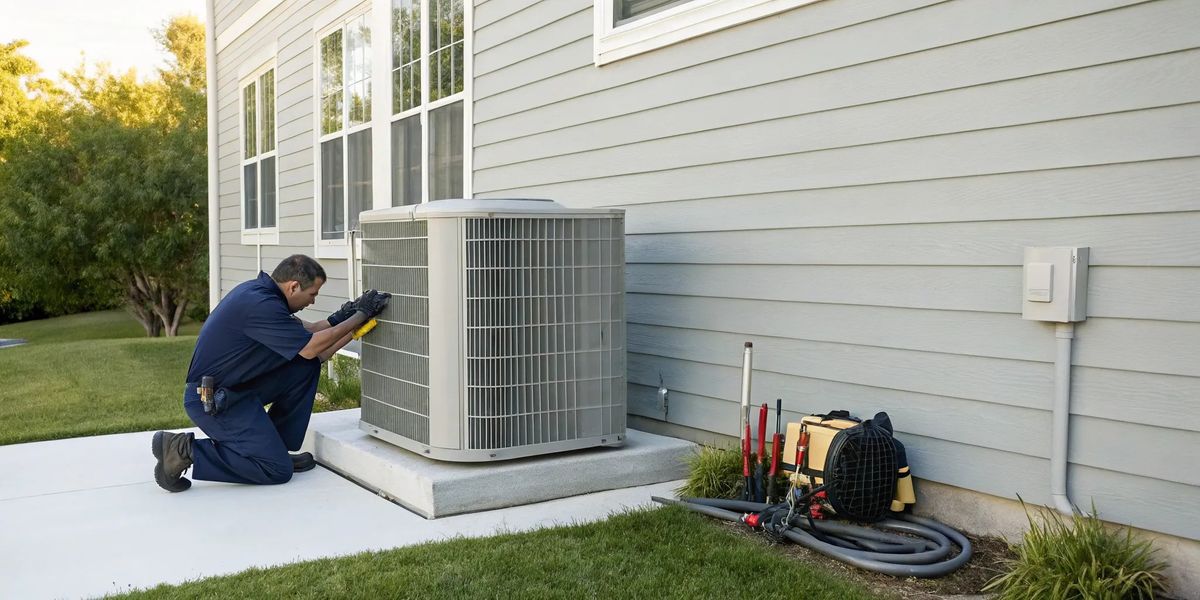
AC Unit Repair: A Homeowner's Guide to Fixes
Your air conditioner can’t speak, but it definitely communicates when something is wrong. A strange new rattle, a musty smell, or a home that just won’t get cool are all signals that your system needs attention. Learning to interpret these clues is the key to catching a small problem before it becomes a major breakdown. This guide will teach you how to listen to your AC. We’ll cover the most common warning signs, what they mean, and help you decide if it’s a simple fix or if you need a professional ac unit repair to get things running smoothly again.
Key Takeaways
- Regular maintenance is your best defense: Performing simple tasks like changing filters and scheduling an annual professional tune-up is the most effective way to prevent costly repairs and keep your system running efficiently.
- Know what to check and when to call: Before calling for service, check your thermostat settings, circuit breaker, and air filter. If you notice grinding noises, burning smells, or constant cycling, it's time to stop and let a professional take over for a safe and accurate repair.
- Make the right financial choice: Use the "$5,000 rule" (multiply the AC's age by the repair cost) to help decide between fixing or replacing your unit. If the result is over $5,000, a new installation is likely the more economical option in the long run.
Is Your AC Trying to Tell You Something?
Your air conditioner can’t talk, but it has its own ways of telling you when something is wrong. Learning to recognize these signals can help you catch problems early, long before a minor issue turns into a major, expensive headache on the hottest day of the year. Think of it as learning your home’s unique language. Ignoring a strange new sound or a subtle change in performance is like ignoring a check engine light; you can do it for a while, but it usually doesn’t end well.
Most AC issues fall into a few categories: strange sounds, unpleasant smells, poor performance, or visible problems like leaks. If you notice your system acting up, it’s a clear sign that it needs attention. Paying attention to these clues can help you decide if it’s a simple fix you can handle or if it’s time to call in a professional for an air conditioning service. Let’s walk through some of the most common warning signs your AC might be sending you.
Strange Noises or Weak Airflow
One of the most obvious signs of trouble is a new or unusual noise. You know what your AC sounds like during normal operation, so when you hear something out of the ordinary, listen closely. A banging or clanking sound could point to a loose or broken part, like a connecting rod or piston pin. Squealing might suggest a belt issue, while grinding could mean your motor’s bearings are shot. Even a continuous clicking can be a sign of an electrical problem. If the air coming from your vents feels weak or isn't as cold as it used to be, your system is struggling. This could be anything from a clogged filter to a failing compressor.
A Sticky Feeling or Funky Smells
Does your home feel sticky or humid even when the AC is running? A properly functioning air conditioner is great at removing humidity from the air, so if you’re feeling clammy indoors, your system isn’t doing its job effectively. This could be due to an oversized unit or a component that needs repair. Even more alarming are funky smells. A musty odor often points to mold or mildew growing in your ductwork or the unit itself, which can seriously impact your indoor air quality. If you smell something burning or an electrical odor, turn the system off immediately and call for help, as this could indicate a dangerous wiring issue.
Constant Cycling, Puddles, and Leaks
An air conditioner that turns on and off every few minutes is "short cycling." This is a big red flag. Not only does it prevent your home from cooling down properly, but it also puts excessive wear and tear on the compressor, the heart of your AC system. It’s a major energy waster, too. Another clear sign of trouble is water pooling around your indoor or outdoor unit. While some condensation is normal, visible puddles or leaks are not. This often means you have a clogged condensate drain line, which can lead to water damage, mold growth, and even shut down your system. It’s a problem that definitely warrants an HVAC service call.
What to Check Before You Call for AC Repair
When your AC stops working on a warm day, it’s easy to feel a little panicked. Before you assume the worst (and a huge repair bill), take a deep breath. There are a few simple things you can check yourself that might solve the problem in minutes. Walking through these steps can save you the cost of a service call, or at the very least, help you give our technicians valuable information if you do need to call us. Let’s walk through a quick diagnostic checklist.
Check Your Thermostat and Breaker
Let’s start with the control center: your thermostat. It sounds simple, but you’d be surprised how often the fix is right here. First, make sure it’s set to “cool” and the temperature is set a few degrees lower than the current room temperature. If it’s a digital model, dead batteries can be the culprit, so try swapping in a fresh pair. If the thermostat seems fine, head to your home’s electrical panel. Find the circuit breaker for your air conditioner. If it has tripped to the middle or “off” position, flip it completely off and then back on. If these steps don't bring back the cool air, it might be time for an HVAC service call.
Inspect and Change the Air Filter
A clogged air filter is one of the most common reasons an AC system struggles. When the filter is packed with dust and debris, it can’t pull in enough air, forcing the system to work much harder. This not only reduces cooling power but can also lead to the unit freezing up. Find your system’s filter (it’s usually in a slot near the indoor air handler) and slide it out. If it looks dark and dirty, it’s time for a change. We recommend replacing disposable filters every 1 to 3 months, especially during peak cooling season. A clean filter is a simple but powerful way to improve your system's efficiency and your home's indoor air quality.
Clear the Outdoor Unit and Drain Line
Your outdoor AC unit needs room to breathe. Over time, leaves, grass clippings, and dirt can build up around it, blocking airflow and causing the system to overheat and work inefficiently. Before you do any cleaning, make sure you turn off the power to the unit at the breaker for safety. Then, gently clear away any debris, making sure there are about two feet of clear space on all sides. Trim back any nearby shrubs or plants as well. This is also a key part of professional maintenance, which ensures deeper components, like the condensate drain line, are clear and functioning properly to prevent water damage.
Know When to Stop and Call a Pro
While these DIY checks can solve many common issues, it’s important to know your limits. If you’ve gone through these steps and your AC is still blowing warm air, making loud grinding or banging noises, or cycling on and off constantly, it’s time to call for backup. Attempting to fix complex electrical or mechanical problems without the right training and tools can be dangerous and often leads to more extensive damage. If your system is showing any of these serious symptoms, the smartest and safest move is to schedule a professional AC repair. Our certified technicians can diagnose the problem correctly and get your home cool again.
How Much Does AC Unit Repair Cost?
Let’s talk about the question on every homeowner’s mind when the AC goes out: How much is this going to cost? The truth is, there’s no single answer. The final bill for an AC repair can vary widely depending on what’s broken, the age and model of your unit, and whether it’s still under warranty. A simple fix might only set you back a couple hundred dollars, but a major component failure could have you weighing the cost of the repair against a full replacement.
Think of it like a car repair. A new set of spark plugs is one thing; a full engine rebuild is another. To help you get a clearer picture of what to expect, we can break down the costs into a few common categories. Understanding these potential expenses will help you feel more prepared when you get a quote from a technician. Remember, a transparent quote from a trusted professional is the best way to know exactly what you’re dealing with.
Common Repair Costs: Capacitors, Coils, and Leaks
Some of the most frequent AC issues are thankfully on the lower end of the cost spectrum. These are the fixes that get your system back up and running without breaking the bank. For example, replacing a faulty capacitor, which helps the motors in your unit start and run, typically costs between $100 and $400. If your thermostat is on the fritz, a replacement could range from $90 to $600, depending on the model you choose. Even a more complex job, like fixing a circuit board, usually falls between $75 and $600. While these costs aren't trivial, they are much more manageable than a major system overhaul. A professional can quickly diagnose these issues during an AC repair visit.
The Big One: Compressor Repair Costs
Now for the more serious repairs. The compressor is the heart of your air conditioner, and if it fails, you’re looking at a significant expense. A compressor repair or replacement can cost anywhere from $900 to $2,900. Similarly, your AC has two sets of coils, the evaporator and condenser coils, which are crucial for heat exchange. If they are damaged or leaking, repairs can be costly, ranging from $1,000 to over $5,000. When you receive a quote in this price range, it’s a good time to pause and think. These high costs often bring you close to the price of a new, more efficient unit, making the "repair or replace" conversation a necessary one for your air conditioning services.
How Your AC's Brand Affects the Bill
The brand of your air conditioner can also play a role in the final repair bill. Some high-end or specialty brands may have parts that are more expensive or harder to source, which can drive up the cost. This is also where a useful guideline called the "$5,000 rule" comes into play. The rule is simple: if you multiply the age of your AC unit by the estimated repair cost and the total exceeds $5,000, it’s generally more economical to replace the unit. For example, if your 10-year-old unit needs a $600 repair, the total is $6,000. In this case, investing in a new AC installation is likely the smarter financial move for the long term.
Will Your Warranty Cover It?
Before you agree to any major repair, take a moment to do some digging: is your AC unit still under warranty? Many homeowners forget about this, but it can save you a significant amount of money. Manufacturer warranties typically cover the cost of major parts, though they may not always cover the labor to install them. Still, having a $2,000 compressor covered by warranty is a huge relief. Check the paperwork that came with your unit or look up the model number online. If you’re not sure how to find this information, a professional technician can often help you determine if your system is covered. Feel free to contact us if you have questions about your unit.
When Is It Time to Call a Professional?
You’ve checked the thermostat, swapped the filter, and cleared the outdoor unit, but your AC is still acting up. While it’s great to handle the small stuff, there comes a point where a DIY fix isn’t just ineffective, it can be unsafe. Some AC problems are complex and require specialized tools and knowledge to diagnose and repair correctly. Pushing your DIY skills too far can lead to bigger, more expensive problems or even void your warranty. Knowing when to step back and call for help is the smartest move you can make for your home and your wallet. Let’s walk through the clear signs that it’s time to bring in an expert and how to choose the right one for the job.
Red Flags That Require an Expert
Your air conditioner will usually give you warning signs before it completely fails. Think of these as cries for help. If you notice any of the following, it’s time to schedule a professional AC unit repair. Don’t ignore warm air blowing from vents, weak airflow, or a sudden spike in your energy bills. Other major red flags include strange noises like grinding or screeching, musty or burning smells, and moisture pooling around the unit. If your home feels more humid than usual or the system constantly turns on and off, these are also clear indicators that a component is failing. These issues point to problems that need an expert’s touch.
How to Choose a Qualified Technician
When your AC needs a repair, the technician you hire matters just as much as the repair itself. Start by looking for a local company with a solid track record in the Bay Area. They’ll be familiar with the specific needs of homes in our communities. Make sure any company you consider is properly licensed and insured for your protection. A reputable company will also be transparent about their pricing and happy to provide a free estimate. Finally, take a moment to read through their positive customer reviews. Hearing from other homeowners is one of the best ways to gauge a company’s reliability and quality of service before you even pick up the phone.
Why Experience and Certifications Matter
You wouldn't want a brand-new driver parking your prized car, and the same logic applies to your HVAC system. When you're vetting technicians, their experience and certifications are your best indicators of quality. An experienced professional has seen thousands of different issues and can diagnose problems faster and more accurately. Certifications, like being Diamond Certified or having a high BBB rating, show a company’s commitment to ongoing training and high standards of customer service. These credentials prove that a company stands behind its work and has been independently verified as a top-tier service provider, giving you peace of mind that your home is in good hands.
Should You Repair or Replace Your AC Unit?
Deciding whether to fix your current air conditioner or invest in a new one can feel like a huge choice. It’s a big expense either way, and you want to make the right call for your home and your budget. You don't have to make this decision in the dark. By looking at a few key factors, you can get a much clearer picture of the best path forward for your home.
Consider Your AC's Age and the $5,000 Rule
Here’s a handy guideline to get you started: the "$5,000 Rule." It’s a simple calculation that can point you in the right direction. Just multiply the age of your AC unit in years by the estimated cost of the repair. If that number is more than $5,000, it’s a strong sign that investing in a new unit is the more financially sound option. If the number is less than $5,000, a repair will likely be your most cost-effective choice. While it’s not a strict law, it’s a great starting point for weighing the long-term value of a repair against a full AC installation.
Factor in Repair Frequency and Energy Bills
How often are you calling for repairs? If your AC technician is on speed dial, it’s time to think about a replacement. Units over 10 years old are more prone to breakdowns, and finding parts can become a real headache. Beyond the repair bills, take a look at your monthly energy costs. Are they creeping up? An older, less efficient AC has to work much harder to cool your home, which shows up on your utility bill. A new, energy-efficient model might have a higher upfront cost, but it can lead to significant savings over time, making our air conditioning services a smart investment.
Avoid These Common, Costly Mistakes
When you’re facing a major AC issue, it’s easy to feel pressured into a quick decision. One of the biggest mistakes you can make is not getting a complete picture of your options. Before you agree to any work, make sure you get a thorough inspection and quotes for both repair and replacement. A reputable technician will walk you through the pros and cons of each choice for your specific system. This empowers you to make an informed decision that you feel confident about. Don't hesitate to ask questions and get a second opinion. We make it easy to understand your options with a free estimate for your home.
How to Prevent Costly AC Repairs
The best way to handle an expensive AC repair is to avoid it altogether. A little proactive care goes a long way in keeping your air conditioner running smoothly and efficiently. Think of it like changing the oil in your car; these simple maintenance tasks protect your investment and prevent small issues from turning into major headaches. Taking a few minutes each month to check on your system can save you money, extend its lifespan, and ensure your home stays comfortable when you need it most.
Change Your Filters and Check Your Ducts
Your AC’s air filter is its first line of defense. A dirty, clogged filter restricts airflow, forcing your system to work much harder to cool your home. This extra strain not only drives up your energy bills but can also cause dirt to build up on essential cooling components, leading to damage. Check your filter every month and replace it at least every 90 days. While you’re at it, take a quick look at any visible ducts for tears or gaps that could be leaking cool air. Clean filters and sealed ducts mean better air quality and a healthier, more efficient AC system.
Keep Key Components Clean
Even with a clean filter, your AC’s coils can get dirty over time. The outdoor unit, or condenser, is especially vulnerable to leaves, dirt, and yard debris. You can help by keeping the area around your outdoor unit clear. Gently rinse the fins with a garden hose (don't use a pressure washer) and trim back any plants or shrubs at least two feet to ensure proper airflow. The indoor evaporator coil can also collect dust, which hinders its ability to cool effectively. Cleaning this component is best left to a professional during a routine air conditioner maintenance visit.
Schedule Annual Professional Maintenance
The single most effective way to prevent costly repairs is to schedule an annual tune-up with a qualified technician. During a professional maintenance visit, a technician will thoroughly inspect, clean, and tune every part of your system. They can spot worn-out parts, check refrigerant levels, and address minor issues before they cause a complete breakdown. This yearly check-up ensures your AC operates at peak efficiency, saving you money on energy bills and giving you peace of mind. Think of it as an investment in your home’s comfort and your system’s longevity. Our team offers comprehensive maintenance plans to keep your AC in top shape.
Related Articles
- Signs Your Home's HVAC System Needs Repair
- Common Signs Your HVAC System Needs Repair and How to Address Them
- Signs It's Time for a New HVAC Installation
- The Benefits of Hiring Professional HVAC Technicians for Repairs
- Spring Is Coming! Learn Maintenance Tips For Your HVAC System
Frequently Asked Questions
What's the most important thing I can do to prevent my AC from breaking down? The two most powerful things you can do are changing your air filter consistently and scheduling a professional tune-up once a year. A clean filter is crucial because it allows your system to breathe easily, preventing strain and dirt buildup. The annual service visit is just as important; a technician can spot and fix small issues, clean essential parts you can't reach, and ensure your system is running at its best, which saves you from surprise failures and high energy bills.
My AC is making a weird noise. Is it serious? Any new or loud noise from your air conditioner is a sign that something isn't right. While a professional needs to make the final diagnosis, sounds like banging, grinding, or high-pitched squealing often point to mechanical problems that can get much worse if ignored. Think of it as your AC's check engine light. It's always best to turn the system off and have a technician take a look to prevent a small issue from becoming a major, expensive repair.
How do I know if I need a repair or a whole new AC unit? This is a big decision, but a few key factors can make it clearer. Consider the age of your unit; if it's over 10 years old, replacement becomes a more attractive option. Also, think about repair frequency. If you're constantly fixing it, those costs add up. A good guideline is the "$5,000 rule": multiply the unit's age by the repair cost. If the total is over $5,000, a new, more efficient system is likely the smarter long-term financial move.
Is it really worth paying for professional maintenance every year? Absolutely. An annual maintenance visit is an investment in your system's health and your own peace of mind. During a tune-up, a technician does a deep clean and a thorough inspection that goes far beyond just changing a filter. They check electrical components, test refrigerant levels, and lubricate moving parts. This service not only prevents the majority of breakdowns but also keeps your AC running efficiently, which can lower your monthly energy costs and extend the life of the unit.
My AC is running, but my house isn't getting cool. What should I check first? Before you call for help, there are two quick things you can check. First, look at your thermostat. Make sure it's set to "cool" and the temperature is set lower than the current room temperature. Second, check your air filter. A filter that's clogged with dust and debris can severely restrict airflow and reduce cooling power. If you've checked both of these and your home still feels warm, it's time to call a professional to diagnose the underlying problem.